
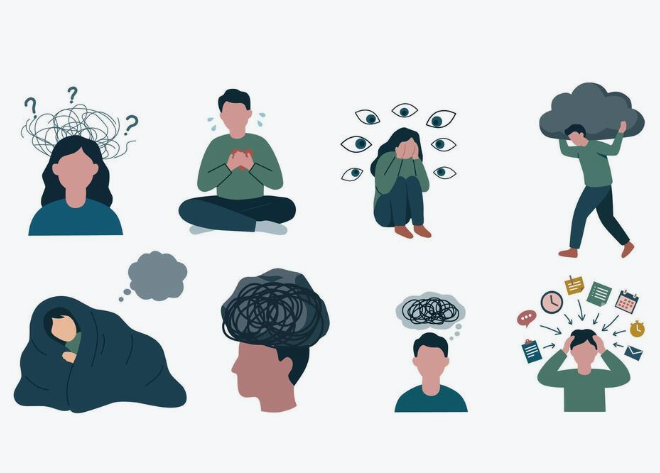
7 Most Common Mental Health Conditions: Symptoms, Causes, and Treatments
7 most common mental health conditions affect hundreds of millions of people globally — yet most go undiagnosed and untreated for years. Here is the complete, honest breakdown of each: what it is, what causes it, and what actually helps.
Why Understanding These Conditions Matters More Than You Think
Mental health conditions are not rare. They are not the experience of a fragile minority. They are the lived reality of hundreds of millions of people globally — people who go to work, maintain relationships, raise children, and carry their conditions mostly invisibly, often without the diagnosis or treatment that would change their experience fundamentally.
The World Health Organization estimates that one in eight people worldwide lives with a mental health condition. In the United States, nearly one in five adults experiences a diagnosable mental health condition in any given year. The gap between how common these conditions are and how often they receive appropriate clinical attention remains one of the most consequential failures in modern healthcare.
What drives that gap is not primarily cost or access — though those are real barriers. It is knowledge. Most people who are living with diagnosable mental health conditions do not know what they have. They know something is wrong. They know they feel different from how they want to feel. But without a framework for understanding what is happening neurologically and psychologically, they cannot make informed decisions about seeking help, choosing treatment, or understanding why what they are experiencing is not simply who they are.
This article provides that framework — for the seven most prevalent mental health conditions, explained honestly, specifically, and in a way that is clinically grounded without requiring a medical degree to follow.
1. Major Depressive Disorder (MDD)
What It Is
Major Depressive Disorder is the most prevalent mental health condition globally, affecting an estimated 280 million people worldwide. It is characterized by persistent low mood, loss of interest or pleasure in activities, and a cluster of cognitive, behavioral, and physical symptoms that together constitute one of the most debilitating conditions in human experience.
The critical distinction that most people miss: depression is not sadness. Sadness is an emotion — it has an object, it responds to circumstances, it lifts with time. Depression is a neurobiological condition — it is pervasive across contexts, does not respond proportionately to circumstances, and does not lift reliably with time or positive thinking.
Symptoms
The DSM-5 diagnostic criteria require at least five of the following during the same two-week period, with at least one being either depressed mood or loss of interest:
Depressed mood most of the day, nearly every day. Markedly diminished interest or pleasure in all, or almost all, activities. Significant weight change or appetite disturbance. Insomnia or hypersomnia. Psychomotor agitation or retardation observable by others. Fatigue or loss of energy. Feelings of worthlessness or excessive guilt. Difficulty thinking, concentrating, or making decisions. Recurrent thoughts of death or suicidal ideation.
The cognitive symptoms of depression — the worthlessness, the hopelessness, the conviction that nothing will improve — do not present themselves as symptoms. They present themselves as accurate assessments of reality. This is what makes depression particularly insidious and particularly resistant to the instruction to simply think more positively.
Causes
Depression has no single cause. It emerges from the interaction of several factors:
Neurobiological: Dysregulation of monoamine neurotransmitter systems — serotonin, dopamine, and norepinephrine — is the most established neurobiological feature of depression. Reduced hippocampal volume, abnormal HPA axis function, and elevated inflammatory markers are also consistently documented. Depression has meaningful heritability — approximately 37% of variance is accounted for by genetic factors.
Psychological: Negative cognitive schemas — deeply held beliefs about the self, the world, and the future — that were formed in early experience and that generate the automatic negative interpretations characteristic of depression. History of trauma or adverse childhood experiences significantly elevates risk.
Situational: Major life stressors — loss, relationship breakdown, financial crisis, chronic illness, caregiving demands — can precipitate depressive episodes in vulnerable individuals.
Treatment
Psychotherapy: CBT has the strongest evidence base for depression — addressing the cognitive distortions and behavioral withdrawal that maintain it. Behavioral Activation is particularly effective for the motivational deficit and anhedonia of depression. Interpersonal Therapy (IPT) addresses the relational dimensions that frequently contribute to and maintain depression.
Medication: SSRIs and SNRIs are the first-line pharmacological treatments — effective for moderate to severe depression. Medication plus therapy consistently outperforms either alone for significant presentations.
Lifestyle: Exercise has documented antidepressant effects comparable to medication in some studies. Sleep normalization, social connection, and nutritional stability are meaningful adjuncts to clinical treatment.
2. Generalized Anxiety Disorder (GAD)
What It Is
GAD is characterized by chronic, pervasive, difficult-to-control worry across multiple life domains — health, finances, relationships, work, the future — that is persistent, excessive relative to the objective probability of the feared outcomes, and accompanied by significant physical symptoms.
GAD is not ordinary stress or worry. It is a neurobiological condition in which the threat-anticipation system generates worry independently and continuously — not in response to specific threats but as a baseline mode of operation.
Symptoms
Excessive anxiety and worry about multiple events or activities, occurring more days than not for at least six months. Difficulty controlling the worry. At least three of the following: restlessness or feeling keyed up, being easily fatigued, difficulty concentrating, irritability, muscle tension, sleep disturbance.
Causes
GAD has significant heritable components — with twin studies estimating heritability at approximately 30%. Neurobiologically, GAD involves dysregulation of the amygdala’s threat-detection function and abnormal connectivity between the amygdala and the prefrontal cortex’s regulatory circuits. Psychological factors include intolerance of uncertainty — one of the most robust constructs in anxiety research — and the use of worry as a cognitive avoidance strategy. Childhood adversity and overprotective parenting are environmental risk factors.
Treatment
CBT targeting the worry process, intolerance of uncertainty, and the behavioral patterns that maintain anxiety. ACT addressing the struggle with anxious experience rather than its content. SSRIs and SNRIs as first-line pharmacological treatment. Mindfulness-Based Cognitive Therapy (MBCT) as a maintenance intervention.
3. Post-Traumatic Stress Disorder (PTSD)
What It Is
PTSD develops following exposure to traumatic events — events involving actual or threatened death, serious injury, or sexual violence — and involves a specific pattern of symptoms organized around the traumatic experience.
The critical neurobiological insight: PTSD is not a psychological weakness. It is the consequence of a memory processing failure — traumatic memories that have not been adequately integrated into the broader autobiographical narrative remain stored in a raw, emotionally intense, present-tense format that is reactivated by reminders.
Symptoms
The DSM-5 organizes PTSD symptoms into four clusters:
Intrusion: Recurrent, involuntary, distressing memories. Flashbacks — dissociative experiences in which the traumatic event feels as if it is recurring. Distressing dreams related to the trauma.
Avoidance: Efforts to avoid distressing memories, thoughts, or feelings about the trauma. Efforts to avoid external reminders — people, places, conversations, activities, objects, situations — associated with the trauma.
Negative alterations in cognition and mood: Inability to remember important aspects of the trauma. Persistent negative beliefs about self or world. Persistent negative emotional states. Diminished interest in activities. Feelings of detachment from others. Inability to experience positive emotions.
Alterations in arousal and reactivity: Irritability and angry outbursts. Reckless or self-destructive behavior. Hypervigilance. Exaggerated startle response. Concentration problems. Sleep disturbance.
Causes
PTSD develops following traumatic exposure — but not all trauma exposure produces PTSD. Risk factors include prior trauma history, lack of social support following the trauma, severity and duration of the traumatic exposure, peritraumatic dissociation, and biological vulnerability. Protective factors include strong social support, prior resilience, and early access to appropriate support following trauma.
Treatment
EMDR (Eye Movement Desensitization and Reprocessing): Endorsed as first-line treatment by WHO and APA. Facilitates the processing of traumatic memories through bilateral stimulation, reducing their emotional intensity and integrating them into autobiographical narrative.
Prolonged Exposure (PE) and Cognitive Processing Therapy (CPT): Both evidence-based first-line treatments that directly address the avoidance and distorted cognitions maintaining PTSD.
4. Attention Deficit Hyperactivity Disorder (ADHD)
What It Is
ADHD is a neurodevelopmental condition characterized by persistent patterns of inattention, hyperactivity, and impulsivity that interfere with functioning and development. It is one of the most prevalent neurodevelopmental conditions, affecting approximately 5-7% of children and 2.5-4% of adults — with significant underdiagnosis in women and girls.
The critical reframe: ADHD is not a deficit of attention in the simple sense. It is a disorder of executive function and self-regulation — specifically of the prefrontal cortex’s capacity to direct, sustain, and regulate attention and behavior in the absence of sufficient novelty, interest, challenge, or urgency.
Symptoms
Three presentations are recognized: predominantly inattentive, predominantly hyperactive-impulsive, and combined presentation.
Inattentive symptoms: Difficulty sustaining attention on tasks not providing immediate interest. Frequently losing items necessary for tasks. Being easily distracted. Difficulty following instructions through to completion. Appearing not to listen when spoken to directly. Avoiding tasks requiring sustained mental effort.
Hyperactive-impulsive symptoms: Fidgeting or squirming. Leaving seat in situations requiring remaining seated. Difficulty engaging in activities quietly. Talking excessively. Blurting out answers before questions are completed. Difficulty waiting one’s turn. Interrupting or intruding on others.
Emotional dysregulation: Not a formal diagnostic criterion but one of the most impairing and most consistent features of ADHD — intense, rapidly shifting emotions that are difficult to regulate.
Causes
ADHD has a heritability estimated at 74-80% — among the highest of any psychiatric condition. Neurobiologically, it involves dysregulation of dopamine and norepinephrine signaling in the prefrontal cortex and its connections. Environmental risk factors include premature birth, low birth weight, and prenatal exposure to alcohol, tobacco, or certain toxins.
Treatment
Stimulant medication: Methylphenidate-based and amphetamine-based medications are the most effective pharmacological treatments for ADHD — with robust evidence for symptom reduction and functional improvement.
Non-stimulant medication: Atomoxetine and viloxazine for people who cannot tolerate stimulants.
CBT adapted for ADHD: Addressing the organizational, planning, and emotional regulation deficits that medication does not fully address. ADHD coaching for practical skill development and accountability.
5. Borderline Personality Disorder (BPD)
What It Is
BPD is a complex mental health condition characterized by pervasive instability in mood, self-image, interpersonal relationships, and behavior. It affects approximately 1.6-5.9% of the general population and is associated with some of the highest rates of psychological suffering and functional impairment of any psychiatric condition.
The most important thing to understand about BPD: it is highly treatable. Despite historical pessimism about its prognosis, long-term studies show that 70-99% of people with BPD no longer meet diagnostic criteria after appropriate treatment.
Symptoms
The DSM-5 requires five or more of the following nine criteria:
Frantic efforts to avoid real or imagined abandonment. Unstable and intense interpersonal relationships alternating between idealization and devaluation. Identity disturbance — markedly and persistently unstable self-image. Impulsivity in at least two potentially self-damaging areas. Recurrent suicidal behavior or self-harm. Emotional instability — marked reactivity of mood. Chronic feelings of emptiness. Intense or inappropriate anger. Transient paranoid ideation or dissociation under stress.
Causes
BPD develops from the interaction of biological emotional sensitivity and environmental invalidation — what Marsha Linehan’s biosocial theory describes as the emotionally sensitive child raised in an environment that consistently dismisses, minimizes, or punishes emotional expression. Trauma history is present in approximately 70-90% of people with BPD. Heritability is estimated at 40-69%.
Treatment
DBT (Dialectical Behavior Therapy): The gold standard treatment for BPD — developed specifically for this condition, with robust evidence for reduction of suicidality, self-harm, emotional dysregulation, and hospitalization.
Mentalization-Based Treatment (MBT): Targeting the impaired mentalization capacity that drives the relational instability of BPD.
Schema Therapy: Addressing the deep, early-formed patterns that drive BPD symptoms at their developmental roots.
6. Obsessive-Compulsive Disorder (OCD)
What It Is
OCD involves recurrent, intrusive, unwanted thoughts — obsessions — that produce significant distress, combined with repetitive behaviors or mental acts — compulsions — performed to reduce that distress. It was reclassified from anxiety disorders to its own category in DSM-5 but shares mechanistic overlap with anxiety and is frequently discussed alongside anxiety disorders.
A critical understanding: the intrusive thoughts of OCD are ego-dystonic — they feel foreign, unwanted, and inconsistent with the person’s values. The person with OCD who has intrusive thoughts about harm does not want to harm anyone. The thoughts are the problem, not the person.
Symptoms
Obsession themes: Contamination fears. Harm obsessions. Symmetry and order. Religious or moral scrupulosity. Sexual or taboo thoughts. Relationship obsessions.
Compulsion types: Washing and cleaning. Checking. Ordering and arranging. Mental rituals — praying, counting, reviewing. Reassurance-seeking. Avoidance.
The defining feature is the obsession-compulsion cycle: the obsession triggers distress, the compulsion temporarily reduces distress, the temporary relief reinforces the compulsion, the obsession returns. The cycle tightens over time as the person’s life increasingly organizes around it.
Causes
OCD has significant heritability and involves dysregulation of the cortico-striato-thalamo-cortical circuit — the brain’s error-detection and behavioral inhibition system. The circuit essentially generates false alarms that the person attempts to neutralize through compulsive behavior. Serotonin dysregulation is also consistently implicated.
Treatment
ERP (Exposure and Response Prevention): The most effective psychological treatment for OCD — deliberately triggering obsessional distress while refraining from compulsive response. Response rates in specialized ERP programs reach 60-85%.
SSRIs: Particularly clomipramine, fluvoxamine, and sertraline — effective for OCD and typically required at higher doses than for depression.
7. Social Anxiety Disorder
What It Is
Social Anxiety Disorder involves intense, persistent fear of social or performance situations in which the person believes they might be scrutinized or negatively evaluated by others. It affects approximately 7% of the population and is one of the most prevalent anxiety disorders — and one of the most undertreated, because its primary symptom is precisely the avoidance of situations in which seeking help might occur.
Symptoms
Marked fear or anxiety about social situations involving scrutiny. Fear of acting in a way that will be humiliating or embarrassing. Social situations almost always provoke fear or anxiety. Social situations are avoided or endured with intense distress. The fear is out of proportion to the actual threat. The disturbance has persisted for at least six months and causes significant impairment.
Associated features: extensive anticipatory anxiety before social events. Post-event processing — replaying interactions for evidence of failure. Safety behaviors including minimizing speech, avoiding eye contact, over-preparing scripts. Progressive life restriction as avoidance expands.
Causes
Social anxiety has heritable components — estimated at 30-50%. Neurobiologically, it involves hyperreactivity of the amygdala to social threat stimuli. Psychological causes include negative social experiences during development — bullying, humiliation, significant social rejection — that sensitize the social threat system. Parenting style, including overprotective parenting and parental modeling of social anxiety, also contributes.
Treatment
CBT with exposure: The most extensively evidenced treatment for social anxiety. Cognitive restructuring targets the specific distortions — mind reading, spotlight effect, catastrophizing — characteristic of social anxiety. Exposure systematically approaches feared social situations without safety behaviors, producing inhibitory learning that reduces the automatic fear response.
ACT: Particularly valuable for social anxiety entangled with identity and values — helping people participate in social situations that matter to them despite anxiety’s presence.
SSRIs and SNRIs: Effective pharmacological options, often used in combination with therapy for moderate to severe presentations.
Get Properly Assessed and Connected to the Right Treatment Through IGOTU Corp
Reading about mental health conditions — recognizing yourself in a description, identifying patterns that have been present for years without a name — is the beginning of something important. But recognition without clinical support is where most people get stuck.
The conditions described in this article respond to specific, evidence-based treatments delivered by licensed clinicians who have been trained to identify the nuances that distinguish similar-looking presentations from each other. The person who has been treating what they believe is depression may actually have ADHD. The person who has been managing anxiety may have OCD that requires ERP rather than generic anxiety treatment. The person who has been told they have anxiety and depression may have BPD that responds dramatically to DBT.
Accurate assessment changes everything — and accurate assessment requires a licensed professional.
IGOTU Corp connects you with licensed mental health clinicians who conduct proper assessments and match treatment approach to your specific presentation — not the most common presentation of what you might have, but yours specifically, in its actual form.
Whether you recognize yourself in one of the seven conditions above or in several of them simultaneously — which is more common than most people realize — IGOTU Corp’s licensed therapist network is equipped to assess accurately and treat effectively.
Visit IGOTU Corp today and take their free mental health assessment. Because the difference between living with an unidentified condition and living with the right treatment for it is not a small difference. It is, for most people, the difference between the life they have been living and the life they could be living.
Frequently Asked Questions (FAQs) About Common Mental Health Conditions
Q: Can you have more than one mental health condition at the same time? Yes — comorbidity is the norm rather than the exception in mental health. Depression and anxiety co-occur in the majority of people who have either. ADHD frequently co-occurs with anxiety, depression, and OCD. BPD frequently co-occurs with PTSD, depression, and substance use disorders. Accurate assessment identifies all relevant conditions — which is why treatment must address the full clinical picture rather than only the most visible presenting concern.
Q: How do I know if what I am experiencing is a mental health condition or just a normal response to a difficult period? The key clinical indicators are duration, pervasiveness, and impairment. A normal difficult period is typically time-limited, tied to specific circumstances, and does not significantly impair functioning across multiple life domains. A mental health condition persists beyond the circumstances that might have triggered it, is present across contexts and situations, and produces measurable impairment in work, relationships, or daily functioning. When in doubt, a professional assessment is the most reliable way to distinguish between the two.
Q: Are mental health conditions permanent? Most are not — with appropriate treatment, the majority of people with the conditions described in this article achieve significant improvement or full remission. Long-term studies on depression, anxiety disorders, OCD, and BPD all show that most people who receive appropriate treatment experience lasting improvement. Recurrence is possible for some conditions, particularly mood disorders, but people who have completed treatment have skills and self-knowledge that make recovery from recurrence faster and more complete.
Q: Can mental health conditions be treated without medication? For many presentations, yes. Psychotherapy alone is effective for mild to moderate depression, anxiety disorders, PTSD, OCD, and social anxiety. For ADHD, medication significantly improves outcomes for most people, though therapy addresses dimensions that medication does not. For BPD, therapy — particularly DBT — is the primary treatment, with medication playing a supporting role. The decision about medication is individual and should be made in collaboration with a licensed clinician.
Q: Why do mental health conditions go undiagnosed for so long? Several reasons: stigma that prevents disclosure. Lack of mental health literacy — not knowing what the symptoms represent. Presentations that do not match the cultural template for the condition (functional depression, female ADHD, high-functioning anxiety). Misdiagnosis — treating anxiety when the underlying condition is ADHD, or treating depression when the underlying condition is BPD. And systems of care that do not prioritize thorough mental health assessment. The average delay between symptom onset and treatment is over a decade for most mental health conditions.
Q: How do I find the right treatment for my specific condition? Start with an accurate assessment from a licensed clinician who takes a thorough history and considers differential diagnosis. Then seek treatment from a clinician specifically trained in the evidence-based approach for your specific condition — not generic therapy, but the protocol that the research shows works for what you have. IGOTU Corp’s matching process does exactly this — connecting you with clinicians whose specific expertise matches your specific presentation. Visit IGOTU Corp to get started.
The Bottom Line: These Conditions Have Names, Mechanisms, and Treatments That Work
One in eight people globally. One in five Americans in any given year. Hundreds of millions of people living with conditions that have names, that have well-understood neurobiological mechanisms, and that respond to specific, evidence-based treatments — many of whom do not know what they have, have never received an accurate diagnosis, and are managing with strategies that were not designed for what they are actually dealing with.
The seven conditions covered in this article represent the most common pathways through which mental illness manifests in human experience. Each of them is real. Each of them is neurobiologically grounded. Each of them produces genuine suffering that is not chosen, not performed, and not a reflection of the person’s character or resilience.
And each of them — with appropriate clinical attention — is treatable.
Not curable in every case, not resolved permanently for every person, but genuinely responsive to the right intervention delivered by a clinician who understands what they are actually treating. That is not a small claim. For most people living with undiagnosed or inadequately treated mental health conditions, it is the most important fact available to them.
IGOTU Corp exists to bridge the gap between that fact and actually experiencing it. Their licensed clinicians assess accurately, match treatment to presentation, and provide the clinical care that makes the difference between managing a condition and genuinely improving from it. Visit IGOTU Corp — take the free assessment and find out what the right clinical support looks like for what you are specifically carrying.
This article is for informational purposes only and does not constitute medical or psychological advice. If you are experiencing a mental health crisis or suicidal thoughts, please contact the 988 Suicide and Crisis Lifeline by calling or texting 988. For personalized diagnosis and treatment guidance, please consult a licensed mental health professional.
Recent Posts
Related Posts

What to Expect During Your First 7 Days at a Depression Center
The night before you start treatment can feel strange. Part of you is relieved that help is finally coming. Another...

How to Protect Your Mental Health Without Sacrificing Your Career
It is Sunday evening and your stomach is already tight. You are replying to emails you will see again in...

How to Find a Licensed Male Therapist in California
Plenty of people know the moment they decide they want therapy. Fewer people know what to type into the search...

How to Do the 5-4-3-2-1 Technique Silently in Class
Learn how to manage anxiety discreetly during class using the simple and effective 5-4-3-2-1 grounding technique in this article. Exclusive...
How to Set Boundaries Without Guilt: Stop People Pleasing
You said yes again. You knew while the words were leaving your mouth that you did not want to say...