
ADHD in Adult Women, Signs Treatment and Diagnosis: Complete Guide
Why ADHD in Adult Women Has Been Missed for So Long
There is a woman reading this article right now who has spent her entire adult life believing she was lazy. Disorganized. Emotionally immature. Too sensitive. Not trying hard enough. She has probably been treated for anxiety, for depression, maybe for both — and while those treatments helped somewhat, something always felt like it wasn’t quite getting at the real problem.
There is a good chance that woman has ADHD.
ADHD — Attention Deficit Hyperactivity Disorder — has been systematically underdiagnosed in women for decades. The reasons are structural, historical, and deeply embedded in how the condition was originally researched and defined. Early ADHD research was conducted almost exclusively on young boys — hyperactive, impulsive, disruptive young boys whose symptoms were impossible for teachers and parents to ignore. The diagnostic criteria that emerged from that research reflected what ADHD looked like in that population.
Women and girls with ADHD, it turns out, often look nothing like that.
They internalize rather than externalize. They mask rather than act out. They develop elaborate compensatory strategies that make them look functional from the outside while exhausting themselves completely from the inside. They get diagnosed with anxiety and depression — which they also genuinely have, but which are often downstream consequences of undiagnosed ADHD rather than the primary condition.
The result: the average woman with ADHD is not diagnosed until her late 30s or early 40s — sometimes not until her children are diagnosed and she recognizes herself completely in the assessment. By that point, she has typically spent two to three decades managing a neurodevelopmental condition without the correct framework, the correct treatment, or the correct understanding of herself.
This article is an attempt to change that — at least for the person reading it right now.
IGOTU Corp’s licensed clinicians are ready to be part of that next chapter. Visit IGOTU Corp today — take the free assessment, get matched with an ADHD specialist who understands the female presentation, and begin the process of finally understanding yourself accurately. Because you have spent long enough being seen as the problem. It is time to be seen as the person you actually are — and to get the support that person has always deserved.
What Is ADHD? The Neuroscience Behind the Diagnosis
Before diving into how ADHD presents specifically in adult women, it is worth establishing what ADHD actually is at the neurological level — because the name is deeply misleading and creates enormous misunderstanding.
ADHD is not primarily a disorder of attention in the simple sense. It is a disorder of executive function and self-regulation — rooted in differences in the development and functioning of the prefrontal cortex and its connections to the dopamine and norepinephrine systems of the brain.
Executive function encompasses a broad set of cognitive capacities: working memory, cognitive flexibility, inhibitory control, planning, time perception, emotional regulation, and sustained motivation. In ADHD, these capacities are inconsistently available — not absent, but unreliable in ways that depend heavily on interest, urgency, challenge, novelty, and emotional stakes.
This is why the observation “but you can focus when you’re interested” is not evidence against ADHD — it is a description of one of ADHD’s most defining features. Interest-based attention is neurologically different from the voluntary, effortful, sustained attention that routine life demands. People with ADHD can access the former easily and struggle profoundly with the latter.
The dopamine system is central to ADHD. Dopamine modulates motivation, reward processing, working memory, and the initiation of goal-directed behavior. In ADHD, dopamine signaling is dysregulated — not simply deficient, but inconsistently available and often requiring much higher levels of stimulation to activate normal motivational responses.
This is why ADHD is not simply “can’t pay attention.” It is “can’t reliably access the internal neurological resources needed to regulate behavior, attention, and emotion in the absence of sufficient stimulation or external structure.”
How ADHD Presents Differently in Women: The Core Distinctions
The differences between how ADHD presents in men and women are not subtle. They are substantial enough that a woman presenting with classic female ADHD symptoms would not be recognized as having ADHD by a clinician using only the traditional male-pattern presentation as a reference.
Women Internalize; Men Externalize
The most fundamental difference is the direction of symptom expression.
Boys and men with ADHD tend to externalize — their symptoms show up in the world around them as hyperactivity, impulsivity, disruptive behavior, and conflict with authority. These symptoms are visible, disruptive to others, and therefore get noticed and referred for assessment.
Girls and women with ADHD tend to internalize — their symptoms show up inside themselves as anxiety, emotional dysregulation, low self-esteem, shame, and overwhelming inner chaos that they work hard to hide from everyone around them. These symptoms are less visible to others, less disruptive to classroom or workplace functioning (at least initially), and therefore get missed.
Women Mask More Effectively — and Pay a Higher Price
Masking is the conscious or unconscious suppression and camouflage of neurodivergent traits to appear neurotypical. It is significantly more prevalent in women with ADHD than in men — partly because of socialization (girls are taught more intensively to be organized, polite, and compliant), partly because of the internalized presentation described above.
Women with ADHD develop sophisticated masking strategies: meticulous list-making to compensate for working memory deficits, arriving early everywhere to manage time blindness, over-preparing for every eventuality to counter impulsivity, and performing calm and competence while internally running on empty.
Masking works — in the sense that it allows women with ADHD to function in ways that avoid obvious impairment. But it is profoundly costly. It requires enormous cognitive and emotional energy. It produces chronic exhaustion that is often misidentified as depression or burnout. And it delays diagnosis by making the underlying condition invisible to the people who could identify it — including, sometimes, the woman herself.
The Hyperactivity Looks Different
When people picture ADHD hyperactivity, they picture a child bouncing off walls. In adult women with ADHD, hyperactivity is often internal and invisible — a relentless, racing mental activity that never quiets, a feeling of being driven from inside, an inability to truly rest even when the body is still.
Women with ADHD describe their inner experience as a browser with fifty tabs open simultaneously. Multiple simultaneous thought streams, none of which can be fully followed or finished. A mind that cannot find stillness even during activities that should be relaxing. A constant low-grade hum of mental motion that is exhausting to live inside.
This internal hyperactivity is not recognized in the classic hyperactivity criteria — which focus on observable physical restlessness — and is one of the most significant reasons female ADHD goes undetected.
Emotional Dysregulation Is a Defining Feature
Emotional dysregulation — intense, rapidly shifting emotions that are difficult to manage and slow to return to baseline — is one of the most significant and most undertreated features of ADHD in women.
Women with ADHD often experience:
- Emotional responses that arrive faster and hit harder than the situation seems to warrant
- Difficulty recovering from emotional upsets that others move on from quickly
- Rejection Sensitive Dysphoria (RSD) — an extreme emotional response to perceived criticism, rejection, or failure that can be temporarily incapacitating
- Intense enthusiasm and emotional investment in interests, followed by crash and disengagement
Emotional dysregulation is not a listed diagnostic criterion for ADHD in the DSM-5 — which is one of the reasons it is so poorly recognized and treated. But among clinicians who specialize in adult ADHD, it is increasingly recognized as one of the most impairing and most characteristic features of the condition — particularly in women.
The Signs of ADHD in Adult Women: A Comprehensive List
These signs are organized not as a clinical checklist but as a description of lived experience — because that is how women typically encounter and recognize them.
Attention and Focus
Difficulty sustaining attention on tasks that don’t provide immediate interest or stimulation. Not all tasks — just routine, repetitive, or low-interest ones. Bills, administrative tasks, reading required material, attending meetings that don’t engage you — these feel disproportionately difficult in ways that seem to have nothing to do with intelligence or effort.
Hyperfocus on tasks that are interesting. Hours disappear into projects, books, creative work, or topics that have captured attention — sometimes to the exclusion of eating, sleeping, or meeting other responsibilities. This hyperfocus capacity is often used by skeptics to dismiss ADHD: “you can focus when you want to.” It is actually one of its diagnostic signatures.
Difficulty finishing what you start. Shelves of half-read books. Half-finished projects. Ideas that arrive with enormous enthusiasm and stall once the novelty wears off and the routine implementation work begins. The starting is easy. The sustaining is not.
Losing things constantly. Keys, phone, wallet, glasses, important documents — repeatedly, despite genuine effort to keep track of them. This is working memory impairment made visible.
Being easily distracted by irrelevant stimuli. A sound, a movement, a tangential thought — any of these can derail a train of thought or a task in progress, requiring significant effort to return to the original focus.
Zoning out during conversations. Not because of disrespect or disinterest — but because sustaining attention on spoken language in real time requires continuous executive function that ADHD makes unreliable. Mid-conversation, attention drifts, and suddenly you’ve missed the last thirty seconds of what someone said.
Organization and Time Management
Chronic disorganization that resists all attempts at systems. Women with ADHD often buy organizational tools, set up elaborate systems, and begin them with genuine enthusiasm — only to find that maintaining the system requires the same executive function that made organization difficult in the first place. The system collapses. The shame compounds.
Time blindness. Time passes in ways that are fundamentally different for people with ADHD. The future feels abstract and non-urgent until it suddenly arrives. An hour can feel like ten minutes. A task estimated to take twenty minutes takes two hours. Chronic lateness, missed deadlines, and the persistent feeling that time is always running out or running away are hallmarks.
Difficulty prioritizing. Everything feels equally urgent or equally unurgent — a flattening of priority that makes it hard to decide what to do first, which often results in doing nothing, or doing the least important thing because it feels most immediately manageable.
Leaving things to the last minute compulsively. Not because of procrastination in the conventional sense — laziness or avoidance — but because urgency and deadline pressure generate the adrenaline and dopamine that the ADHD brain needs to activate and sustain effort. The deadline is not a failure of planning. It is sometimes the only functional planning tool available.
Consistently underestimating how long things take. Time optimism — the persistent, genuine belief that a task will take less time than it actually does — is a specific and well-documented feature of ADHD time perception differences.
Emotional and Relational Signs
Rejection Sensitive Dysphoria (RSD). This is one of the most important and least-known features of ADHD in women. RSD is an extreme, almost physically painful emotional response to perceived rejection, criticism, or failure — and crucially, the rejection can be real or imagined. A slightly cool email from a colleague. A friend who seems quieter than usual. A piece of work that receives less enthusiastic feedback than hoped. The emotional response that fires is wildly disproportionate to the objective situation — and it can last hours or days, significantly impairing functioning during that time.
Emotional flooding. Being overwhelmed by emotion quickly and recovering slowly. The emotional temperature reaches high levels rapidly and takes a long time to return to baseline — what Dr. William Dodson calls the ADHD “emotional thermostat” that runs hotter and cools more slowly than average.
Chronic shame and low self-esteem. Decades of underperforming relative to perceived potential, failing to meet self-imposed and external standards despite genuine effort, and being told — explicitly or implicitly — that the problem is effort, character, or discipline rather than neurology produces profound accumulated shame. This shame is often the heaviest burden women with undiagnosed ADHD carry.
Difficulty in relationships due to forgetfulness and inconsistency. Forgetting important dates, missing social commitments, not following through on promises — not because of indifference, but because working memory and follow-through are impaired. Partners and friends often experience this as not being cared about. The woman with ADHD experiences the gap between her intentions and her actions as another source of shame and self-accusation.
Emotional sensitivity and intensity. Feeling things more intensely than peers, being moved to tears more easily, caring more deeply and being more affected by others’ emotional states — these are relational features of ADHD that are often mislabeled as immaturity, oversensitivity, or borderline traits.
Physical and Behavioral Signs
Chronic sleep problems. Difficulty falling asleep because the mind won’t quiet. Difficulty waking up because the sleep debt accumulated by a racing mind is profound. Irregular sleep patterns that resist routine. Many women with undiagnosed ADHD have struggled with sleep their entire lives without understanding the ADHD connection.
Sensory sensitivity. Heightened sensitivity to sound, texture, light, or physical sensation — certain fabrics feel intolerable, background noise is distracting to the point of dysfunction, crowded environments are overwhelming. This sensory sensitivity often overlaps with ADHD and is increasingly recognized as a feature rather than a separate condition.
Impulsive spending, eating, or decision-making. Impulsivity in women with ADHD is often less dramatic than in men but equally present — manifesting in impulsive purchases, difficulty with food regulation, blurting out thoughts before fully forming them, and decisions made quickly without sufficient consideration of consequences.
Starting many things and finishing few. New hobbies pursued with intense initial enthusiasm. New projects, new systems, new relationships — all initiated with genuine excitement and gradually abandoned when the initial novelty and dopamine of newness wears off.
Physical restlessness. Fidgeting, leg-bouncing, needing to move while thinking, difficulty sitting through long meetings or films — the physical expression of the internal restlessness that defines ADHD hyperactivity in adult women.
Cognitive Signs
Working memory deficits. Walking into a room and forgetting why. Losing a thought mid-sentence. Needing to write everything down immediately or it evaporates. Reading a paragraph and retaining nothing. Working memory is the cognitive scratchpad where information is held and manipulated in real time — and in ADHD, it is consistently unreliable.
Difficulty with sequential tasks. Following multi-step instructions, maintaining a sequence of actions, or completing tasks that require holding multiple pieces of information in mind simultaneously while performing actions — all of these challenge the working memory systems that ADHD impairs.
Mental fatigue from compensating. The exhaustion of spending all day using effortful strategies to compensate for executive function deficits — performing neurotypicality — is profound. Many women with undiagnosed ADHD describe collapsing in the evenings in ways that seem disproportionate to their objective workload.
Word-finding difficulties and verbal disorganization. Knowing what you want to say but losing it before or during the act of saying it. Losing train of thought in conversations. Writing more easily than speaking in some contexts because writing allows for revision in a way that speech does not.
How Is ADHD Diagnosed in Adult Women? The Assessment Process
ADHD diagnosis in adult women is not a simple blood test or brain scan. It is a clinical assessment process that requires thoroughness, clinical skill, and a specific awareness of how ADHD presents in women — not just in the textbook descriptions derived from research on boys.
What a Comprehensive ADHD Assessment Should Include
A detailed clinical interview: This is the cornerstone of ADHD diagnosis. A skilled clinician will take a thorough developmental and clinical history — exploring childhood academic and behavioral patterns, family history of ADHD or related conditions, current functional impairments across multiple life domains, and the longitudinal pattern of symptoms. ADHD must have been present since childhood (though not necessarily recognized then) to meet diagnostic criteria.
Standardized rating scales: Tools like the Adult ADHD Self-Report Scale (ASRS), the Conners’ Adult ADHD Rating Scales (CAARS), and the Brown ADD Rating Scales provide structured, normed measures of ADHD symptom severity. A responsible evaluation uses multiple rating scales completed by both the individual and ideally a collateral informant who knows them well.
Neuropsychological testing: Comprehensive evaluations often include cognitive testing — measures of working memory, processing speed, sustained attention, and executive function. These tests do not diagnose ADHD (some people with ADHD test normally; some without ADHD test poorly) but contribute important information to the clinical picture.
Ruling out other conditions: Many conditions produce symptoms that overlap with ADHD — thyroid disorders, sleep apnea, anxiety, depression, trauma, and hormonal fluctuations all affect attention, energy, and executive function in ways that can mimic ADHD. A thorough evaluation considers and rules out these alternatives.
Assessment for co-occurring conditions: ADHD in women rarely arrives alone. Anxiety disorders co-occur in approximately 50% of women with ADHD. Depression co-occurs in approximately 30-40%. Learning disabilities, sleep disorders, and eating disorders are also significantly more common in women with ADHD than in the general population. A comprehensive evaluation identifies and addresses these co-occurring conditions, because treatment must address the full picture.
The Problem of Masking in Assessment
One of the most significant clinical challenges in diagnosing ADHD in adult women is that the masking strategies women have developed over decades can make symptoms less apparent in a structured clinical assessment than they are in daily life.
A woman who has spent thirty years developing compensatory strategies for ADHD may appear organized, articulate, and in control in a one-hour clinical interview — even while her daily life involves significant impairment. A good assessor will probe specifically for the hidden costs of apparent functioning: the exhaustion behind the organization, the anxiety behind the apparent calm, the private chaos behind the public competence.
Clinicians who assess primarily children or who primarily assess the hyperactive-impulsive ADHD presentation are at particular risk of missing female ADHD even in otherwise thorough assessments. Seeking a clinician with specific experience in adult female ADHD is not a luxury — it is a clinical necessity.
When to Seek Assessment
Seek a professional ADHD assessment if:
You recognize a significant number of the signs described in this article and they have been present since childhood, not just recently.
The symptoms are causing impairment — in work, relationships, finances, self-care, or overall quality of life — not just occasional inconvenience.
You have been treated for anxiety or depression without feeling like the treatment fully addressed what was wrong.
You have a child who has been diagnosed with ADHD and you recognize yourself in the assessment.
Your symptoms worsen significantly at specific hormonal transitions — perimenopause, premenstrual phases, postpartum — in ways that suggest a neurological rather than purely psychological origin.
ADHD and Hormones: The Connection That Changes Everything for Women
One aspect of ADHD in women that is almost entirely absent from mainstream ADHD information — and that is clinically crucial — is the profound impact of female hormonal fluctuations on ADHD symptom severity.
Estrogen plays a significant role in dopamine regulation. Higher estrogen levels support more robust dopaminergic functioning — which means more stable executive function, better working memory, and improved mood regulation. Lower estrogen levels reduce dopaminergic tone — meaning executive function worsens, working memory becomes less reliable, and emotional regulation deteriorates.
This has specific and dramatic implications across the female life cycle:
Premenstrual phase: The drop in estrogen in the days before menstruation worsens ADHD symptoms significantly. Many women with ADHD notice that their worst functioning days cluster in the week before their period — and may have been diagnosed with PMDD (Premenstrual Dysphoric Disorder) when the primary driver was actually ADHD worsening with estrogen withdrawal.
Postpartum period: The dramatic estrogen drop after childbirth produces significant ADHD symptom worsening, often at the worst possible time — when the demands of newborn care require exactly the executive function that has just deteriorated.
Perimenopause and menopause: The sustained estrogen decline of perimenopause produces what many women describe as a sudden, dramatic deterioration in cognitive function — difficulty concentrating, memory lapses, emotional dysregulation, inability to manage what they previously managed. Many women are diagnosed with ADHD for the first time in perimenopause — not because they suddenly developed it, but because the hormonal support that had been partially compensating for it has been withdrawn.
Understanding this hormonal dimension changes treatment planning significantly — and is one of the most important reasons women with ADHD benefit from working with clinicians who specifically understand the female presentation of the condition.
Treatment for ADHD in Adult Women: What Actually Works
ADHD in adult women is highly treatable — and treatment that addresses both the neurological and psychological dimensions of the condition produces transformative outcomes for most women who receive it. The key is that treatment must be comprehensive and must be calibrated to the female presentation.
Medication: The Neurological Foundation
Medication for ADHD is among the most effective pharmacological treatments in all of psychiatry — with effect sizes that exceed those of most antidepressant or anti-anxiety medications. For women specifically, ADHD medication often produces the clearest, most immediate demonstration that the underlying problem was always neurological rather than characterological.
Stimulant medications are the first-line pharmacological treatment for ADHD:
Methylphenidate-based medications (Ritalin, Concerta, Focalin) work primarily by blocking the reuptake of dopamine and norepinephrine, increasing their availability in the synaptic gap. They are available in short-acting and extended-release formulations.
Amphetamine-based medications (Adderall, Vyvanse, Dexedrine) work by both blocking reuptake and stimulating release of dopamine and norepinephrine. Vyvanse (lisdexamfetamine) is a prodrug that converts to active amphetamine in the body — producing a smoother, longer-lasting effect that many women find preferable.
For women, hormonal fluctuations affect medication response — the same dose may be more or less effective at different points in the menstrual cycle, and may require adjustment during perimenopause. A prescribing clinician who understands this dimension can calibrate treatment accordingly.
Non-stimulant medications are an alternative for women who cannot tolerate stimulants or for whom they are contraindicated:
Atomoxetine (Strattera) is a selective norepinephrine reuptake inhibitor that builds to full effect over several weeks but produces consistent, non-peaks-and-troughs coverage. It is particularly useful for women with significant anxiety alongside ADHD.
Bupropion (Wellbutrin) is an antidepressant that also has meaningful ADHD symptom effects — particularly useful for women with co-occurring depression and ADHD.
Viloxazine (Qelbree) is a newer non-stimulant SNRI approved for ADHD that is gaining clinical traction.
Cognitive Behavioral Therapy for ADHD
Medication addresses the neurological substrate. It does not automatically undo the decades of accumulated maladaptive patterns, shame, low self-esteem, and compensatory strategies that undiagnosed ADHD produces.
CBT adapted specifically for ADHD — not standard CBT, but ADHD-specific CBT protocols — addresses:
Skills building: Organization, time management, planning, and task initiation skills that were never developed because the executive function to learn them was unavailable.
Cognitive restructuring: The deeply entrenched negative beliefs about self-worth, capability, and identity that decades of undiagnosed ADHD produce. Beliefs like “I am lazy,” “I am stupid,” “I can never finish anything,” “something is fundamentally wrong with me” — all of which are false, all of which require active therapeutic work to dismantle.
Emotional regulation strategies: Specific skills for managing the emotional dysregulation and RSD that ADHD produces — techniques drawn from DBT, ACT, and mindfulness-based approaches.
Shame processing: The specific psychological work of grieving the years lost to undiagnosis and rewriting the narrative of a life through an accurate rather than deficit-focused lens.
Research consistently shows that medication plus ADHD-specific CBT produces better outcomes than either treatment alone — particularly for the functional impairment, emotional regulation, and self-esteem dimensions of the condition.
ADHD Coaching
ADHD coaching is distinct from therapy — it is not focused on psychological healing but on practical, present-focused skill development and accountability. A skilled ADHD coach helps with:
- Developing personalized organizational systems that work with ADHD rather than against it
- Building routines and structures that externalize the executive function the ADHD brain doesn’t reliably generate internally
- Accountability structures for tasks and goals
- Identifying and working with individual ADHD profiles rather than applying generic strategies
ADHD coaching is most effective as a complement to therapy and medication rather than a standalone intervention — but for women who are managing well psychologically and need primarily practical support, it can be transformative.
Lifestyle Factors That Significantly Affect ADHD in Women
Exercise: Physical exercise is one of the most potent non-pharmacological interventions for ADHD. It increases dopamine, norepinephrine, and BDNF — the same neurochemicals that ADHD medications target. Thirty minutes of aerobic exercise produces measurable improvement in executive function, attention, and mood that persists for several hours.
Sleep: ADHD and sleep disruption are tightly linked — ADHD causes sleep problems, and sleep deprivation worsens ADHD dramatically. Addressing sleep is not optional in ADHD treatment. CBT-I (Cognitive Behavioral Therapy for Insomnia) is the evidence-supported first-line treatment for the chronic insomnia that many women with ADHD experience.
Nutrition: Blood sugar stability matters significantly for ADHD — glucose fluctuations produce attention and mood instability that worsens ADHD symptoms. Regular meals, lower glycemic-index foods, and adequate protein support more stable neurochemical functioning.
Mindfulness practice: Research on mindfulness-based interventions for ADHD shows meaningful improvements in attention, impulsivity, and emotional regulation. Mindfulness is not a replacement for other treatments — but as part of a comprehensive approach, it produces measurable benefits.
Reducing caffeine dependence: Many women with undiagnosed ADHD have been self-medicating with caffeine for years — using its stimulant effects to manage the attention and energy deficits of unmanaged ADHD. While moderate caffeine use is not harmful, heavy dependence compounds sleep disruption and anxiety, which worsen ADHD. Treating ADHD properly often naturally reduces the drive toward caffeine overconsumption.
Get Properly Assessed and Treated for ADHD — IGOTU Corp’s Licensed Clinicians Are Ready
If you have read this article and felt — with a recognition that is almost physical — that this is describing you, that feeling is worth taking seriously.
Women with ADHD spend an average of decades undiagnosed. Decades during which the narrative is “I’m not trying hard enough,” “I’m too emotional,” “I’m disorganized,” “I can’t seem to get my life together” — when the truth is that they have a well-understood neurodevelopmental condition that responds dramatically to the right treatment.
IGOTU Corp connects you with licensed mental health professionals who specialize in adult ADHD assessment and treatment in women — clinicians who understand the female presentation, who know what masking looks like and how to see through it, and who can provide the comprehensive, accurate assessment that so many women have never received.
Whether you’re seeking an initial assessment, a second opinion on a previous diagnosis, or evidence-based treatment for a diagnosis you already have, IGOTU Corp’s licensed clinician network is equipped to provide the level of care that the complexity of female ADHD actually requires.
Visit IGOTU Corp today, take their free assessment, and get matched with a clinician who will finally see what has always been there. Because the years you spent believing you were the problem deserve to be followed by years of understanding what the problem actually was — and treating it effectively.
ADHD in Women Across the Life Cycle: How Symptoms Change
ADHD does not stay the same across a woman’s life. It shifts — in presentation, in intensity, and in the specific ways it creates impairment — across the major transitions of the female life cycle.
Childhood and Adolescence
Girls with ADHD in childhood are often the daydreamers — the ones who seem to be elsewhere, whose schoolwork is inconsistent, who are “not working to their potential.” They are rarely the disruptive ones. They may be academically successful because intelligence compensates for ADHD impairment in the earlier years — a phenomenon called “masking through intelligence” that delays recognition and often sets up a devastating crash when the compensatory demands exceed intelligence’s ability to compensate.
Socially, girls with ADHD often struggle — finding peer relationships more complicated than they seem to be for others, being perceived as “too much” or “too intense,” and experiencing the early forms of RSD that will become more entrenched with each social rejection.
Early Adulthood
College is often where the compensatory strategies first fail. The structure that school provided — fixed schedules, teacher-imposed deadlines, parental oversight — is removed, and the executive function that the ADHD brain cannot generate internally is suddenly required. Many women with ADHD experience their first major functional collapse in college or in their first independent adult living situation.
Relationships in early adulthood introduce the full complexity of ADHD’s interpersonal impact — the forgetfulness, the emotional intensity, the inconsistency — to partners who do not have the context to understand it as neurological.
Motherhood
The demands of parenting — the simultaneous, multi-domain, unending organizational demands of raising children while managing a household — are specifically brutal for women with ADHD. Motherhood also introduces the particular cruelty of ADHD mothers watching their children struggle with the same things they struggled with, often recognizing ADHD in their children and themselves simultaneously.
The postpartum estrogen drop, as discussed earlier, worsens ADHD symptoms at the worst possible time. Many women report the first year postpartum as the period when their ADHD became undeniably apparent to everyone around them.
Perimenopause and Menopause
As discussed earlier, the sustained estrogen decline of perimenopause can produce dramatic ADHD symptom worsening in women who had been marginally compensating. The menopausal transition is one of the peak periods for first-time ADHD diagnosis in women — which represents both opportunity (finally getting the right diagnosis) and tragedy (the years that passed without it).
Frequently Asked Questions (FAQs) About ADHD in Adult Women
Q: Can you develop ADHD as an adult woman?
ADHD is a neurodevelopmental condition — meaning it is present from early development, not something that develops in adulthood. What happens for many women is not development of ADHD in adulthood, but recognition of ADHD in adulthood — when demands exceed compensatory capacity, when hormonal support decreases, or when a child’s diagnosis provides the mirror that makes their own condition visible.
Q: What does ADHD feel like for a woman?
Women with ADHD commonly describe their inner experience as constant mental noise — a mind that never fully quiets, that runs multiple streams of thought simultaneously, that can hyperfocus on what is interesting and cannot sustain attention on what is necessary. They describe exhaustion from performing competence, shame from the gap between intention and follow-through, and a persistent feeling of not quite keeping up with life in ways they can’t fully explain.
Q: Is ADHD in women often misdiagnosed?
Yes — significantly and systematically. The conditions most commonly misdiagnosed in women who actually have ADHD include anxiety disorders, major depressive disorder, bipolar disorder, and borderline personality disorder. These conditions share symptom overlap with ADHD and may genuinely co-occur — but when they are treated without identifying the underlying ADHD, treatment produces limited results.
Q: What is Rejection Sensitive Dysphoria and is it really part of ADHD?
RSD is an extreme emotional response — temporarily incapacitating, almost physically painful — to perceived rejection, criticism, or failure. It is not a formal DSM-5 criterion for ADHD but is increasingly recognized by ADHD specialists as one of the most impairing features of the condition, particularly in women. It responds partially to ADHD medication and significantly to targeted therapeutic work.
Q: Does ADHD get worse with age in women?
ADHD symptoms in women tend to worsen at hormonal transition points — premenstrually, postpartum, and during perimenopause — due to estrogen’s role in dopamine regulation. Outside of hormonal transitions, the underlying neurology of ADHD doesn’t necessarily worsen with age, but increasing life demands can make the same level of impairment more functionally significant over time.
Q: Can ADHD be managed without medication?
Yes — for some women and some presentations. ADHD-specific CBT, coaching, lifestyle modifications (exercise, sleep, nutrition), and environmental adaptations can produce meaningful improvement, particularly for milder presentations. However, for most women with significant functional impairment, medication plus therapy produces substantially better outcomes than therapy alone. The decision is individual and should be made in collaboration with a knowledgeable clinician.
Q: Why do women with ADHD so often have anxiety?
The co-occurrence of anxiety in women with ADHD is extremely high — approximately 50%. Two mechanisms drive this. First, genuine co-occurring anxiety disorder that exists alongside ADHD as a separate condition. Second — and perhaps more commonly — anxiety as a downstream consequence of ADHD: the chronic experience of underperforming, forgetting, failing to follow through, and managing a demanding world with inadequate neurological resources produces anxiety as a natural response. Treating ADHD often reduces anxiety significantly, even without targeted anxiety treatment.
Q: How do I ask my doctor about ADHD assessment?
Be direct and specific. Rather than saying “I think I might have ADHD,” describe the functional impairments you’re experiencing: “I have significant difficulty sustaining attention on tasks that aren’t immediately engaging, I struggle with time management and organization despite extensive efforts to improve, I have chronic problems with working memory, and I experience emotional dysregulation that seems disproportionate to situations. I’d like to be assessed for ADHD.” Bringing specific examples and, if possible, childhood academic records or teacher comments strengthens the case for assessment.
Q: Is ADHD hereditary? Should I be concerned about my children?
ADHD has significant heritability — estimated at approximately 74-80%. If you are diagnosed with ADHD, your children have a meaningfully elevated likelihood of also having ADHD. This is worth taking seriously — early identification and support for children with ADHD produces significantly better outcomes than the delayed diagnosis that many of their mothers experienced.
Q: Where can I get a proper ADHD assessment and treatment as an adult woman?
IGOTU Corp connects adult women with licensed clinicians who specialize in female ADHD assessment and treatment — professionals who understand the female presentation, who recognize masking, and who can provide the comprehensive evaluation that so many women have never received. Visit IGOTU Corp today to take their free assessment and get matched with the right clinician for your needs.
The Bottom Line: You Were Never Lazy, Scattered, or Too Much — You Were Undiagnosed
If you are a woman who has spent years — possibly decades — believing that your struggles with attention, organization, time, emotions, and follow-through were evidence of personal failure, this is the most important thing this article can tell you:
You were not failing. You were managing a neurological condition without the correct tools, the correct framework, or the correct support. Every elaborate system you built to compensate. Every extra hour you spent doing what seemed to come easily to everyone else. Every time you told yourself to try harder when trying harder was never the issue — all of that was evidence not of weakness, but of extraordinary effort in the face of genuine neurological challenge.
ADHD in women is real. It is prevalent. It is dramatically underdiagnosed. And it is — with the right assessment, the right treatment, and the right support — highly, meaningfully treatable.
The shame you have been carrying belongs to a system that failed to recognize you, not to anything that is wrong with you. And the exhaustion of decades of undiagnosed ADHD is not something you have to keep carrying indefinitely.
There is a name for what you’ve been experiencing. There are treatments that work. There are clinicians who understand the specific way this condition has shown up in your specific life — and who can help you build a life that works with your neurology rather than constantly fighting against it.
Recent Posts
Related Posts
How to Set Boundaries Without Guilt: Stop People Pleasing
You said yes again. You knew while the words were leaving your mouth that you did not want to say...
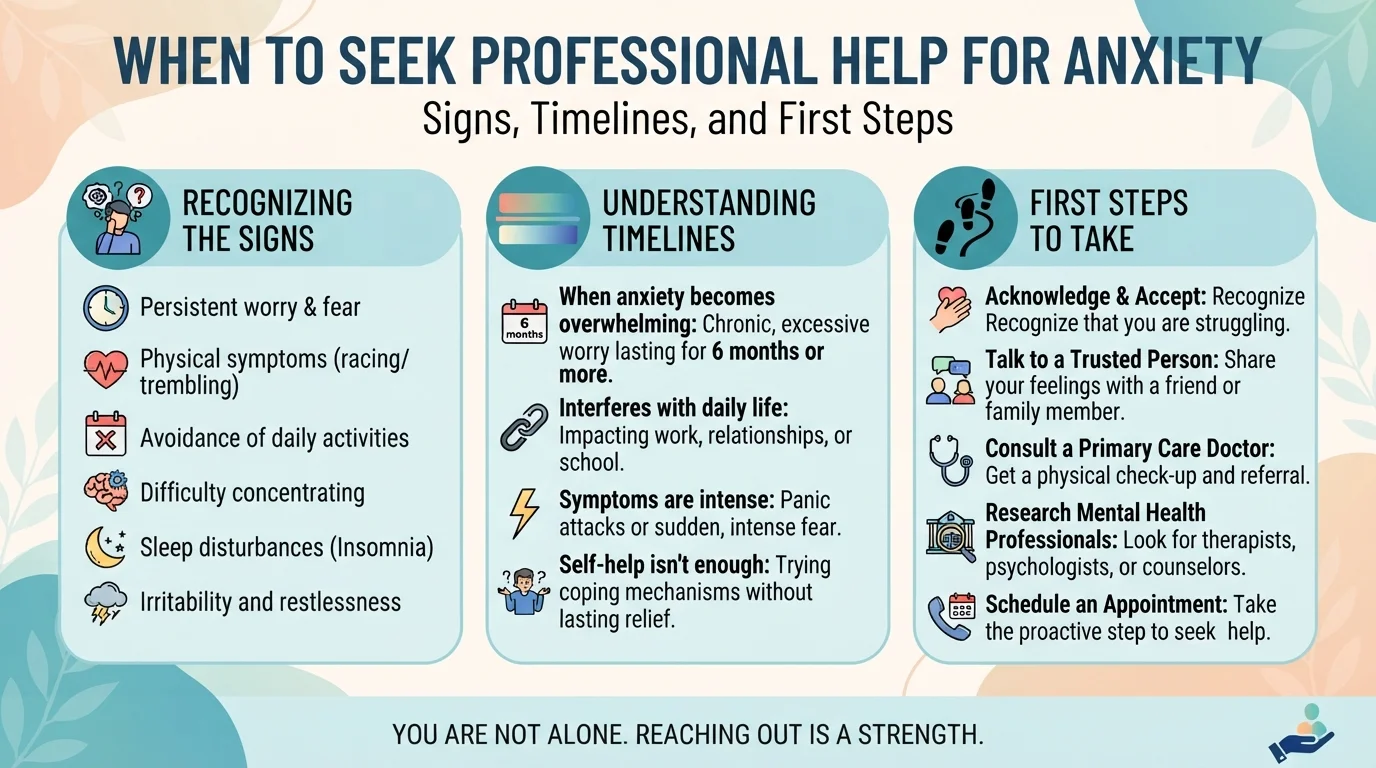
When to Seek Professional Help for Anxiety: Signs, Timelines, and First Steps
Anxiety (anxious distress) is the body's alarm response to a perceived threat, marked by worry, muscle tension, and a faster...
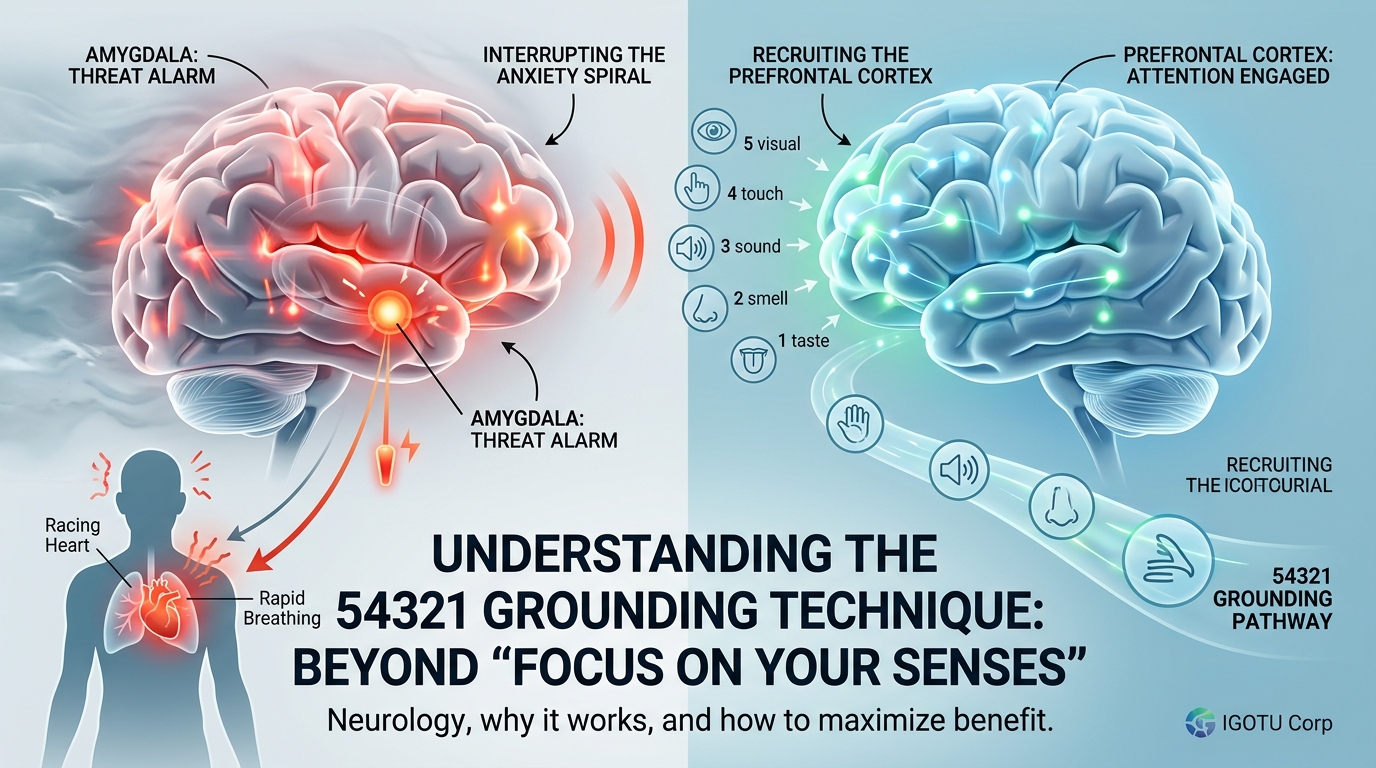
What Is the 54321 Grounding Technique? How Does It Actually Work?
If you have ever looked up what to do during a panic attack, an anxiety spiral, or a moment of...
Can Stress Alone Cause Panic Disorder? IGOTU Corp Guide
The Question That Arrives After the First Attack You were not doing anything dramatic. You were not in danger. You...
ESA Letter vs Service Animal: What’s the Difference in California?
An ESA letter and a service animal are not the same thing under California or federal law, and confusing the...