

Why Am I So Tired? The Exhausting Reality of PTSD Fatigue
Quick Answer: Waking up bone-tired after a full night’s sleep is a real physiological response to trauma, not a lack of effort. PTSD fatigue occurs because your brain’s threat-detection center stays locked in emergency mode 24/7, burning massive amounts of metabolic energy to scan for danger, maintain muscle tension, and disrupt deep sleep cycles. Because ordinary rest cannot turn off this chronic survival loop, true relief requires treating the root trauma. IGOTU Corp connects you with licensed specialists trained in trauma therapies and CBT, helping your nervous system safely process past trauma so you can finally disarm this exhausting background program and reclaim genuine, restorative rest.
The Tiredness That Sleep Doesn’t Fix
You slept eight hours. Maybe nine. And you woke up exhausted.
Not groggy. Not slow to start. Genuinely, bone-deep exhausted — the kind of tired that sits behind your eyes and lives in your muscles and makes the simplest tasks feel like they require more energy than you currently possess. The kind of tired that a nap doesn’t touch, that a weekend of rest doesn’t resolve, that people around you don’t understand because from the outside you look fine and you slept enough and there’s no obvious reason for you to feel this way.
If you are living with PTSD, this exhaustion is not mysterious and it is not your imagination. It has a name — PTSD fatigue — and it has a clear, well-documented neurobiological explanation that has nothing to do with laziness, weakness, or not trying hard enough.
Your nervous system has been running a survival program for an extended period of time. That program is extraordinarily energy-intensive. The exhaustion you feel is the physiological cost of it — as real and as measurable as the exhaustion that follows physical illness or sustained physical labor.
This article explains exactly what is happening in your body and brain to produce PTSD fatigue, why it is so resistant to ordinary rest, and what approaches the research shows actually help.
What Is PTSD Fatigue? Why It’s Different From Ordinary Tiredness
Ordinary tiredness has a straightforward cause and a straightforward remedy. You expended energy — through physical activity, mental effort, insufficient sleep, or illness — and rest replenishes it. The system is relatively simple.
PTSD fatigue is categorically different because its cause is not energy expenditure in the conventional sense. It is the product of a nervous system locked in chronic threat response — operating at a level of sustained vigilance and physiological activation that burns through neurological and endocrine resources continuously, even when you are doing nothing, even when you are asleep, even when the external environment is objectively safe.
The result is a form of exhaustion that rest does not fully address because rest does not turn off the underlying system generating the fatigue. You are not tired because you did too much. You are tired because your nervous system is doing too much — constantly, involuntarily, in the background of everything else you do.
This is not a metaphor. It is a specific set of neurobiological processes that research has documented in detail — and understanding them is the first step toward addressing the fatigue they produce.
The Neuroscience of PTSD Fatigue: What Is Actually Happening in Your Body
Your Amygdala Is Working Overtime
The amygdala — the brain’s threat-detection center — is hyperreactive in PTSD. Where a healthy amygdala scans the environment, identifies genuine threats, and returns to baseline when they pass, the PTSD amygdala is set to a fundamentally different sensitivity level. It detects threats in situations that are objectively safe. It fires in response to sensory stimuli that merely resemble elements of the traumatic experience. It maintains a state of elevated alertness that never fully resolves.
This continuous amygdala activation requires metabolic energy. The brain is an extraordinarily energy-intensive organ — consuming approximately 20% of the body’s total energy budget despite representing only 2% of its mass. When the amygdala is chronically over-activated, the metabolic cost is significant and continuous.
The HPA Axis Is Dysregulated
The hypothalamic-pituitary-adrenal (HPA) axis is the body’s central stress response system — the neurobiological highway that translates threat detection into the physiological stress response. In PTSD, this system is fundamentally dysregulated.
Research consistently shows that people with PTSD have abnormal cortisol patterns — often characterized by lower baseline cortisol than average but heightened cortisol reactivity to stressors. This dysregulation has significant consequences for energy. Cortisol plays a critical role in regulating metabolism, immune function, sleep architecture, and inflammatory processes. When its regulation is disrupted by chronic trauma response, the body’s energy management system is comprehensively impaired.
Hypervigilance Burns Enormous Energy
Hypervigilance — the state of constant environmental scanning for threat that is one of PTSD’s most characteristic symptoms — is metabolically expensive in ways that are easy to underestimate because the activity is invisible.
When you are hypervigilant, your brain is continuously processing the sensory environment at a level of detail and urgency that the non-traumatized brain reserves for genuinely dangerous situations. Every sound is assessed for threat. Every movement in peripheral vision is tracked. Every social interaction is monitored for signs of danger. The body is maintained at a physiological readiness level — elevated muscle tension, accelerated heart rate, heightened sensory sensitivity — that requires continuous energy expenditure.
This happens automatically and continuously, including in environments that are objectively safe and including during periods of apparent rest. You cannot will yourself out of hypervigilance. It is not a choice. And its energy cost does not pause because you are sitting still or trying to relax.
Sleep Disruption Creates a Compounding Debt
PTSD and sleep disruption are so tightly linked that disordered sleep is a diagnostic criterion for the condition. PTSD disrupts sleep through multiple mechanisms simultaneously:
Nightmares and trauma-related dreams interrupt sleep continuity and are often accompanied by the full physiological stress response — heart pounding, sweating, acute fear — which takes time to resolve before sleep can resume.
Hyperarousal at bedtime — the heightened threat sensitivity of PTSD — makes the relaxation of vigilance required for sleep onset neurologically difficult. The bedroom, associated with vulnerability, can itself be a threat trigger.
Fragmented sleep architecture — the disruption of normal cycling through sleep stages — reduces the proportion of slow-wave and REM sleep, both of which are critical for neurological restoration, memory consolidation, and emotional processing.
The result is that people with PTSD frequently spend adequate time in bed but emerge from sleep significantly under-restored — because the quality of the sleep, not just its quantity, has been compromised by the underlying condition.
This sleep deficit compounds the hypervigilance fatigue and the HPA axis dysregulation in a vicious cycle: poor sleep worsens PTSD symptoms, worsened symptoms further disrupt sleep, deepening the fatigue that results from both.
Emotional Processing Is Exhausting Work
PTSD involves continuous, often involuntary emotional processing — intrusive memories, flashbacks, trauma-related thoughts, and the emotional labor of managing triggers and their aftermath. This emotional work is neurologically demanding in ways that are easy to dismiss because it is invisible to others and because it doesn’t feel like “doing” something.
Research on cognitive load and emotional regulation consistently shows that managing intense emotional experience depletes the same executive function resources that cognitive work consumes. The person with PTSD who appears to be resting is often engaged in intense, involuntary neurological work — processing trauma material, managing intrusive thoughts, and regulating emotional responses that arise without warning.
Chronic Inflammation
Emerging research has identified neuroinflammation as a significant feature of PTSD — and inflammation is one of the most direct biological causes of fatigue. The same inflammatory cytokines that produce the fatigue of physical illness are elevated in chronic stress states including PTSD. This means that PTSD fatigue has a genuine inflammatory component — the same mechanism that makes you tired when you have the flu is contributing to your exhaustion from PTSD.
How PTSD Fatigue Shows Up in Daily Life
Understanding the neuroscience is important. So is recognizing the specific ways PTSD fatigue manifests in daily experience — because it does not always look like the tiredness people expect.
Cognitive fog. Difficulty concentrating, word-finding problems, slowed processing speed, difficulty making decisions or holding multiple pieces of information in mind simultaneously. The prefrontal cortex is resource-intensive — when overall neurological resources are depleted by chronic trauma response, higher cognitive functions are the first to show the deficit.
Physical heaviness. A sensation of physical weight, slowness, or resistance to movement that has no clear physical cause. Muscles that feel more fatigued than activity levels would explain. This reflects the chronic muscle tension of hypervigilance, combined with the inflammatory and metabolic effects of sustained stress response.
Emotional numbness alternating with overwhelm. The exhausted nervous system alternates between shutting down emotional responsiveness as a protective measure — producing flatness, disconnection, and the inability to feel positive emotions — and becoming overwhelmed by emotional responses that break through without warning.
Social withdrawal. Social interaction is cognitively and emotionally demanding, and when neurological resources are depleted by PTSD, the cost of social engagement rises beyond what many people can sustain. Withdrawal is often a resource-conservation strategy — the depleted person reducing expenditure wherever possible.
Difficulty completing basic tasks. Tasks that previously felt routine — cooking, cleaning, administrative tasks, hygiene — can feel disproportionately effortful. This is not loss of ability but loss of the neurological resources that make routine tasks feel manageable rather than overwhelming.
Post-exertion crashes. Activities that others find energizing — exercise, social events, even enjoyable experiences — can produce significant fatigue in people with PTSD. The additional neurological and emotional activation of engaging with the world adds to the already-high baseline load, producing a crash afterward that feels disproportionate.
What Makes PTSD Fatigue Worse
Knowing what amplifies the fatigue gives you meaningful leverage over it, even before formal treatment has produced significant improvement.
Avoidance. While avoidance of triggers provides short-term relief, it maintains the PTSD in a state that continues to generate fatigue. The avoided trigger remains threatening in the nervous system’s assessment, and the vigilance required to monitor for and avoid it is its own energy cost.
Alcohol and substance use. Both commonly used to manage PTSD symptoms — and both worsening them over time. Alcohol disrupts sleep architecture, worsens anxiety rebound, and impairs the neurological processing of traumatic material. The short-term relief comes at a significant medium-term energy cost.
Caffeine over-reliance. Using caffeine to manage PTSD fatigue creates a cycle that worsens the underlying sleep disruption and anxiety that generate the fatigue in the first place.
Social isolation. While social withdrawal is understandable as a resource-conservation strategy, sustained isolation removes the social connection that is one of the most potent buffers against the physiological stress of PTSD.
Sedentary behavior. Physical inactivity, while it feels like rest, does not activate the neurobiological mechanisms that genuinely restore the depleted systems — exercise is one of the most potent interventions for HPA axis regulation and neuroinflammation.
What Actually Helps PTSD Fatigue: Evidence-Based Approaches
Trauma-Focused Therapy — Treating the Source
The most direct approach to PTSD fatigue is treating the PTSD that generates it. When the underlying trauma response is addressed, the hypervigilance, sleep disruption, and chronic stress activation that produce the fatigue diminish — and the fatigue diminishes with them.
EMDR (Eye Movement Desensitization and Reprocessing) is one of the most evidence-supported trauma therapies available, endorsed as first-line treatment by the WHO and APA. EMDR facilitates the processing of traumatic memories in ways that reduce their emotional intensity and their capacity to generate the ongoing stress response that drives PTSD fatigue.
CBT (Cognitive Behavioral Therapy) addresses the stuck points — the specific beliefs about the trauma and its implications — that maintain the PTSD response and the chronic stress activation associated with it.
Prolonged Exposure (PE) uses systematic, graduated exposure to trauma memories and trauma-related situations to reduce the threat response they generate — directly addressing the hypervigilance and avoidance that contribute to fatigue.
Sleep Treatment — Breaking the Most Vicious Loop
Because sleep disruption both results from and worsens PTSD fatigue, addressing sleep is one of the highest-leverage interventions available.
CBT-I (Cognitive Behavioral Therapy for Insomnia) is the evidence-based first-line treatment for the chronic insomnia that PTSD produces. It addresses the cognitive and behavioral patterns that maintain sleep disruption — including the hyperarousal at bedtime, the associations between bed and wakefulness, and the anxiety about sleep itself.
Image Rehearsal Therapy (IRT) is a specific CBT-based treatment for PTSD-related nightmares — involving the rehearsal of rescripted versions of recurring nightmares during waking hours. Research shows IRT significantly reduces nightmare frequency and severity, directly improving sleep quality and the restoration it provides.
Exercise — The Underutilized Neurobiological Intervention
Physical exercise is one of the most robustly evidence-supported non-pharmacological interventions for PTSD — and one of the most directly relevant to the fatigue it produces.
Exercise reduces neuroinflammation, normalizes HPA axis function, increases BDNF (Brain-Derived Neurotrophic Factor, which supports neuronal health and resilience), improves sleep quality, and produces the endorphin and endocannabinoid signaling that directly counteracts the chronic stress physiology of PTSD.
The paradox of exercise for PTSD fatigue is that beginning feels hardest when it would help most — the depleted person has the least energy for the activity that would most restore their energy. Starting very small — genuinely very small, ten minutes of walking, not a gym program — and building gradually is the approach most likely to overcome this barrier.
Nervous System Regulation Practices
Practices that directly activate the parasympathetic nervous system — the physiological counterpart of the sympathetic stress response that PTSD keeps elevated — address the fatigue at its neurobiological source.
Diaphragmatic breathing — slow, deep breaths using the diaphragm rather than the chest — activates the vagus nerve, which directly signals the nervous system to shift from sympathetic to parasympathetic activation. Extended exhale breathing (inhaling for four counts, exhaling for six to eight) is particularly effective for activating this response.
Cold water exposure — splashing cold water on the face or brief cold showers — activates the diving reflex, producing rapid parasympathetic activation and heart rate reduction.
Progressive Muscle Relaxation (PMR) — systematically tensing and releasing muscle groups — addresses the chronic muscle tension of hypervigilance and activates the parasympathetic response through the release of held tension.
Social Connection
The research on social support and PTSD outcomes is among the most consistent in trauma literature. Social connection reduces the physiological stress response, buffers against the inflammatory effects of chronic stress, and provides the co-regulation that allows a dysregulated nervous system to return toward baseline more effectively.
This does not mean forcing social interaction when genuinely depleted. It means protecting and prioritizing the specific relationships that provide genuine restoration rather than additional energy demand — and recognizing social connection as a physiological need, not just an emotional preference.
Get Professional Support for PTSD Fatigue Through IGOTU Corp
PTSD fatigue is not something to simply manage through better habits and more rest. It is a symptom of an underlying neurobiological condition that responds to specific, evidence-based treatment — and the most efficient path to resolving the fatigue is treating the PTSD that generates it.
IGOTU Corp connects you with licensed, trauma-specialized mental health professionals trained in EMDR, CBT, Prolonged Exposure, and the full range of evidence-based trauma therapies. Their clinicians understand that PTSD fatigue is real, physiologically grounded, and not a reflection of personal weakness — and they are equipped to address the underlying condition that makes you this tired.
Whether you are newly recognizing your exhaustion as trauma-related or have been living with PTSD for years without access to the right treatment — IGOTU Corp’s licensed therapist network is ready to meet you where you are.
Visit IGOTU Corp today, take their free assessment, and get matched with a licensed trauma specialist who can help you address not just the fatigue but everything driving it. Because you deserve to know what it feels like to be rested — genuinely, fully rested — and that experience is possible with the right support.
Frequently Asked Questions (FAQs) About PTSD Fatigue
Q: Is PTSD fatigue a real medical symptom? Yes. PTSD fatigue is a well-documented, neurobiologically grounded symptom of PTSD with specific, measurable mechanisms — including HPA axis dysregulation, chronic hypervigilance, sleep architecture disruption, and neuroinflammation. It is not psychological weakness or a lack of effort. It is a physiological consequence of sustained trauma response.
Q: Why am I tired all the time even when I sleep enough? Because PTSD fatigue is not primarily caused by insufficient sleep — it is caused by a nervous system running a continuous, energy-intensive threat response. Sleep quantity does not resolve this because the underlying system generating the fatigue does not switch off during sleep. Sleep quality is also typically compromised by PTSD through nightmares, hyperarousal, and fragmented sleep architecture.
Q: Can PTSD fatigue cause physical symptoms? Yes. PTSD fatigue manifests physically through muscle heaviness and tension, chronic pain (which shares neurobiological mechanisms with trauma response), gastrointestinal symptoms, headaches, and immune suppression that increases vulnerability to illness. The physiological effects of chronic stress response on the body are comprehensive and well-documented.
Q: How long does PTSD fatigue last? PTSD fatigue typically persists as long as the underlying PTSD remains active and untreated. With effective trauma therapy — particularly EMDR or CPT — most people experience meaningful reduction in fatigue as the trauma response itself diminishes. The timeline varies by severity and treatment approach, but significant improvement within six to twelve months of appropriate treatment is realistic for most people.
Q: Does exercise help PTSD fatigue or make it worse? With appropriate pacing, exercise significantly helps PTSD fatigue through multiple neurobiological mechanisms. The key is starting genuinely small — ten to fifteen minutes of moderate activity — and increasing gradually. Exercising beyond current capacity can worsen fatigue short-term. But consistent, appropriately paced physical activity is one of the most evidence-supported interventions for both PTSD symptoms and the fatigue they generate.
Q: Is PTSD fatigue the same as depression fatigue? They share significant overlap and frequently co-occur — depression and PTSD have high comorbidity, and both produce fatigue through HPA axis dysregulation, sleep disruption, and reduced motivation. PTSD fatigue has additional specific contributors including hypervigilance energy expenditure and trauma-related sleep disruption that depression alone doesn’t necessarily produce. Accurate diagnosis matters because treatment approaches differ.
Q: How can IGOTU Corp help with PTSD fatigue? IGOTU Corp connects you with licensed trauma specialists who can provide the EMDR, CPT, or Prolonged Exposure therapy that addresses the underlying PTSD — directly reducing the hypervigilance, sleep disruption, and chronic stress activation that produce the fatigue. Visit IGOTU Corp today to take their free assessment and get matched with the right trauma therapist for your needs.
The Bottom Line: Your Exhaustion Makes Complete Sense
The tiredness you are carrying is not a character flaw. It is not laziness. It is not weakness or a failure of discipline or the result of not trying hard enough.
It is the physiological cost of surviving something that your nervous system has not yet been able to process and file away as past. Your amygdala is still on guard. Your HPA axis is still dysregulated. Your sleep is still disrupted by a brain that hasn’t received the signal that the threat has passed. Your body is still paying the metabolic price of a survival response that should have been temporary but has become chronic.
That is not your fault. And it is not permanent.
Effective trauma treatment — delivered by a clinician who understands what you’re actually dealing with — changes the underlying neurobiological state that generates the fatigue. When the trauma response is processed, the hypervigilance softens. Sleep improves. The inflammatory load reduces. The nervous system finds a new baseline that is not emergency level. And the exhaustion that has been your constant companion begins, gradually and meaningfully, to lift.
IGOTU Corp’s licensed trauma specialists are ready to help you get there. Visit IGOTU Corp today — take the free assessment, get matched with a trauma-trained therapist, and take the first step toward understanding what it actually feels like to be rested.
Recent Posts
Related Posts
How to Set Boundaries Without Guilt: Stop People Pleasing
You said yes again. You knew while the words were leaving your mouth that you did not want to say...
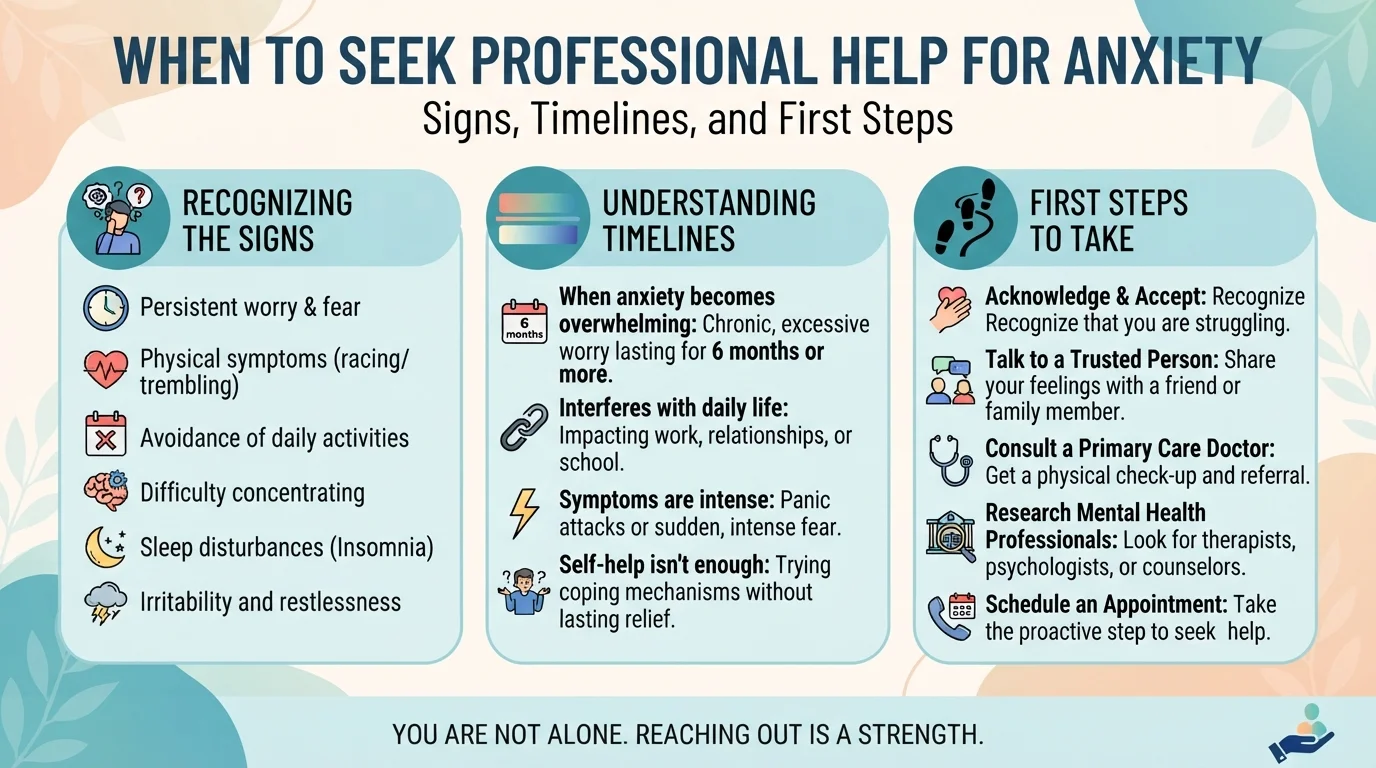
When to Seek Professional Help for Anxiety: Signs, Timelines, and First Steps
Anxiety (anxious distress) is the body's alarm response to a perceived threat, marked by worry, muscle tension, and a faster...
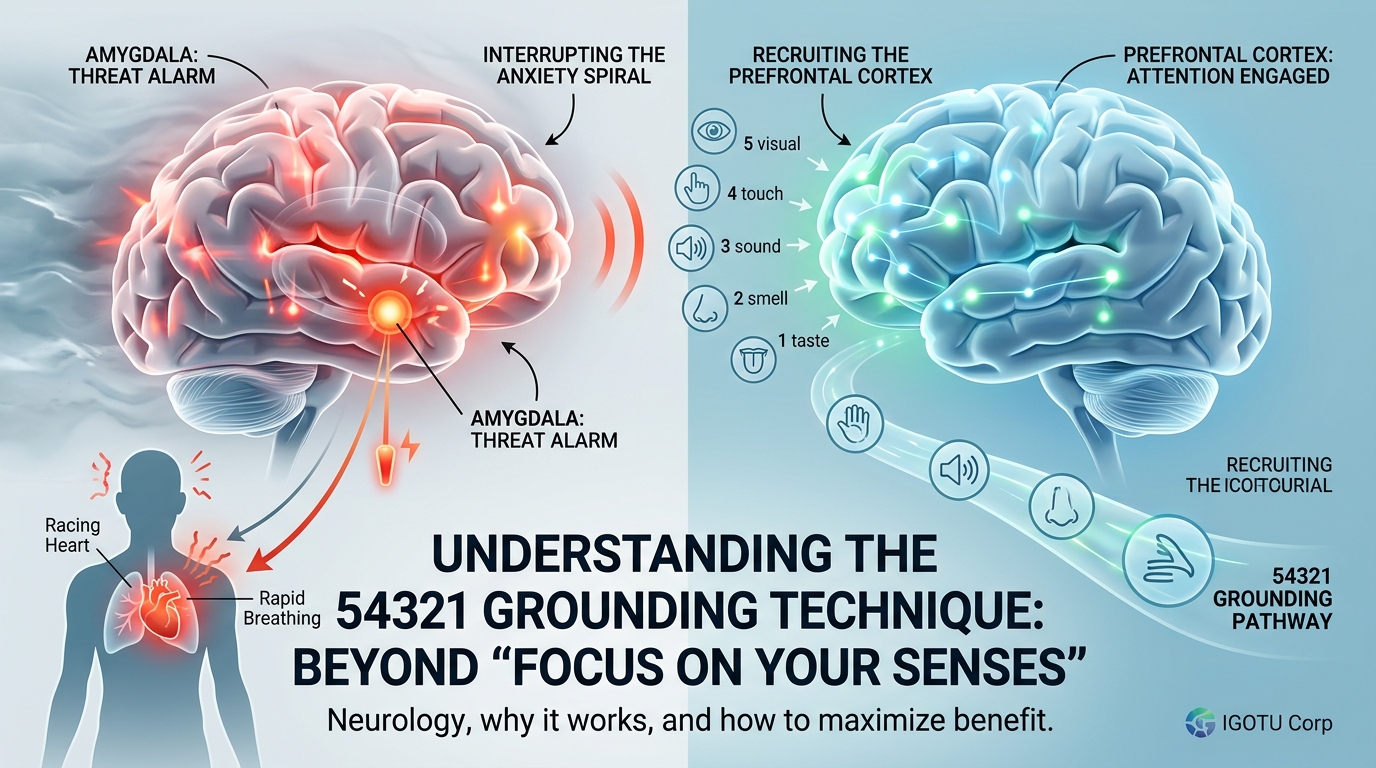
What Is the 54321 Grounding Technique? How Does It Actually Work?
If you have ever looked up what to do during a panic attack, an anxiety spiral, or a moment of...
Can Stress Alone Cause Panic Disorder? IGOTU Corp Guide
The Question That Arrives After the First Attack You were not doing anything dramatic. You were not in danger. You...
ESA Letter vs Service Animal: What’s the Difference in California?
An ESA letter and a service animal are not the same thing under California or federal law, and confusing the...