
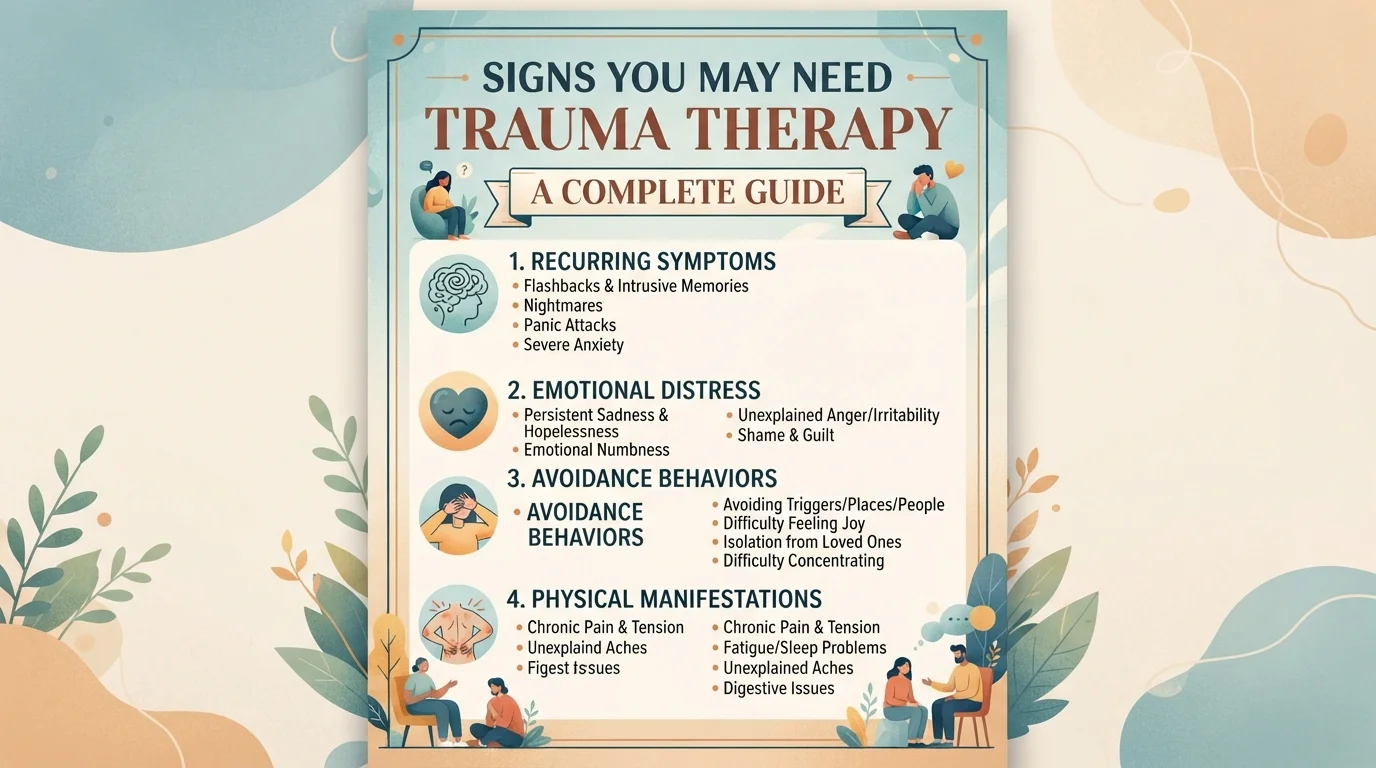
Signs You May Need Trauma Therapy: A Complete Guide
Trauma therapy treats the lasting emotional and physical effects of overwhelming experiences, from a single car accident to years of childhood neglect. About 70 percent of adults experience at least one traumatic event in their lifetime, according to the National Council for Behavioral Health, yet most never connect their current symptoms back to that history. Trauma doesn’t always look like flashbacks on a movie screen. It shows up as a short temper, a locked jaw at night, a relationship you keep sabotaging, or exhaustion that sleep never fixes.
This guide focuses on a narrower question than “what does trauma look like.” If you’ve already read about the signs of emotional trauma in adults, you know the symptom list. What follows is the next step: how to tell when those symptoms have crossed the line from “something I’m managing” into “something that needs a licensed trauma therapist.”
We’ll cover the emotional, physical, and behavioral signs that typically prompt a referral, the role of PTSD and complex PTSD in that decision, how trauma-informed approaches like EMDR and somatic experiencing work, and what starting trauma therapy with IGotU Corp in California actually involves. By the end, you should have a clear answer for yourself, not just a longer list of symptoms.
What Trauma Does to the Body and Mind
Trauma happens when an experience overwhelms your ability to cope in the moment, and your nervous system never fully stands down afterward. The amygdala, your brain’s threat detector, stays on alert. The prefrontal cortex, which handles reasoning and calm judgment, gets quieter. That imbalance is temporary for most people. For others it becomes the new baseline, and that’s when a therapist starts talking about post-traumatic stress disorder (PTSD), acute stress disorder, or complex PTSD from repeated or prolonged exposure.
None of this requires a dramatic single incident. Ongoing neglect, a toxic relationship, workplace bullying, or a frightening medical diagnosis can produce the same nervous system response as an assault or a disaster. Trauma therapy exists for all of these, not just the ones that make headlines.
Common Causes Behind the Need for Trauma Therapy
Trauma doesn’t have a single cause, and it doesn’t require a life-threatening event to qualify. Clients come to trauma-informed therapy for a wide range of experiences, and naming yours can be the first step toward recognizing that your symptoms make sense.
- Childhood neglect or abuse, including emotional, physical, or sexual abuse experienced before age 18
- Accidents and injuries, from car crashes to workplace incidents that involved real or perceived danger
- Loss and grief, particularly sudden or violent deaths of a close family member or friend
- Relationship trauma, including domestic violence, betrayal, or a controlling partner
- Combat and first-responder exposure, from military deployment to repeated exposure to crisis calls
- Medical trauma, such as a frightening diagnosis, a difficult birth, or an ICU stay
- Witnessing violence, even without being directly harmed yourself
Multiple causes often overlap. A person who grew up with childhood neglect and later experienced a car accident may carry both an old wound and a newer trigger, and effective trauma therapy accounts for that layered history rather than treating the most recent event in isolation.
Emotional Signs You May Need Trauma Therapy
Emotional symptoms are usually the first ones people notice, even if they don’t name them as trauma.
- Reliving the event through intrusive memories, nightmares, or flashbacks that feel like the danger is happening again
- Persistent fear, guilt, or shame that doesn’t match your current circumstances
- Emotional numbness or a sense of watching your own life from behind glass
- Sudden anger or irritability that surprises you and the people around you
- Hopelessness about the future, including trouble picturing your life a year from now
One or two of these on a hard week is normal stress. Several of them, most days, for weeks at a time, is the pattern a trauma therapist looks for during an intake assessment.
Hypervigilance deserves its own mention here, because it rarely gets named correctly. It’s the sense of constantly scanning a room for exits, flinching at raised voices, or feeling unable to relax even in genuinely safe settings like your own living room. People experiencing it often describe themselves as “just an anxious person” for years before connecting the pattern back to a specific event or period in their life.
Physical Signs You May Need Trauma Therapy
Trauma lives in the body as much as the mind, which is why so many people end up in a doctor’s office before they end up in a therapist’s. Unexplained physical symptoms are one of the more overlooked signs of trauma in adults.
- Chronic headaches or muscle tension with no clear medical cause
- Digestive problems that flare during stress
- A racing heart, sweating, or a startle response to ordinary noises
- Trouble falling asleep, staying asleep, or waking up rested
- Fatigue that persists even after a full night’s sleep
If you’ve had normal bloodwork and normal scans but the symptoms haven’t budged, that’s often the moment a primary care doctor suggests a referral for trauma-informed care. The body keeps a record of experiences the mind hasn’t fully processed, which is why somatic approaches to trauma therapy work directly with physical sensation rather than only conversation.
Behavioral and Relationship Signs
Trauma changes how people act, sometimes in ways that look like personality traits rather than symptoms.
- Avoiding places, people, or conversations that bring back the memory
- Pulling away from close relationships or becoming anxiously dependent on them
- Using alcohol, drugs, or constant busyness to avoid sitting with the feeling
- Difficulty concentrating or finishing tasks at work
- Self-sabotage, including quitting or withdrawing right before something goes well
Difficulty maintaining relationships and sudden mood changes are two of the clearest markers our team at IGotU Corp watches for during a trauma-informed intake, because they tend to affect a person’s whole life, not just their mood.
Self-sabotage is the one people miss most often. It rarely looks like an obvious act of self-destruction. It looks like turning down a promotion right after earning it, ending a good relationship over a minor disagreement, or quietly stopping effort on a goal you cared about. These patterns usually trace back to a belief formed during the original trauma, often something like “good things don’t last for me” or “if I get close, I’ll get hurt again.”
When Symptoms Cross Into “Time to Get Help”
Three things separate ordinary stress from a pattern that needs professional trauma therapy: duration, interference, and intensity.
Duration means the symptoms have lasted more than a month, not just a rough week. Interference means they’re affecting your job, your relationships, or your ability to function day to day, not just your mood. Intensity means the symptoms include flashbacks, dissociation, thoughts of self-harm, or substance use to cope. Any one of these on its own is worth a conversation with a licensed therapist. All three together mean it’s time to book an appointment, not wait it out.
A helpful gut check: if you’ve tried the usual advice, more sleep, exercise, talking to friends, and nothing has moved the needle in a month or more, that’s not a personal failure. It’s a sign the nervous system needs professional support to reset, not more willpower.
Family and friends sometimes notice these patterns before you do. If someone close to you has mentioned that you seem “on edge” more than usual, or that you’ve pulled back from activities you used to enjoy, that outside observation carries weight. Trauma often narrows a person’s sense of their own baseline, so an outside perspective can catch a shift that feels invisible from the inside.
What Trauma Therapy Actually Involves at IGotU Corp
Trauma therapy isn’t one technique. It’s a set of evidence-based approaches matched to your history and symptoms. At IGotU Corp, licensed trauma therapists use several trauma-informed methods depending on what a client needs:
- EMDR (Eye Movement Desensitization and Reprocessing) to help the brain reprocess stuck memories using guided eye movements, often over 6 to 12 sessions for single-incident trauma
- Somatic experiencing to release trauma the body has stored as tension or chronic pain, using slow-paced body awareness exercises rather than talking alone
- Narrative therapy to help you rebuild the story you tell about what happened, separating your identity from the traumatic event
- Inner child work for trauma rooted in childhood experiences, addressing patterns that formed before you had the language to describe them
- Grounding and mindfulness strategies for day-to-day symptom management between sessions, giving you tools for the moments a flashback or panic spike hits outside the therapy room
Every plan starts with an intake that maps your specific symptoms, whether that’s hypervigilance, dissociation, or relationship avoidance, before a therapist recommends a modality. Sessions are available online and in person from IGotU Corp’s Rancho Cucamonga office, so location doesn’t have to be a barrier to starting. Vincente Mozell, LCSW, and the wider IGotU Corp team draw on more than 20 years of combined experience treating trauma, anxiety, and depression in adults across California.
How to Start Trauma Therapy in California
Getting started takes three steps: reach out, complete an intake assessment, and begin sessions on a schedule that fits your life.
- Call or request an appointment. IGotU Corp can be reached at 909-325-7949 or through the online request form.
- Complete a trauma-informed intake. This identifies your specific symptoms and history so your therapist can recommend the right approach, whether that’s EMDR, somatic work, or a combination.
- Choose online or in-person sessions. Both formats meet HIPAA privacy standards, and many clients start online before deciding whether in-person work fits better.
If you’re not sure you’re “bad enough” to need therapy, that hesitation is common and it’s not a reason to wait. A trauma-informed intake exists specifically to answer that question with you, not for you.
Cost is often the next question, right after “am I bad enough for this.” IGotU Corp can verify your insurance benefits before your first appointment, and the team will walk you through what’s covered so you’re not guessing at pricing while you’re already dealing with symptoms. Most clients find that starting the conversation, even before committing to ongoing sessions, removes more uncertainty than waiting ever does.
Frequently Asked Questions
How do I know if I need trauma therapy or just time to heal?
Time alone rarely resolves trauma symptoms that have lasted longer than a month. If flashbacks, avoidance, or physical symptoms are still present after four to six weeks and are affecting work or relationships, a trauma-informed assessment is the next step rather than waiting further.
Do I need a referral to start trauma therapy in California?
No referral is required to book trauma therapy with IGotU Corp. Clients can request an appointment directly by phone or through the online form and complete an intake without a physician referral.
What happens in a first trauma therapy session?
The first session is an intake assessment, not a deep dive into the traumatic event itself. Your therapist gathers history, current symptoms, and safety information to build a plan before any trauma processing begins.
What’s the difference between trauma therapy and regular talk therapy?
Trauma-informed therapy prioritizes safety and pacing before it asks you to process the event itself. Standard talk therapy may move faster into discussing the experience, which can retraumatize someone whose nervous system isn’t ready.
What types of trauma therapy does IGotU Corp offer?
IGotU Corp offers EMDR, somatic experiencing, narrative therapy, inner child work, and grounding or mindfulness strategies. A therapist matches the approach to your specific symptoms during intake rather than applying one method to every client.
The Bottom Line
Trauma therapy exists for the gap between coping and healing, whether your symptoms show up as flashbacks, chronic headaches, avoided relationships, or all three at once. The emotional, physical, and behavioral signs covered here matter less individually than they do together: when they last more than a month, interfere with daily life, and include intense reactions like dissociation or self-harm thoughts, that combination is the signal to stop managing alone.
IGotU Corp’s licensed trauma therapists build a plan around your specific history, using EMDR, somatic experiencing, narrative therapy, or inner child work depending on what actually fits, available online and in person from Rancho Cucamonga. Getting started takes one phone call to 909-325-7949 or a request through the online form. Recognizing the signs is the hard part. Reaching out is the easier next one.
Recent Posts
Related Posts
How to Set Boundaries Without Guilt: Stop People Pleasing
You said yes again. You knew while the words were leaving your mouth that you did not want to say...
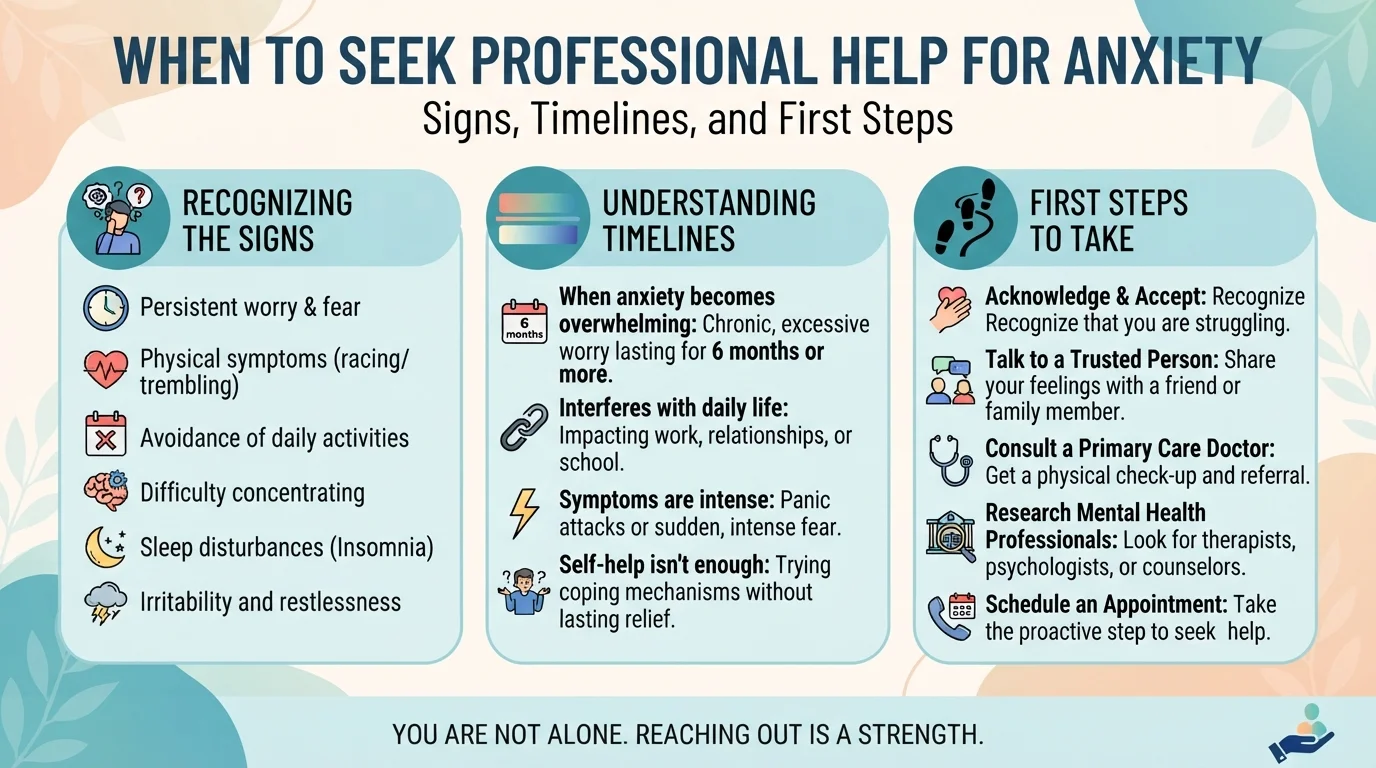
When to Seek Professional Help for Anxiety: Signs, Timelines, and First Steps
Anxiety (anxious distress) is the body's alarm response to a perceived threat, marked by worry, muscle tension, and a faster...
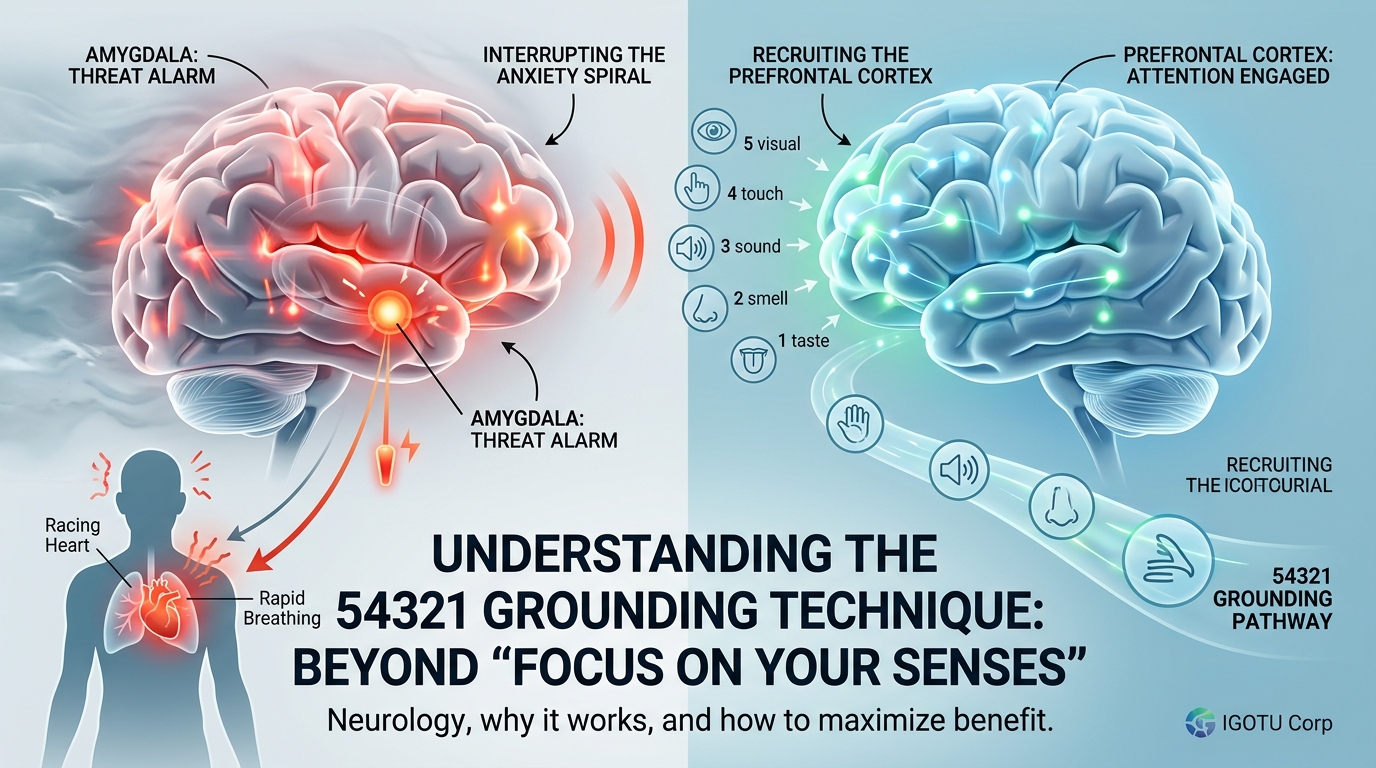
What Is the 54321 Grounding Technique? How Does It Actually Work?
If you have ever looked up what to do during a panic attack, an anxiety spiral, or a moment of...
Can Stress Alone Cause Panic Disorder? IGOTU Corp Guide
The Question That Arrives After the First Attack You were not doing anything dramatic. You were not in danger. You...
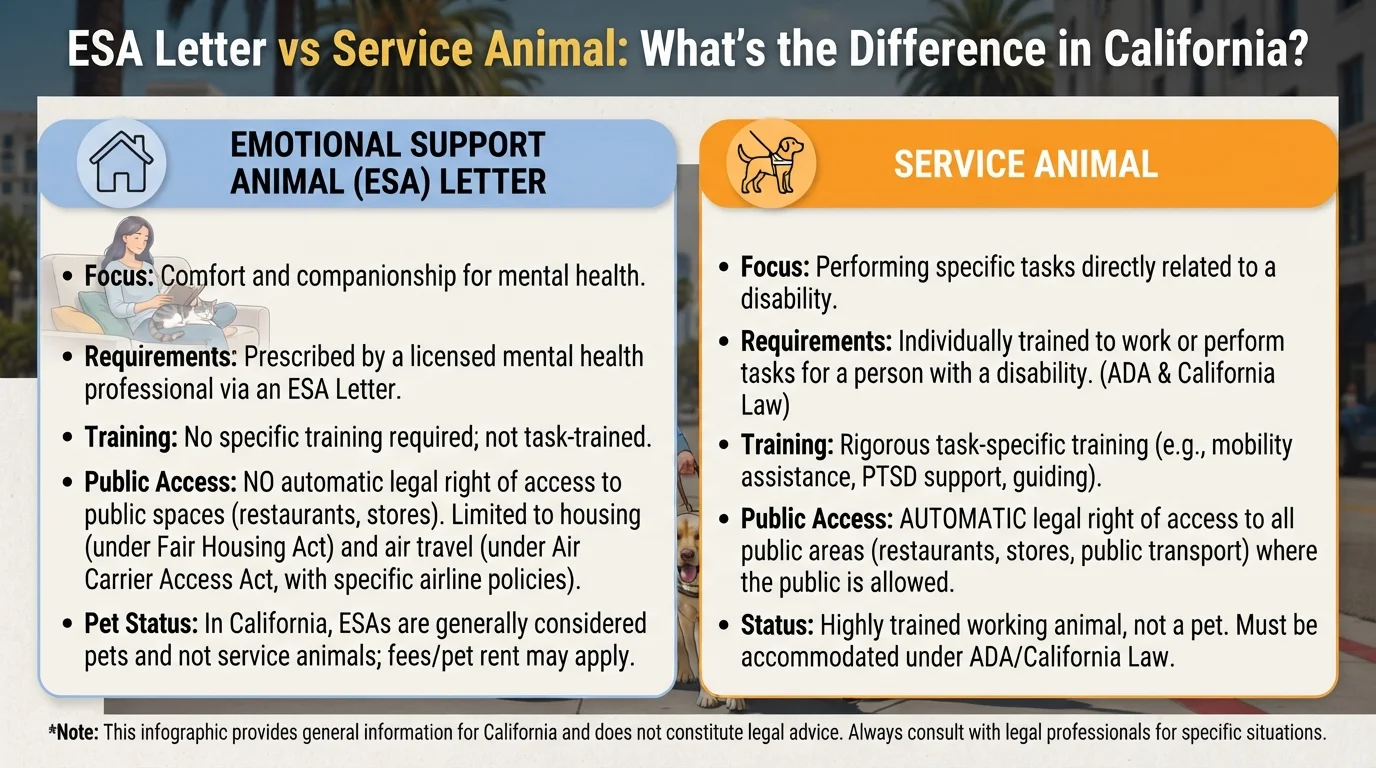
ESA Letter vs Service Animal: What’s the Difference in California?
An ESA letter and a service animal are not the same thing under California or federal law, and confusing the...