
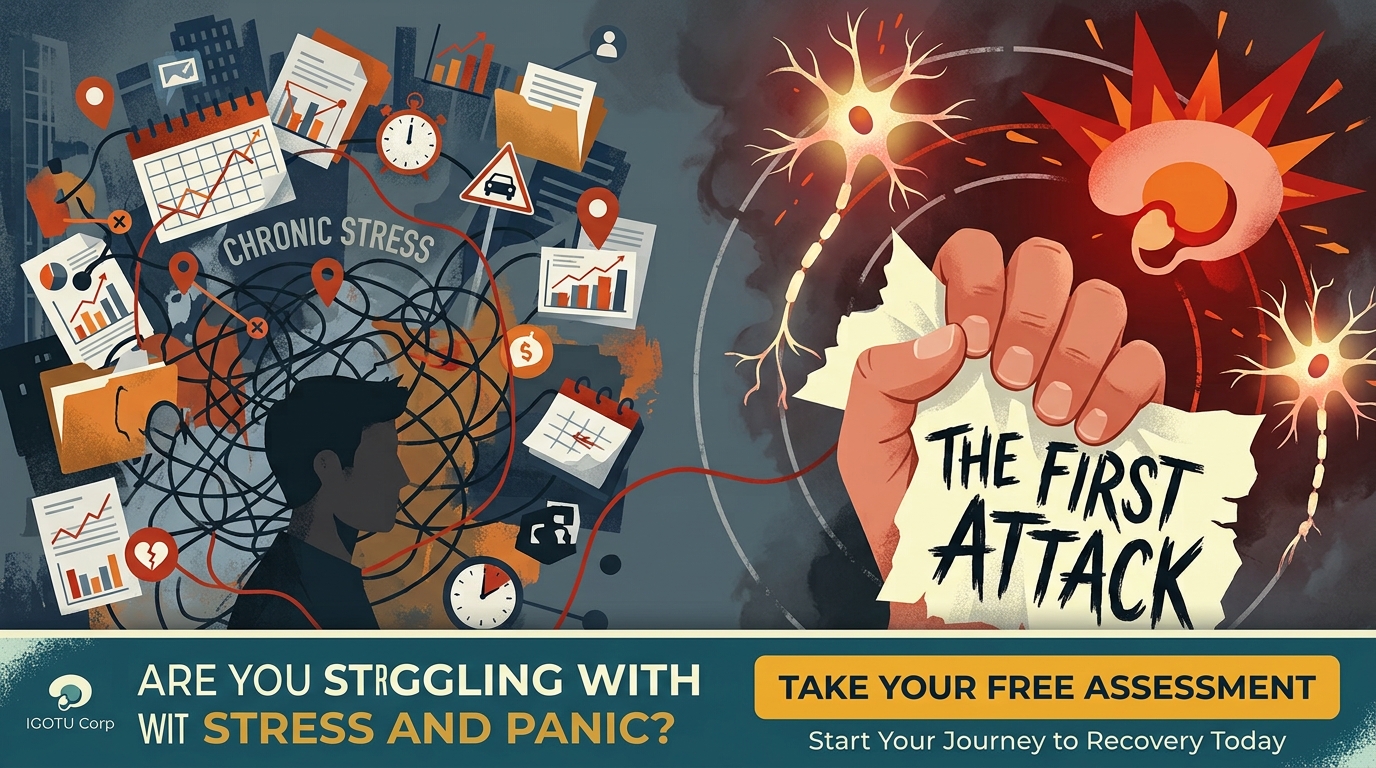
Can Stress Alone Cause Panic Disorder? IGOTU Corp Guide
The Question That Arrives After the First Attack
You were not doing anything dramatic. You were not in danger. You were stressed — the kind of stressed that has become so familiar it barely registers anymore — and then suddenly you were not okay. Your heart was hammering. You could not breathe properly. Every alarm in your body was firing simultaneously and some part of your brain was certain, with complete conviction, that you were dying.
And afterward, once the adrenaline cleared and the shakiness settled, you asked the question that most people ask after a first panic attack: where did that come from?
For many people, the honest answer points toward stress. Not a single traumatic event. Not a dramatic life crisis. Just the accumulated, sustained, unremarkable stress that had been building for months or years — the work pressure, the financial worry, the relationship strain, the chronic overcommitment — that had become so normal it stopped feeling like stress and started feeling like life.
So the question follows naturally: can stress alone cause panic disorder? Or is stress just one factor among many? And if stress played a role in producing your panic attacks, what does that mean for how to address them?
This guide answers those questions with clinical accuracy — explaining exactly how chronic stress contributes to panic disorder, what else is involved, and what the evidence shows about getting from panic attacks to recovery.
First: Understanding What Panic Disorder Actually Is
Before examining stress’s role, a precise understanding of what panic disorder is — and what distinguishes it from having panic attacks — establishes the right target for everything that follows.
A panic attack is a discrete episode of sudden, intense fear accompanied by dramatic physical symptoms: racing heart, chest tightness, shortness of breath, dizziness, numbness, sweating, trembling, derealization, and the overwhelming conviction of impending death or loss of control. It peaks within minutes and typically resolves within 20 to 30 minutes.
Panic disorder is not simply the presence of panic attacks. It is diagnosed when panic attacks recur and are accompanied by two additional features: persistent anticipatory anxiety about future attacks — the fear of the fear — and significant behavioral changes in response to that concern, including avoidance of situations associated with panic.
This distinction matters because stress’s relationship with panic attacks and with panic disorder involves different mechanisms. Stress can trigger panic attacks. The development of panic disorder depends on additional factors — particularly the response to those initial attacks — that determine whether isolated episodes become a self-sustaining clinical condition.
How Chronic Stress Loads the Neurobiological Gun
The relationship between chronic stress and panic disorder is not metaphorical. It operates through specific, well-documented neurobiological pathways that explain precisely how sustained stress creates the conditions in which panic disorder can develop.
HPA Axis Dysregulation: The Stress Hormone System Goes Wrong
The hypothalamic-pituitary-adrenal (HPA) axis is the body’s primary stress response system — the neurobiological machinery that translates threat perception into the cortisol and adrenaline release that mobilizes the body for action.
Under normal circumstances, the HPA axis activates in response to genuine threat and deactivates when the threat passes — returning cortisol and adrenaline to baseline as the parasympathetic nervous system reasserts itself.
Under chronic stress, this deactivation becomes progressively impaired. The HPA axis stays activated. Cortisol remains chronically elevated. The body is maintained in a sustained low-grade state of emergency readiness that was designed to be temporary.
The consequence directly relevant to panic disorder: a chronically activated HPA axis lowers the threshold for acute panic responses. The person whose stress response system has been running at elevated baseline for months requires a smaller trigger to produce a full panic attack than someone whose system is well-regulated. The gun is cocked. The trigger requires less pressure.
Amygdala Sensitization: The Threat Detector Becomes Hyperreactive
The amygdala — the brain’s primary threat-detection center — is profoundly affected by chronic stress. Research using neuroimaging consistently shows that chronic stress increases amygdala volume and reactivity, while simultaneously reducing the connectivity between the amygdala and the prefrontal cortex that normally allows rational appraisal to modulate emotional responses.
The practical consequence: a stress-sensitized amygdala fires more easily, more intensely, and with less capacity for prefrontal modulation than a well-regulated one. Normal physical sensations — a slightly elevated heart rate, a brief dizziness, a moment of breathlessness — that would previously register as unremarkable are now more likely to trigger the amygdala’s threat response.
This is the neurobiological foundation of the interoceptive sensitivity that characterizes panic disorder — the heightened awareness of and reactivity to internal bodily sensations that turns normal physiological fluctuations into panic triggers. Chronic stress does not just make panic attacks more likely to occur. It creates the neurobiological conditions in which internal sensations become threatening.
Sleep Disruption: The Compounding Factor
Chronic stress disrupts sleep through cortisol elevation, hyperarousal, and the racing cognitive activity that makes sleep onset and sleep maintenance difficult. And sleep deprivation — even partial, chronic sleep deprivation of the kind that accompanies sustained stress — produces measurable effects on the anxiety system.
Sleep-deprived brains show heightened amygdala reactivity, reduced prefrontal regulation of emotional responses, and lower thresholds for stress response activation. In the context of panic disorder risk, this means that the sleep disruption chronic stress produces is not merely an associated problem — it actively amplifies the neurobiological vulnerability that makes panic disorder more likely.
Research published in the journal Sleep found that people with insomnia were significantly more likely to develop panic disorder than those without sleep disruption — independently of other anxiety factors. Sleep disruption and panic disorder are not simply correlated. Sleep disruption is a causal contributor to panic vulnerability.
Autonomic Nervous System Imbalance
Chronic stress persistently elevates sympathetic nervous system tone — the fight-or-flight arm of the autonomic nervous system — while reducing parasympathetic tone, the rest-and-digest counterbalance that allows the system to return to baseline.
This autonomic imbalance means the chronically stressed person is already operating closer to the physiological state of a panic attack than someone with balanced autonomic regulation. The difference between their resting state and a full panic response is smaller. The distance from stressed-but-managing to acutely panicking requires less additional activation to cross.
Can Stress Alone Cause Panic Disorder? The Honest Answer
Here is the honest, clinically accurate answer: stress alone is rarely sufficient to cause panic disorder, but chronic stress is one of the most significant and most common precipitating factors in its development.
Panic disorder appears to require the convergence of several factors:
Biological vulnerability. Panic disorder has meaningful heritability — twin studies estimate genetic contribution at approximately 40-48%. Some people’s nervous systems are more reactive to stress, more prone to interoceptive sensitivity, and more likely to generate the catastrophic misinterpretation of physical sensations that drives panic disorder. This biological predisposition is not destiny — it is a vulnerability that requires other factors to become clinical disorder.
A precipitating stressor or stress load. For the majority of people with panic disorder, there is an identifiable period of elevated stress preceding the onset of panic attacks. Research consistently shows that life stress events precede panic onset in a significant proportion of cases — suggesting that stress functions as the precipitating factor that activates a pre-existing vulnerability.
The catastrophic response to the first panic attack. This is perhaps the most important factor in the conversion of isolated panic attacks into panic disorder — and it is the factor that stress has the most indirect but significant influence on. The chronically stressed person who experiences their first panic attack is more likely to interpret it catastrophically, less likely to have the cognitive resources to accurately contextualize it, and more likely to develop the anticipatory anxiety that transforms isolated panic into a self-sustaining disorder.
The maintenance behaviors that follow. Avoidance of situations associated with panic. Safety behaviors designed to prevent or escape attacks. The progressive life restriction that develops as feared situations multiply. These are the behavioral factors that maintain panic disorder once it is established — and chronic stress reduces the psychological resources available to resist them.
So: stress alone does not mechanically produce panic disorder the way a specific pathogen produces a specific illness. But chronic stress is a potent precipitating and maintaining factor — one that activates biological vulnerabilities, sensitizes the neurobiological systems involved in panic, depletes the psychological resources that would otherwise prevent isolated panic attacks from becoming panic disorder, and maintains the physiological arousal that makes recovery from panic disorder harder.
For many people, stress is the primary modifiable factor in the development of their panic disorder — which means that stress treatment is an important component of panic disorder treatment, not merely a lifestyle consideration to be addressed separately.
The Stress-Panic Spiral: How It Self-Perpetuates
One of the most important things to understand about the stress-panic relationship is that it does not operate in one direction. Once panic disorder is established, it generates its own stress — creating a bidirectional spiral that can feel increasingly difficult to escape.
Chronic stress precipitates panic attacks. Panic attacks produce anticipatory anxiety — the fear of future attacks — which is itself a form of chronic stress that maintains HPA axis activation and amygdala sensitization. Maintained HPA activation and amygdala sensitization make future panic attacks more likely. More panic attacks deepen anticipatory anxiety and the behavioral avoidance that restricts life and eliminates the activities that would otherwise provide stress relief.
The spiral tightens. The person is more stressed because of the panic disorder, which makes the panic disorder worse, which makes them more stressed. External stressors continue. The psychological resources available to manage both the panic and the stress deplete progressively.
Understanding this spiral is not meant to produce hopelessness. It is meant to explain why panic disorder does not typically resolve on its own even when the original stressor that precipitated it has passed — and why treatment must address both the panic disorder’s specific mechanisms and the stress load that precipitates and maintains it.
Stress vs. Panic: Recognizing Where You Are in the Progression
For the person asking whether their experience is severe stress or emerging panic disorder, a practical framework for self-assessment helps clarify the clinical picture — which determines what kind of support is most appropriate.
Signs your experience may be primarily stress-related:
Your episodes of acute distress are consistently connected to identifiable stressors — they arrive in relation to specific worries or situations, not spontaneously. The physical symptoms of acute episodes diminish reliably when the stressor passes or is resolved. You have not developed anticipatory fear about the episodes themselves — you are not afraid of having another one in a way that persists between stressors. Your behavior has not changed significantly to avoid situations associated with the episodes.
Signs your experience may be developing into panic disorder:
You have had episodes that arrived without a clear trigger, or that arrived in situations that should have been safe and unremarkable. You have developed ongoing concern about when the next episode will occur. You find yourself monitoring your body for early warning signs of another attack. You have started avoiding situations, activities, or contexts associated with previous attacks — or where escape would be difficult if an attack occurred. The episodes have a quality of sudden overwhelming intensity that peaks rapidly rather than building gradually.
This self-assessment is a starting point, not a diagnosis. Accurate differential assessment between chronic anxiety responses, panic attacks, and panic disorder requires clinical evaluation by a licensed mental health professional — because the presentations overlap and because the treatment implications differ meaningfully.
What Stress Management Alone Cannot Do
If chronic stress is such a significant factor in panic disorder, the logical conclusion might be that stress management is the solution — that reducing stress should resolve panic disorder.
This is partially true and importantly incomplete.
Reducing chronic stress removes a significant precipitating and maintaining factor, which matters and should be part of a comprehensive approach. But stress reduction alone does not address several of the maintaining mechanisms of established panic disorder:
Interoceptive sensitivity. The sensitized response to internal body sensations that characterizes panic disorder does not resolve when stress is reduced. The body has learned to treat its own normal fluctuations as threatening — a learned response that requires specific unlearning through exposure-based treatment, not through stress reduction alone.
Catastrophic misinterpretation. The automatic interpretation of physical sensations as dangerous — a thought pattern that operates in milliseconds, below the level of conscious reasoning — is not corrected by stress reduction. It requires the specific cognitive restructuring of CBT to identify, challenge, and gradually replace.
Anticipatory anxiety. The ongoing fear of future panic attacks — which is itself what most significantly impairs the quality of life of people with panic disorder — does not resolve when stress is reduced. It persists as an established anxiety pattern that requires targeted therapeutic work.
Avoidance behaviors. The progressive behavioral restriction that develops around panic disorder does not reverse spontaneously when stress is reduced. It requires systematic exposure work that deliberately approaches avoided situations and demonstrates their safety.
Stress management is a meaningful component of panic disorder treatment. It is not sufficient as a standalone intervention for established panic disorder with significant anticipatory anxiety and avoidance.
What Actually Works: Evidence-Based Treatment for Stress-Related Panic Disorder
Cognitive Behavioral Therapy — The Cornerstone
CBT for panic disorder is the most extensively researched and most consistently effective treatment — with multiple large randomized controlled trials demonstrating response rates of 70-90% and long-term maintenance of gains that exceed those of medication alone.
The specific CBT protocol for panic disorder — Panic Control Treatment — targets the three primary maintaining mechanisms:
Psychoeducation about the physiology of panic — explaining precisely what happens in the body during a panic attack and why the symptoms, while terrifying, are not dangerous. This psychoeducational component alone often produces immediate reduction in the fear-of-fear that drives anticipatory anxiety.
Cognitive restructuring targeting the catastrophic misinterpretation of physical sensations — “my heart is pounding means I’m having a heart attack” becomes “my heart is pounding because my sympathetic nervous system activated, which is uncomfortable but not dangerous.”
Interoceptive exposure — deliberately inducing the physical sensations associated with panic through exercises including spinning in a chair, running in place, breathing through a narrow straw, or shaking the head side to side. This exposure is the most counterintuitive and most powerful component of panic treatment — training the nervous system through direct experience that these sensations are not threats, gradually extinguishing the amygdala’s threat response to them.
Situational exposure addressing the agoraphobic avoidance that develops around panic — systematically approaching avoided situations in a graded hierarchy until they no longer trigger anticipatory anxiety.
Stress Reduction as Adjunct Treatment
Addressing the chronic stress that precipitated and maintains panic disorder is an important adjunct to the specific panic disorder treatment above — not as a replacement but as a component that removes a significant amplifying factor.
Mindfulness-Based Stress Reduction (MBSR) has documented effects on HPA axis regulation, amygdala reactivity, and parasympathetic nervous system restoration — directly addressing the neurobiological changes that chronic stress produced and that contribute to panic vulnerability.
Progressive Muscle Relaxation (PMR) and diaphragmatic breathing restore parasympathetic tone, counteract the autonomic imbalance of chronic stress, and provide practical in-the-moment tools for managing the physiological arousal that precedes and accompanies panic.
Lifestyle interventions addressing sleep, exercise, caffeine reduction, and the structural sources of chronic stress produce meaningful reductions in the physiological stress load that lowers the panic threshold.
Medication
SSRIs and SNRIs are first-line pharmacological treatments for panic disorder — reducing both the frequency and intensity of panic attacks and the anticipatory anxiety between them. For panic disorder with significant stress-related HPA axis dysregulation, medication can provide the neurobiological stabilization that makes the cognitive and behavioral work of CBT more accessible.
Medication and CBT together consistently outperform either treatment alone for panic disorder — with medication addressing the neurobiological substrate and CBT producing the lasting cognitive and behavioral change that maintains recovery after treatment ends.
Get Comprehensive Panic Disorder Support Through IGOTU Corp
The relationship between stress and panic disorder is real, clinically documented, and practically important — but it is also more complex than a simple cause-and-effect relationship that resolves when stress is reduced. Panic disorder, once established, has its own mechanisms that require targeted clinical intervention alongside stress management.
IGOTU Corp connects you with licensed mental health professionals who specialize in panic disorder, anxiety, and the stress-related presentations that most commonly precede and maintain them. Their clinicians understand that panic disorder rarely exists in isolation from the stress context that produced it — and they are equipped to provide treatment that addresses both the specific mechanisms of panic disorder and the broader stress landscape in which it developed.
Whether you are in the early stages of recognizing that what you have been experiencing may be more than severe stress, or have been living with panic attacks and anticipatory anxiety for months without adequate clinical support — IGOTU Corp’s licensed therapist network is ready to assess your specific situation accurately and match you with the treatment approach the evidence shows works.
Visit IGOTU Corp today and take their free anxiety and panic assessment. Get matched with a licensed specialist who will help you understand exactly what is driving your experience — and build the comprehensive treatment plan that addresses it fully.
Frequently Asked Questions (FAQs) About Stress and Panic Disorder
Q: Can work stress alone trigger panic disorder?
Workplace stress is one of the most commonly reported precipitating factors for panic disorder onset. Sustained occupational stress produces the HPA axis dysregulation, amygdala sensitization, sleep disruption, and autonomic imbalance that lower the threshold for panic attacks. Work stress alone rarely causes panic disorder in the absence of biological vulnerability — but it is a potent trigger for people who carry that vulnerability, and workplace stress is consistently identified in clinical histories of panic disorder onset.
Q: How long does stress need to be present before it can trigger panic disorder?
Research does not establish a precise threshold — the relationship between stress duration and panic onset varies significantly by individual, stress severity, biological vulnerability, and available coping resources. Clinical histories of panic disorder commonly reveal sustained stress periods of several months to over a year preceding onset. Acute, intense stress can also precipitate panic attacks in predisposed individuals without the prolonged buildup.
Q: If I reduce my stress, will my panic disorder go away on its own?
Stress reduction removes a significant precipitating and maintaining factor, which is genuinely meaningful. But for established panic disorder with anticipatory anxiety and avoidance, stress reduction alone is typically insufficient. The interoceptive sensitivity, catastrophic misinterpretation of physical sensations, and avoidance behaviors that characterize panic disorder are learned neurobiological patterns that require specific exposure-based and cognitive treatment to change.
Q: Is panic disorder from stress different from panic disorder from other causes?
The clinical presentation of panic disorder is similar regardless of precipitating factor. What differs is the broader treatment context — panic disorder with significant ongoing chronic stress requires attention to the stress load as part of treatment, as stress is maintaining the panic vulnerability. Panic disorder that developed in a single acute stressor context may have less ongoing precipitating stress to address, focusing treatment more narrowly on the panic mechanisms themselves.
Q: Can panic disorder be completely resolved, or is it always chronic?
Research on long-term outcomes for treated panic disorder is genuinely encouraging. Studies show that 70-90% of people who complete CBT-based panic treatment experience significant, lasting improvement — with many no longer meeting diagnostic criteria at long-term follow-up. Panic disorder is among the more treatment-responsive anxiety disorders. Untreated panic disorder tends to be more chronic and more likely to expand in scope through progressive avoidance.
Q: What is the fastest way to stop a panic attack caused by stress?
The physiological sigh — two sharp inhales through the nose followed by a long, slow exhale through the mouth — has the strongest evidence for rapid reduction of physiological arousal during acute panic. Cold water on the face activates the diving reflex and immediately reduces heart rate. Accepting rather than fighting the panic — recognizing it as a stress response that will pass rather than a danger to be escaped — reduces the fear-of-fear amplification that prolongs attacks.
Q: Should I see a therapist or a psychiatrist for stress-related panic disorder?
Ideally both, or a therapist who coordinates with a prescribing provider. CBT from a licensed therapist trained in panic disorder protocols addresses the psychological and behavioral maintaining mechanisms. Medication from a psychiatrist or primary care provider addresses the neurobiological substrate. Both together produce better long-term outcomes than either alone. IGOTU Corp can connect you with licensed therapists who specialize in panic disorder and who coordinate with prescribing providers when medication is indicated.
Q: How does IGOTU Corp help with stress-related panic disorder specifically?
IGOTU Corp connects you with licensed therapists who specialize in panic disorder and stress-related anxiety — clinicians trained in CBT panic protocols, stress management integration, and the comprehensive treatment approach that addresses both the panic disorder mechanisms and the stress context that produced them. Visit IGOTU Corp today to take the free assessment and get matched with the right specialist for your specific situation.
The Bottom Line: Can stress alone cause panic disorder?
Chronic stress can load the neurobiological conditions for panic disorder. It sensitizes the amygdala. It dysregulates the HPA axis. It disrupts sleep, depletes coping resources, and reduces the psychological distance between stressed-but-functioning and acutely panicking. For many people, stress is the primary identifiable factor in the onset of their panic disorder.
But once panic disorder is established, it develops its own engine — the fear of fear, the interoceptive sensitivity, the anticipatory anxiety, the avoidance — that runs independently of the original stress trigger and that does not resolve simply because the stress is reduced.
This means two things simultaneously: addressing your stress matters and is a legitimate part of treatment, and it is not sufficient without the specific clinical interventions that target panic disorder’s maintaining mechanisms directly.
The good news is that panic disorder is one of the most treatment-responsive conditions in psychiatry. The right treatment, from the right clinician, produces genuine, lasting recovery for the majority of people who receive it. Not management of an ongoing condition — recovery from a clinical episode that leaves you with skills and understanding that make recurrence less likely and recovery faster if it does occur.
You do not have to choose between managing your stress and treating your panic disorder. A comprehensive approach does both — and IGOTU Corp’s licensed specialists are equipped to build that approach with you.
Visit IGOTU Corp today. Take the free assessment. Find out what comprehensive panic disorder treatment looks like when it is built around your specific experience — and take the first real step toward a nervous system that no longer lives in the shadow of the next attack.
Recent Posts
Related Posts
How to Set Boundaries Without Guilt: Stop People Pleasing
You said yes again. You knew while the words were leaving your mouth that you did not want to say...
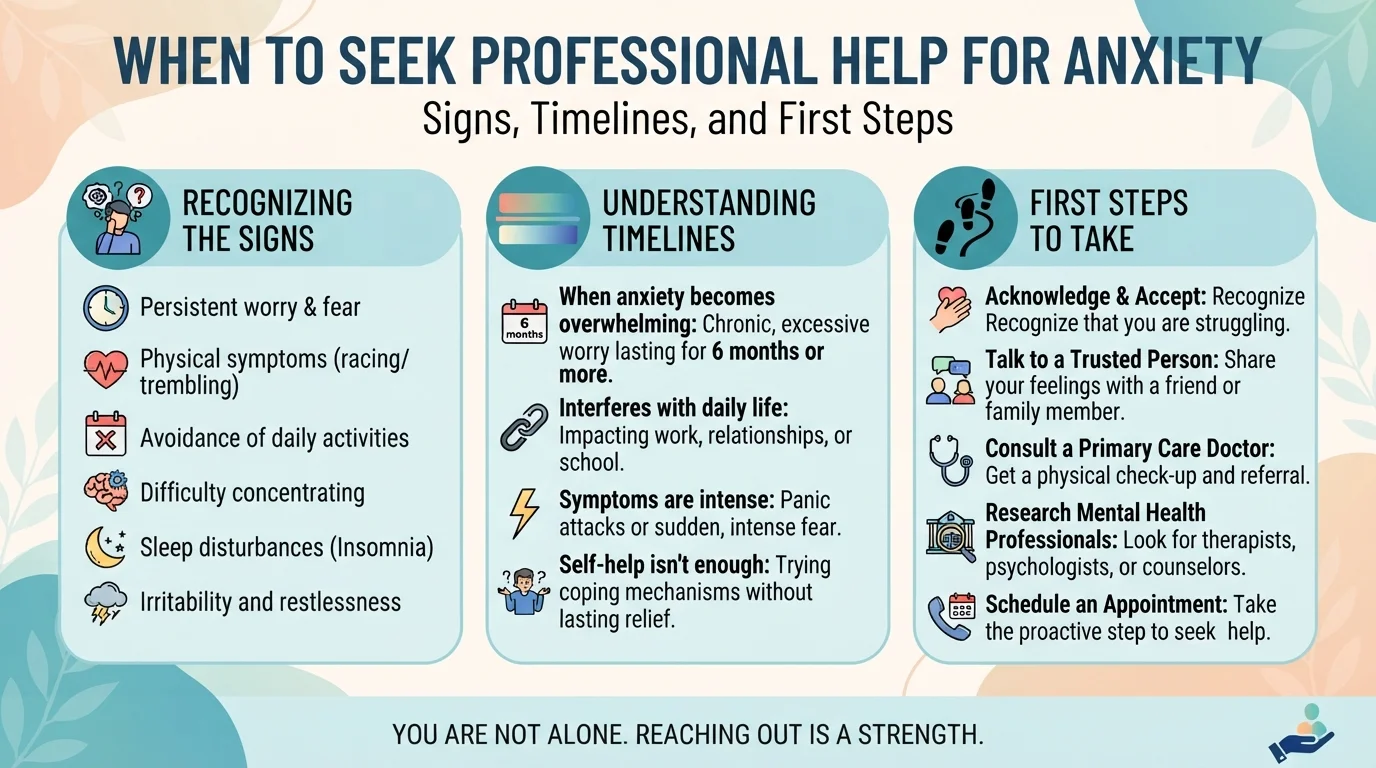
When to Seek Professional Help for Anxiety: Signs, Timelines, and First Steps
Anxiety (anxious distress) is the body's alarm response to a perceived threat, marked by worry, muscle tension, and a faster...
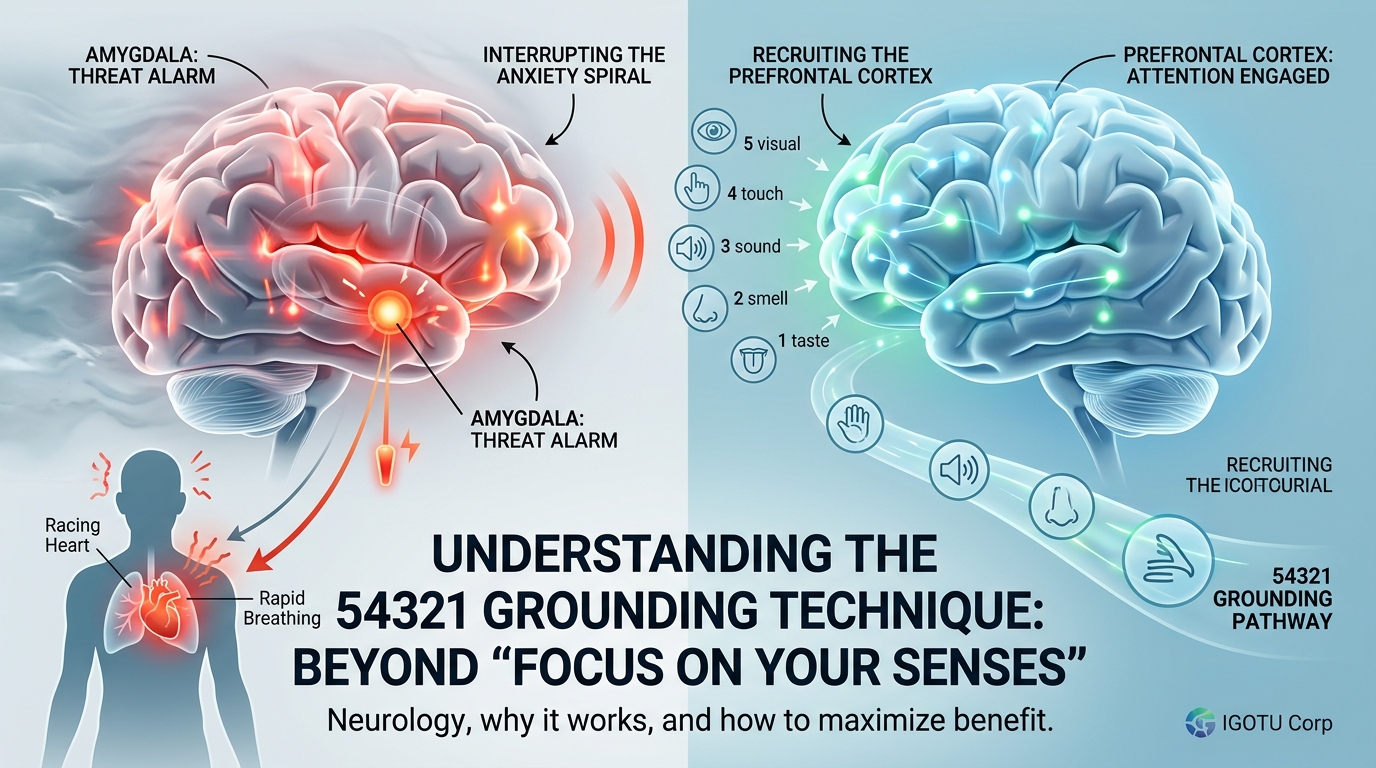
What Is the 54321 Grounding Technique? How Does It Actually Work?
If you have ever looked up what to do during a panic attack, an anxiety spiral, or a moment of...
Can Stress Alone Cause Panic Disorder? IGOTU Corp Guide
The Question That Arrives After the First Attack You were not doing anything dramatic. You were not in danger. You...
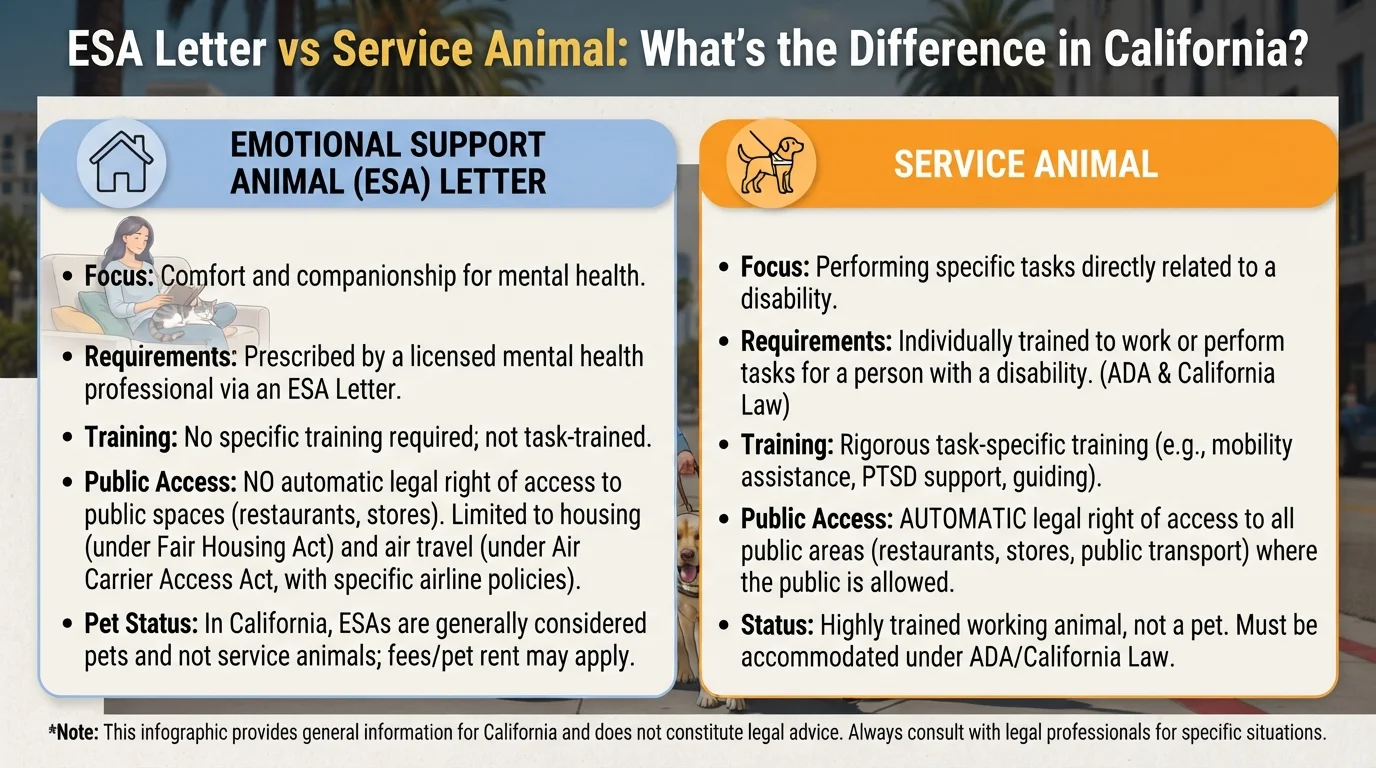
ESA Letter vs Service Animal: What’s the Difference in California?
An ESA letter and a service animal are not the same thing under California or federal law, and confusing the...