
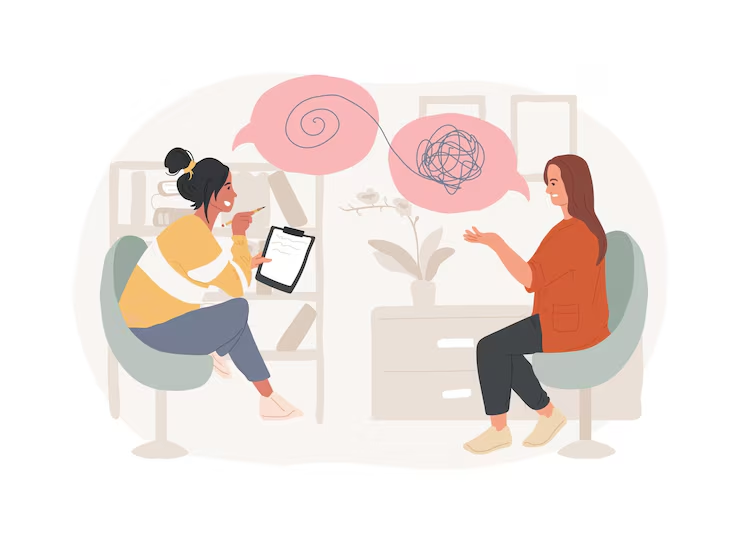
Which Therapy is Best for Depression in 2026? Therapist for Depression
Quick Answer
Cognitive Behavioral Therapy (CBT) is the most widely recommended first-line therapy for depression, supported by decades of clinical evidence and endorsed by major psychiatric associations including the APA. For many people, combining CBT with antidepressant medication produces the best outcomes. In 2026, newer options like ketamine-assisted therapy, TMS, and Mindfulness-Based Cognitive Therapy (MBCT) are also offering strong results, particularly for treatment-resistant depression.
What Is Therapy for Depression?
Therapy for depression — also called psychotherapy or “talk therapy” — is a structured, evidence-based form of treatment where a trained mental health professional helps a person understand, manage, and overcome depressive symptoms. Unlike medication, therapy works by addressing the underlying thought patterns, behaviors, and relationship dynamics that contribute to or worsen depression.
Therapy can help you identify what triggers your low moods, develop healthier ways of thinking and coping, and rebuild your sense of motivation and hope. Research consistently shows that for mild to moderate depression, psychotherapy alone can be just as effective as antidepressants — and for severe depression, combining both often yields the best results.
The American Psychological Association (APA) currently recommends seven distinct psychotherapy interventions for depression in adults, alongside second-generation antidepressants such as SSRIs and SNRIs.
Best Types of Therapy for Depression in 2026
Not all therapies are created equal when it comes to depression. Here are the most evidence-supported approaches, ranked by the strength of clinical backing:
Cognitive Behavioral Therapy (CBT)
The most studied and recommended therapy for depression. CBT helps you identify negative thought patterns and replace them with balanced, realistic ones. Typically 12–20 weekly sessions.
Interpersonal Therapy (IPT)
Focuses on improving communication and relationships that cause or worsen depression. Especially effective for depression linked to grief, role transitions, or relationship conflict.
Mindfulness-Based CBT (MBCT)
Combines CBT with mindfulness meditation. Designed specifically for people who experience repeated bouts of depression. Reduces relapse risk by up to 50% in some studies.
Behavioral Activation (BA)
Counters the withdrawal and inactivity that reinforce depression by re-engaging you in meaningful, pleasurable activities. Often used for 20–24 sessions.
Dialectical Behavior Therapy (DBT)
A form of CBT that adds skills in emotional regulation, distress tolerance, and mindfulness. Best for people with intense emotional swings alongside depression.
Psychodynamic Therapy
Explores how unconscious patterns, early life experiences, and relationships shape your current emotional state. Suited for people wanting in-depth self-understanding.
Key research finding
- CBT is recommended by the APA Clinical Practice Guideline as the primary evidence-based psychotherapy for depression in adults.
- MBCT reduces relapse rates in people with three or more previous depressive episodes, making it highly valuable for chronic sufferers.
- Behavioral Activation is considered equally effective to CBT in several large trials, and is often easier to access.
- Combining any psychotherapy with medication produces better long-term outcomes than either alone for moderate to severe depression.
What Kind of Therapist Should I See for Depression? Therapist for Depression
One of the most common questions people ask is: “Which type of mental health professional is right for me?” The answer depends on the severity of your depression, whether you need medication, and what kind of support you’re looking for.
| Provider Type | Training | Can Prescribe? | Best For |
|---|---|---|---|
| Psychiatrist | Medical degree + psychiatric residency | Yes | Severe depression; medication management; treatment-resistant cases Best for complex cases |
| Psychologist (PhD/PsyD) | Doctoral degree in psychology | In some states only | Diagnosis, psychological testing, and CBT or other evidence-based therapies |
| Licensed Therapist for Depression / Counselor (LCSW, LPC, MFT) | Master’s degree in counseling or social work | No | Mild to moderate depression; talk therapy; relationship or situational issues Most accessible |
| Primary Care Doctor (GP) | Medical degree | Yes | Initial assessment; basic antidepressant prescriptions; referrals |
For many people, the most effective approach combines medication management from a psychiatrist with regular psychotherapy from a licensed therapist or psychologist. These two providers can collaborate on your care plan.
How to Choose the Right Therapist for Depression
Finding the right fit matters as much as the therapist’s credentials. Research shows that the therapeutic relationship — the rapport and trust between you and your therapist — is itself a major predictor of treatment success. When searching, look for:
Specialization in depressionNot every therapist has deep training in mood disorders. Look for someone who explicitly lists depression as a specialty and holds certifications such as CBT certification from the NACBT.
Evidence-based treatment modalitiesAsk whether they use CBT, IPT, MBCT, or DBT — all have strong clinical evidence. Avoid practitioners who can’t clearly name the approaches they use.
Licensure in your state or regionConfirm they hold an active license (LCSW, LPC, PsyD, PhD, MD). You can verify this through your state’s licensing board or platforms like Psychology Today.
Personal comfort and rapportIt’s normal to try two or three therapists before finding the right match. Many offer a free initial consultation — use this to gauge whether you feel heard and respected.
Need help finding a therapist? IGOTU Corp connects you with licensed mental health professionals specializing in depression.
Therapy vs. Medication for Depression: Which Is Better?
This is one of the most searched questions about depression treatment — and the honest answer is: it depends on your situation.
General guidelines
- Mild to moderate depression: Psychotherapy alone (especially CBT) is often as effective as antidepressants, without the side effects.
- Moderate to severe depression: A combination of psychotherapy and medication tends to produce the best outcomes.
- Severe or treatment-resistant depression: Medication, advanced interventions (TMS, ketamine), and therapy together are usually required.
- Preventing relapse: Therapy — especially MBCT — is superior to medication alone for preventing future depressive episodes.
The key insight from 2026 research is that no single approach is universally “best.” The right choice depends on your symptom severity, how quickly you need relief, your treatment history, and practical factors like cost and access.
Best Therapy for Treatment-Resistant Depression
Treatment-resistant depression (TRD) affects approximately one in three people with major depressive disorder — those who haven’t responded adequately to two or more medication trials. For this group, standard approaches may not be enough, and specialized interventions are often needed.
Evidence-based options for treatment-resistant depression
Esketamine (Spravato) Nasal SprayFDA-approved for TRD, esketamine targets NMDA receptors and can reduce symptoms within hours to days — a dramatic improvement over the 2–6 week onset of conventional antidepressants. Administered at certified clinical centers under supervision.
Transcranial Magnetic Stimulation (TMS)Uses magnetic pulses to stimulate mood-regulating brain regions. FDA-cleared since 2008 and covered by most insurers after documented medication failures. Advanced protocols like SAINT TMS report remission rates approaching 79% in some trials.
Electroconvulsive Therapy (ECT)Despite its reputation, ECT remains one of the most powerful interventions for certain types of severe, life-threatening depression — including cases with active suicidal ideation requiring the fastest possible intervention. Modern ECT is administered under general anesthesia and is far safer than its historical depiction.
Augmented Psychotherapy + Novel MedicationsCombining CBT or ACT with newer medications such as zuranolone (an oral GABA-targeted antidepressant with rapid onset) is showing promise in 2026 trials, particularly for those who have not responded to standard SSRIs or SNRIs.
Important note
- Most of these advanced treatments require referral from a psychiatrist and are only available at certified centers.
- Insurance coverage in 2026 generally requires documentation of prior medication failures before approving TMS or esketamine.
- The highest remission rates consistently come from combination approaches — not any single treatment alone.
New Depression Treatments in 2026
Depression treatment is entering a meaningful period of change. While psychotherapy and antidepressants remain foundational, a growing number of innovations are reshaping clinical approaches in 2026.
NMDA-Targeting Therapies
Esketamine and the oral dextromethorphan-bupropion combination offer faster relief for people who haven’t improved on prior antidepressants. Both target the brain’s glutamate system rather than serotonin.
Positive Affect Therapy
A 2026 study found that increasing positive emotions — not just reducing negative ones — may be more effective for some depression subtypes. This approach helps people find pathways to joy and reward rather than only managing symptoms.
SAINT TMS (Accelerated)
Stanford’s SAINT protocol delivers multiple TMS sessions per day over a condensed schedule, achieving remission rates exceeding 50% in some trials — and in some centers approaching 79% — far above traditional TMS.
How to Find a Therapist for Depression in 2026
Finding a qualified therapist can feel overwhelming, but there are practical steps you can take right now:
Start with your primary care doctorYour GP can screen you for depression, rule out medical causes, provide initial prescriptions if needed, and give a referral to a mental health specialist.
Use therapist directoriesPlatforms like Psychology Today, the ADAA’s therapist finder, and SAMHSA’s National Helpline (1-800-662-4357) allow you to search by specialty, insurance, and location.
Check insurance coverage firstCall your insurer to confirm which providers are in-network and how many sessions are covered per year. Most plans cover mental health services, including therapy.
Consider teletherapyOnline therapy platforms have expanded access dramatically. In 2026, telehealth for mental health is widely covered by insurance and can be as effective as in-person sessions for many people.
Ask about their approach upfrontIn your first call, ask: “What therapy approach do you use for depression?” and “Have you worked with clients who have similar experiences to mine?” Their answer tells you a lot.
Ready to Take the First Step?
IGOTU Corp connects you with licensed therapists and psychiatrists who specialize in depression — in-person and online. Verified providers, insurance support, and compassionate care.
Frequently Asked Questions
These are the most common questions people search when looking for depression therapy information in 2026.
What is the most effective therapy for depression?
How long does therapy for depression take?
Should I see a therapist or a psychiatrist for depression?
Is therapy or medication better for depression?
What are the newest treatments for depression in 2026?
How do I know if my depression is treatment-resistant?
Can online therapy work for depression?
How much does therapy for depression cost?
Don’t navigate depression alone. IGOTU Corp is here to help you find the right therapy and therapist for your needs.
Recent Posts
Related Posts
How to Protect Your Mental Health Without Sacrificing Your Career
It is Sunday evening and your stomach is already tight. You are replying to emails you will see again in...

How to Find a Licensed Male Therapist in California
Plenty of people know the moment they decide they want therapy. Fewer people know what to type into the search...

How to Do the 5-4-3-2-1 Technique Silently in Class
Learn how to manage anxiety discreetly during class using the simple and effective 5-4-3-2-1 grounding technique in this article. Exclusive...
How to Set Boundaries Without Guilt: Stop People Pleasing
You said yes again. You knew while the words were leaving your mouth that you did not want to say...
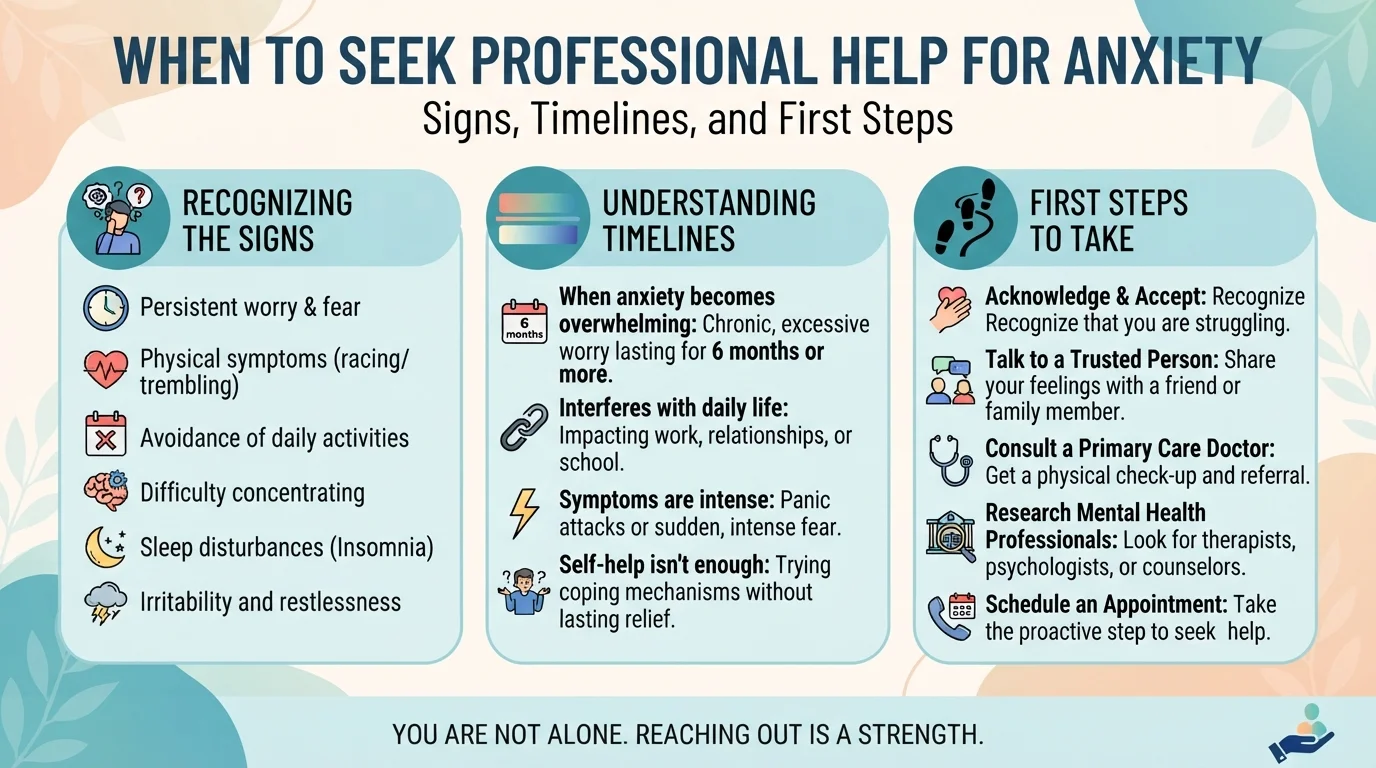
When to Seek Professional Help for Anxiety: Signs, Timelines, and First Steps
Anxiety (anxious distress) is the body's alarm response to a perceived threat, marked by worry, muscle tension, and a faster...