
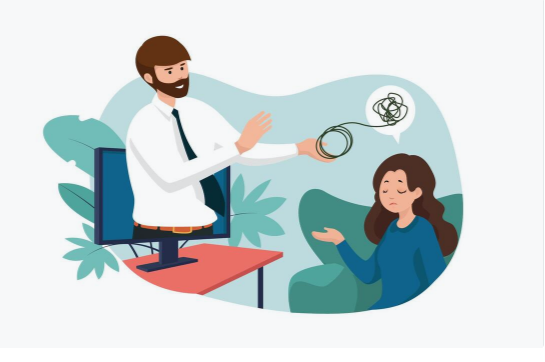
7 Benefits of Seeing a Licensed Mental Health Counselor
Why This Conversation Still Needs to Be Had
In 2026, more people understand that mental health matters than at any previous point in modern history. The cultural conversation has shifted. Therapy is discussed openly in ways it simply wasn’t a generation ago. And yet — despite all of that progress — the majority of people who would meaningfully benefit from seeing a licensed mental health counselor still haven’t done it.
The reasons are familiar: cost, access, stigma, uncertainty about whether it would actually help, the suspicion that what they’re dealing with isn’t serious enough to warrant professional attention, or simply not knowing where to start.
This article addresses that last barrier directly — by making the clearest, most honest case possible for what seeing a licensed mental health counselor actually does for the people who do it. Not a generic list of benefits written to sound reassuring. A specific, research-grounded explanation of seven things that genuinely change when you work with the right licensed professional.
If you are on the fence, consider this the information you were looking for.
What Makes a Licensed Mental Health Counselor Different
Before diving into the benefits, it is worth establishing what distinguishes a licensed mental health counselor from other people you might talk to about your struggles — a friend, a life coach, a wellness influencer, or an unlicensed practitioner.
A licensed mental health counselor — whether they hold the title of LCSW, LMFT, LPCC, Licensed Psychologist, or another state-recognized credential — has completed graduate-level clinical training, accumulated thousands of hours of supervised clinical experience, passed rigorous licensing examinations, and is held to ethical and professional standards enforced by a state licensing board.
This matters for several reasons:
They are trained to assess, diagnose, and treat mental health conditions — not just to listen supportively.
They are trained in specific, evidence-based treatment approaches that have been validated through clinical research to produce measurable outcomes.
They are legally and ethically accountable for the care they provide in ways that coaches, advisors, and unlicensed practitioners are not.
They maintain confidentiality under legally enforced standards — your disclosures are protected in ways that conversations with friends, coaches, or online communities are not.
The distinction between talking to a supportive person and working with a licensed clinician is the distinction between getting directions from someone who has been to the place once and getting directions from someone who is trained in navigation and has helped hundreds of people reach that specific destination.
Both have value. Only one is clinical care.
Benefit 1: You Finally Have an Accurate Understanding of What’s Actually Wrong
One of the most immediately provided benefits of seeing a licensed mental health counselor provides is something that seems simple but is genuinely rare: an accurate, professional assessment of what is actually happening with you.
Most people who are struggling carry explanations for their struggles that are either incomplete or incorrect — and those incorrect explanations shape every decision they make about how to address them.
The person who has been managing “stress” for five years may actually have Generalized Anxiety Disorder — a specific neurobiological condition with specific, effective treatments that are entirely different from stress management strategies.
The person who has been “a bit down” for eighteen months may have dysthymia — a chronic low-grade depression that responds to specific clinical intervention but not to the advice to exercise more and think positively.
The person who has been told they are “too sensitive” their entire life may have ADHD, or a trauma history, or an anxiety disorder — any of which would explain the sensitivity in ways that change everything about how it can be addressed.
A licensed mental health counselor conducts a comprehensive clinical assessment — taking developmental history, identifying symptom patterns, considering differential diagnoses, and identifying co-occurring conditions — that produces a formulation of what is actually driving your struggles. This formulation is not just intellectually interesting. It is the foundation of every effective intervention that follows.
Getting the right explanation for what you’re experiencing — after years of wrong or incomplete ones — is itself therapeutic. The shame of thinking something is a character flaw dissolves when you understand it as a treatable condition. The exhaustion of trying the wrong strategies lifts when you have a map of what actually helps.
Benefit 2: You Gain Access to Treatments That Produce Measurable, Lasting Change
This is the benefit most undersold in popular discourse about therapy — and it is perhaps the most important one.
Licensed mental health counselors are trained in evidence-based treatments — therapeutic approaches that have been validated through rigorous clinical research to produce specific, measurable outcomes for specific conditions. These are not generic listening sessions or supportive conversations, though those elements are present. They are structured clinical interventions with documented mechanisms of change.
Cognitive Behavioral Therapy (CBT) produces measurable reduction in anxiety, depression, OCD, insomnia, and a wide range of other conditions — with effect sizes that compare favorably to medication, and with durability that often exceeds it.
EMDR (Eye Movement Desensitization and Reprocessing) produces measurable reduction in PTSD symptoms — in many cases achieving remission within a relatively small number of sessions.
DBT (Dialectical Behavior Therapy) produces measurable reduction in emotional dysregulation, self-harm, suicidal behavior, and the symptoms of Borderline Personality Disorder.
ERP (Exposure and Response Prevention) produces measurable reduction in OCD symptoms — in some specialized programs, with response rates reaching 70-85%.
These are not claims made by therapy advocates. They are findings from hundreds of randomized controlled trials, replicated across populations, cultures, and clinical settings.
The critical point is that access to these treatments requires a licensed professional trained in their delivery. Reading about CBT does not produce the same outcomes as working with a trained CBT therapist. Understanding the theory of exposure does not produce the same neurobiological learning as systematically completing an exposure hierarchy under clinical guidance.
The treatment is the benefit — and the treatment requires the clinician.
Benefit 3: You Develop Skills That Change How You Function for the Rest of Your Life
Unlike medication — which produces its benefits during the period it is taken and typically requires ongoing use to maintain its effects — therapy with a licensed mental health counselor produces something that medication alone cannot: durable skills and insight that belong to you permanently.
The cognitive restructuring skills learned in CBT change how your brain processes negative automatic thoughts — not just during therapy, but for years afterward. Research on CBT for depression consistently shows that people who complete a course of CBT have lower relapse rates than people who are treated with medication alone, because the skills they have learned continue to work after treatment ends.
The distress tolerance skills from DBT — the specific techniques for surviving intense emotional states without making them worse — become available in every future crisis, long after the therapy has concluded.
The understanding of your own patterns, triggers, and emotional history developed in psychodynamic or relational therapy becomes a permanent lens through which you understand yourself and your relationships more accurately.
The mindfulness skills embedded in ACT, MBCT, and DBT become a daily practice that continues to modulate your nervous system and your relationship to your internal experience indefinitely.
This is what licensed mental health counselors mean when they describe therapy as an investment rather than an expense. The returns are not limited to the period of treatment. They compound over time and manifest across every domain of your life — how you manage stress, how you maintain relationships, how you navigate setbacks, how you understand and regulate your own emotional experience.
Benefit 4: Your Relationships Improve — Even If You Come Alone
One of the most consistently reported and most consistently underappreciated benefits of individual therapy with a licensed mental health counselor is the downstream improvement in relationships — with partners, family members, friends, and colleagues — that occurs even when those people never attend a session.
This happens because the patterns that most damage relationships originate inside the individual — in their attachment style, their emotional regulation capacity, their communication habits, their defensive reactions, their unprocessed history, and the beliefs they carry about themselves and what they can expect from other people.
Therapy addresses these internal patterns directly.
The person who has always responded to perceived rejection with withdrawal learns, in therapy, to recognize the pattern, understand its origins, and develop the capacity to respond differently. Their partner doesn’t attend a session — but experiences a fundamentally different relationship as a result.
The person who has never been able to express their needs directly — who has always hinted, accommodated, and resented — learns to communicate assertively, clearly, and without aggression. Their friendships become more honest and more reciprocal as a result.
The person who responds to conflict with escalation learns to regulate the emotional response that drives escalation before it reaches the point of irreversibility. Their relationships stop cycling through the same destructive patterns.
Research on individual therapy outcomes consistently shows improvements in relationship quality and satisfaction as collateral benefits of individual treatment — even when relationships are not the explicit focus of the work. You come alone. Your relationships benefit.
Benefit 5: You Have a Confidential Space That Exists Nowhere Else in Your Life
There is something that a licensed mental health counselor provides that no other relationship in most people’s lives provides — a space that is confidential, non-judgmental, consistent, and dedicated entirely to your wellbeing and your growth.
This sounds simple. Its rarity in adult life is not.
Every other significant relationship in your life carries reciprocal obligations — your friends need to be supported as well as supported you, your family carries history and stakes, your colleagues carry professional dynamics, your partner carries intimate entanglement. In every other relationship, there is something at stake beyond your honest experience.
In therapy, there is not. You can say the things you cannot say anywhere else — the thoughts you are ashamed of, the feelings you believe make you a bad person, the fears you have never articulated out loud, the truths about your experiences that you have protected others from knowing. You can say them without managing the other person’s reaction, without worrying about damaging a relationship, without performing equanimity or rationality or being okay.
This particular kind of freedom is therapeutic in itself — not just as a vehicle for the other interventions, but as a direct benefit. The experience of being fully known by another person, in safety, changes something about the inner experience of isolation that so much suffering depends on.
Licensed mental health counselors are legally and ethically bound to maintain confidentiality — your disclosures are protected by law in ways that make the therapeutic space genuinely safe in a way that no other relationship can replicate.
This confidential space is not nothing. For many people, it is the first place in their lives where they have ever been completely honest about their experience. That honesty, held safely by a trained professional, is often where the most significant change begins.
Benefit 6: You Stop Cycling Through the Same Patterns and Finally Move Forward
Most people who are struggling — with anxiety, depression, relationship difficulties, self-destructive habits, or the persistent feeling that their life is not going the way they want it to — are struggling in ways that are not random. They are struggling in patterns.
The same relationship dynamic that ended the last three relationships is present in the current one. The same avoidance response to stress that derailed the last project is derailing the current one. The same cycle of overwork, burnout, and collapse that has repeated every two years is beginning again. The same inner critic that made childhood painful is making adulthood painful in a different form.
These patterns are not random and they are not a reflection of bad character or insufficient effort. They are the expression of deeply ingrained psychological structures — formed in response to early experience, reinforced through repetition, and operating largely outside of conscious awareness.
A licensed mental health counselor is specifically trained to identify these patterns — to help you see what you cannot see from inside the pattern — and to work with you to understand their origins, interrupt their operation, and build alternatives that produce different outcomes.
This is genuinely difficult to do alone. Not because of intellectual limitation but because the patterns that most need changing are precisely the ones that feel most natural, most justified, and most invisible from the inside. The anxiety-driven overwork feels like responsibility. The avoidance feels like self-care. The withdrawal feels like protection. It takes a trained external perspective to see the pattern clearly — and a therapeutic relationship to safely dismantle it.
The benefit is not just symptom reduction. It is the end of the cycle — finally getting past the point that has been the ceiling of every previous attempt to move forward.
Benefit 7: You Build Long-Term Resilience, Not Just Short-Term Relief
The seventh benefit is the one that distinguishes professional clinical care from every other form of support available to people who are struggling — and it is the one that matters most in the long run.
Talking to a friend helps in the moment. A self-help book provides insight and strategies. A wellness app offers daily exercises. A crisis line provides immediate support. All of these have genuine value.
None of them build long-term psychological resilience — the durable increase in capacity to manage adversity, regulate emotion, maintain perspective under pressure, and recover from setbacks — the way sustained work with a licensed mental health counselor does.
Resilience is not a trait you either have or don’t. It is a capacity that is built — through the gradual, sustained development of specific psychological skills, through the processing of unresolved material that currently consumes psychological resources, through the building of self-knowledge that makes difficult experiences navigable rather than catastrophic, and through the development of the kind of relationship with your own mind that allows you to be its observer rather than only its subject.
This is what a course of therapy with a skilled licensed mental health counselor produces over time. Not just the resolution of the presenting problem — the anxiety that brought you in, the depression that finally got bad enough, the relationship crisis that pushed you to seek help. But a fundamentally more robust psychological foundation from which future difficulties are more manageable.
Research consistently shows that people who have completed therapy report not just symptom improvement but increased psychological wellbeing — greater life satisfaction, greater sense of meaning, greater confidence in their capacity to manage what life brings. These are not incidental benefits. They are the downstream consequence of building the internal capacities that therapy develops.
Ready to Experience These Benefits Yourself? IGOTU Corp’s Licensed Counselors Are Ready
Every benefit described in this article is real, is documented in clinical research, and is accessible to you — through the right licensed mental health counselor, matched to your specific needs and presenting concerns.
The barrier between where you are now and experiencing these benefits is smaller than it probably feels. It is one assessment, one matching process, one first appointment.
IGOTU Corp connects you with licensed mental health counselors across a comprehensive range of specializations — anxiety, depression, trauma, relationship difficulties, burnout, ADHD, grief, life transitions, and more. Their matching process is built around clinical fit — ensuring that the counselor you work with has the specific training and expertise that your situation requires, not just general availability.
Whether you are dealing with something specific and acute, or with the persistent, chronic sense that something is not quite right and hasn’t been for a long time — IGOTU Corp’s licensed counselor network is equipped to meet you exactly where you are and build from there.
Visit IGOTU Corp today, take their free mental health assessment, and get matched with a licensed counselor who can help you access every benefit described in this article. Because the version of your life that exists on the other side of the right therapeutic relationship is worth whatever it takes to get there.
How to Get the Most Out of Working With a Licensed Mental Health Counselor
Knowing the benefits is one thing. Maximizing them requires understanding what good therapy actually looks like from the client’s side — because the outcomes of therapy are influenced by both the quality of the clinician and the quality of the engagement.
Be as honest as possible from the start. The therapeutic relationship can only work with what you bring to it. Filtering your experience, presenting the version of yourself you think the therapist wants to see, or protecting them from the parts of your experience that feel most shameful — all of these reduce the effectiveness of the work. The things that are hardest to say are usually the things most worth saying.
Engage with between-session practice. The insight and skills developed in sessions need to be practiced in ordinary life to produce durable change. CBT homework, mindfulness practices, behavioral experiments, journaling — these are not optional additions to therapy. They are where much of the actual change happens.
Raise concerns directly with your therapist. If you feel a session was not helpful, if you disagree with something your therapist has said, if you feel the approach is not right for your needs — say so directly. How a therapist responds to feedback and challenge is itself clinically relevant information, and raising concerns is practice for the direct communication that therapy often aims to develop.
Give it long enough. Most evidence-based therapies require 12 to 20 sessions before their full benefit is realized. The early sessions establish the relationship and the formulation. The middle sessions implement the core interventions. The later sessions consolidate gains and prepare for maintenance. Leaving after three sessions because change hasn’t occurred yet is like leaving a course of antibiotics on day two because you still have symptoms.
Trust the process even when it’s uncomfortable. The moments in therapy that feel most uncomfortable — the sessions that stir up difficult emotions, the exposures that feel too scary, the insights that are hardest to accept — are often the sessions where the most significant change is occurring. Discomfort in therapy is not a sign that something is wrong. It is often a sign that something right is happening.
Frequently Asked Questions (FAQs) About Seeing a Licensed Mental Health Counselor
Q: How do I know if I need a licensed mental health counselor or just need to talk to a friend? If what you’re dealing with has been present for more than a few weeks, is affecting your functioning at work or in relationships, involves symptoms that recur despite your efforts to manage them, or has roots that feel deep and resistant to ordinary problem-solving — you are describing something that is likely to benefit from professional clinical support rather than social support alone. Friends provide something irreplaceable. Licensed counselors provide something different and often more clinically targeted.
Q: How long will I need to see a counselor? Duration varies significantly by presenting concern and treatment approach. Focused CBT for a specific anxiety disorder might resolve meaningfully within 12 to 16 sessions. More complex presentations — trauma history, chronic depression, personality-level patterns, multiple co-occurring conditions — typically require longer treatment. Most licensed counselors will discuss treatment duration during the early sessions once they have a clear formulation of your needs.
Q: Is what I tell a licensed mental health counselor kept confidential? Yes — with specific, legally defined exceptions. Licensed mental health counselors in every US state are legally bound to maintain confidentiality. The exceptions — which counselors are required to explain at the start of treatment — typically involve imminent risk of harm to self or others, abuse of children or vulnerable adults, and certain legal proceedings. Outside of these specific exceptions, your disclosures are legally protected.
Q: Do I need a diagnosis to see a licensed mental health counselor? No. You can begin working with a licensed mental health counselor without a prior diagnosis. The counselor will conduct their own assessment — which may or may not result in a formal diagnosis — as part of the clinical process. Many people benefit enormously from therapy for concerns that do not rise to the level of a diagnosable condition — life transitions, relationship difficulties, grief, career stress, personal growth.
Q: What is the difference between a licensed mental health counselor and a psychiatrist? A licensed mental health counselor (LCSW, LMFT, LPCC, psychologist) provides therapy — the clinical conversational and skills-based interventions described in this article. A psychiatrist is a medical doctor who specializes in mental health and primarily provides medication management, though some also provide therapy. For most mental health concerns, beginning with a licensed counselor for therapy is appropriate. If medication is indicated, a referral to a psychiatrist or your primary care physician can be made.
Q: Can online therapy with a licensed counselor produce the same benefits as in-person? Research consistently demonstrates that online therapy with a licensed counselor produces outcomes comparable to in-person therapy for most common mental health conditions — including anxiety, depression, trauma, and relationship difficulties. The therapeutic relationship, which research identifies as the primary predictor of outcomes, transfers effectively to video-based delivery. Online therapy also removes barriers of geography, transportation, and scheduling that prevent many people from accessing in-person care.
Q: What if I try a counselor and it doesn’t feel right? A poor therapeutic fit is one of the most common reasons therapy is less effective than it could be — and it is not a reason to give up on therapy. It is a reason to find a different therapist. The therapeutic relationship is the primary vehicle of change in most therapeutic approaches, which means that fit matters enormously. If after three to five sessions a counselor does not feel right — for whatever reason, including reasons you can’t fully articulate — it is completely appropriate to seek someone else.
Q: How do I find a licensed mental health counselor who is right for my specific needs? Verify that any counselor you consider holds a current license in your state. Look for specific training and experience with your presenting concern — not just general mental health experience. Use an initial consultation to assess fit before committing to ongoing sessions. Or let IGOTU Corp do the matching for you — their clinical assessment process identifies your specific needs and matches you with a licensed counselor whose expertise, approach, and availability align with what your situation requires. Visit IGOTU Corp today to get started.
The Bottom Line: Seven Benefits That Compound Over a Lifetime
The seven benefits described in this article — accurate understanding of what’s wrong, access to evidence-based treatments, durable skills, improved relationships, a confidential space unlike any other, freedom from repeating patterns, and long-term resilience — are not separate or independent. They are interconnected and mutually reinforcing.
Accurate understanding makes treatment more targeted. Effective treatment builds skills. Skills improve relationships. The confidential space enables honesty that deepens the work. Deeper work interrupts patterns. Interrupted patterns build resilience. Resilience changes the fundamental experience of being a person navigating a difficult world.
This compounding quality is what makes the investment in working with a licensed mental health counselor one of the highest-return decisions most people can make about their wellbeing. The benefits do not stay in the therapy room. They migrate into every corner of your life — your work, your relationships, your health, your experience of ordinary days.
You do not have to be in crisis to benefit. You do not have to have a diagnosis. You do not have to have a clear sense of what you need or what you want from the process. You just have to begin.
IGOTU Corp’s licensed mental health counselors are ready to help you begin — matched to your specific needs, your specific situation, and the specific version of a better life that you are working toward. Visit IGOTU Corp today, take the free assessment, and take the first step toward every benefit this article has described.
Because the person you are with the right clinical support is not a different person. It is a more fully realized version of who you already are — with better tools, better understanding, and a better relationship with the most important thing you will ever have to manage: your own mind.
Recent Posts
Related Posts
How to Protect Your Mental Health Without Sacrificing Your Career
It is Sunday evening and your stomach is already tight. You are replying to emails you will see again in...

How to Find a Licensed Male Therapist in California
Plenty of people know the moment they decide they want therapy. Fewer people know what to type into the search...

How to Do the 5-4-3-2-1 Technique Silently in Class
Learn how to manage anxiety discreetly during class using the simple and effective 5-4-3-2-1 grounding technique in this article. Exclusive...
How to Set Boundaries Without Guilt: Stop People Pleasing
You said yes again. You knew while the words were leaving your mouth that you did not want to say...
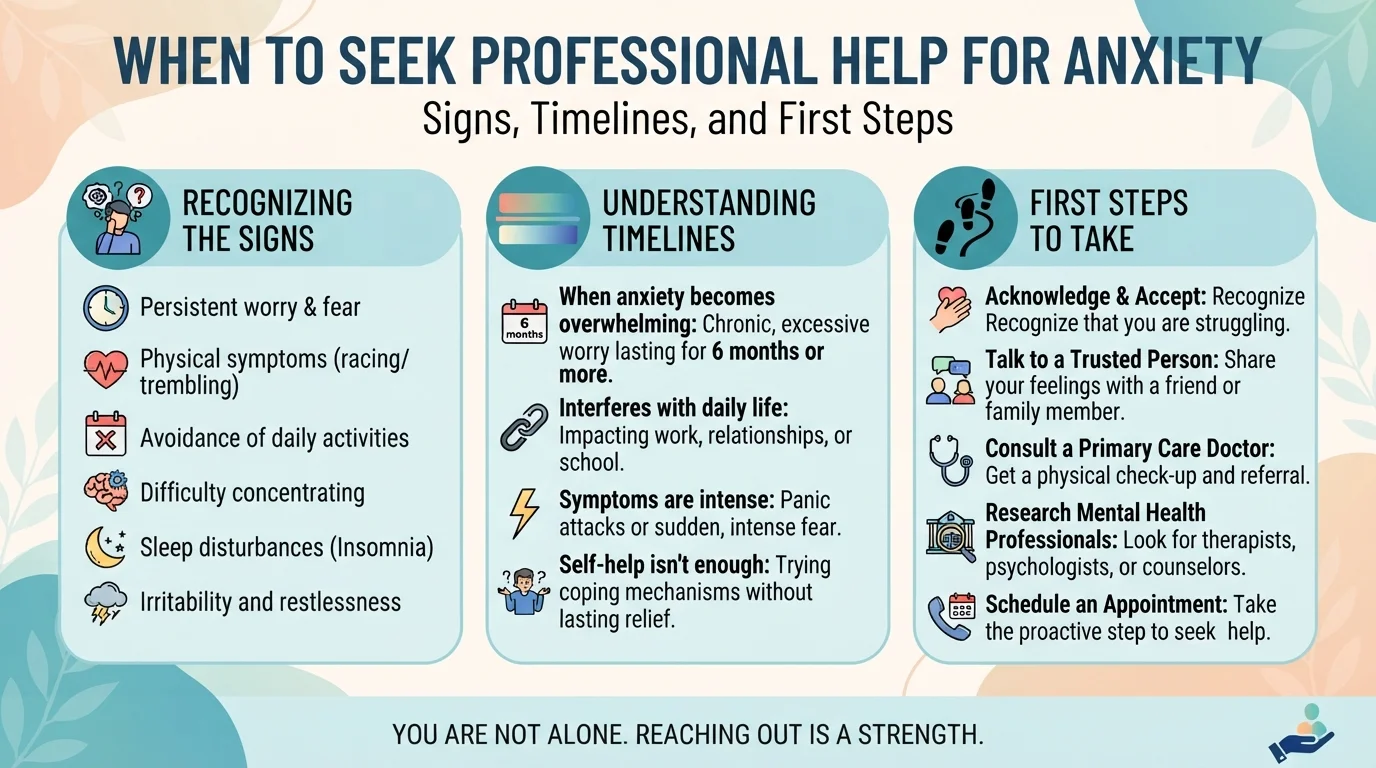
When to Seek Professional Help for Anxiety: Signs, Timelines, and First Steps
Anxiety (anxious distress) is the body's alarm response to a perceived threat, marked by worry, muscle tension, and a faster...