

Life Transitions Counseling: Career Changes, Divorce, Loss & More
Life is not a straight line. It curves, breaks, doubles back on itself, and sometimes drops away entirely without warning. Whether you’re walking out of a 20-year marriage, stepping away from a career that no longer fits who you’ve become, grieving a loss that has reshaped your entire sense of self, or navigating a milestone that everyone around you calls exciting but feels quietly terrifying — these moments are not minor adjustments.
They are seismic shifts in identity, routine, and purpose. Life transitions counseling exists precisely for these moments: not to rush you through them, but to give you the professional support, the psychological tools, and the compassionate space to move through them with clarity and intention rather than confusion and isolation.
At I Got U Corp, our licensed therapists specialize in helping adults navigate the full spectrum of life transitions — the expected ones, the sudden ones, and the ones that arrive so gradually you barely notice until you’re already in the middle of them. If you’re searching for a life transition therapist near me who genuinely understands the complexity of these moments, this guide is your starting point.
What Is Life Transitions Counseling — and Who Actually Needs It?
Life transitions counseling is a therapeutic approach rooted in life transitions psychology — the clinical study of how human beings respond, adapt, and grow (or struggle to grow) during periods of significant change. Unlike therapy focused on a single diagnosis like depression or anxiety, life transitions counseling is inherently contextual. It meets you where you are in your specific moment of change and helps you develop the psychological resilience, emotional regulation skills, and cognitive clarity to navigate that change without losing yourself in the process.
The question of who needs it is broader than most people assume. Many adults seek life transitions therapy only after reaching a breaking point — when the anxiety has become unmanageable, the grief has paralyzed them, or the confusion about their identity has started affecting their work, relationships, and daily functioning. But life transitions counseling is equally valuable as a proactive resource — a way to process significant change before it becomes a clinical crisis.
You may benefit from life transitions counseling if you are experiencing any of the following:
- A career change, job loss, retirement, or a growing sense that your professional life no longer aligns with your values or goals
- Divorce, separation, or the ending of a long-term relationship — including the grief, identity disruption, and logistical upheaval that follows
- Bereavement — the loss of a parent, partner, child, sibling, or close friend, including anticipatory grief before a terminal diagnosis
- Becoming a parent for the first time, including postpartum adjustment challenges and changes to relationship and identity
- An empty nest transition — the period after children leave home that often surfaces questions about purpose, partnership, and personal identity
- A significant health diagnosis — for yourself or a loved one — that forces a fundamental reassessment of life priorities
- Relocation, immigration, or cultural displacement that disrupts social support networks and sense of belonging
- Recovery from addiction or a period of self-destructive behavior, as you rebuild a new identity and life structure
- Aging milestones — entering a new decade, facing physical limitations, or confronting mortality in a way that demands psychological integration
“Every major life transition carries within it the seed of both loss and possibility. Counseling helps you hold both at the same time.” — I Got U Corp
Career Changes and Professional Identity: When Work Is No Longer Working
For many American adults, professional identity is not just what they do — it is a core component of who they are. When that identity is disrupted — through a layoff, a voluntary career pivot, burnout, or retirement — the psychological impact goes far deeper than practical financial concern. The loss of a professional role triggers grief. The uncertainty of a new career path generates anxiety. The mismatch between who you were professionally and who you are becoming creates what life transitions psychology calls an identity gap — a disorienting space between your former self and your emerging self where confusion, self-doubt, and fear of failure tend to live.
Life transitions counseling for career change focuses on several interconnected psychological tasks. First, it helps you process the grief and loss attached to a professional role you are leaving behind — including the loss of structure, purpose, social connection, and status that role provided. Second, it works to clarify your values, strengths, and authentic motivations so that your next professional chapter is built on something real rather than on anxiety-driven decisions. Third, it equips you with the cognitive behavioral tools to manage the fear, self-criticism, and perfectionism that often accompany a professional transition — particularly for high achievers who are unaccustomed to feeling uncertain or incompetent.
At I Got U Corp, we use trauma-informed Cognitive Behavioral Therapy (CBT) and evidence-based narrative therapy approaches to help clients rewrite their professional identity story — not as a story of failure or loss, but as a story of intentional evolution.
Divorce and the End of Relationships: Rebuilding Identity After Loss
Divorce is consistently ranked among the most psychologically disruptive life events an adult can experience — second only to the death of a spouse on the Holmes and Rahe Stress Scale. Yet in American culture, there remains a persistent expectation that people should process it quickly, move on cleanly, and resist the urge to be visibly affected for too long. Life transitions therapy challenges that expectation directly.
The end of a long-term relationship — whether through divorce, legal separation, or the breakdown of a committed partnership — involves multiple simultaneous losses. There is the loss of the relationship itself, of course. But there is also the loss of the future you had planned together, the loss of your identity as part of a couple, the loss of shared social networks, the disruption of daily routines, and frequently the loss of financial security and housing stability. For parents, there is the additional complexity of co-parenting, custody arrangements, and the grief of a changed family structure.
Life transitions counseling for divorce and relationship endings provides a structured, clinically informed space to process these layered losses without judgment. Our therapists at I Got U Corp are trained in grief therapy, attachment theory, and the psychology of identity reconstruction — helping clients move through the stages of loss at their own pace, develop healthy boundaries and communication skills for co-parenting where relevant, and eventually rebuild a sense of self that is whole, independent, and genuinely theirs.
The Emotional Phases of Divorce
Research in life transitions psychology identifies several emotional phases that typically characterize the divorce process — not in a rigid linear sequence, but as recurring themes that clients move through at different rates:

- Denial and disbelief — difficulty accepting the reality of the ending, particularly when the decision was not mutual
- Anger and resentment — a natural and necessary emotional response that, when unprocessed, can calcify into long-term bitterness and impair co-parenting and future relationships
- Bargaining and rumination — replaying past events, identifying what could have been done differently, and struggling to release responsibility for the relationship’s ending
- Grief and depression — the deep sadness attached to genuine loss, which is clinically distinct from clinical depression but can develop into it without appropriate support
- Acceptance and reconstruction — the gradual re-emergence of personal agency, clarity about values, and readiness to build a new chapter
Life transitions therapy does not push clients toward acceptance before they are ready. It honors every phase of the process as meaningful and necessary — and provides the clinical support to ensure none of those phases becomes a permanent residence.
Grief, Bereavement, and Loss: When the Ground Shifts Beneath You
Grief is the most universal of all human experiences — and one of the most poorly understood. American culture has historically underestimated the duration and intensity of grief, frequently pathologizing normal grief responses as signs of weakness or clinical disorder. Life transitions counseling takes a fundamentally different view: grief is not a problem to be solved. It is a psychological process to be supported, honored, and carefully navigated.
Bereavement — the loss of a significant person in your life — is the most commonly recognized form of grief. But the I Got U Corp clinical team works with a much broader definition of grief that encompasses any significant loss of meaning, connection, or identity. This includes disenfranchised grief — grief that is not publicly acknowledged or socially supported — such as the loss of a pregnancy, the estrangement from a living family member, the death of a pet, or the loss of a life path that will never be realized.
Our approach to grief therapy draws on established frameworks from life transitions psychology — including William Worden’s tasks of mourning and the continuing bonds model — while integrating trauma-informed CBT techniques for clients whose grief has developed into complicated grief disorder or major depressive episodes. The goal is not to help you stop grieving. The goal is to help you grieve in a way that allows you to continue living fully alongside your loss — carrying it without being crushed by it.
“Grief is not a sign that something is wrong with you. It is a sign that something mattered deeply — and that takes time to integrate.” — I Got U Corp
Other Major Life Transitions That Benefit From Professional Support
Becoming a Parent
The transition to parenthood — particularly for first-time parents — is one of the most identity-disrupting experiences an adult can encounter. The arrival of a child changes every dimension of life simultaneously: sleep, relationships, finances, career trajectory, social dynamics, and the most fundamental sense of who you are and what your life is for. Life transitions counseling for new parents addresses the psychological adjustment challenges of this period, including postpartum anxiety and depression, relationship strain, identity grief (the loss of the pre-parent self), and the pressure to perform parenthood in ways that conflict with authentic experience.
Empty Nest Syndrome
When the last child leaves home — for college, for independence, for a life of their own — many parents experience a profound sense of loss, disorientation, and purposelessness that catches them entirely off guard. The role of active parent, which may have structured every dimension of adult life for 20+ years, suddenly contracts. Life transitions therapy helps parents reconnect with individual identity, rediscover personal interests and ambitions, and renegotiate the terms of their relationship with a partner in the absence of shared parenting as a primary organizing force.
Health Diagnoses and Medical Transitions
A significant health diagnosis — whether your own or a loved one’s — forces an immediate and involuntary reassessment of everything you assumed your life would be. The psychological impact of a chronic illness, a cancer diagnosis, or a degenerative condition involves grief, fear, identity disruption, and often a profound spiritual reckoning. Life transitions counseling in a medical context is not about positivity or acceptance on demand. It is about honest, compassionate psychological support as you integrate a new reality into your sense of self and your vision of the future.
Retirement
Retirement is culturally framed as an achievement — the reward at the end of a working life. But for many American adults, particularly those whose professional identity was central to their self-concept, retirement carries genuine psychological risk. Without the structure, purpose, social connection, and sense of competence that work provides, retirement can trigger depression, anxiety, and a disorienting loss of identity. Life transitions counseling for retirement focuses on proactive identity reconstruction — helping clients develop a post-retirement sense of purpose and meaning before the emotional impact of the transition sets in.
Life Transitions Therapy Worksheets and Clinical Tools We Use
Effective life transitions therapy is not confined to the therapy session itself. Between sessions, structured reflection exercises and clinical tools play an important role in helping clients process their experiences, track their emotional patterns, and build the self-awareness skills that accelerate therapeutic progress. I Got U Corp therapists use evidence-based life transitions therapy worksheets and structured exercises tailored to each client’s specific transition and therapeutic goals.
Commonly used tools and frameworks in our life transitions counseling practice include:
- Values clarification exercises — helping clients identify what genuinely matters to them beneath the noise of external expectations and social pressure
- Cognitive restructuring worksheets — identifying and challenging the distorted thought patterns (catastrophizing, all-or-nothing thinking, mind reading) that amplify the psychological difficulty of transition
- Grief journaling prompts — structured writing exercises that help clients externalize and process emotion in a contained, therapeutically directed way
- Identity mapping — a visual and narrative exercise that helps clients articulate who they were before the transition, who they are in the middle of it, and who they want to become
- Acceptance and commitment therapy (ACT) tools — exercises that help clients develop psychological flexibility and reduce experiential avoidance during periods of uncertainty
- Behavioral activation planning — structured scheduling of meaningful and pleasurable activities to counter the withdrawal and isolation that commonly accompany difficult life transitions.
These tools are not assigned as homework for its own sake. They are carefully selected based on each client’s presenting challenges and therapeutic stage, and reviewed in session to maximize their clinical value.
Why Choose I Got U Corp for Life Transitions Counseling in California?
Searching for a life transition therapist near me is a meaningful step — and the therapist you choose matters enormously. Not every clinician has the specific training, temperament, and clinical experience to hold space for the complexity of major life transitions without rushing toward resolution, minimizing the depth of loss, or applying a one-size-fits-all framework to something that is deeply personal.
I Got U Corp’s clinical team is led by Vincente Mozell, LCSW — a licensed clinical social worker with over 15 years of experience helping adults in California navigate anxiety, depression, trauma, and life transitions of every kind. Our practice is grounded in life transitions psychology, informed by trauma-sensitive CBT and DBT frameworks, and delivered with the kind of genuine human warmth that makes it possible to do the hard work of personal transformation.
We offer both in-person sessions in Rancho Cucamonga and fully HIPAA-compliant telehealth sessions available to adults across all of California — removing the geographical barrier that often prevents people from accessing quality mental health care. A free initial consultation is available for all new clients, so you can assess the fit before making any commitment.
Whether you’re in the middle of a career overhaul, grieving a significant loss, rebuilding after divorce, or simply sensing that the life you are living no longer matches who you are becoming — I Got U Corp’s life transitions counseling team is here to help you navigate what comes next with clarity, courage, and compassionate professional support.
Frequently Asked Questions: Life Transitions Counseling
What is life transitions counseling and how is it different from regular therapy?
Life transitions counseling is a specific therapeutic focus that addresses the psychological, emotional, and identity challenges that arise during periods of significant change — such as career shifts, divorce, bereavement, retirement, or major health events. While general therapy may address ongoing mental health conditions like depression or anxiety, life transitions counseling is contextually focused on helping clients navigate a specific moment of change. That said, the two frequently overlap — major life transitions often trigger or intensify clinical anxiety and depression, which life transitions therapy addresses alongside the transition itself.
How do I find a life transition therapist near me in California?
To find a qualified life transition therapist near me in California, start by verifying that the therapist holds an active California state license — LCSW, LMFT, or LPCC — which you can confirm through the California Board of Behavioral Sciences at bbs.ca.gov. From there, look for a therapist who explicitly lists life transitions as a specialization area, has experience with your specific type of transition, and offers a free initial consultation. I Got U Corp serves adults across California through both in-person appointments in Rancho Cucamonga and telehealth sessions statewide.
How long does life transitions therapy typically take?
The duration of life transitions therapy varies significantly based on the nature and complexity of the transition, the client’s prior mental health history, and their therapeutic goals. Some clients reach their goals within 8 to 12 focused sessions. Others dealing with more complex transitions — such as grief following traumatic loss or identity reconstruction after a long-term relationship ends — benefit from longer-term therapeutic support. I Got U Corp therapists discuss realistic timeline expectations during the initial consultation and revisit treatment goals regularly to ensure the pace of therapy matches the client’s evolving needs.
Can life transitions counseling help with grief after losing a loved one?
Yes. Grief therapy is a core component of life transitions counseling at I Got U Corp. Our therapists are trained in established grief frameworks — including Worden’s tasks of mourning and the continuing bonds model — and integrate trauma-informed CBT techniques for clients whose grief has developed into complicated grief or major depressive disorder. We work with all forms of loss, including bereavement, disenfranchised grief (losses not publicly recognized), anticipatory grief, and the grief associated with non-death losses such as divorce, estrangement, or the loss of a life path.
Is online life transitions therapy as effective as in-person sessions?
Yes. Extensive clinical research confirms that telehealth therapy produces outcomes equivalent to in-person sessions for the vast majority of mental health presentations, including life transitions, grief, anxiety, and depression. I Got U Corp conducts all online sessions via a secure, HIPAA-compliant video platform that meets the same legal and ethical standards as a private office setting. For clients across California who face geographical, logistical, or mobility barriers to in-person attendance, online life transitions therapy offers the same clinical quality without the commute.
What therapeutic approaches does I Got U Corp use for life transitions counseling?
I Got U Corp’s life transitions counseling draws on multiple evidence-based therapeutic modalities, selected and integrated based on each client’s specific transition and clinical presentation. These include trauma-informed Cognitive Behavioral Therapy (CBT) for managing the distorted thought patterns that amplify transition-related anxiety and depression; Dialectical Behavior Therapy (DBT) for emotional regulation and distress tolerance; Acceptance and Commitment Therapy (ACT) for developing psychological flexibility during uncertainty; grief therapy frameworks for bereavement and loss; and narrative therapy approaches for identity reconstruction. Life transitions therapy worksheets and structured between-session exercises supplement in-session work throughout.
How much does life transitions counseling cost at I Got U Corp?
I Got U Corp works with select insurance plans to make life transitions counseling accessible and affordable. We recommend contacting our team directly at 909-325-7949 or through I Got U corp.com to verify your specific plan’s coverage. A free initial consultation is available to all new clients, during which our therapist will discuss your therapeutic goals, the recommended treatment approach, and all relevant cost and insurance information — with complete transparency and no obligation to proceed.
Do you offer life transitions therapy worksheets or resources between sessions?
Yes. I Got U Corp therapists provide structured between-session resources — including life transitions therapy worksheets, journaling prompts, cognitive restructuring exercises, values clarification tools, and behavioral activation plans — tailored to each client’s specific transition and therapeutic stage. These resources are not generic handouts; they are clinically selected and reviewed in session to ensure they are actively contributing to your progress. Between-session work is a meaningful component of the I Got U Corp therapeutic model, extending the benefit of each session beyond the 50-minute hour.
You Do Not Have to Navigate This Alone — Take the First Step Today
Life transitions are hard. The grief is real. The confusion is real. The fear of what comes next is real. And the tendency to white-knuckle your way through it alone — because asking for help feels like admitting defeat — is one of the most common and most costly mistakes adults make during the most challenging chapters of their lives.
I Got U Corp’s licensed life transition therapists are here to walk alongside you — not to rush you toward resolution, but to give you the clinical support, the practical tools, and the compassionate professional space to move through your transition with genuine clarity and lasting psychological growth. Whether you’re in the middle of a divorce, processing a loss, rebuilding after a career change, or simply sensing that the life you’re living has stopped matching who you truly are — we are ready when you are.
✦ Book Your Free Consultation at https://igotucorp.com/ ✦
📞 Call or Text: 909-325-7949 | Online Therapy Available Across All of California
Contact I Got U Corp
- 🌐 Website: https://igotucorp.com/
- 📞 Phone: 909-325-7949
- 📧 Contact: https://igotucorp.com/contact-us
- 📍 In-Person: 9431 Haven Ave suite 100-151, Rancho Cucamonga, CA 91730, United States
- 💻 Online Therapy: Available to all California adults statewide
I Got U Corp — Licensed Life Transitions Counseling for Adults | Online & In-Person | California
Recent Posts
Related Posts
How to Set Boundaries Without Guilt: Stop People Pleasing
You said yes again. You knew while the words were leaving your mouth that you did not want to say...
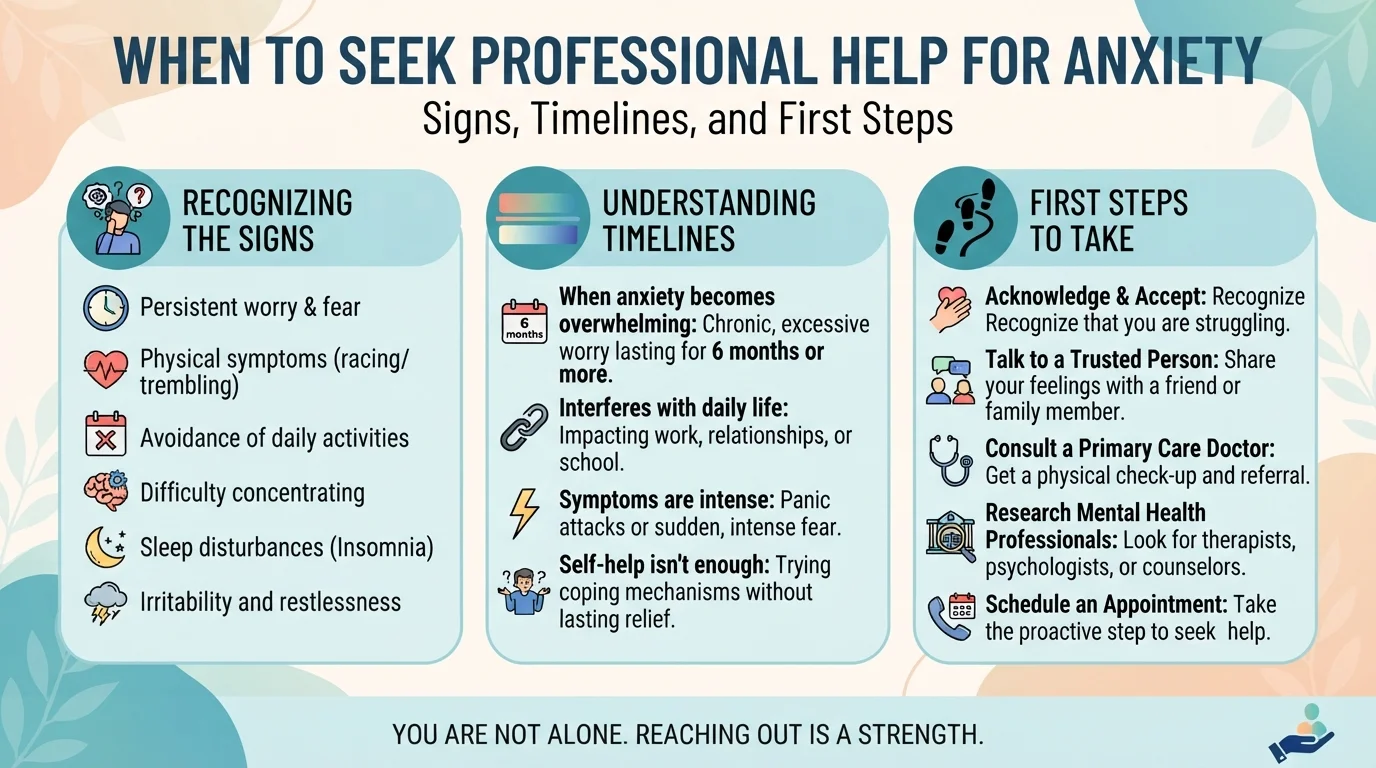
When to Seek Professional Help for Anxiety: Signs, Timelines, and First Steps
Anxiety (anxious distress) is the body's alarm response to a perceived threat, marked by worry, muscle tension, and a faster...
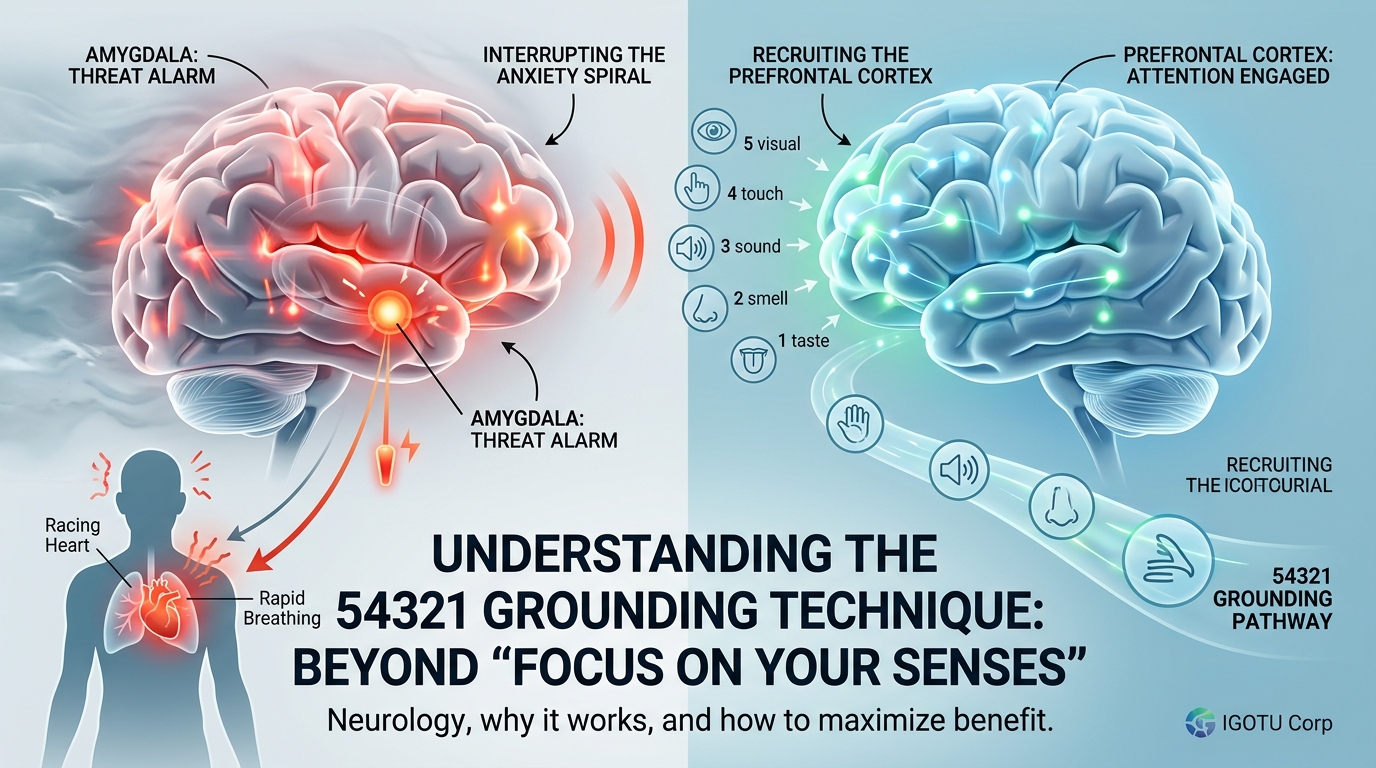
What Is the 54321 Grounding Technique? How Does It Actually Work?
If you have ever looked up what to do during a panic attack, an anxiety spiral, or a moment of...
Can Stress Alone Cause Panic Disorder? IGOTU Corp Guide
The Question That Arrives After the First Attack You were not doing anything dramatic. You were not in danger. You...
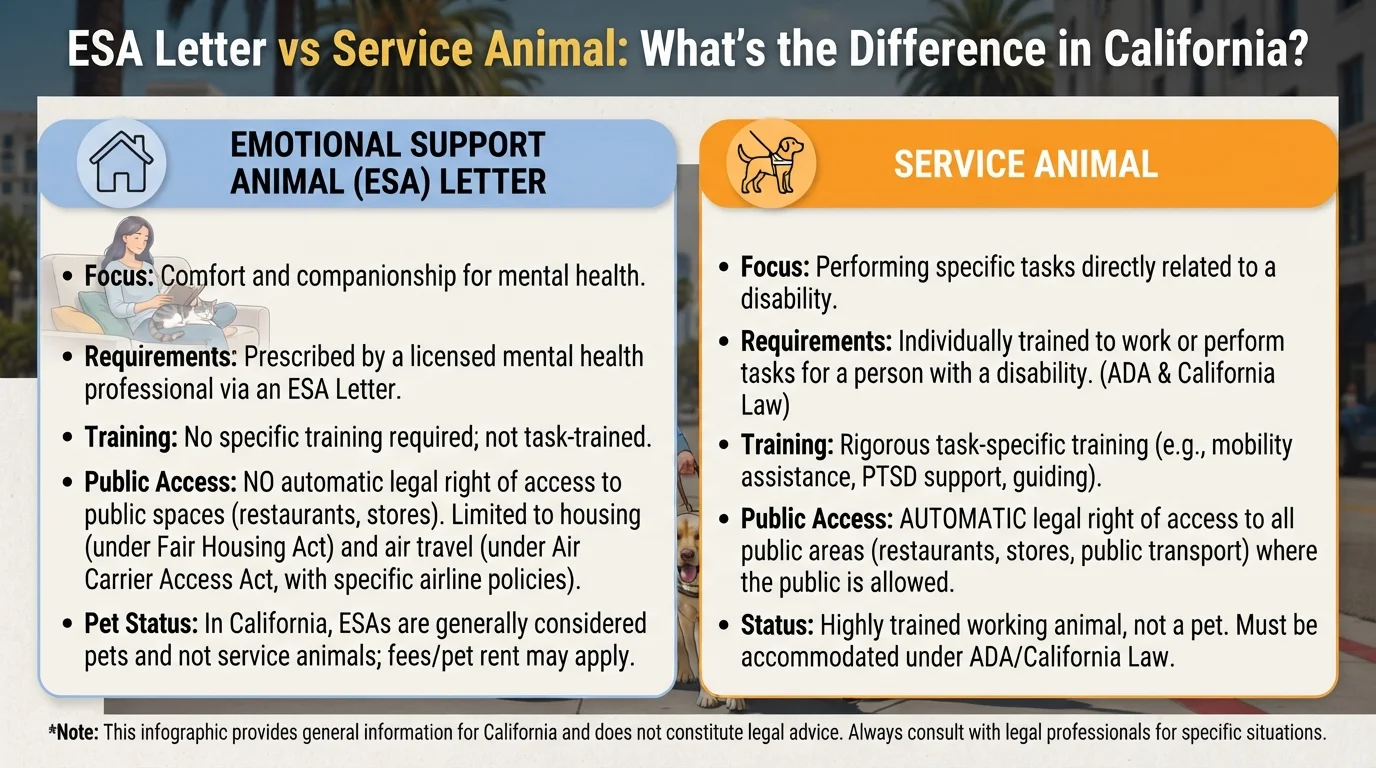
ESA Letter vs Service Animal: What’s the Difference in California?
An ESA letter and a service animal are not the same thing under California or federal law, and confusing the...