

How to Protect Your Mental Health Without Sacrificing Your Career
It is Sunday evening and your stomach is already tight. You are replying to emails you will see again in the morning, and your mind keeps running through everything that could go wrong this week. You tell yourself you will rest after the big project, after the review, after the promotion. Somehow that day never comes.
A lot of hardworking people live this way. They believe that taking care of their mental health means falling behind, and that staying ahead means ignoring how they feel. That belief is common, but it is not true. In fact, the opposite tends to happen. People who ignore stress for years often end up with worse work, not better.
This guide shows you how to protect your mental health and still build the career you want. You will learn the warning signs to watch for, simple habits that fit into a real workday, how to set boundaries without picking a fight, what to say to your boss and when to bring in professional help.
Feeling stretched thin by work? The licensed therapists at IGotU Corp offer online and in-person therapy for adults across California. Request an appointment and start with a free consultation.
Why Does It Feel Like You Have to Choose Between Your Mental Health and Your Career?
Most of us pick up the idea early. We watch people get praised for staying late, skipping lunch and answering messages at midnight. We hear phrases like “rise and grind” and “no days off.” Over time we learn that being tired means being committed.
The fear underneath is usually practical. You worry that if you say you are struggling, people will see you as weak, replaceable or not ready for more responsibility. In some workplaces that fear is based on real experience. In many others, it is based on a story you have been telling yourself for years.
Here is the useful reframe. Your mental health is not competing with your career. It is the thing your career runs on. Focus, memory, patience, good judgment and creativity all depend on a brain that is not constantly in survival mode. When you protect it, your work improves. When you drain it, your work eventually pays the price.
What Are the Early Warning Signs of Burnout and Work Stress?
Burnout rarely arrives with a loud crash. It builds slowly, which makes it easy to miss. The World Health Organization describes burnout as a result of chronic workplace stress that has not been managed well, and it points to three main features: exhaustion, growing mental distance or cynicism toward the job and a drop in effectiveness.
Watch for patterns like these.
In your body
- Constant tiredness that sleep does not fix
- Headaches, stomach problems or muscle tension
- Trouble falling asleep or waking up at 3 a.m. with work thoughts
- Getting sick more often
In your mind and mood
- Dread when you think about work
- Irritability with coworkers or family
- Trouble concentrating or making simple decisions
- Feeling numb, hopeless or like nothing you do matters
In your behavior
- Putting things off that used to be easy
- Pulling away from friends and hobbies
- Relying more on caffeine, alcohol or screens to get through the day
- Calling in sick more often or dreading every meeting
One or two of these on a rough week is normal. If several show up and stay for weeks, that is your system asking for attention. It is much easier to respond early than to wait until you cannot function.
How Can You Protect Your Mental Health During a Normal Workday?
You do not need a long vacation or a new job to start. Small habits repeated daily do more than big changes you cannot keep up. Here are ones that fit into a real schedule.
Start your day without your inbox
Try to give yourself even ten to fifteen minutes before you check email or messages. Drink some water, stretch or just sit quietly. When the first thing you see is a list of demands, your body goes into alert mode before you have even had breakfast.
Take real breaks
Working for hours without stopping feels productive, but attention fades. Step away from your screen for a few minutes every hour or two. Walk to the window, refill your water or look at something far away. A short break is not wasted time. It is how you stay sharp for the next stretch.
Eat lunch away from your desk
Even twenty minutes helps. Your brain needs a clear pause between tasks, and eating while answering messages does not give it one.
Use a grounding tool when stress spikes
When your heart races before a meeting or a hard conversation, you can calm your body quickly without anyone noticing. Slow breathing is one option. Another is the 5-4-3-2-1 technique, where you quietly name five things you see, four you feel, three you hear, two you smell and one you taste. It pulls your attention out of worry and into the room.
Protect your sleep
Sleep is not a luxury. Poor sleep makes anxiety louder and patience shorter. Try to keep a steady bedtime, avoid work email in the last hour before bed and keep screens out of reach if you can. If sleep problems persist, that is worth talking to a doctor or therapist about.
Move your body in a way you can keep up
You do not need a gym membership. A ten minute walk after lunch or a few stretches between calls can lower tension and improve mood. The best exercise is the one you will actually do.
End the day with a clear stop
Pick a signal that says work is over. It could be closing your laptop, writing tomorrow’s top three tasks or changing your clothes. Without a clear stop, work follows you into the evening and your mind never fully rests.
How Do You Set Boundaries at Work Without Hurting Your Career?
Boundaries have a bad reputation in the workplace. People assume setting one means saying no to everything or looking lazy. In practice, good boundaries are calm, specific and tied to getting good work done.
Here are some ways to put them into practice.
Be clear about your availability. If you do not respond after a certain hour, say so once and stick to it. Many people find that coworkers adjust quickly when the pattern is consistent.
Say yes with conditions. Instead of a flat no, try “I can take that on, and I would need to move the report to next week. Which one matters more?” This keeps you cooperative while making the tradeoff visible.
Ask what the priority is. When everything is urgent, nothing is. Asking your manager to rank tasks protects your time and shows you care about results.
Do not overexplain. You do not owe a long reason every time you decline something. A short, polite answer is enough.
Turn off notifications you do not need. Constant pings keep your nervous system on edge. Decide when you will check messages and let the rest wait.
Take your time off. Use your vacation days and sick days. They exist for a reason, and rested people do better work.
A boundary is not a wall. It is a way of telling people how to work with you so you can keep doing your job well over the long run.
You do not have to power through this alone. Talk with a licensed therapist at IGotU Corp whenever you feel ready.
How Do You Talk to Your Boss About Your Mental Health?
This is the part many people fear most, so let us be honest about it. You are never required to share a diagnosis or personal details with your employer. You get to decide how much to say, and sometimes saying very little is the right choice.
If you want to bring it up, keep the conversation focused on work and solutions.
Lead with the impact and the plan. For example: “I have been dealing with a lot of stress lately, and I want to make sure I keep delivering quality work. Could we talk about adjusting my workload or deadlines for the next few weeks?”
Ask for specific support. Examples include a flexible schedule, a few remote days, clearer priorities, a temporary reduction in projects or protected time to focus.
Pick the right moment. A private, scheduled conversation works better than a rushed hallway chat or a heated moment.
Put requests in writing when needed. A short follow up email helps both sides remember what was agreed.
What Can You Do When Your Job Is the Main Source of Stress?
Sometimes the problem is not your habits. Sometimes the job itself is the issue, with unrealistic workloads, unclear expectations, a difficult manager or a culture that never lets up. When that is the case, self care tips will only take you so far.
Ask yourself a few honest questions.
- Is this stress tied to a busy season, or has it been constant for months?
- Can anything realistically change, such as workload, team or schedule?
- Have I raised the problem, and what happened when I did?
- How is this affecting my health, sleep and relationships?
- If nothing changes, how do I want to feel in a year?
You may decide to stay and negotiate changes, move to a different team or start quietly looking for something else. None of these is a failure. Leaving a harmful situation can be one of the best career moves you make. If you do plan a change, try to line up support first, like a therapist, a trusted friend and a savings cushion if possible.
How Do You Stay Ambitious Without Burning Out?
Wanting more from your career is healthy. The trouble starts when ambition runs on fear instead of interest. If you are chasing goals because you feel you are never enough, the finish line keeps moving.
A few shifts can help.
Define success on your own terms. Write down what a good career looks like to you, including health, relationships and time. Then check your current pace against that picture.
Think in seasons. There will be periods of intense effort and periods of rest. Plan recovery after big pushes instead of rolling straight into the next one.
Measure progress, not perfection. Perfectionism feels like high standards, but it often drives procrastination, anxiety and exhaustion.
Build real relationships at work. Having at least one person you trust at work makes hard seasons easier.
Keep something outside your job. Hobbies, friends, faith, exercise or volunteering give you an identity beyond your title. That makes setbacks at work hurt less.
When Should You See a Therapist About Work Stress?
Many people wait until they are exhausted or overwhelmed before getting help. You do not have to. Therapy is useful for stress, anxiety, low mood and burnout, and it can also be a place to think clearly about your career.
Consider reaching out if:
- Stress or worry has lasted for weeks and is getting worse
- You are struggling to sleep, eat or concentrate
- You feel hopeless, numb or constantly on edge
- Anxiety about work is leaking into your relationships
- You are relying on alcohol or other habits to cope
- Self care tips are not helping enough
A licensed therapist can help you understand what is going on, build practical coping skills and make decisions with a clearer head. Approaches like Cognitive Behavioral Therapy help you spot and change the thought patterns that fuel stress, and Dialectical Behavior Therapy teaches skills for emotional regulation and handling intense moments. If anxiety is at the center, anxiety therapy can help you take back control of your thoughts. If your mood has been low for a long time, depression treatment offers support to rebuild motivation and energy.
Therapy can also fit around a full schedule. Online therapy in California lets you meet from home or even on a break, which removes the commute and the scheduling headaches.
Ready to talk to someone? IGotU Corp offers a free consultation with a licensed therapist. Request an appointment or call 909-325-7949.
Will Going to Therapy Hurt Your Career?
This is a very common worry, so here is a clear answer. Your therapy is private. Licensed therapists follow strict confidentiality rules, and what you discuss does not go to your employer. If you use insurance, your employer generally does not see the details of your care. Ask your therapist how they handle privacy and billing, and check with your insurance provider if you have specific concerns.
Many people find that therapy makes them better at work. They communicate more clearly, handle conflict with less drama, make steadier decisions and recover faster after stressful days. Far from hurting a career, support often protects it.
Work stress still following you home? Therapy at IGotU Corp can help you work on what is underneath.
What If You Are in Crisis?
If work stress has grown into thoughts of hopelessness or hurting yourself, please do not wait. In the United States you can call or text 988 to reach the Suicide and Crisis Lifeline at any hour. If you are in immediate danger, call 911. Reaching out is a strong and sensible step.
Frequently Asked Questions
How do I protect my mental health at work?
Build small daily habits such as taking breaks, eating lunch away from your desk, protecting your sleep, setting clear boundaries and using calming tools when stress rises. If stress keeps building, talk with a licensed therapist.
How do I know if I am burned out or just tired?
Tiredness usually improves with rest. Burnout tends to stick around, along with dread about work, cynicism and a drop in your performance. If rest is not helping, it is worth getting support.
Can I take a mental health day without hurting my career?
Yes. Many employers treat sick leave as covering mental health, and taking time to recover can prevent bigger problems later. You do not usually need to give details. Check your company policy if you are unsure.
Do I have to tell my employer about my mental health?
No. In general, you are not required to share a diagnosis. You can ask for support like flexible hours or a lighter workload without explaining personal details. For formal accommodations, ask HR about the process.
Is therapy confidential if my employer pays for my insurance?
Therapists follow strict confidentiality rules, and your employer does not get access to what you discuss in sessions. Ask your therapist and your insurance provider how billing and records are handled if you want details.
How do I set boundaries with a demanding boss?
Stay calm and specific. Ask your boss to rank priorities, offer tradeoffs when new tasks arrive and be clear about your hours. Framing boundaries around quality of work usually goes over better than framing them around personal limits.
What type of therapy helps with work stress and burnout?
Many people benefit from Cognitive Behavioral Therapy for stress and anxious thinking, and from Dialectical Behavior Therapy for emotional regulation. A licensed therapist can help you choose the approach that fits you best.
Can I do therapy online while working full time?
Yes. Online therapy with IGotU Corp offers secure, HIPAA-compliant sessions for adults across California, which makes it easier to fit care into a busy week.
Does IGotU Corp offer therapy for teens and children?
IGotU Corp provides services for adults and does not offer services for minors at this time.
Final Thoughts
You do not have to pick between a healthy mind and a successful career. The two work together. The people who last in demanding fields are rarely the ones who ignore every warning sign. They are the ones who notice early, set limits, rest on purpose and ask for help when they need it.
Start small this week. Take one real break, protect one evening or write down one boundary you want to try. Little steps add up faster than you would think.
And if the weight keeps growing, you do not have to carry it by yourself.
Take the Next Step With IGotU Corp
Licensed therapists. Online and in-person care across California. Support for anxiety, depression, trauma and life transitions.
- Request an appointment
- Explore online therapy in California
- Meet the team
- Call 909-325-7949 or email Noworries@igotucorp.com
Recent Posts
Related Posts
How to Protect Your Mental Health Without Sacrificing Your Career
It is Sunday evening and your stomach is already tight. You are replying to emails you will see again in...

How to Find a Licensed Male Therapist in California
Plenty of people know the moment they decide they want therapy. Fewer people know what to type into the search...

How to Do the 5-4-3-2-1 Technique Silently in Class
Learn how to manage anxiety discreetly during class using the simple and effective 5-4-3-2-1 grounding technique in this article. Exclusive...
How to Set Boundaries Without Guilt: Stop People Pleasing
You said yes again. You knew while the words were leaving your mouth that you did not want to say...
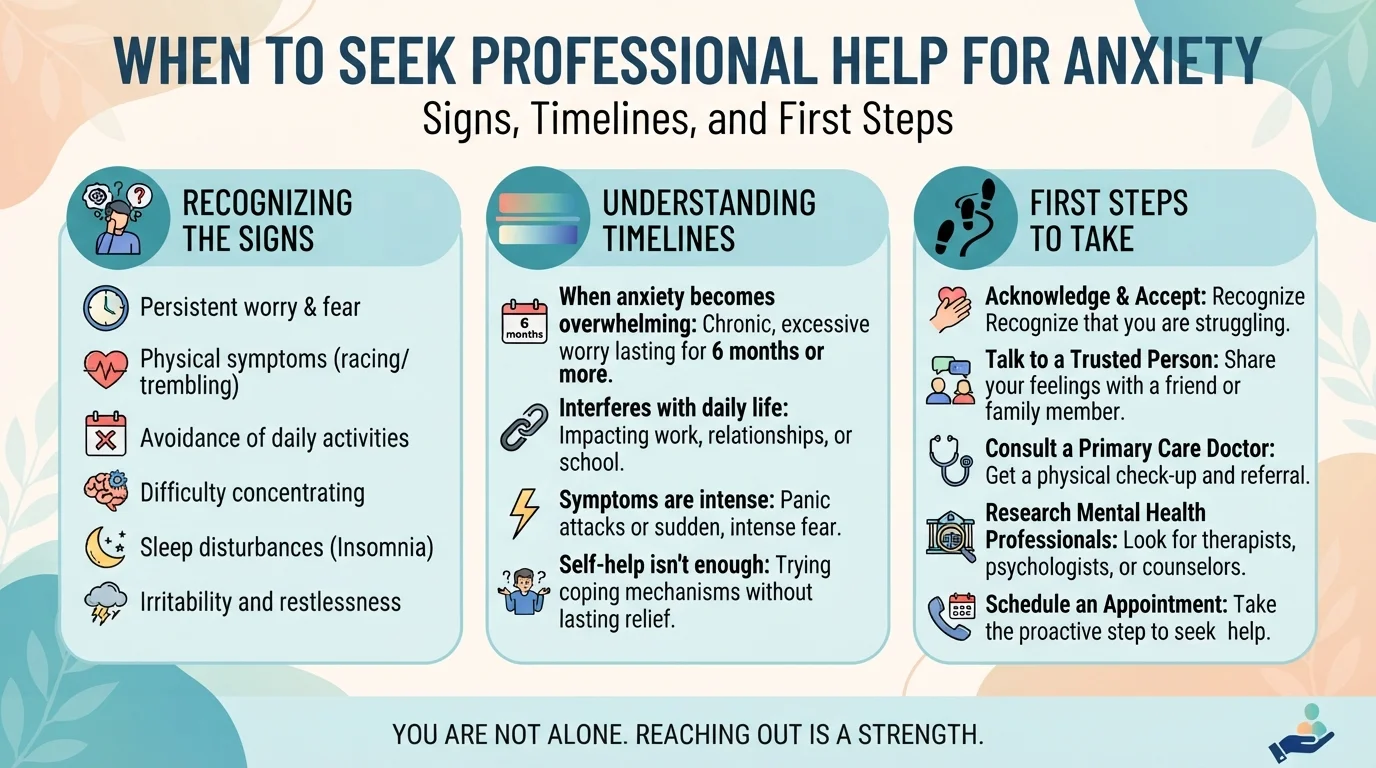
When to Seek Professional Help for Anxiety: Signs, Timelines, and First Steps
Anxiety (anxious distress) is the body's alarm response to a perceived threat, marked by worry, muscle tension, and a faster...