

How to Find a Licensed Male Therapist in California
Plenty of people know the moment they decide they want therapy. Fewer people know what to type into the search bar next. And if you already have a feeling that you would be more comfortable talking to a man, the search gets a little more specific and a little more confusing.
Maybe you are a man who has never talked about feelings with anyone and the idea of opening up to a woman feels like too big a first step. Maybe you are a woman whose past experiences make a male therapist feel like the wrong fit, or maybe the opposite is true and you want a male perspective. Maybe you just want someone you click with, and that happens to be a man. Every one of those reasons is valid, and you do not owe anyone an explanation.
This guide walks you through how to find a licensed male therapist in California, whether you want to meet in an office or from your couch. You will learn what the different licenses mean, where to search, what to ask and how to tell if a therapist is the right match.
Prefer to skip the search? IGotU Corp offers online and in-person therapy with licensed therapists in California, including Vincente Mozell, LCSW in Rancho Cucamonga. Request an appointment and start with a free consultation.
Why Do Some People Want a Male Therapist?
There is no single reason, and none of them are wrong. Here are some of the most common ones.
Comfort. Some people simply open up more easily to a man. Comfort matters in therapy because you cannot do the work if you are holding back.
Shared experience. Many men want to talk to someone who understands what it is like to grow up hearing “toughen up” or “don’t cry.” A male therapist may relate to pressures around work, fatherhood, masculinity or relationships in a way that feels natural.
Past experiences. Some people have had a hard time with women in their lives and would rather start with a man. For others the reverse is true. Either way, feeling safe comes first.
Cultural or personal values. In some families and communities, talking with a therapist of the same gender feels more appropriate.
A male perspective. Some women want to hear how a man might see a situation, especially around dating, marriage or family.
Research on therapy outcomes keeps pointing to the same thing. The relationship between you and your therapist, often called the therapeutic alliance, is one of the strongest predictors of progress. A therapist’s gender is only one piece of that. Still, if gender helps you feel safe enough to start, that is a good enough reason to look for it.
What Does Licensed Mean for a Therapist in California?
This part matters more than most people realize. In California, the word “therapist” is not a protected title, so someone can call themselves a therapist without having the training to back it up. A license is what proves a person has met state standards for education, supervised clinical hours and exams.
Here are the main licenses you will see.
LCSW (Licensed Clinical Social Worker). LCSWs hold a master’s degree in social work and complete thousands of hours of supervised clinical experience. They treat anxiety, depression, trauma, relationship problems and more.
LMFT (Licensed Marriage and Family Therapist). LMFTs focus on relationships and family systems but also work with individuals on many mental health concerns.
LPCC (Licensed Professional Clinical Counselor). LPCCs have a master’s degree in counseling and provide individual therapy for a wide range of concerns.
Psychologist (PhD or PsyD). Psychologists hold a doctoral degree and can provide therapy and psychological testing.
Psychiatrist (MD or DO). Psychiatrists are medical doctors who can prescribe medication. Many focus on medication management and refer you to a therapist for talk therapy.
Watch out for the words “associate,” “registered associate” or “trainee.” These are people still working toward full licensure. They practice under supervision, and many are skilled, but if you want a fully licensed therapist, look for the full credential.
How Do You Check a Therapist’s License in California?
You can verify any California therapist in a couple of minutes, and you should do it before your first session.
- Ask for the license type and number. A licensed therapist will share this without hesitation. It is usually on their website or profile.
- Look them up with the state. LCSWs, LMFTs and LPCCs are licensed by the California Board of Behavioral Sciences. Psychologists are licensed by the Board of Psychology. Psychiatrists are licensed by the Medical Board of California. Each board has a free online license lookup.
- Check the status. You want to see that the license is current and active. The lookup will also show whether there are any public disciplinary actions.
This takes very little time and gives you real peace of mind.
Where Can You Search for a Male Therapist in California?
Once you know what to look for, these are the best places to start.
Therapist directories. Sites like Psychology Today let you filter by location, gender, specialty, insurance and whether the therapist offers online sessions. This is the fastest way to build a short list of men near you.
Practice websites. Local clinics usually list their therapists with photos, bios and specialties. Reading a bio gives you a sense of tone and approach, which a directory listing often cannot.
Your insurance provider. Your insurer can give you a list of in-network therapists. You can then call or search each name to see their gender and specialties.
Your doctor. A primary care provider often knows therapists in the area and can refer you.
Word of mouth. Friends, coworkers or family members may have a recommendation. Just remember that a therapist who works well for someone else may not be the right fit for you.
Local practices that offer both formats. If you are in Southern California, a practice like IGotU Corp serves clients in person in Rancho Cucamonga and online across the state, which gives you flexibility from the start.
Can You See a Male Therapist Online in California?
Yes, and for many people online therapy is the easiest way to find the right match. When you are not limited to your own neighborhood, you have far more choices.
There is one rule to know. A therapist must be licensed in California to provide therapy to someone who is physically located in California at the time of the session. A therapist with a license from another state generally cannot treat you while you are in California unless they also hold a California license. Always confirm this before booking.
Online therapy also has some practical benefits.
- No commute or parking
- Easier scheduling around work and family
- More privacy, since nobody sees you walk into an office
- Access to specialists who may be far from where you live
- Comfort of being in your own space
For many men especially, being at home removes some of the awkwardness of a first session. If privacy matters to you, ask the therapist how they protect your information. Reputable practices use secure platforms that meet HIPAA standards. Online therapy with IGotU Corp is built around secure, confidential sessions for adults across California.
Is In-Person Therapy Better Than Online?
Neither one is better for everyone. It depends on you.
In-person therapy may suit you if you:
- Want a separate space away from home to talk
- Have a busy or noisy home with little privacy
- Feel more connected face to face
- Are working through issues where body language and physical presence feel important
Online therapy may suit you if you:
- Live far from a good match
- Have a packed schedule
- Feel more relaxed at home
- Have trouble getting to appointments
Many people start with one and switch later, or mix the two. A practice that offers both makes that easy.
What Questions Should You Ask a Male Therapist Before the First Session?
Most therapists offer a short call or consultation before you commit. Use it. Here are good questions to ask.
- What is your license type, and is it active in California?
- What do you specialize in, and have you worked with people dealing with what I am going through?
- What does a typical session look like?
- What approach do you use? (For example, Cognitive Behavioral Therapy or Dialectical Behavior Therapy.)
- Do you offer online sessions, in-person sessions or both?
- How much do sessions cost, and do you take my insurance?
- How often will we meet?
- What happens if we turn out not to be a good fit?
That last question is a good one. A caring therapist will tell you plainly that they will help you find someone else if needed. It is a sign of a professional who puts you first.
How Much Does a Therapist in California Cost?
Prices vary by city, license type and experience. Some therapists take insurance, some do not and some offer a sliding scale based on income. Here are the questions that clear things up fast.
- Are you in network with my insurance plan?
- If not, can you give me a receipt to submit for out-of-network reimbursement?
- What is your fee per session, and what is your cancellation policy?
- Do you offer a free consultation?
If cost is a worry, do not rule yourself out before asking. Many people are surprised at how much their plan covers. You can also read about options on the cost and insurance page at IGotU Corp.
What Types of Therapy Can a Male Therapist Offer?
A therapist’s gender does not decide the type of care they provide. What matters is their training and specialty. Some common approaches include the following.
Cognitive Behavioral Therapy (CBT). Helps you notice and change thought patterns that feed anxiety, low mood and unhelpful habits. Learn more about CBT in California.
Dialectical Behavior Therapy (DBT). Builds skills in mindfulness, emotional regulation, distress tolerance and healthy relationships. See how DBT works.
Trauma therapy. Helps you process painful experiences and rebuild a sense of safety. Read about trauma therapy.
Anxiety and depression treatment. Focused support for worry, panic, low motivation and persistent sadness. Explore anxiety treatment and depression treatment.
Individual therapy. One on one sessions that help you understand yourself better and work through life transitions. See individual therapy in California.
How Do You Know If a Therapist Is the Right Fit?
You will not always know after one session, but there are signs worth paying attention to.
Good signs
- You feel heard and not judged
- The therapist explains their approach in plain language
- You leave sessions feeling a little lighter or clearer
- You feel safe saying what is really on your mind
- The therapist asks for your feedback and respects it
Warning signs
- You feel dismissed or rushed
- The therapist talks about themselves far more than they listen
- You feel pressured or judged
- Boundaries feel blurry
- Nothing changes after several sessions and the therapist will not adjust the plan
Give it a few sessions before you decide. It can take a little time to settle in. But if your gut keeps telling you it is not working, that is useful information, and you are free to try someone else.
Looking for a therapist you can talk to openly? Meet Vincente Mozell, LCSW at IGotU Corp, who works with adults on anxiety, trauma and life transitions through in-person and online sessions in California. Book a free consultation.
What If You Cannot Find a Male Therapist With Openings?
Good therapists are often busy. If the first few you contact have waitlists, here is what to try.
- Ask to be added to the waitlist while you keep looking
- Widen your search to online therapists anywhere in California
- Ask the therapist for referrals to colleagues
- Try a practice with several clinicians, which often has faster openings
- Be flexible on times, since early mornings, evenings or weekdays may open up options
Also keep in mind that finding the right person may take more than one try. That is normal and does not mean something is wrong with you.
Frequently Asked Questions | Male Therapist California
How do I find a licensed male therapist near me in California?
Start with a therapist directory and filter by gender, location and online availability. Then confirm the license through the California Board of Behavioral Sciences, the Board of Psychology or the Medical Board, depending on the type of provider. Practices like IGotU Corp in Rancho Cucamonga also offer a direct way to book.
Can I choose the gender of my therapist?
Yes. You are allowed to ask for a therapist of a particular gender. Most directories have a gender filter, and many practices will happily match you based on your preference.
Are male therapists better for men?
Not necessarily. Research shows the quality of the relationship between you and the therapist matters most. Some men feel more at ease with a male therapist, and others do not mind either way. What counts is feeling comfortable and understood.
Is online therapy as effective as in-person therapy?
For many concerns, such as anxiety and depression, studies have found online therapy can work about as well as meeting in person. The best option depends on your needs and what you will actually stick with.
Does insurance cover therapy in California?
Many plans do, though coverage varies. Call your insurer and ask about mental health benefits, copays, deductibles and whether you need a referral. You can also ask a therapist if they can provide a receipt for out-of-network reimbursement.
How long does it take to find the right therapist?
Some people click with the first therapist they meet. Others try two or three before settling in. Try not to get discouraged, since the right match is worth the effort.
What is the difference between a therapist and a psychiatrist?
A therapist, such as an LCSW, LMFT or LPCC, provides talk therapy. A psychiatrist is a medical doctor who can diagnose and prescribe medication. Some people see both.
Do you offer therapy for minors?
IGotU Corp provides services for adults and does not offer services for minors at this time.
Can I see a male therapist online if I live in California?
Yes, as long as the therapist is licensed in California. Online therapy with IGotU Corp is available to adults throughout the state.
Final Thoughts | Male Therapist California
Finding a licensed male therapist in California comes down to a few clear steps. Decide what matters to you, check that the license is real and current, pick between online and in-person care, ask good questions and give the relationship a fair chance to build. You are looking for someone who is qualified, someone you trust and someone you can be honest with.
The hardest part of therapy for most people is the first phone call or form. Once that is done, the rest tends to feel more manageable than expected.
Ready to Take the First Step With IGotU Corp?
Licensed therapists. Online and in-person care across California. Support for anxiety, depression, trauma and life transitions.
- Request an appointment
- Meet the team
- Explore online therapy in California
- Call 909-325-7949 or email Noworries@igotucorp.com
Recent Posts
Related Posts

How to Protect Your Mental Health Without Sacrificing Your Career
It is Sunday evening and your stomach is already tight. You are replying to emails you will see again in...
How to Find a Licensed Male Therapist in California
Plenty of people know the moment they decide they want therapy. Fewer people know what to type into the search...

How to Do the 5-4-3-2-1 Technique Silently in Class
Learn how to manage anxiety discreetly during class using the simple and effective 5-4-3-2-1 grounding technique in this article. Exclusive...
How to Set Boundaries Without Guilt: Stop People Pleasing
You said yes again. You knew while the words were leaving your mouth that you did not want to say...
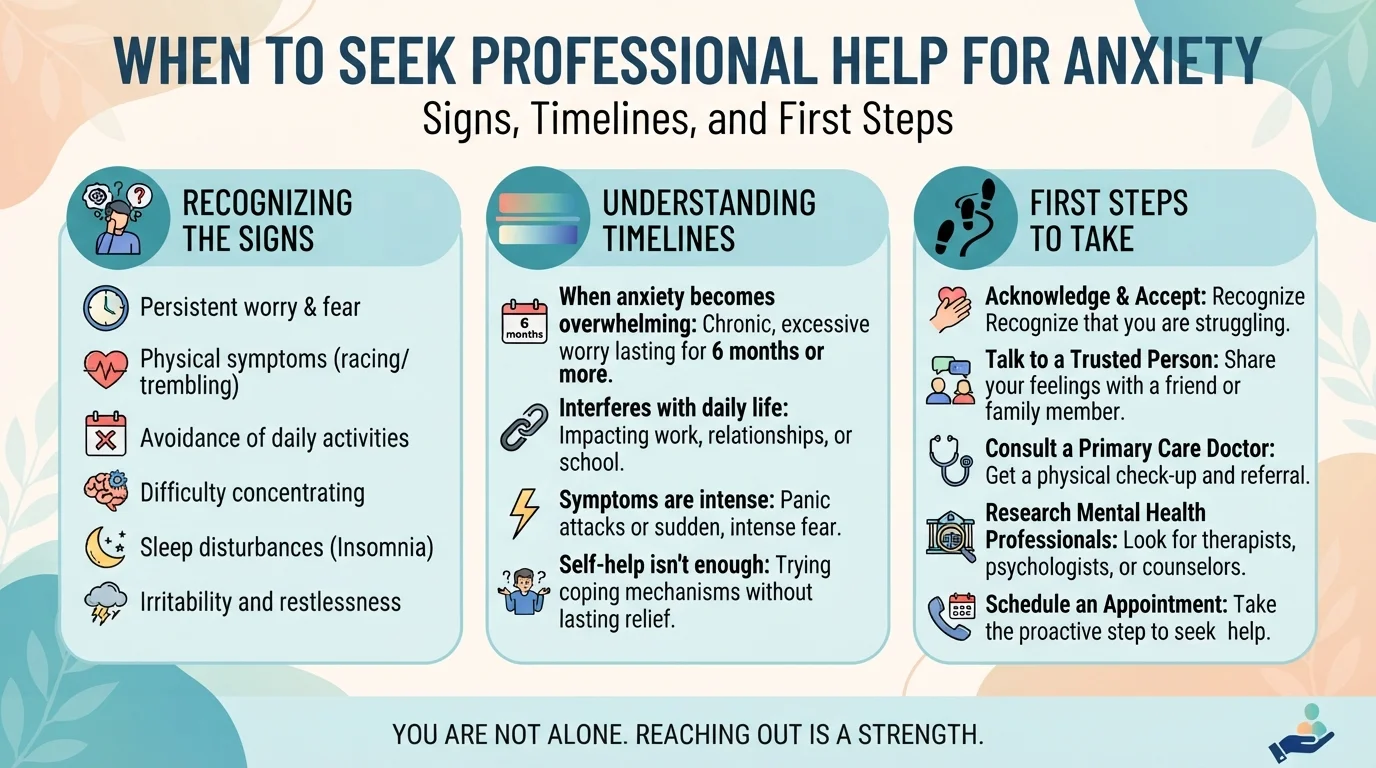
When to Seek Professional Help for Anxiety: Signs, Timelines, and First Steps
Anxiety (anxious distress) is the body's alarm response to a perceived threat, marked by worry, muscle tension, and a faster...