
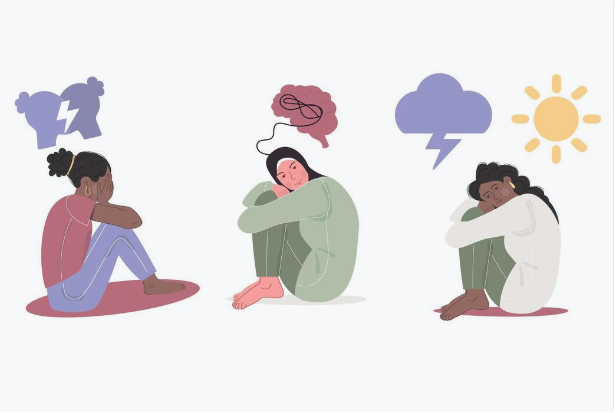
Understanding What a Mental Health Crisis Looks Like
The Crisis Nobody Recognized Until It Was Almost Too Late
She had been going to work every day. She was answering texts — slowly, but answering them. She looked tired when people saw her, but everyone is tired. Nobody knew that behind the functioning exterior, she was not sleeping, not eating, not able to imagine a reason to keep going. Nobody knew because nothing about her behavior announced itself as a crisis. It didn’t look like what people expect a crisis to look like.
That gap — between what a mental health crisis actually looks like and what most people expect it to look like — is one of the most consequential misunderstandings in mental health. It delays intervention. It allows suffering to compound quietly. And it means that the people who most need support are often the ones who appear, from the outside, to be managing fine.
A mental health crisis is not always a dramatic breakdown. It is not always a phone call from a hospital or a scene that announces itself unmistakably. It is often quieter, slower, and more hidden than that — in other people, and sometimes even in ourselves.
If you or someone you care about is showing signs of a mental health crisis right now, IGOTU Corp connects you with licensed mental health professionals who can help — quickly, legitimately, and with the specific expertise your situation requires. Visit IGOTU Corp today and take their free mental health assessment. And if you want to understand what to look for, what it means, and what to do — keep reading.
What Is a Mental Health Crisis?
A mental health crisis is any situation in which a person’s psychological state deteriorates to a point where their ability to function, stay safe, or care for themselves is significantly compromised — and where the severity or urgency of the situation requires immediate or prompt intervention.
The word “crisis” implies suddenness, but mental health crises are often neither sudden nor obvious. They can develop gradually over weeks or months, with warning signs that are individually easy to rationalize or dismiss but collectively represent a significant deterioration in someone’s mental health.
A mental health crisis can involve:
A person becoming unable to perform basic daily functions — sleeping, eating, maintaining hygiene, going to work or school.
A person losing contact with reality — experiencing hallucinations, delusions, or severe disorganization of thought.
A person experiencing suicidal thoughts, making plans, or taking actions that suggest they are considering ending their life.
A person engaging in behaviors that put themselves or others at serious risk — reckless driving, substance abuse that has escalated beyond previous levels, self-harm.
A person’s existing mental health condition deteriorating rapidly to a level beyond what previous coping strategies can manage.
What all of these have in common is a level of psychological distress or disorganization that requires more than ordinary support — and that is unlikely to resolve without active, appropriate intervention.
Why Mental Health Crises Are So Frequently Missed
Before detailing the specific signs of a mental health crisis, it is worth understanding why they are so often missed — because the reasons are structural and psychological, not simply failures of attention or care.
People in Crisis Often Hide It
The experience of mental health crisis frequently includes shame — the belief that something is fundamentally wrong with you, that others would be burdened or frightened if they knew, that functioning is what you owe the world regardless of what is happening internally. This shame drives concealment.
People in mental health crises become skilled at performing normalcy — answering messages, showing up, saying they’re fine. The performance is exhausting, and it deepens the crisis, but it is often the only option that feels available to someone who has internalized the belief that their suffering is not allowed to be visible.
Mental Health Crisis Doesn’t Look Like the Movies
Popular culture has given us a template for what a mental health crisis looks like — a dramatic breakdown, an obvious inability to function, behavior that is clearly and unmistakably abnormal. Real mental health crises frequently look nothing like this.
They look like withdrawal. They look like someone being quieter than usual. They look like someone who has stopped initiating contact. They look like a person who is present physically but absent in every other sense. They look like fine, fine, fine — and then not fine at all.
Warning Signs Are Easy to Rationalize
Each individual sign of an emerging mental health crisis can be explained away. They’re just tired. Work has been stressful. Everyone goes through periods like this. They’ve always been a bit withdrawn. This rationalization is natural and human — but it is also how early intervention gets missed and crises deepen.
The warning signs below are most significant not in isolation but in combination, in intensity, and in how much they represent a change from a person’s baseline.
Warning Signs of a Mental Health Crisis in Others
Significant Withdrawal and Isolation
One of the most consistent early warning signs of a mental health crisis is withdrawal — from social contact, from activities previously enjoyed, from family, from friends, from the ordinary rhythms of connection that previously characterized the person’s life.
This is different from the ordinary withdrawal that accompanies a bad week or a period of busyness. It is more pervasive, more sustained, and more complete. Messages go unanswered not occasionally but consistently. Plans are canceled not sometimes but always. The person who used to call now doesn’t return calls. The person who used to show up has stopped showing up.
The withdrawal is particularly significant when it represents a change from baseline — when someone who was previously social and engaged progressively disengages, the trajectory matters as much as the current behavior.
Dramatic Changes in Sleep or Eating
Sleep and appetite are among the most reliable biological indicators of psychological state. The person who has stopped sleeping — lying awake through the night, waking repeatedly, or sleeping fitfully and waking exhausted — and the person who has stopped eating, or conversely who is eating in ways that have become compulsive or uncontrolled, is showing physiological signs of significant psychological distress.
These changes are not always visible to outsiders. But comments about not sleeping, visible weight loss or gain over a short period, references to having no appetite, or the physical signs of chronic sleep deprivation — dark circles, slowed movement, difficulty concentrating — can all signal that something significant is happening beneath the surface.
Expressions of Hopelessness or Worthlessness
Pay close attention to language. When someone begins expressing persistent hopelessness — statements that things will never get better, that there is no point, that the future holds nothing — or persistent worthlessness — statements that they are a burden, that no one would miss them, that they contribute nothing and deserve nothing — these are not simply expressions of a bad mood.
They are cognitive patterns associated with serious depression and, at their most intense, with suicidal ideation. The specific language matters. “I’m so tired of everything” is different from “I don’t see the point of anything.” “I’ve been struggling” is different from “I don’t think things are going to get better.”
When someone uses language that expresses hopelessness or worthlessness consistently — not once in a frustrated moment, but repeatedly, across different conversations and contexts — that pattern is clinically significant and warrants direct, compassionate engagement.
Giving Away Possessions
This is one of the warning signs most specifically associated with suicidal crisis — and one of the most frequently missed because it can appear generous or benign on the surface.
A person who begins giving away meaningful possessions — items of personal significance, things they have always treasured, practical items they would normally keep — may be divesting themselves of things they no longer expect to need. This behavior, particularly when it occurs alongside other warning signs, should be taken seriously and addressed directly.
Increased Substance Use
A significant escalation in alcohol consumption, drug use, or reliance on substances to function — beyond a person’s previous pattern — is both a warning sign of mental health crisis and a factor that accelerates it. Substances are frequently used to manage unbearable internal states, and their escalation reflects the escalation of the underlying distress.
The escalation is the relevant signal — someone whose alcohol use has visibly and rapidly increased, someone who is using substances to get through situations they previously navigated without them, someone who seems increasingly unable to tolerate ordinary experience without chemical modulation.
Extreme Mood Shifts or Emotional Dysregulation
Moods that shift dramatically and rapidly — from intense distress to apparent calm to rage to numbness within a short period — can indicate several things: a mental health crisis involving the emotional regulation systems, a manic or hypomanic episode, a dissociative response to overwhelming distress, or the kind of emotional instability that accompanies acute psychological deterioration.
The extreme quality of the mood states, and the speed with which they change, is what distinguishes this from ordinary emotional variation. People in mental health crises often describe feeling like they have no control over their emotional state — like they are at the mercy of something internal and overwhelming.
Neglecting Basic Self-Care
When someone stops maintaining basic hygiene — stops showering regularly, stops changing clothes, lets their living space deteriorate significantly — this is a sign that the cognitive and motivational resources required for self-care have been severely compromised.
Self-care neglect is a symptom of serious depression, psychosis, and other acute mental health conditions. It is particularly significant when it represents a change from a person’s previous habits — someone who was previously clean and organized whose home has become chaotic, or someone who previously cared about their appearance who has stopped entirely.
Talking About Death or Dying
Any direct or indirect reference to death, dying, or not wanting to be alive should be taken seriously — every time, without exception.
Direct statements — “I want to die,” “I’ve been thinking about ending my life,” “I don’t want to be here anymore” — are clear and require immediate response.
Indirect statements are more common and more frequently dismissed: “I won’t be around much longer,” “everyone would be better off without me,” “I’m so tired of fighting,” “I just want it to stop.” These statements are not always the explicit articulation of suicidal intent — but they are always expressions of significant psychological pain that require compassionate, direct engagement.
The most dangerous response to such statements is to treat them as hyperbole, to minimize them, or to change the subject. The most helpful response is to engage directly, without panic but with seriousness and care.
Psychotic Symptoms
Symptoms of psychosis — hallucinations (seeing or hearing things others don’t), delusions (fixed beliefs that are clearly disconnected from reality), significant disorganization of thought or speech — represent a mental health crisis that requires prompt professional intervention.
Psychosis can occur as part of conditions including schizophrenia, schizoaffective disorder, bipolar disorder with psychotic features, severe depression with psychotic features, and in response to certain substances. It can also be the first presentation of a serious psychiatric condition that has not previously been recognized.
A person experiencing psychosis may not recognize that their experiences are symptoms — the hallucinations feel real, the delusions feel true. This makes navigation particularly delicate, requiring calm, non-confrontational engagement and professional support.
Warning Signs of a Mental Health Crisis in Yourself
Recognizing a mental health crisis in yourself is often harder than recognizing it in others — partly because the crisis itself compromises the cognitive clarity needed for self-assessment, and partly because the gradual nature of most crises makes it easy to normalize each deterioration as it occurs.
You Can No Longer Remember Feeling Okay
When you struggle to remember what it felt like to not feel the way you currently feel — when the idea of feeling different seems theoretical rather than real — that duration and pervasiveness is clinically significant. Depression in particular produces a quality of timelessness — the sense that this is simply how things are, have always been, and will always be.
You Are Getting Through Days, Not Living Them
There is a distinction between living a life and surviving it. When your entire cognitive and emotional energy is consumed by the effort of simply getting through each day — making it to the end of the day without it getting worse — you have crossed from ordinary difficulty into something that requires support.
You Have Stopped Caring About Things That Previously Mattered
Anhedonia — the inability to experience pleasure or interest in activities that previously brought both — is one of the most significant symptoms of serious depression and one of the most reliable indicators that a mental health crisis has developed or is developing. When you notice that nothing interests you, nothing excites you, nothing feels worth doing or looking forward to — and this has been true for weeks rather than days — that is a meaningful signal.
Your Thoughts Have Become Frightening
When your own thoughts frighten you — when intrusive thoughts about harming yourself or not wanting to exist have become regular or intensifying — that is a sign that you need professional support urgently. You do not have to be certain you will act on these thoughts for them to constitute a crisis. Their presence and intensity alone indicates a level of psychological distress that requires intervention.
You Are Functioning but Not Fine
The most important thing to understand about mental health crises is that functioning does not preclude crisis. You can be going to work, answering emails, making dinner, and simultaneously be in a mental health crisis. The functioning and the crisis coexist. The functioning does not mean you are okay. It means you have not yet stopped functioning — which is different.
If you are doing the things you need to do while simultaneously feeling like you are disappearing inside, or like you don’t care whether you keep going, or like something is profoundly and urgently wrong — trust that feeling over the surface evidence of your functioning.
What to Do When You Recognize a Mental Health Crisis
If Someone Else Is in Crisis
Engage directly and calmly. The most important thing is to open the conversation — not to fix it, not to have answers, but to make genuine contact. “I’ve been worried about you. I’ve noticed you seem to be struggling. I’m here and I want to listen.” Direct, calm, non-judgmental engagement is the single most powerful first response.
Ask about suicidal thoughts directly. Research consistently shows that asking someone directly whether they are thinking about suicide does not plant the idea — it opens a door that may be the only door available to a person in crisis. “Are you having thoughts of hurting yourself or ending your life?” asked calmly and with care is appropriate and important.
Do not leave them alone if there is immediate risk. If someone has expressed suicidal intent with a plan, or if you believe they are in immediate danger, do not leave them alone. Stay with them, call 988 (the Suicide and Crisis Lifeline), or accompany them to emergency services.
Connect them with professional support. Your role is not to be their therapist. Your role is to be the bridge to professional support — to help them make the call, to sit with them while they do, to help them find IGOTU Corp or a crisis line or an emergency room if that’s what the situation requires.
If You Are in Crisis
Tell someone. This is the most important step and often the hardest. Tell one person — a friend, a family member, a colleague, anyone — that you are not okay. You do not have to explain everything. You do not have to have the language for it. Just telling one person breaks the isolation that crises thrive in.
Contact a crisis resource. The 988 Suicide and Crisis Lifeline is available by call or text, 24 hours a day. The Crisis Text Line is available by texting HOME to 741741. These resources are staffed by trained counselors and are available immediately, without appointment, without insurance, and without requiring you to be in immediate danger to contact them.
Seek professional help. A mental health crisis is a clinical situation that requires clinical support. IGOTU Corp connects you with licensed therapists who can provide urgent support, proper assessment, and the evidence-based treatment that mental health crises require.
Get Immediate Professional Support Through IGOTU Corp
A mental health crisis — whether you are experiencing one yourself or watching someone you love move through one — is not a situation for waiting lists, generic advice, or hoping it resolves on its own.
IGOTU Corp connects you with licensed mental health professionals who specialize in crisis support, trauma, depression, anxiety, and the full range of conditions that underlie mental health crises. Their matching process is designed to get you to the right clinician quickly — without the months of searching, the wrong fits, and the administrative burden that makes accessing mental health care in a crisis feel impossible.
Whether you are in the early stages of recognizing that something is wrong, in the middle of a full crisis, or supporting someone else through one — IGOTU Corp’s licensed therapist network is equipped to meet you exactly where you are.
Visit IGOTU Corp today, take their free mental health assessment, and get matched with a licensed professional who can provide the support this situation requires. Because a mental health crisis does not improve through endurance alone. It improves through the right intervention, delivered at the right time, by a clinician who knows what they’re doing.
After the Crisis: What Recovery Actually Looks Like
Mental health crises, when properly supported, have an after. Understanding what that after looks like — and what it requires — matters for anyone who is moving through one or supporting someone who is.
Stabilization Comes First
The immediate priority following a mental health crisis is stabilization — returning to a baseline level of safety and function. This may involve medication adjustments, more frequent therapy appointments, temporary reduction in external demands, and the deliberate prioritization of sleep, nutrition, and the most basic forms of self-care.
Stabilization is not recovery. It is the platform from which recovery becomes possible. Treating stabilization as the end of the process leaves the underlying conditions that produced the crisis unaddressed — which is the primary reason crises recur.
Understanding What Produced the Crisis
Once stabilized, the therapeutic work of understanding what produced the crisis becomes essential. Was it an untreated or undertreated underlying condition — depression, anxiety, BPD, PTSD — that has been present for years and finally exceeded the person’s coping capacity? Was it an acute external stressor that overwhelmed an otherwise adequate mental health foundation? Was it a combination of biological vulnerability, psychological patterns, and situational stress that converged in a way that exceeded the available resources?
Understanding the confluence of factors that produced the crisis is the foundation of preventing the next one. This work requires the support of a skilled clinician — not because the person in recovery cannot think clearly about their own experience, but because the patterns that produce crises are often outside of conscious awareness and require skilled therapeutic inquiry to identify.
Building a Crisis Plan
A crisis plan — sometimes called a safety plan or a psychiatric advance directive — is a concrete, personalized document that specifies what warning signs to watch for, what coping strategies to use when those signs appear, who to contact and in what order, what professional resources are available, and what makes the environment safer during high-risk periods.
Crisis plans work because they are made in advance — before the crisis state has compromised the cognitive clarity needed for good decision-making. They externalize the decision-making process to a document created by the person at their most reflective, making it available when they are at their least.
A good crisis plan is developed collaboratively with a therapist and updated as circumstances change. It is one of the most concrete, most practical, most effective tools available for reducing both the frequency and the severity of mental health crises.
Frequently Asked Questions (FAQs) About Mental Health Crises
Q: What is the difference between a mental health crisis and a mental breakdown? “Mental breakdown” is not a clinical term — it is a colloquial expression that most people use to describe a period of acute psychological deterioration. A mental health crisis is the clinical equivalent — a state in which psychological distress or disorganization has reached a level that requires prompt intervention. The terms are often used interchangeably, though “crisis” is more precise and more useful for identifying the appropriate response.
Q: Can a mental health crisis happen suddenly with no warning signs? Acute crises can appear sudden — a panic attack, a psychotic break, an acute suicidal episode — but they are almost always preceded by warning signs that were present but missed or minimized. Understanding this is important because it means that looking for and responding to early warning signs is one of the most effective crisis prevention strategies available.
Q: Is it possible to be in a mental health crisis and not know it? Yes — and this is one of the most important things to understand about mental health crises. The psychological state of crisis can compromise the cognitive clarity needed for accurate self-assessment. Depression in particular produces distorted thinking that makes the current state feel normal or permanent. People can be in significant crisis while genuinely believing they are managing adequately.
Q: Should I call 911 or 988 during a mental health crisis? 988 (the Suicide and Crisis Lifeline) is specifically designed for mental health crises and should be the first call in most situations involving suicidal ideation, acute psychological distress, or mental health emergencies. 911 is appropriate when there is immediate physical danger — when someone has already taken steps to harm themselves or others, or when a medical emergency is present alongside the mental health crisis.
Q: How do I talk to someone who denies they are in crisis? Calmly, consistently, and without ultimatums. Denial is a common response to being identified as in crisis — it reflects both the shame around mental health struggles and the genuine difficulty of accurately self-assessing during crisis. Express your concern specifically (“I’ve noticed you’ve seemed really withdrawn and you mentioned not seeing the point last week — I’m worried about you”), listen without arguing about whether they agree with your assessment, and make clear that your concern and support are available regardless of whether they accept the framing.
Q: What if someone refuses professional help during a crisis? Continue to maintain connection and express concern. Refusing help is common and does not mean the person is beyond help — it often means the crisis has not yet reached the threshold that makes help feel possible or necessary, or that the shame of accepting help is currently outweighing the pain of continuing without it. Document specific warning signs. Know what options exist for involuntary intervention in your area if safety is at immediate risk. And seek support for yourself — supporting someone through a mental health crisis is its own demanding experience.
Q: Can therapy prevent future mental health crises? Yes — significantly. Evidence-based therapy that addresses the underlying conditions and psychological patterns that produce mental health crises, combined with a personalized crisis plan, reduces both the frequency and severity of future crises for most people. This is one of the most important reasons that therapy following a crisis is not optional maintenance — it is active prevention.
Q: Where can I get help for a mental health crisis right now? For immediate crisis support: call or text 988, or text HOME to 741741 for the Crisis Text Line. For professional mental health support that addresses both the immediate crisis and the underlying conditions — IGOTU Corp connects you with licensed mental health professionals quickly and efficiently. Visit IGOTU Corp today to take their free assessment and get matched with the right clinician for your situation.
The Bottom Line: Crises Are Recognizable, Treatable, and Survivable
A mental health crisis is not the end of anything. It is a signal — loud, urgent, and demanding to be heard — that something has exceeded the available support and requires more than ordinary coping can provide.
The warning signs covered in this article are not esoteric or hard to learn. They are recognizable once you know what to look for. The gap between not knowing and knowing is the gap between intervention that comes too late and intervention that comes when it can still change the trajectory of someone’s life.
For the person reading this who is worried about someone they love: trust your instinct. The worry you feel is data. Act on it gently, directly, and persistently — because the cost of engaging with someone who turns out not to be in crisis is a slightly awkward conversation. The cost of not engaging with someone who is in crisis can be irreversible.
For the person reading this who recognizes themselves in what has been described: what you are experiencing is real, it is not permanent, and it is not something you have to keep enduring alone. Help exists, it is accessible, and it works.
IGOTU Corp’s licensed mental health professionals are ready to provide that help — matched specifically to your situation, your needs, and the urgency of what you’re facing. Visit IGOTU Corp today. Take the free assessment. Get the support that this moment requires.
Because mental health crises are survivable. And more than surviving them — recovering from them, understanding them, and building a life that is more resilient because of what they revealed — that is possible too.
Recent Posts
Related Posts

How to Protect Your Mental Health Without Sacrificing Your Career
It is Sunday evening and your stomach is already tight. You are replying to emails you will see again in...

How to Find a Licensed Male Therapist in California
Plenty of people know the moment they decide they want therapy. Fewer people know what to type into the search...

How to Do the 5-4-3-2-1 Technique Silently in Class
Learn how to manage anxiety discreetly during class using the simple and effective 5-4-3-2-1 grounding technique in this article. Exclusive...
How to Set Boundaries Without Guilt: Stop People Pleasing
You said yes again. You knew while the words were leaving your mouth that you did not want to say...
When to Seek Professional Help for Anxiety: Signs, Timelines, and First Steps
Anxiety (anxious distress) is the body's alarm response to a perceived threat, marked by worry, muscle tension, and a faster...