
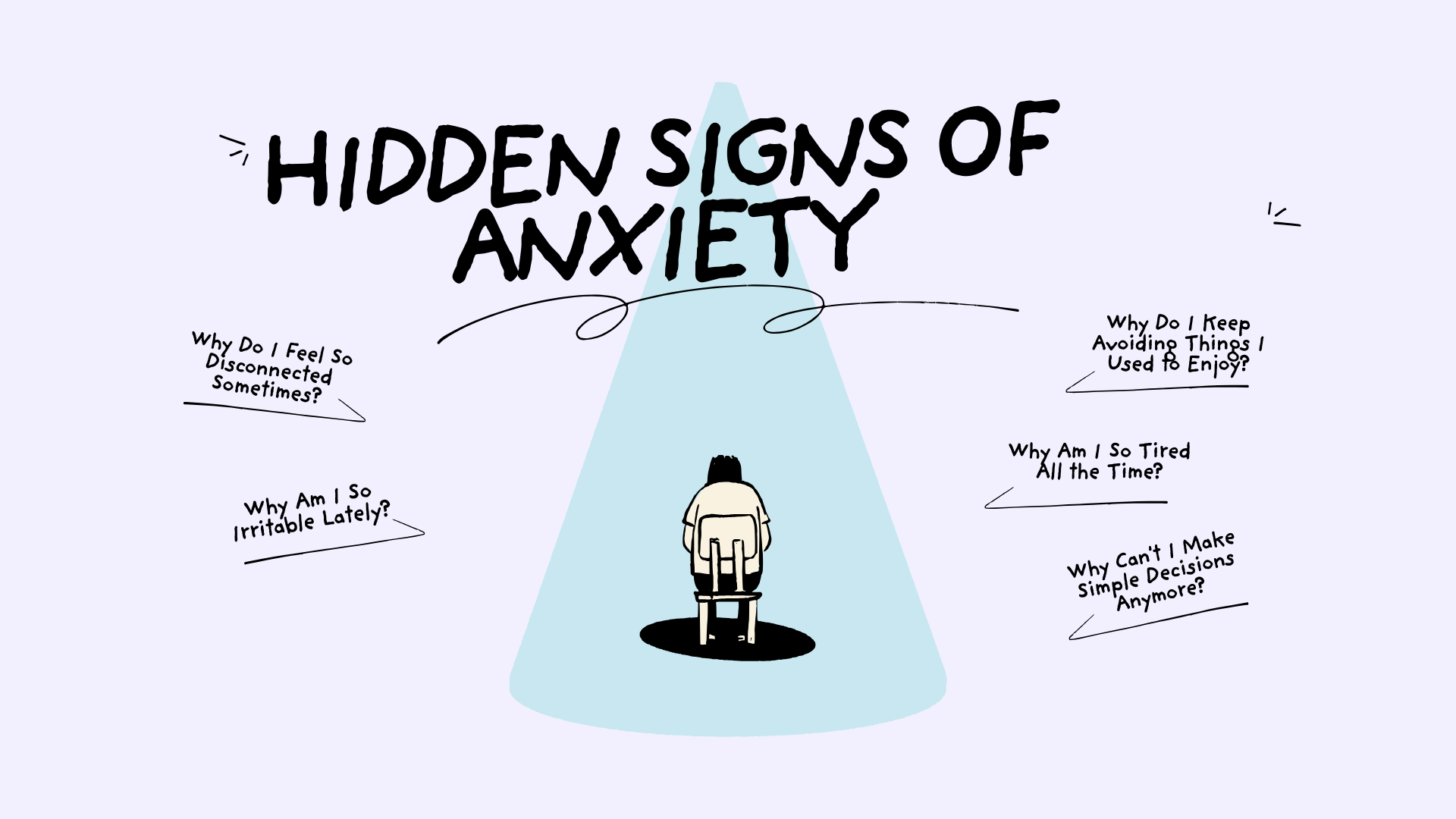
What Triggers Anxiety? Types and Proven Therapies for Anxiety Disorder
What Is Anxiety and Why Does It Happen to You?
Anxiety is the most common mental health condition on earth. It affects over 40 million adults in the United States alone, cuts across every demographic, and shows up in forms that range from a persistent low hum of worry to full-blown panic attacks that send people to emergency rooms convinced they are dying.
And yet, despite how common it is, most people who live with anxiety spend years not fully understanding what is actually happening to them — what triggers it, why it won’t go away, and what could genuinely help.
That gap between experience and understanding is part of what makes anxiety so difficult to live with. When you don’t know what’s driving something, you can’t address it effectively. You manage it, you avoid it, you white-knuckle your way through it — but you don’t actually change it.
This article closes that gap. It explains what anxiety actually is neurologically, what triggers it, which of the several distinct anxiety disorders you might be dealing with, and which therapies the research shows actually work — for each specific type.
What Is Actually Happening in Your Brain During Anxiety?
Anxiety is not simply excessive worrying. It is a neurobiological condition rooted in dysregulation of the brain’s threat-detection and stress-response systems — specifically the amygdala, which functions as your brain’s alarm system.
In a healthy threat-response cycle, the amygdala detects danger, fires an alarm, and the body responds with the physiological stress response — cortisol and adrenaline release, heart rate increase, breathing acceleration, muscle tension. When the threat passes, the prefrontal cortex sends the all-clear and the system returns to baseline.
In anxiety disorders, this system misfires. The amygdala is hyperreactive — it fires in response to stimuli that aren’t genuinely dangerous, fires more intensely than the situation warrants, and fails to return to baseline efficiently once activated. The prefrontal cortex, which should apply the brakes, is less able to modulate those responses.
The result is a nervous system perpetually calibrated for a threat level that doesn’t match reality — producing fear, physical symptoms, and the cognitive distortions that together constitute the anxiety experience.
What Triggers Anxiety? The Complete Breakdown
Anxiety triggers fall into several categories — and understanding yours specifically is one of the most practically useful things you can do, because it tells you a great deal about which type of anxiety disorder you may be dealing with and which interventions are most likely to help.
External Triggers
Stressful life events and major transitions. Job loss, divorce, moving, bereavement, financial crisis, health diagnoses — major stressors activate the anxiety system in almost everyone. For people with anxiety disorders, these events can trigger episodes of significantly heightened anxiety that persist well beyond what the situation seems to warrant.
Relationship conflict and interpersonal tension. For many people with anxiety, conflict with partners, family members, friends, or colleagues is a primary trigger. The threat-detection system interprets interpersonal danger as seriously as physical danger — sometimes more so.
Performance and evaluation situations. Presentations, exams, job interviews, social gatherings, first dates — any situation in which you are being observed, assessed, or judged activates anxiety in ways that range from manageable to completely debilitating depending on your specific anxiety profile.
Health-related stimuli. For people with health anxiety, physical sensations — a racing heart, a headache, a lump felt when touching your body — trigger immediate, intense fear of serious illness. Medical appointments, waiting rooms, and health news can be significant triggers.
News and social media consumption. The algorithmic delivery of threat-relevant content — violence, political instability, environmental disaster, economic crisis — activates the threat-detection system continuously and is one of the most underappreciated drivers of chronic anxiety in the current era.
Environmental factors. Crowded spaces, loud environments, enclosed places, heights, certain animals — specific environmental stimuli can function as powerful anxiety triggers for people with specific phobias or sensory sensitivities.
Internal Triggers
Intrusive thoughts. Unwanted, distressing thoughts that arrive without invitation — often about harm, contamination, forbidden topics, or catastrophic outcomes — are particularly significant triggers for OCD and can produce intense anxiety in anyone who experiences them.
Physical sensations. A slightly elevated heart rate, a momentary dizziness, a tension headache — for people with panic disorder and health anxiety, noticing physical sensations and catastrophically misinterpreting them is one of the most powerful anxiety triggers that exists.
Uncertainty. Intolerance of uncertainty is one of the most robust psychological constructs in anxiety research — a core feature of GAD and a contributing factor in virtually every anxiety disorder. Not knowing what will happen produces anxiety that can feel as intense as knowing something bad will happen.
Memories and trauma reminders. For people with PTSD and trauma-related anxiety, sensory stimuli — a smell, a sound, a physical sensation, a visual image — can trigger intense anxiety by activating the traumatic memory network.
Sleep deprivation and physical depletion. The brain’s capacity to regulate anxiety is significantly compromised by insufficient sleep, poor nutrition, dehydration, and physical illness. These physiological states lower the anxiety threshold, making triggers that would otherwise be manageable suddenly overwhelming.
Biological and Lifestyle Triggers
Caffeine. Caffeine directly activates the physiological anxiety response — increasing heart rate, blood pressure, and cortisol. For people with anxiety disorders, especially panic disorder, caffeine consumption can trigger or significantly worsen anxiety episodes. Many people with undiagnosed anxiety are unknowingly amplifying their condition through caffeine.
Alcohol and substance use. While alcohol produces short-term anxiety reduction, withdrawal from alcohol — including the mild withdrawal that follows a night of drinking — produces significant anxiety rebound. Chronic alcohol use worsens anxiety over time and interferes with the neurochemical systems that regulate it.
Hormonal fluctuations. Estrogen and progesterone both influence the anxiety system. Many women notice significant anxiety worsening premenstrually, postpartum, and during perimenopause — tracking hormonal contributions to anxiety is clinically important and frequently overlooked.
Genetics and neurobiology. Anxiety has a meaningful heritable component — if anxiety disorders run in your family, your biological vulnerability is higher. This isn’t deterministic, but it is relevant context for understanding why some people are more vulnerable to anxiety than others in the same environments.
The Major Types of Anxiety Disorders: Which One Are You Dealing With?
Anxiety is not a single condition. The DSM-5 identifies several distinct anxiety disorders, each with specific trigger patterns, symptom profiles, and treatment implications. Knowing which type you’re dealing with is not just academic — it determines which specific therapeutic approach is most likely to help.
Generalized Anxiety Disorder (GAD)
GAD is characterized by chronic, pervasive, difficult-to-control worry across multiple life domains simultaneously — health, finances, relationships, work, safety, the future. The worry in GAD is not proportionate to the actual probability or impact of the feared outcomes, and it persists even when the person recognizes intellectually that they are worrying excessively.
Physical symptoms typically include chronic muscle tension, fatigue, difficulty concentrating, irritability, and sleep disruption. GAD is often described by those living with it as a baseline state of low-level dread that never fully lifts — an exhausting, always-on quality that is distinct from episodic anxiety.
Primary triggers: Uncertainty, open-ended situations, responsibility, anything that can’t be fully controlled or predicted.
Panic Disorder
Panic disorder involves recurrent, unexpected panic attacks — sudden surges of intense fear that peak within minutes and produce a cluster of dramatic physical symptoms: racing or pounding heart, chest tightness, shortness of breath, dizziness, tingling, derealization, and an overwhelming sense of impending doom or death.
The defining feature of panic disorder is not the attacks themselves — many conditions produce panic attacks — but the persistent fear of future attacks and the behavioral changes (avoidance, safety behaviors) that develop in response. The fear of having a panic attack becomes its own anxiety trigger, creating a feedback loop that can progressively narrow a person’s life.
Primary triggers: Specific physical sensations (heart rate changes, dizziness), certain environments previously associated with attacks, caffeine, alcohol withdrawal, sleep deprivation.
Social Anxiety Disorder
Social anxiety disorder involves intense, disproportionate fear of social or performance situations in which the person might be scrutinized, judged, or humiliated. It goes significantly beyond ordinary shyness — producing avoidance of social interaction that can severely impair professional, academic, and personal functioning.
People with social anxiety often engage in extensive pre-event anticipatory anxiety, safety behaviors during social situations (minimizing eye contact, rehearsing what to say, staying near exits), and post-event rumination (replaying interactions for evidence of having made a negative impression).
Primary triggers: Public speaking, meeting new people, being observed while doing something, eating or drinking in public, asserting oneself, attending social gatherings.
Specific Phobias
Specific phobias involve marked, persistent, excessive fear of a specific object or situation — and avoidance or intense distress upon exposure — that is disproportionate to the actual danger posed. Common specific phobias include fear of flying, heights, needles, blood, vomiting, certain animals, storms, and enclosed spaces.
Specific phobias are among the most common anxiety disorders and, importantly, among the most treatment-responsive — often producing significant improvement with a relatively small number of targeted exposure therapy sessions.
Primary triggers: The specific feared object or situation, or anticipation of encountering it.
Agoraphobia
Agoraphobia involves fear and avoidance of situations where escape might be difficult or help unavailable in the event of a panic attack or other incapacitating event. Common agoraphobic situations include crowds, public transport, open spaces, enclosed spaces like shops or cinemas, and being outside the home alone.
Agoraphobia frequently develops as a complication of panic disorder — the person’s world progressively narrows as they avoid more and more situations associated with panic — but it can also occur independently.
Primary triggers: Distance from home, crowded or enclosed public spaces, situations without a clear exit, being alone in public.
Health Anxiety (Illness Anxiety Disorder)
Health anxiety involves excessive, persistent preoccupation with having or developing a serious illness, characterized by misinterpretation of normal physical sensations as signs of serious disease. It is maintained by health-checking behaviors (repeatedly touching a lump, searching symptoms online), reassurance-seeking (repeated medical consultations), and avoidance of anything health-related.
Health anxiety frequently intensifies in the context of real illness in oneself or someone close — and the COVID-19 pandemic produced a significant increase in health anxiety presentations globally.
Primary triggers: Physical sensations, health news, illness in others, medical environments, online symptom searching.
OCD (Obsessive-Compulsive Disorder)
OCD involves recurrent, intrusive, unwanted thoughts (obsessions) that produce significant distress, combined with repetitive behaviors or mental acts (compulsions) performed to reduce that distress. Common obsession themes include contamination, harm (to self or others), symmetry and order, forbidden or taboo thoughts, and doubt.
OCD was reclassified from anxiety disorders to its own category in DSM-5, but shares significant mechanistic overlap with anxiety and is frequently discussed alongside anxiety disorders in clinical contexts.
Primary triggers: Contact with feared contaminants, proximity to sharp objects, uncertainty about whether a task was completed correctly, intrusive thoughts themselves.
PTSD (Post-Traumatic Stress Disorder)
PTSD develops following exposure to traumatic events and involves four symptom clusters: intrusive re-experiencing (flashbacks, nightmares, distressing memories), avoidance of trauma-related stimuli, negative alterations in cognition and mood, and hyperarousal (hypervigilance, startle response, sleep disruption).
Also reclassified from anxiety disorders in DSM-5, PTSD shares anxiety’s neurobiological underpinnings and responds to many of the same treatments.
Primary triggers: Sensory reminders of the trauma (sounds, smells, images), situations resembling the traumatic context, anniversaries, interpersonal dynamics that echo the original trauma.
Proven Therapies for Anxiety Disorders: What the Research Actually Shows
With anxiety disorders identified and triggers understood, the critical question is what actually works. Here is the evidence-based answer — by therapeutic approach and by disorder.
Cognitive Behavioral Therapy (CBT) — The Gold Standard
CBT is the most extensively researched psychotherapy for anxiety across all disorder types — with decades of randomized controlled trials, meta-analyses, and endorsement from every major mental health body including the APA, NICE, and WHO.
CBT targets the two core mechanisms of anxiety: cognitive distortions (the thought patterns that overestimate threat and underestimate coping capacity) through cognitive restructuring, and behavioral avoidance (the primary behavioral maintenance mechanism of anxiety) through systematic exposure.
Exposure — deliberately and systematically approaching feared situations, sensations, or thoughts rather than avoiding them — is the single most potent element of CBT for anxiety. It works through inhibitory learning: the brain learns, through direct experience, that the feared situation is manageable and survivable, gradually inhibiting the old threat response.
CBT is effective across all anxiety disorder types, with specific protocols adapted for each: CBT for GAD targets worry as a process and intolerance of uncertainty; CBT for panic disorder combines interoceptive exposure and psychoeducation about the physiology of panic; CBT for social anxiety addresses post-event processing and safety behaviors; CBT for health anxiety targets reassurance-seeking and symptom misinterpretation.
Best for: GAD, panic disorder, social anxiety, specific phobias, health anxiety, agoraphobia.
Exposure and Response Prevention (ERP) — Essential for OCD
ERP is the specific form of exposure therapy developed for OCD, and it is categorically the most effective psychological treatment for the condition. ERP involves deliberately triggering obsessive thoughts while refraining from the compulsive responses that normally neutralize the distress — building tolerance for obsessional distress and breaking the obsession-compulsion cycle through inhibitory learning.
ERP requires specific training and should be sought from a therapist with genuine OCD specialization — not generic CBT therapists who have encountered OCD occasionally.
Best for: OCD and related disorders.
EMDR — For Trauma-Rooted Anxiety
Eye Movement Desensitization and Reprocessing was developed for PTSD and is endorsed as a first-line trauma treatment by the WHO and APA. EMDR facilitates the processing of traumatic memories through bilateral stimulation (typically eye movements), reducing their emotional intensity and integrating them into the broader autobiographical narrative.
For anxiety disorders with clear trauma roots — PTSD, complex trauma, anxiety rooted in adverse childhood experiences — EMDR addresses the driving mechanism at its source in ways that cognitive approaches alone often cannot.
Best for: PTSD, trauma-rooted anxiety, panic disorder with traumatic origins.
Acceptance and Commitment Therapy (ACT)
ACT shifts the therapeutic goal from reducing anxiety symptoms to changing your relationship with them — learning to experience anxiety without being controlled by it, while committing to behavior aligned with your values regardless of anxiety’s presence.
ACT is particularly valuable for people stuck in the struggle with anxiety — whose efforts to control, eliminate, or avoid anxious experience have paradoxically amplified it — and for anxiety entangled with existential questions about meaning and identity. Research shows ACT produces outcomes comparable to CBT for anxiety disorders, with particular advantages for GAD.
Best for: GAD, generalized anxiety, anxiety entangled with values and identity questions.
Mindfulness-Based Cognitive Therapy (MBCT)
MBCT combines mindfulness practice with cognitive therapy in an eight-week structured program, teaching decentering — the ability to observe anxious thoughts as passing mental events rather than facts requiring action. It is particularly effective as a maintenance intervention, sustaining gains made in acute treatment and reducing relapse.
Best for: Recurrent anxiety, anxiety maintenance and relapse prevention.
Get Proper Assessment and Evidence-Based Anxiety Treatment Through IGOTU Corp
Understanding your triggers, your anxiety type, and the therapies that work is meaningful — but understanding alone doesn’t treat anxiety. The right therapist, delivering the right approach for your specific presentation, is what actually produces change.
IGOTU Corp connects you with licensed mental health professionals who specialize in anxiety disorders — clinicians trained in CBT, ERP, EMDR, ACT, and the full range of evidence-based approaches covered in this article. Their matching process goes beyond availability to clinical fit — ensuring the therapist you’re connected with is specifically equipped for your anxiety type, not just generally experienced in mental health.
Whether you are dealing with GAD that has been present for years, panic attacks that started recently, social anxiety that has been quietly shrinking your world, OCD that has never received proper ERP treatment, or trauma-rooted anxiety that previous therapy didn’t reach — IGOTU Corp’s licensed therapist network is ready to meet you exactly where you are.
Visit IGOTU Corp today, take their free anxiety assessment, and get matched with a licensed therapist who specializes in what you’re actually dealing with. Because anxiety is among the most treatable conditions in psychiatry — and you deserve access to the treatment that actually works for your specific type.
Frequently Asked Questions (FAQs) About Anxiety Triggers, Types, and Therapies
Q: What is the most common trigger for anxiety? Uncertainty is consistently identified in research as one of the most universal anxiety triggers — across anxiety disorders and populations. Stressful life events, interpersonal conflict, and performance situations are also among the most commonly reported. Individual triggers vary significantly by anxiety disorder type and personal history.
Q: Can anxiety be triggered for no reason? Yes — and this is one of the most distressing features of anxiety disorders, particularly panic disorder. The amygdala can fire without an identifiable external trigger, producing anxiety or panic attacks that feel completely unprovoked. These “out of nowhere” episodes reflect internal neurobiological processes rather than external events and are a recognized feature of anxiety disorders rather than evidence of something more serious.
Q: Which type of anxiety disorder is most common? Specific phobias are the most prevalent anxiety disorder by diagnosis, affecting approximately 12% of adults at some point in their lives. GAD is the most common anxiety disorder seen in primary care settings. Social anxiety disorder affects approximately 7% of the population and is frequently underdiagnosed.
Q: Which therapy works fastest for anxiety? For specific phobias, a single extended exposure session — sometimes called a one-session treatment — has strong research support and can produce significant improvement in one day. For panic disorder, CBT with interoceptive exposure often produces meaningful improvement within 8 to 12 sessions. ERP for OCD, EMDR for trauma, and CBT for GAD typically require 12 to 20 sessions for substantial improvement.
Q: Can anxiety be cured permanently? Remission — a state in which anxiety no longer significantly impairs functioning or drives avoidance — is achievable for most people with the right treatment. Many people maintain remission indefinitely following effective therapy. Recurrence during major stressors is possible, but people who have completed therapy have skills that make recovery from recurrence faster and more complete than the original episode.
Q: Is medication necessary to treat anxiety disorders? Not always. CBT and other evidence-based therapies produce meaningful improvement for many people without medication. For moderate to severe anxiety, combined treatment — therapy plus medication, typically SSRIs or SNRIs — produces better outcomes than either alone. The decision is individual and should be made collaboratively with a knowledgeable clinician.
Q: How do I know which type of anxiety disorder I have? A comprehensive assessment by a licensed mental health professional is the definitive way to identify which anxiety disorder or disorders you’re dealing with. Self-recognition through reading is valuable but should be followed by professional evaluation, both to confirm the diagnosis and to guide treatment planning. IGOTU Corp’s licensed clinicians can provide that assessment and connect you with the right treatment for your specific presentation — visit IGOTU Corp to get started.
Q: Where can I get evidence-based anxiety treatment matched to my specific type? IGOTU Corp connects you with licensed therapists who specialize in specific anxiety disorder types — ensuring you receive the right treatment protocol for your specific presentation rather than generic anxiety support. Visit IGOTU Corp today to take their free assessment and get matched with the right clinician for your needs.
The Bottom Line: Anxiety Is Treatable — When the Treatment Matches the Type
Anxiety is not one thing. It is a family of related but distinct conditions, each with its own trigger profile, symptom pattern, and treatment implications. Treating panic disorder the same way you treat GAD, or treating OCD with generic CBT rather than ERP, produces limited results — not because therapy doesn’t work, but because the wrong therapy was applied to the specific condition.
The research is clear, the treatments are proven, and the path from where you are to where you want to be is shorter than anxiety makes it feel. What it requires is an accurate understanding of what you’re dealing with, matched to a therapist specifically trained to treat it.
IGOTU Corp makes that match possible. Visit IGOTU Corp today — take the free anxiety assessment, get connected with a licensed anxiety specialist, and begin the treatment that the evidence shows most people with anxiety are genuinely capable of recovering through.
Recent Posts
Related Posts

What to Expect During Your First 7 Days at a Depression Center
The night before you start treatment can feel strange. Part of you is relieved that help is finally coming. Another...
How to Protect Your Mental Health Without Sacrificing Your Career
It is Sunday evening and your stomach is already tight. You are replying to emails you will see again in...

How to Find a Licensed Male Therapist in California
Plenty of people know the moment they decide they want therapy. Fewer people know what to type into the search...

How to Do the 5-4-3-2-1 Technique Silently in Class
Learn how to manage anxiety discreetly during class using the simple and effective 5-4-3-2-1 grounding technique in this article. Exclusive...
How to Set Boundaries Without Guilt: Stop People Pleasing
You said yes again. You knew while the words were leaving your mouth that you did not want to say...