

What Are Abandonment Issues? How Childhood Trauma Silently Shapes Your Relationships
“Why do I push people away right when they finally get close?” If you’ve ever stared at a “Read” receipt with a sinking feeling in your chest, or felt an urge to leave first just so you aren’t the one being left, this is for you.
Let’s be honest: that sudden, crushing panic when a text goes unanswered isn’t just “overthinking.” It’s an internal alarm system. Whether you’ve been labeled as “too clingy” because you need constant reassurance, or “too distant” because you’ve built a fortress around your heart, the confusion is exhausting. You aren’t “broken” or “too much”—you are likely navigating the echoes of abandonment issues. These are often the footprints of things that happened to you long ago, before you had the words to understand them.
Recognizing these patterns is the first step, but breaking them requires a bridge between self-awareness and actual healing. This is where Igotu Corp comes in. Specializing in the intersection of emotional intelligence and modern support systems, Igotu Corp provides the framework to help you understand why your brain chooses protection over connection.
What are Abandonment Issues?
Abandonment issues are a deep, persistent fear that the people you love will leave you — emotionally or physically. It’s not just garden-variety anxiety. It’s a core belief, often formed in childhood, that you are fundamentally not safe in relationships. That love is temporary. That if someone sees the real you, they’ll go.
This fear can show up in ways that seem contradictory on the surface. Some people cling tightly to their partners. Others keep everyone at arm’s length so they can’t get hurt. Some swing between both extremes. But underneath all of it? The same wound.
“Abandonment isn’t just about being left. It’s about learning, at a vulnerable age, that your needs didn’t matter — or that love came with conditions you couldn’t always meet.” At their core, abandonment issues are a form of post-traumatic stress. When a primary caregiver is physically or emotionally unavailable during a child’s formative years, the child develops an “insecure attachment style.”
In adulthood, this manifests as:
- Hyper-vigilance: Constantly looking for signs that a partner is losing interest.
- The “Push-Pull” Cycle: Pushing people away to avoid being rejected first.
- Emotional Flashbacks: Feeling the intense, small-child terror of being left, even when an adult partner is just going to the grocery store.
What Causes Abandonment Issues in Childhood?
Here’s the part that surprises a lot of people: you don’t have to have lived through something obviously dramatic for abandonment wounds to form. Yes, losing a parent early or going through a difficult divorce can plant these seeds. But so can subtler things:
- Emotionally unavailable parents: A parent who was physically present but emotionally checked out can feel like a quiet, ongoing abandonment.
- Early loss or grief: Losing a caregiver, sibling, or close person before you had tools to process it.
- Inconsistent caregiving: Parents who were warm one day, cold the next — teaching you that love is unpredictable.
- Being told not to feel: “Stop crying,” “you’re too sensitive” — repeated messages that your emotions were a burden.
- Family instability: Frequent moves, financial crises, or a chaotic home environment that never felt safe or predictable.
- Neglect or abuse: When the people meant to protect you were the source of the pain, trust becomes extremely hard to build.
The child’s brain is remarkable at adapting — but adaptation has a cost. The strategies that kept you emotionally safe as a kid often become the very patterns that wreck your adult relationships.
How do Abandonment Issues Affect Adult Relationships? Signs & Patterns
Abandonment wounds don’t just sit quietly in the past. They travel with you — into your friendships, your romantic partnerships, your workplace dynamics, even your relationship with yourself.
- You test people. Subconsciously pushing partners away to see if they’ll stay. Picking fights to check if they’ll leave. Interpreting silence as rejection — even when it isn’t.
- You over-explain or people-please. Because somewhere deep down, you believe you have to earn your place in someone’s life. That love has to be performed for.
- You feel jealousy intensely. Not because you’re controlling, but because your nervous system reads potential relationship threats as existential danger.
- You avoid intimacy. Commitment feels suffocating. You’d rather leave first. You might be described as emotionally unavailable — and secretly hate that about yourself.
- You settle. Staying in relationships that aren’t good for you because the fear of being alone is bigger than the pain of staying.
Does Childhood Trauma Directly Cause Abandonment Issues in Relationships?
Childhood trauma changes the brain, quite literally. When a child’s environment is unpredictable or unsafe, the nervous system learns to stay on high alert. The amygdala — your brain’s threat-detection center — becomes hyperactive. You start reading danger everywhere, especially in the people closest to you.
This is why people with childhood trauma often describe feeling “triggered” in relationships — not in the watered-down social media sense, but in the neurological one. A partner’s raised voice, a few hours of silence, a cancelled plan… the body responds as if it’s back in that childhood moment of fear or helplessness.
Trauma also affects attachment styles. Most adults with abandonment issues land in anxious attachment (clinging, hypervigilance, fear of rejection) or avoidant attachment (emotional distancing, self-reliance to a fault). Some cycle between both — what’s called disorganized or fearful-avoidant attachment. None of this is a character flaw. It’s a survival response that outlived its usefulness.
The Connection: How Your Inner Child Shapes Adult Fear of Abandonment
| Adult Symptom | The “Why” (The Childhood Gap) | Root Inner Child Need |
| Fear of being alone | As a child, solitude felt like a threat to survival or a sign of being forgotten. | Consistent Presence: The need to know that someone is reliably “there,” even when out of sight. |
| Chronic People Pleasing | You learned that “being good” or “easy” was the only way to prevent caregivers from leaving. | Unconditional Acceptance: The need to be loved for who you are, not for the service you provide. |
| Constant Checking of Phone | Digital silence is interpreted by the nervous system as a modern form of abandonment. | Reassurance of Safety: The need for frequent “pings” to confirm the emotional bond is still intact. |
| Hyper-independence | “If I don’t need anyone, no one can hurt me by leaving.” | Safe Dependency: The need to learn that it is safe to rely on others without losing one’s self. |
| Testing the Partner | Creating “mini-crises” to see if the partner will stay or walk away. | Proven Loyalty: The need for tangible proof that they are “un-leaveable” despite their flaws. |
Can You Heal from Abandonment Issues Caused by Childhood Trauma?
Yes, you can heal from abandonment issues caused by childhood trauma and even not in a toxic-positivity way. In a science-backed, takes-real-work, absolutely-worth-it way.

Healing from abandonment wounds and childhood trauma is some of the most transformative work a person can do. It doesn’t mean erasing the past. It means building a new relationship with it — one where the past no longer has veto power over your present.
Inner child work is particularly powerful here. It involves learning to acknowledge, comfort, and re-parent the younger version of yourself who learned those painful lessons. It’s less “therapy-speak” and more genuinely connecting with the part of you that still carries the old fear. In a nutshell, healing happens through a process called ‘reparenting’. This involves:
- Recognition: Noticing when your “inner child” is triggered.
- Validation: Instead of judging your anxiety, tell that younger version of yourself, “I see you are scared, and I am here with you.”
- Safety: Providing the adult consistency that you lacked as a child.
Healing Begins with Being Seen — IGOTU CORP
If you’re recognizing yourself in these patterns and feel ready to do something about it, IGOTU CORP offers specialized support in inner child healing and trauma therapy. Their approach meets you where you are — whether you’re just beginning to understand your patterns or deep in the work of rewiring them.
Working with trained trauma therapists, IGOTU CORP helps you move from surviving your past to actually living your present. Because you deserve relationships that feel safe, not just tolerable.
4 Science-Backed Ways to Heal
here are the four most common ways to heal the childhood trauma and reparent your inner child to resolve your abandonment issues because you can’t live your whole life with these haunting thoughts of being left alone by your loved ones.
Neuroplasticity & EMDR
Eye Movement Desensitization and Reprocessing (EMDR) helps “unlock” traumatic memories stored in the nervous system, allowing the brain to process them so they no longer trigger an acute abandonment response.
2. Inner Child Shadow Work
By journaling or using guided imagery, you can communicate with the part of you that feels abandoned. This bridges the gap between your logical adult brain and your emotional child brain.
3. Dialectical Behavior Therapy (DBT)
DBT is excellent for “Distress Tolerance.” It teaches you how to sit with the physical sensation of anxiety without acting on it (e.g., without sending 20 “Where are you?” texts).
4. Somatic Experiencing
Since trauma is stored in the body, somatic work focuses on releasing the physical tension associated with the fear of being left.
The Healing Timeline | Therapists Take
| Stage | Focus | Goal |
| Awareness | Identifying “What are abandonment issues” | Awareness of triggers |
| Regulation | Learning to calm the nervous system | Stopping the panic response |
| Reparenting | Deep Inner Child work | Building internal self-worth |
| Security | Choosing healthy, stable partners | Sustained secure attachment |
What are Daily Practices to Overcome Abandonment Issues?
Therapy is the gold standard, but healing also happens in the small moments of everyday life. Here’s where to start:
- Notice the pattern, not just the feeling. Next time you feel that spike of panic when someone doesn’t reply, pause. Ask yourself: “Is this about right now, or is this an old story?”
- Learn to self-soothe. Your nervous system needs to learn that you can handle discomfort without it being catastrophic. Breathwork, grounding exercises, and physical movement are all powerful tools.
- Communicate instead of react. Practice saying “When you do X, I feel Y” rather than either shutting down or exploding. Hard at first. Gets easier.
- Journal to your younger self. Write to the child who was scared or overlooked. Tell them what you wish an adult had said to them then.
- Let safe relationships be safe. When someone is consistently kind and present, let yourself believe it — slowly, deliberately, on purpose.
Frequently Asked Questions About Abandonment Issues
Can abandonment issues develop in adulthood or only from childhood trauma?
What is difference between normal relationship anxiety and abandonment issues?
Is it possible to have a healthy relationship while healing from abandonment issues?
How does inner child healing work for healing abandonment issues?
How long does it take to recover from childhood trauma and abandonment issues?
The Final Word: From Surviving the Past to Owning Your Future
Healing isn’t about waiting for the fear to disappear entirely; it’s about reaching a point where that fear no longer drives the car. By understanding what are abandonment issues and acknowledging the needs of your inner child, you bridge the gap between childhood survival and adult security. You are no longer that helpless child waiting for someone to stay—you are the adult who has learned how to show up for yourself. The cycle ends when you decide that your worth is no longer up for debate.
You are not too much. You are not broken. You are someone who learned to survive in conditions that weren’t safe — and now you get to learn what it feels like when they are. That’s not a small thing. That’s everything.
Contact IGotU Corp
- 🌐 Website: https://igotucorp.com
- 📞 Phone: 909-325-7949
- 📅 Book Online: Noworries@igotucorp.com
- 📧 Contact: https://igotucorp.com/contact-us
- 📍 In-Person: 9431 Haven Ave suite 100-151, Rancho Cucamonga, CA 91730, United States
- 💻 Online Therapy: Available to all California residents statewide. Schedule Your First Session Now!
Recent Posts
Related Posts
How to Set Boundaries Without Guilt: Stop People Pleasing
You said yes again. You knew while the words were leaving your mouth that you did not want to say...
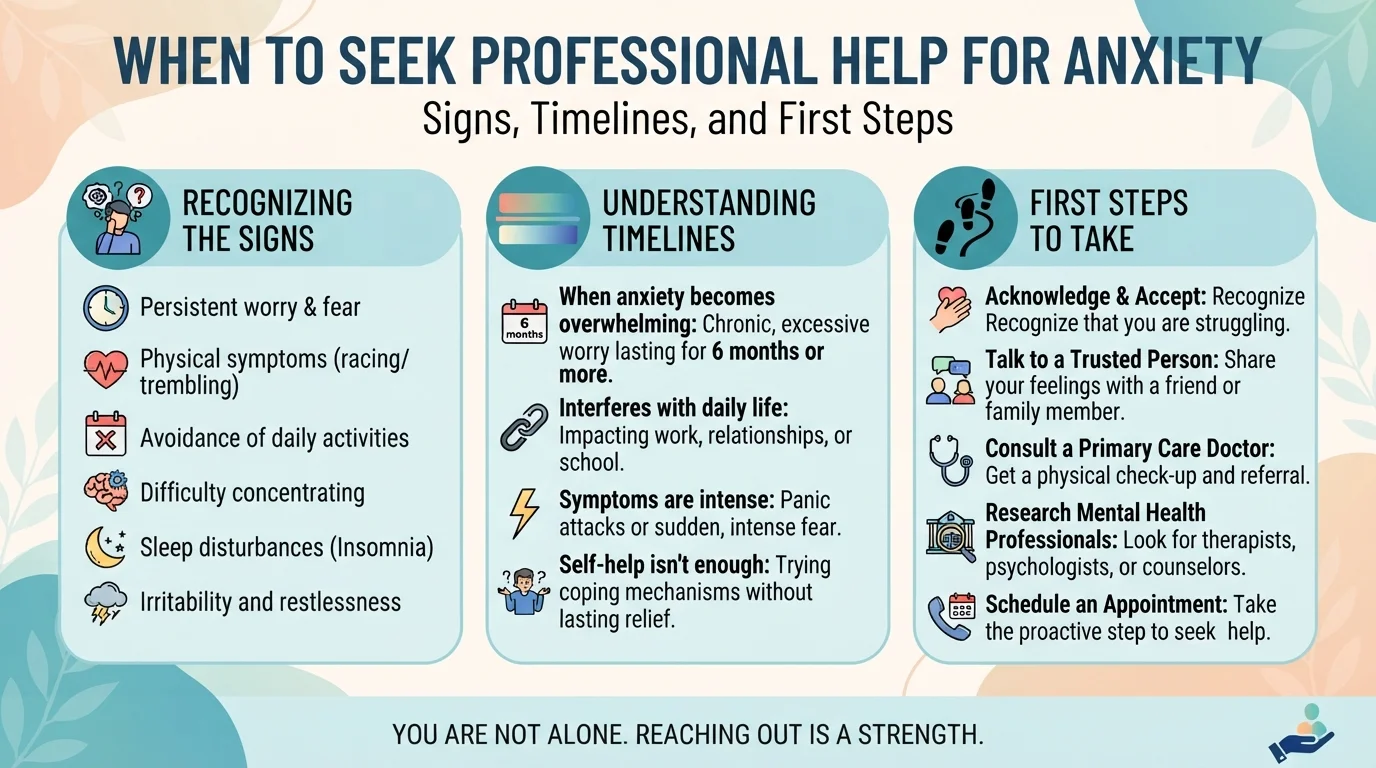
When to Seek Professional Help for Anxiety: Signs, Timelines, and First Steps
Anxiety (anxious distress) is the body's alarm response to a perceived threat, marked by worry, muscle tension, and a faster...
What Is the 54321 Grounding Technique? How Does It Actually Work?
If you have ever looked up what to do during a panic attack, an anxiety spiral, or a moment of...
Can Stress Alone Cause Panic Disorder? IGOTU Corp Guide
The Question That Arrives After the First Attack You were not doing anything dramatic. You were not in danger. You...
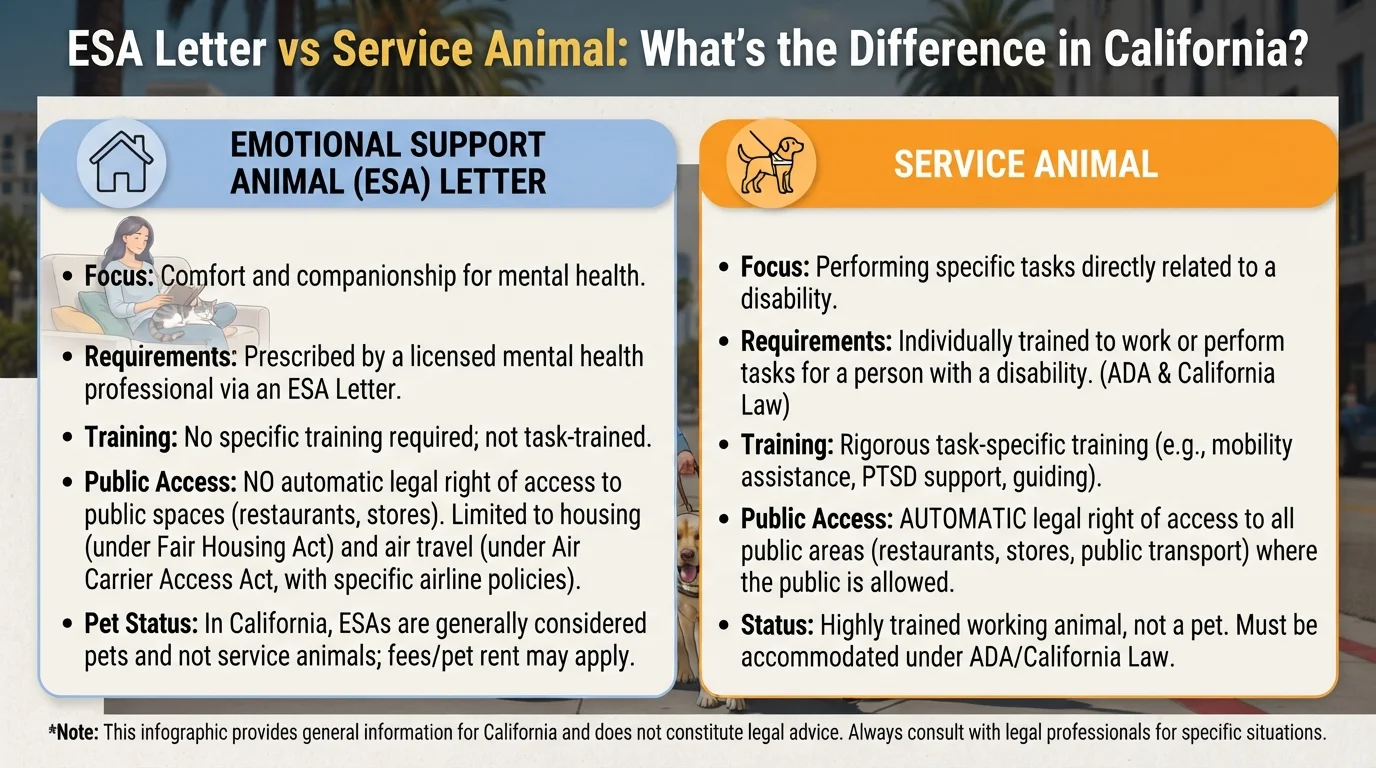
ESA Letter vs Service Animal: What’s the Difference in California?
An ESA letter and a service animal are not the same thing under California or federal law, and confusing the...