
Can Anxiety Really Cause a Fever? The Answer Might Surprise You
You’ve been anxious for days. Maybe weeks. And now you’re checking your temperature and seeing numbers that are slightly — or significantly — higher than normal. You’re not sick. Nobody around you is sick. But the thermometer says otherwise.
So you ask the question thousands of people search every single day: can anxiety cause a fever?
The answer is yes — and the science behind it is more fascinating, and more validating, than most people expect.
Anxiety does not just live in your mind. It lives in your immune system, your endocrine system, your autonomic nervous system, and yes — your body temperature regulation. The connection between psychological stress and physical body temperature is real, documented, and increasingly well understood by researchers.
This article breaks down exactly what’s happening when anxiety makes you run hot, what the difference is between a true fever and a stress-related temperature rise, when to be concerned, and what your body is actually trying to tell you.
What Is a Normal Body Temperature — and Why Does It Matter?
Before we dive into anxiety and fever, it helps to understand what “normal” body temperature actually means — because the 98.6°F (37°C) figure most of us grew up with is more of a population average than a personal standard.
Research published in medical journals over the past two decades has consistently found that average human body temperature has actually been declining over time. A large Stanford study found the average American adult body temperature is closer to 97.5°F (36.4°C) today than the old 98.6°F benchmark.
More importantly, your normal is individual. Body temperature naturally fluctuates throughout the day — lowest in the early morning, highest in the late afternoon. It also varies by age, sex, activity level, hydration, and where on the body it’s measured.
A true fever is typically defined as a temperature of 100.4°F (38°C) or higher. Temperatures between your personal baseline and 100.4°F are sometimes called low-grade fever — and this is exactly the zone where anxiety most commonly operates.
What Is Psychogenic Fever? The Clinical Name for Anxiety-Induced Temperature Rise
The formal term for fever caused by psychological or emotional stress — rather than infection or inflammation — is psychogenic fever.
This is not a fringe concept or a psychological workaround. It is a clinically recognized phenomenon, studied extensively by researchers including Dr. Takakazu Oka at Kyushu University in Japan, who has published some of the most comprehensive work on the subject.
Psychogenic fever can present in two distinct patterns:
Pattern 1 — Mild, persistent elevation: A slight but consistent increase in body temperature during periods of chronic stress or anxiety — typically in the range of 99°F to 100°F (37.2°C to 37.8°C). This type is associated with ongoing psychological stress and tends to persist as long as the stressor remains.
Pattern 2 — Dramatic acute spike: In cases of extreme acute psychological stress, body temperature can spike rapidly and significantly — sometimes reaching 104°F (40°C) or higher. This type is less common but well-documented, particularly in individuals with conditions like PTSD or severe panic disorder.
Both patterns share a key characteristic: they do not respond to antipyretic medications like ibuprofen or acetaminophen the way infection-based fevers do. This is actually one of the clinical clues that helps distinguish psychogenic fever from illness-based fever.
How Does Anxiety Actually Raise Body Temperature? The Biological Mechanism
This is where it gets genuinely interesting — because the pathway from anxious thought to elevated temperature is not vague or theoretical. It is a precise physiological cascade.
The Hypothalamus: Your Body’s Thermostat
Your body temperature is regulated by the hypothalamus, a small but extraordinarily powerful region of the brain that acts as your internal thermostat. The hypothalamus receives input from your nervous system, immune system, and endocrine system constantly — and adjusts your temperature set point accordingly.
When you experience anxiety or stress, your hypothalamus receives signals that it interprets as a threat — and it responds by raising the temperature set point. This is not a malfunction. It is a feature.
The Sympathetic Nervous System Activation
Anxiety activates the sympathetic nervous system — the fight-or-flight system. This triggers a cascade of physiological changes including increased heart rate, elevated blood pressure, muscle tension, and accelerated metabolism.
Accelerated metabolism generates heat. That heat has to go somewhere. Before your body’s cooling mechanisms fully compensate, your core temperature rises. This is the same reason you feel warm during intense exercise — the mechanism is metabolic, and anxiety triggers it even when you’re sitting perfectly still.
The HPA Axis and Cortisol
Chronic anxiety activates the hypothalamic-pituitary-adrenal (HPA) axis, triggering the release of cortisol — your primary stress hormone. Cortisol has complex effects on immune function and inflammatory signaling, both of which influence temperature regulation.
Prolonged HPA activation associated with chronic anxiety keeps the body in a low-grade state of physiological alert — which includes a subtly elevated temperature set point.
The Serotonin Connection
Research has identified serotonin — the neurotransmitter most associated with mood regulation — as a key player in psychogenic fever. Serotonin pathways in the brain directly influence thermoregulation through the hypothalamus. This explains why anxiety disorders, which often involve dysregulation of serotonergic signaling, can produce temperature effects that don’t occur with ordinary stress.
It also explains why certain antidepressants (SSRIs and SNRIs, which target serotonin) can sometimes affect body temperature — and why serotonin syndrome, which involves excess serotonergic activity, produces hyperthermia as one of its primary symptoms.
What Does an Anxiety Fever Actually Feel Like?
People who experience psychogenic fever describe a recognizable constellation of sensations that sets it apart from a typical illness fever:
A flushed, warm feeling without other illness symptoms. You feel genuinely warm — your skin is hot to the touch, your face may look flushed — but you don’t have the body aches, chills, fatigue, or congestion that usually accompany an infectious fever.
Temperature that fluctuates with your stress level. One of the most telling features of psychogenic fever is that it tracks your emotional state. You may check your temperature during a calm moment and find it normal, then check again during a period of anxiety and find it elevated. This responsiveness to psychological state is a strong indicator.
Warmth concentrated in the face, chest, and hands. The distribution of heat during anxiety differs from infection-based fever because it’s driven by blood flow changes (vasodilation) rather than systemic inflammatory signaling.
Temperature that doesn’t respond to fever reducers. Ibuprofen or Tylenol work on prostaglandins — the inflammatory molecules that signal the hypothalamus to raise temperature during infection. Psychogenic fever doesn’t involve the same prostaglandin pathway, so these medications typically don’t bring it down.
Accompanying anxiety symptoms. Racing heart, muscle tension, shallow breathing, gastrointestinal upset, and a feeling of being wired or on edge tend to accompany the temperature elevation — because they share the same root cause.
Anxiety and Low-Grade Fever: Why Chronic Stress Is Different from Acute Stress
It’s important to distinguish between what happens to body temperature during an acute anxiety attack versus during chronic, ongoing anxiety.
Acute anxiety (a sudden panic attack or intense stress response) produces rapid, short-lived temperature changes driven by sympathetic nervous system activation and adrenaline. The temperature spike comes fast and resolves relatively quickly as the acute response winds down.
Chronic anxiety (ongoing generalized anxiety disorder, persistent life stress, or prolonged psychological strain) produces a different pattern — a sustained, low-grade elevation that can persist for weeks or months. This is driven more by the HPA axis, cortisol dysregulation, and serotonergic changes than by acute adrenaline release.
Chronic anxiety-related temperature elevation is particularly insidious because it can be mistaken for a chronic illness — leading to rounds of medical testing that come back normal, which then creates its own anxiety. The pattern becomes self-reinforcing: the anxiety produces the symptom, the unexplained symptom creates more anxiety, which perpetuates the temperature elevation.
Can Anxiety Cause a Fever Over 100.4°F?
This is a question people are genuinely afraid to ask — because it feels like it shouldn’t be possible.
The honest answer: yes, in some cases.
While most anxiety-related temperature elevations are mild and hover in the 99°F to 100°F range, documented cases of psychogenic fever reaching 104°F (40°C) and above exist in medical literature. These extreme cases are typically associated with:
- Severe, acute psychological trauma
- PTSD with active re-experiencing symptoms
- Severe panic disorder with frequent, intense panic attacks
- Major psychological stressors (bereavement, abuse, catastrophic life events)
For most people with anxiety disorders, the temperature elevation will be mild and sub-febrile. But dismissing the possibility of higher elevations entirely would be inaccurate — and would leave some people without an explanation for symptoms that are genuinely distressing.
How to Tell the Difference Between an Anxiety Fever and an Illness Fever
This is the practical question most people are really asking. Here’s a framework for thinking it through:
Signs pointing toward psychogenic fever:
- Temperature rises and falls in parallel with your anxiety or stress level
- No other symptoms of illness — no sore throat, no body aches, no congestion, no fatigue beyond what your anxiety already causes
- Temperature doesn’t respond to ibuprofen or acetaminophen
- You’ve been under significant psychological stress
- You have a known anxiety disorder
- The temperature is mild and consistent (99°F–100°F range) rather than high and spiking
- Similar episodes have happened before during periods of stress
Signs pointing toward an illness fever:
- Temperature above 103°F (39.4°C)
- Accompanying symptoms: chills, sweating cycles, body aches, headache, cough, sore throat, nausea, vomiting
- Someone in your household or workplace is sick
- The fever responds (at least partially) to fever-reducing medication
- You feel genuinely unwell in the way illness feels — not anxious, but sick
- The fever persists for more than a few days without obvious stress correlation
When to see a doctor regardless: A fever above 103°F, a fever that lasts more than three days, a fever accompanied by a stiff neck or severe headache, or any fever in an infant under 3 months — these all warrant prompt medical attention regardless of your anxiety status.
Other Ways Anxiety Affects Body Temperature Beyond Fever
Psychogenic fever is the most dramatic temperature effect of anxiety, but it’s not the only one. Anxiety affects body temperature regulation in several other ways worth knowing about:
Cold Hands and Feet Despite Feeling Warm
During anxiety, blood is redistributed away from the extremities and toward the core and large muscles (fight-or-flight preparation). This means many people with anxiety simultaneously feel warm or flushed in the face and chest while having ice-cold hands and feet. This thermoregulatory inconsistency is a hallmark of anxiety physiology.
Night Sweats
Anxiety-driven hormonal and autonomic changes can produce night sweats — waking up drenched despite normal room temperature. This is particularly common in people with nocturnal anxiety or panic attacks, and it overlaps significantly with the sleep disruption patterns seen in anxiety disorders.
Hot Flashes
The anxiety-induced hot flash — a sudden wave of heat through the face, neck, and chest — is neurologically similar to the menopausal hot flash. Both involve dysregulation of the hypothalamic thermostat. For people who experience anxiety hot flashes outside of hormonal contexts, this can be confusing and alarming.
Temperature Sensitivity
Many people with chronic anxiety report heightened sensitivity to temperature changes in general — feeling more easily overheated or more easily chilled than others in the same environment. This hypersensitivity is part of the broader pattern of sensory heightening that anxiety produces.
The Gut-Brain-Temperature Connection
One area of emerging research worth highlighting is the relationship between gut microbiome health, anxiety, and temperature regulation.
The gut-brain axis — the two-way communication highway between your digestive system and your central nervous system — plays a significant role in both anxiety and inflammatory regulation. Disruptions to gut microbiome balance (dysbiosis) are associated with increased anxiety symptoms and with heightened inflammatory signaling, which in turn affects temperature set points.
This is a rapidly evolving field, but the practical implication is already clear: chronic psychological stress damages gut microbiome diversity, which worsens systemic inflammation, which contributes to both anxiety symptoms and temperature dysregulation. Managing anxiety comprehensively means attending to physical health — including gut health — not just psychological symptoms.
Ready to Address the Root Cause? IGOTU Corp’s Mental Health Programs Are Built for This
If you’ve been experiencing unexplained temperature changes, physical symptoms that your doctor can’t explain, or a body that seems to be constantly responding to a threat that isn’t there — you are not imagining it, and you are not alone.
IGOTU Corp connects you with licensed mental health professionals who understand the full-body impact of anxiety disorders — not just the psychological symptoms, but the physical ones. Psychogenic fever, somatic anxiety symptoms, and chronic stress responses are all areas their clinicians work with every day.
Whether you’re looking for therapy, a structured anxiety treatment program, or simply need a professional to help you make sense of what your body is doing — IGOTU Corp has the support you need.
Visit IGOTU Corp today and take their free anxiety assessment — because understanding what’s happening in your body is the first step toward actually changing it.
Can Children and Teenagers Get Anxiety Fevers?
Yes — and this is particularly important for parents to understand, because a child who repeatedly presents with low-grade fevers and no identifiable illness may be experiencing psychogenic fever driven by school anxiety, social stress, or undiagnosed anxiety disorder.
Research on psychogenic fever in pediatric populations has found it to be more common than previously recognized. Children often lack the vocabulary to describe anxiety, and somatic symptoms — stomachaches, headaches, fatigue, and low-grade fevers — are frequently their primary expression of psychological distress.
If your child regularly develops a mild fever before school, social events, or stressful situations, and medical evaluation consistently finds no infection, it is worth speaking with a pediatric mental health professional. Childhood anxiety is highly treatable, and early intervention produces dramatically better long-term outcomes.
What Actually Helps Anxiety-Induced Temperature Elevation?
Since psychogenic fever doesn’t respond to standard fever reducers, the treatment approach is different. Here’s what actually works:
Treat the anxiety, not the temperature. This sounds obvious once you understand the mechanism, but it bears stating clearly. The temperature is a symptom. Reducing it directly without addressing the underlying anxiety is like turning off a smoke alarm without looking for the fire. Evidence-based anxiety treatments — CBT, exposure therapy, medication — address the root cause and resolve the temperature symptom as a consequence.
Activate the parasympathetic nervous system. The physiological sigh (double inhale through the nose, long exhale through the mouth), progressive muscle relaxation, and cold water exposure all shift the nervous system from sympathetic (fight-or-flight) to parasympathetic (rest-and-digest) mode — directly countering the mechanisms driving the temperature elevation.
Reduce chronic cortisol load. Regular physical exercise, adequate sleep, reduced caffeine intake, and mindfulness practices all reduce HPA axis activation over time — lowering the chronic cortisol burden that sustains low-grade psychogenic fever.
Address sleep disruption. The relationship between sleep deprivation and both anxiety severity and temperature dysregulation is well-established. Poor sleep raises cortisol, worsens anxiety, and disrupts thermoregulation. Treating sleep problems — including with CBT-I — has measurable downstream effects on anxiety-related physical symptoms.
Consider professional support. For persistent, distressing psychogenic fever — especially when it’s affecting your quality of life or creating its own anxiety loop — working with a licensed mental health professional is the most effective path to resolution.
When Anxiety Fever Becomes a Cycle: The Symptom-Anxiety Loop
One of the most important things to understand about psychogenic fever — and about somatic anxiety symptoms in general — is how easily they become self-perpetuating.
It goes like this: Anxiety raises your body temperature. You check your temperature and find it elevated. That reading triggers health anxiety. Health anxiety raises cortisol and sympathetic activation. Which raises your temperature further. Which gives you more data to be anxious about.
This is the symptom-anxiety loop, and it is one of the most effective traps anxiety sets for itself. The way out is not to stop checking your temperature — willpower-based approaches rarely work with anxiety. The way out is to change your relationship with the symptom through education (which is what this article is doing) and through structured therapeutic work that reduces the catastrophic meaning your brain attaches to physical sensations.
Frequently Asked Questions (FAQs) About Anxiety and Fever
Q: Can anxiety cause a low-grade fever every day? Yes. Chronic anxiety, particularly generalized anxiety disorder or persistent life stress, can produce sustained low-grade temperature elevation — typically in the 99°F to 100°F range — that persists throughout periods of high anxiety. It is one of the most underrecognized somatic symptoms of anxiety disorders.
Q: Why does my temperature go up when I’m stressed? Stress activates the sympathetic nervous system and HPA axis, accelerating metabolism and generating heat. Simultaneously, the hypothalamus — your brain’s thermostat — receives stress signals and raises the body’s temperature set point. Both mechanisms contribute to the temperature elevation you notice during stress.
Q: Does anxiety cause a fever or just feel like one? Both, actually. Anxiety can cause genuine, measurable temperature elevations (psychogenic fever) and can also produce sensations of warmth, flushing, and heat that feel like fever even when the thermometer reads normal. Both experiences are real — they just have slightly different mechanisms.
Q: Can anxiety cause a fever of 101°F? Mild elevations into the low 100s are possible with significant psychological stress, particularly in individuals with severe anxiety disorders. However, a sustained fever of 101°F should always be evaluated medically to rule out infection, especially if accompanied by other illness symptoms.
Q: Why doesn’t Tylenol work on my anxiety fever? Tylenol (acetaminophen) and ibuprofen work by inhibiting prostaglandins — the inflammatory molecules that drive infection-based fever. Psychogenic fever operates through a different pathway (sympathetic nervous system and hypothalamic thermoregulation) that doesn’t involve the same prostaglandin mechanism, which is why antipyretics typically don’t reduce it.
Q: Can anxiety cause fever and chills at the same time? Yes. The anxiety stress response can produce simultaneous or alternating sensations of warmth and cold — hot flushing followed by chills, or cold extremities with a warm core. This thermoregulatory instability is a recognized feature of severe anxiety.
Q: Is psychogenic fever dangerous? For most people, the mild, persistent form of psychogenic fever is not dangerous in itself. However, it is a signal that your anxiety is significantly impacting your physical health — which warrants attention. The extreme acute form (temperatures reaching 104°F or higher) that can occur with severe psychological trauma does require medical evaluation.
Q: How do I stop getting a fever from anxiety? The most effective approach is treating the underlying anxiety through evidence-based methods — CBT, medication, lifestyle changes, and stress management. Specific techniques like diaphragmatic breathing and cold water exposure can help in the moment. For persistent symptoms, working with a licensed mental health professional produces the most durable results.
Q: Can anxiety cause fever in children? Yes. Psychogenic fever in children — particularly around school, social situations, or family stress — is more common than most parents realize. Children who repeatedly present with mild fevers and no identified illness source should be evaluated for anxiety disorders by a pediatric mental health professional.
Q: Where can I get professional help for anxiety and its physical symptoms? IGOTU Corp connects you with licensed therapists who specialize in anxiety disorders and understand the full spectrum of physical symptoms anxiety produces — including psychogenic fever, somatic symptoms, and chronic stress responses.
Visit IGOTU Corp to start your assessment and get matched with the right clinician for your needs. Book an appointment NOW!
The Bottom Line: Your Body Temperature Is Talking — It’s Time to Listen
When anxiety raises your body temperature, it is not your body malfunctioning. It is your body communicating — loudly, physically, unmistakably — that your nervous system is under a level of strain it was not designed to sustain indefinitely.
A psychogenic fever is not imaginary. It is not weakness. It is not something to be embarrassed about or dismissed. It is a measurable, physiologically real consequence of a mental health condition that affects millions of people — and it is a signal worth taking seriously.
The good news is that anxiety is one of the most treatable mental health conditions that exists. The right support, the right tools, and the right clinician can change not just how you feel emotionally — but how your body physically responds to the world.
Don’t let unexplained physical symptoms go unaddressed. IGOTU Corp’s licensed mental health professionals are ready to help you understand the connection between your anxiety and your body — and build a real path toward relief. Visit IGOTU Corp today and take the first step.
This article is for informational purposes only and does not constitute medical advice. If you are experiencing a high fever, persistent symptoms, or are unsure whether your symptoms are anxiety-related or illness-related, please consult a licensed healthcare provider promptly.
Recent Posts
Related Posts

How to Protect Your Mental Health Without Sacrificing Your Career
It is Sunday evening and your stomach is already tight. You are replying to emails you will see again in...

How to Find a Licensed Male Therapist in California
Plenty of people know the moment they decide they want therapy. Fewer people know what to type into the search...

How to Do the 5-4-3-2-1 Technique Silently in Class
Learn how to manage anxiety discreetly during class using the simple and effective 5-4-3-2-1 grounding technique in this article. Exclusive...
How to Set Boundaries Without Guilt: Stop People Pleasing
You said yes again. You knew while the words were leaving your mouth that you did not want to say...
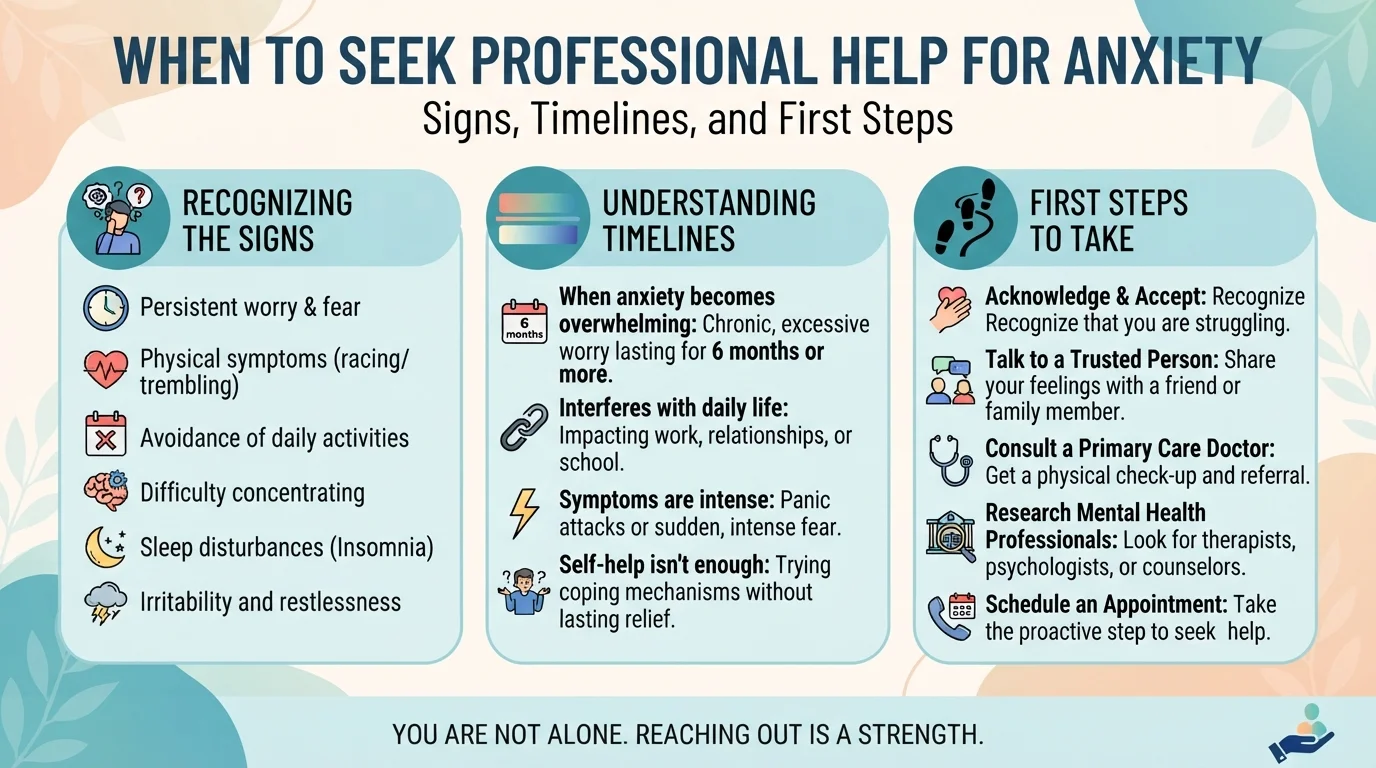
When to Seek Professional Help for Anxiety: Signs, Timelines, and First Steps
Anxiety (anxious distress) is the body's alarm response to a perceived threat, marked by worry, muscle tension, and a faster...