
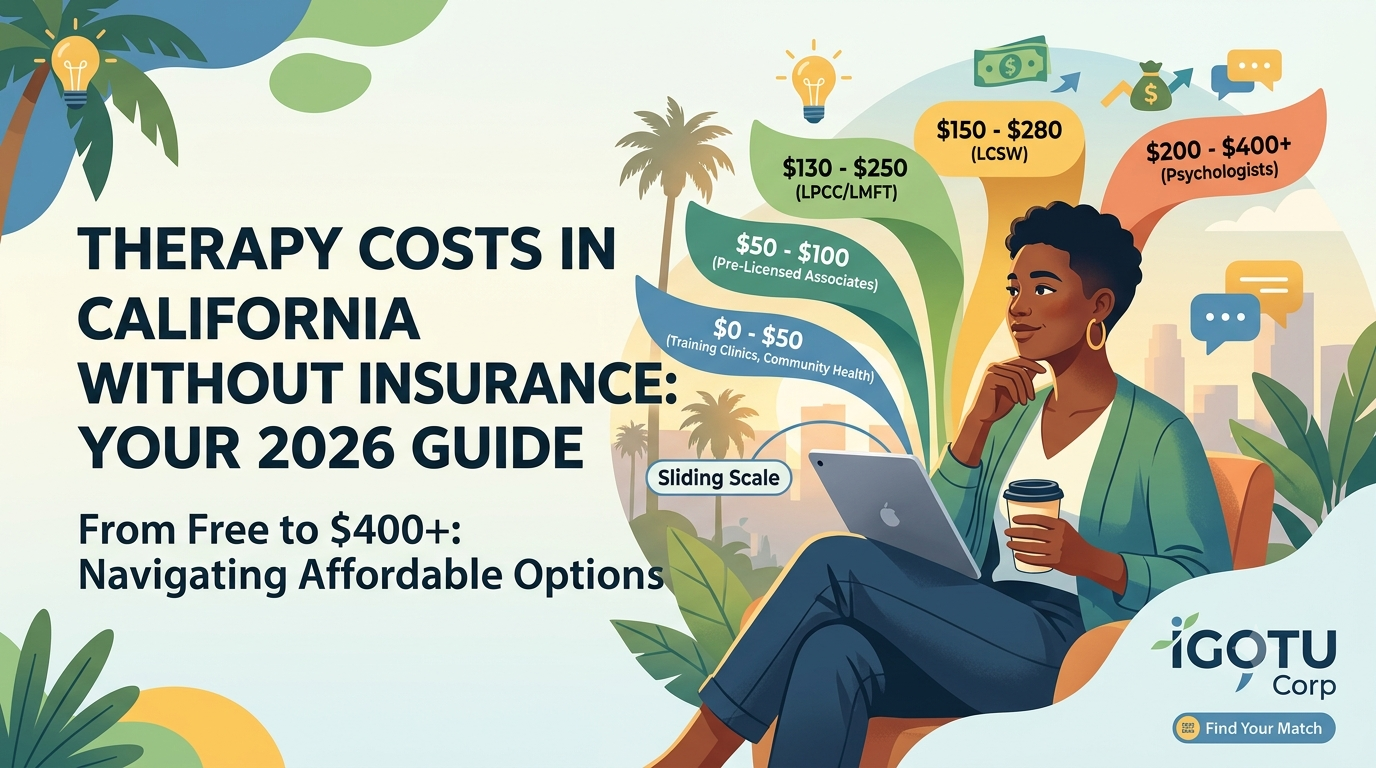
What is the Cost of Therapy Without Insurance in California?
Here is the direct answer: therapy without insurance in California in 2026 costs between $0 and $400 per session, depending on the type of provider, the delivery format, your income, and which of the available access pathways you use. That range is not a dodge — it reflects a genuinely wide landscape of options that most people never fully explore because the mental health system does not make them easy to find.
If the $300 to $400 end of that range is what you have encountered so far and it has made therapy feel financially impossible, this guide exists to show you everything between zero and that number — because there is a great deal in between, much of it accessible without compromise on clinical quality.
You deserve to know the full picture before you decide whether you can afford to get help. So here it is.
Why Therapy Costs Without Insurance Vary So Dramatically in California
California’s therapy cost landscape is unlike almost any other state — shaped by extreme geographic variation in cost of living, a high concentration of licensed clinicians in urban centers, and a significant gap between what the most experienced specialists charge and what genuinely qualified clinicians at earlier career stages charge.
The variables that most directly determine what you will pay are:
License type and credential level. A licensed psychologist with a doctorate charges more than a licensed clinical social worker with a master’s degree. Both are fully qualified to provide therapy. The credential difference does not automatically translate to better outcomes — particularly for common presentations like anxiety, depression, and relationship difficulties.
Years of experience and specialization. A therapist with twenty years of experience treating a specific complex condition commands rates that reflect that expertise. A newly licensed therapist with strong training provides genuine clinical care at a lower rate. For many people, the latter is an excellent fit.
Geographic location. A therapist practicing in San Francisco or Beverly Hills has overhead costs that a therapist practicing in Fresno or Redding does not. Those costs are reflected in session rates. Online therapy removes geographic rate premiums entirely.
Delivery format. In-person therapy in a private office carries overhead costs that online therapy does not. Many therapists charge slightly less for telehealth sessions — and online access means you can choose from therapists anywhere in California rather than only those in your immediate area.
Whether the therapist offers sliding scale. This single variable can reduce your cost more dramatically than any other — from $200 per session to $60 per session with the same level of licensure. More on this below.
The Full Cost Breakdown: What Each Provider Type Charges in 2026
Licensed Psychologists (PhD/PsyD)
Standard private pay rate: $200 to $400 per session
Psychologists hold doctoral degrees — either the research-focused PhD or the clinically-focused PsyD — and represent the highest credential level in therapy. They are qualified to conduct psychological testing and assessments in addition to therapy, which contributes to the higher rate.
For most common mental health concerns — anxiety, depression, relationship difficulties, life transitions, burnout — the additional cost of a psychologist over a master’s-level therapist does not automatically translate to better therapeutic outcomes. The research on therapy outcomes consistently shows that therapeutic alliance — the quality of the relationship between therapist and client — is a stronger predictor of outcomes than credential level.
Where psychologist-level expertise genuinely matters: complex diagnostic situations requiring neuropsychological testing, severe personality disorders requiring doctoral-level specialization, forensic evaluations, or conditions where accurate differential diagnosis is particularly high-stakes.
Licensed Clinical Social Workers (LCSWs)
Standard private pay rate: $150 to $280 per session
LCSWs are among the most numerous licensed mental health professionals in California and among the most clinically versatile. They complete a master’s degree in social work plus 3,000 hours of supervised clinical experience — training that emphasizes both clinical therapy and the social systems context of mental health.
Many of California’s most skilled anxiety, depression, trauma, and relationship therapists are LCSWs. The credential difference from a psychologist does not represent a meaningful clinical difference for most people seeking individual therapy.
Licensed Marriage and Family Therapists (LMFTs)
Standard private pay rate: $140 to $260 per session
Despite the name, LMFTs provide individual therapy across the full range of mental health concerns — not only couples and family work. They complete master’s-level training plus 3,000 supervised hours and are fully qualified to treat anxiety, depression, trauma, ADHD, and the other conditions that bring most people to therapy.
Licensed Professional Clinical Counselors (LPCCs)
Standard private pay rate: $130 to $250 per session
LPCCs are California’s counseling license category — master’s-level clinicians qualified to provide individual and group therapy across a broad range of conditions. The LPCC credential is newer than LCSW and LMFT, but the clinical training and supervision requirements are comparable.
Pre-Licensed Therapists Under Supervision
Standard private pay rate: $50 to $100 per session
This is the most underutilized and most clinically underappreciated option in California’s therapy landscape — and for many people, it represents the best combination of affordability and quality available.
Pre-licensed therapists have completed their graduate clinical training and are accumulating the supervised hours required for licensure. In California, this typically means they hold an ASW (Associate Social Worker), AMFT (Associate Marriage and Family Therapist), or APCC (Associate Professional Clinical Counselor) credential.
They practice under the direct clinical supervision of a licensed professional — which means their work is reviewed, guided, and quality-checked by an experienced clinician in a way that fully licensed independent practitioners are not. Research on therapy outcomes consistently shows that pre-licensed therapists produce outcomes comparable to licensed therapists for most common presentations.
The rate difference is significant: a highly competent pre-licensed therapist working under strong supervision will charge $60 to $80 per session for work that would cost $200 per session from a fully licensed counterpart.
If cost is a genuine barrier to therapy and you are dealing with anxiety, depression, life stress, burnout, or relationship difficulties — not a complex diagnostic situation requiring deep specialization — a pre-licensed therapist under supervision deserves serious consideration.
Online Therapy Platforms
Standard rate: $60 to $180 per week or per session
The major online therapy platforms — BetterHelp, IGOTU CORP, Talkspace, and similar services — operate at price points significantly below traditional private practice. Subscription-based platforms typically charge $60 to $100 per week for messaging plus one live video session. Per-session platforms typically charge $100 to $180 for a fifty-minute video session with a licensed therapist.
The tradeoff: platform therapists may have less control over their caseload size and session time, and the matching process is algorithmic rather than clinically curated. Platform therapy works well for mild to moderate presentations — particularly anxiety, depression, life stress, and adjustment difficulties — and represents a genuine, legitimate entry point into professional mental health care.
For more complex presentations requiring highly specialized expertise, a platform match may be less reliable than a carefully chosen independent therapist. The question is whether platform therapy is right for your specific situation — and that is worth thinking through rather than assuming either way.
The Sliding Scale: California’s Most Underused Cost-Reduction Tool
Sliding scale fees — therapy rates adjusted downward based on the client’s income — represent the single most impactful cost-reduction mechanism available to people seeking private therapy in California without insurance. And they are significantly more widely available than most people know.
Many California therapists offer sliding scale as a matter of professional commitment to accessibility. They simply do not advertise it prominently — because most clients who would benefit from sliding scale never ask, and because sliding scale slots are finite and fill through word-of-mouth and direct inquiry.
The practical implication: ask every therapist you contact whether they offer sliding scale fees. Ask what their range is. Be honest about your financial situation. The worst outcome is that they say no. The realistic outcome, if you contact enough therapists, is that you find someone offering genuinely good clinical care at $70 to $120 per session — a dramatic reduction from their standard rate.
Sliding scale rates in California currently range from approximately $40 to $150 per session for therapists who offer it. The variation reflects both the therapist’s standard rate and the income documentation they require for reduced rates.
Free and Very Low Cost Therapy Options in California in 2026
University Training Clinics
California’s major universities with graduate psychology and counseling programs operate training clinics that provide therapy to the public at dramatically reduced rates — typically $20 to $50 per session, sometimes on a further-reduced sliding scale for very low incomes.
The clinicians are advanced graduate students — which sounds alarming until you understand the context. These are people who have completed most of their clinical training, who see a carefully managed caseload, and whose work is reviewed session by session by licensed supervisors with doctoral credentials. For many common presentations, this level of care is genuinely excellent.
Examples in California include training clinics at UCLA, USC, Stanford, UC Berkeley, UC San Diego, and California State University campuses throughout the state. Each has its own intake process, specializations, and availability. Wait lists exist at the most sought-after programs, but many have reasonable wait times.
Community Mental Health Centers
California has a network of community mental health organizations that provide sliding-scale and sometimes free therapy to California residents. These organizations are funded through a combination of government grants, foundation support, and insurance billing, which allows them to provide services at dramatically reduced rates to people who cannot afford private pay.
Quality varies by organization, and specialization may be more limited than with private practitioners. But for people dealing with depression, anxiety, grief, life stress, and similar presentations, many community mental health organizations provide genuinely competent clinical care.
Finding community mental health resources in your California county: your county’s Behavioral Health department website typically maintains a resource directory. The California Department of Health Care Services also maintains a statewide behavioral health directory.
Open Path Collective
Open Path is a nonprofit network specifically designed to connect people who cannot afford standard therapy rates with licensed therapists willing to provide sessions at $30 to $80. Therapists in the Open Path network are voluntarily participating — they are not required to, and they do so as a professional service commitment.
California has a significant number of therapists in the Open Path network across the state, including both urban and suburban areas. The application process involves providing income information to verify need.
The HRSA Health Center Network
Federally Qualified Health Centers (FQHCs) — funded through the Health Resources and Services Administration — provide integrated primary care and behavioral health services on a sliding-scale basis to anyone, regardless of insurance status or ability to pay. California has a substantial FQHC network with locations in most major population centers and many rural areas.
FQHCs use a sliding fee scale based on income and family size, with some services available at zero cost for the lowest income tiers. Behavioral health services — including individual therapy and psychiatric medication management — are among the services commonly available at FQHCs.
Employee Assistance Programs (EAPs)
If you are employed — even part-time at some companies — your employer may offer an Employee Assistance Program that provides free therapy sessions as an employment benefit. EAP sessions are completely free to the employee, completely confidential, and available for a wide range of concerns including anxiety, depression, relationship difficulties, stress, and grief.
The limitation is session count: EAPs typically provide 3 to 8 free sessions. This is not sufficient for significant or complex mental health concerns — but it is a meaningful entry point, and for milder presentations, it may be sufficient. It also gives you the experience of working with a therapist before committing to a paid arrangement.
If you are not sure whether your employer offers an EAP, ask your HR department directly. Many employees with EAP benefits never use them because they do not know they exist.
The Real Cost of NOT Getting Therapy: A Different Calculation
Most conversations about therapy costs are framed as the cost of getting therapy versus spending nothing. That framing misses something important — the genuine financial and life cost of not addressing mental health crisis that respond to treatment.
Untreated anxiety, depression, and chronic stress have measurable productivity consequences — research on workplace mental health consistently shows that untreated depression costs significantly more in reduced productivity, absenteeism, and presenteeism than the cost of effective treatment.
Untreated relationship difficulties compound — the cost of a divorce, practically and emotionally, dwarfs the cost of couples or individual therapy that might have addressed the underlying dynamics earlier.
Untreated PTSD and trauma maintain a physiological stress burden that has documented long-term physical health consequences — cardiovascular, immunological, and neurological — that generate their own costs over time.
The calculation of what therapy costs without insurance in California should include this side of the ledger — not to manufacture guilt about not seeking help, but to give an honest picture of the total cost comparison.
How to Find Affordable Therapy Without Insurance in California: A Practical Checklist
Work through this checklist in order — each step either produces a direct option or narrows the search:
First: Check whether your employer offers an EAP. Ask HR directly. If yes, use the free sessions while you identify a longer-term option.
Second: Check whether you qualify for Medi-Cal. California’s income thresholds are broad enough that many people who believe they don’t qualify actually do. Medi-Cal covers mental health services at no cost for qualifying individuals.
Third: Contact university training clinics in your area. Apply to two or three simultaneously to improve your chances of a timely intake.
Fourth: Search the Open Path Collective directory for licensed California therapists in the $30 to $80 range.
Fifth: Contact therapists whose specialization matches your needs and ask directly whether they offer sliding scale. Be honest about your financial situation. Do this with at least five to ten therapists to find available sliding scale slots.
Sixth: Consider pre-licensed therapists under supervision — check Psychology Today, Therapy Den, and similar directories filtering for associate-level clinicians in your area or offering telehealth.
Seventh: Consider online therapy platforms as a starting point while pursuing other options — the lower rate and immediate access make them a reasonable bridge while waiting for a preferred option to become available.
Get Matched With Affordable Licensed Therapy Through IGOTU Corp
Knowing your options is one thing. Actually navigating the calls, the waitlists, the credential checks, and the clinical fit assessment while dealing with the mental health challenges that brought you to search in the first place is genuinely hard — and hard in a way that is particularly cruel when the condition itself depletes the executive function that searching requires.
IGOTU Corp removes that navigation burden.
Their matching process connects California residents with licensed therapists — including therapists offering sliding scale fees, telehealth options, and pre-licensed clinicians under supervision — based on your specific clinical needs, financial situation, and availability requirements. You do not have to work through the checklist above alone. IGOTU Corp has already done the infrastructure work.
If cost has been the thing standing between you and getting support, let IGOTU Corp show you what is actually accessible to you — because the answer is almost certainly more than you currently know.
Take IGOTU Corp’s free assessment today and find out which licensed California therapists are available at a rate that works for your situation. Your mental health does not have to wait for your financial situation to change. Options exist right now.
Frequently Asked Questions (FAQs) About Therapy Costs Without Insurance in California
Q: What is the cheapest legitimate therapy option in California without insurance? The lowest-cost options with genuine clinical quality are university training clinics ($20 to $50 per session), FQHC behavioral health services (sliding scale to zero cost), and Open Path therapists ($30 to $80 per session). Each has availability limitations and intake processes, but all provide real clinical care from licensed or closely supervised clinicians.
Q: Is a $50 therapist as good as a $300 therapist? Not automatically — but not automatically worse, either. A pre-licensed therapist under strong supervision, or an early-career licensed therapist with relevant training, can provide excellent care for most common presentations. Credential level and cost do not linearly predict outcome. Therapeutic alliance — the fit between you and your therapist — is a stronger predictor of outcomes than the therapist’s fee.
Q: Can I negotiate the rate with a private pay therapist? You can ask whether they offer sliding scale — which is essentially a structured negotiation based on income. Most therapists who offer sliding scale do not advertise it. Asking respectfully and honestly about your financial situation is appropriate and not uncommon. What you should not do is attempt to bargain down a therapist who has stated they do not offer sliding scale — that is not appropriate.
Q: How many sessions will I need? This depends on your presenting concern and the treatment approach. Focused CBT for a specific anxiety disorder might produce meaningful improvement in 12 to 16 sessions. More complex presentations — chronic depression, trauma history, personality-level patterns — typically require longer treatment. Most therapists will discuss expected duration during the first few sessions once they have a clearer clinical picture.
Q: Does online therapy cost less than in-person in California? Generally, yes. Online therapy through platforms runs $60 to $180 per week or session. Independent therapists offering telehealth sometimes charge slightly less than their in-person rate due to reduced overhead. Online therapy also expands your access to therapists in lower-cost areas of California who may charge less than equivalently qualified therapists in San Francisco or Los Angeles.
Q: What is the difference between a sliding scale and a reduced fee? Sliding scale typically refers to a structured fee reduction based on documented income — the therapist has a range of rates and assigns you to a point on that range based on what you can afford. A reduced fee is a more informal negotiation where the therapist offers a lower rate based on their assessment of your circumstances. Both result in paying less than the standard rate — the difference is mainly in structure and documentation.
Q: How do I find sliding scale therapists in California? Ask directly when contacting therapists. Search directories that allow filtering by sliding scale — Therapy Den and Open Path are specifically designed to facilitate this. Contact community mental health organizations in your county. IGOTU Corp’s matching process also takes financial situation into account when connecting you with available therapists.
The Bottom Line: Therapy Without Insurance in California Is More Accessible Than the Price Tag Suggests
The $300 per session number that appears at the top of many searches for California therapy costs is real — but it is one end of a range that extends all the way to zero, with multiple genuinely good clinical options at every point along the way.
University training clinics, community health centers, Open Path therapists, pre-licensed clinicians, EAP sessions, sliding scale private practitioners, and telehealth platforms — each of these represents a legitimate, quality-conscious pathway to professional mental health care at a cost significantly below the private pay ceiling.
The barrier between you and affordable therapy in California in 2026 is more often information than it is money. People pay $300 per session because they did not know the $70 option existed. People go without therapy because they assumed it was unaffordable without investigating what affordable actually means in this landscape.
Now you know. The options are real, the quality at lower price points is genuine, and the first step is simply choosing one option from this guide and making contact.
If you want that step made easier — if you want someone to handle the matching, the credential verification, and the financial fit assessment on your behalf — IGOTU Corp is ready to do exactly that. Visit IGOTU Corp, take the free assessment, and find out which licensed California therapists are accessible to you at a rate that your current situation can actually sustain.
This article is for informational purposes only and does not constitute financial, legal, or medical advice. Therapy costs and program availability are subject to change. Please verify current rates and eligibility directly with providers. For personalized mental health care, please consult a licensed mental health professional.
Recent Posts
Related Posts
How to Set Boundaries Without Guilt: Stop People Pleasing
You said yes again. You knew while the words were leaving your mouth that you did not want to say...
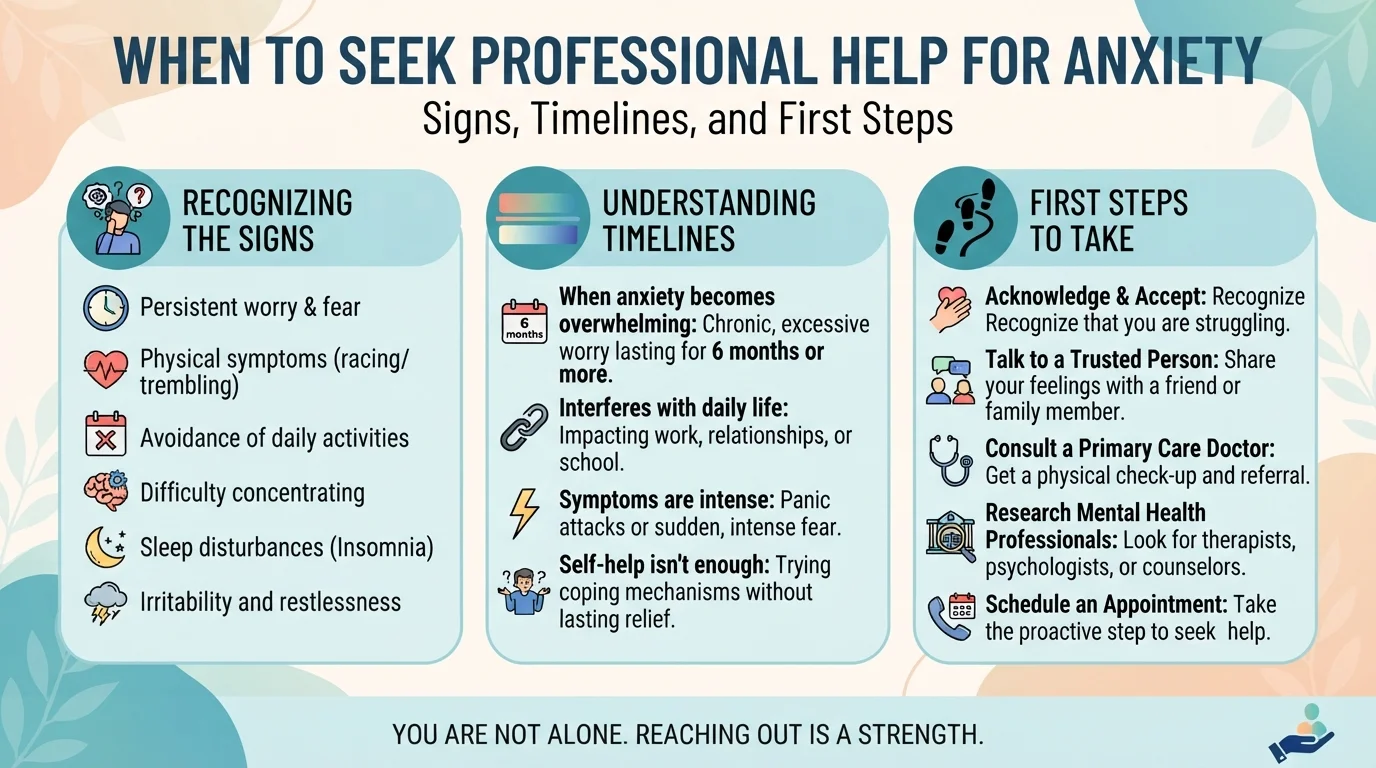
When to Seek Professional Help for Anxiety: Signs, Timelines, and First Steps
Anxiety (anxious distress) is the body's alarm response to a perceived threat, marked by worry, muscle tension, and a faster...
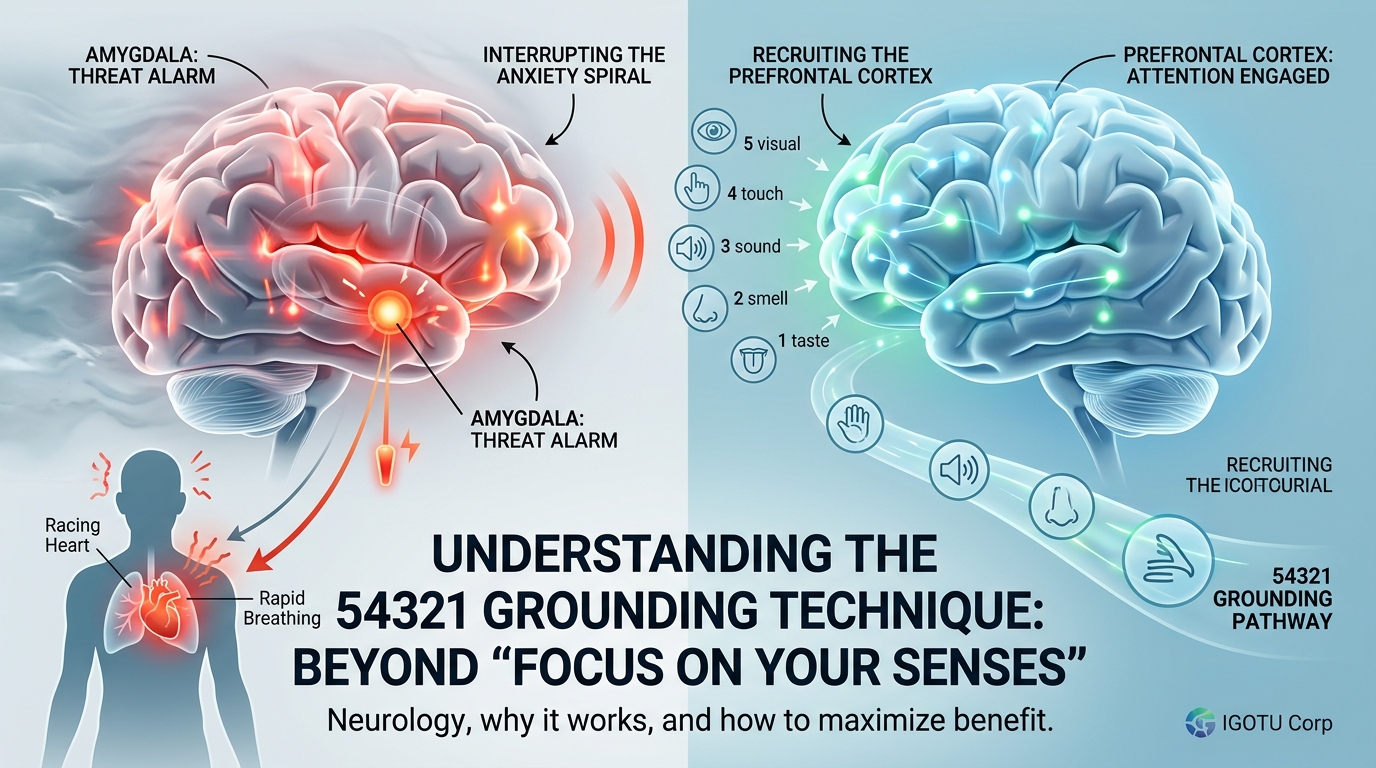
What Is the 54321 Grounding Technique? How Does It Actually Work?
If you have ever looked up what to do during a panic attack, an anxiety spiral, or a moment of...
Can Stress Alone Cause Panic Disorder? IGOTU Corp Guide
The Question That Arrives After the First Attack You were not doing anything dramatic. You were not in danger. You...
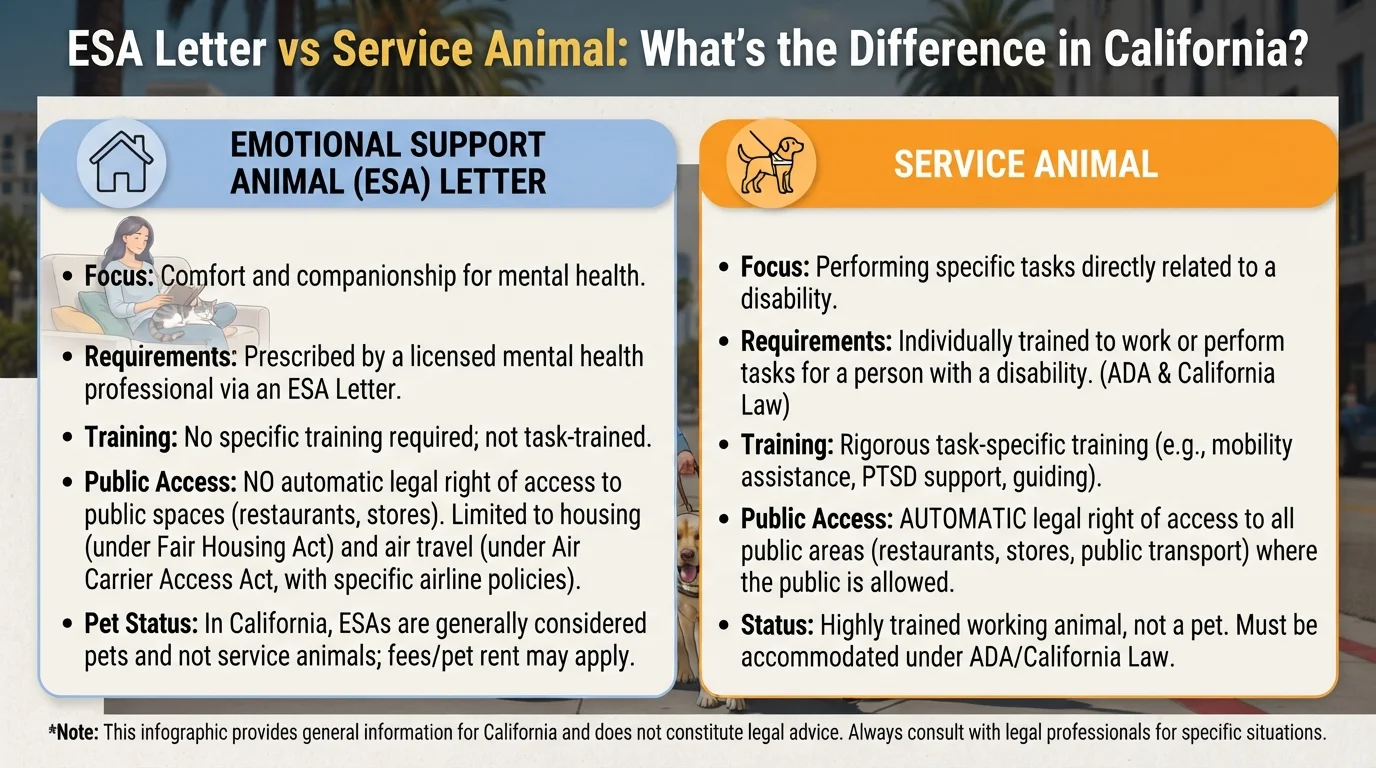
ESA Letter vs Service Animal: What’s the Difference in California?
An ESA letter and a service animal are not the same thing under California or federal law, and confusing the...