
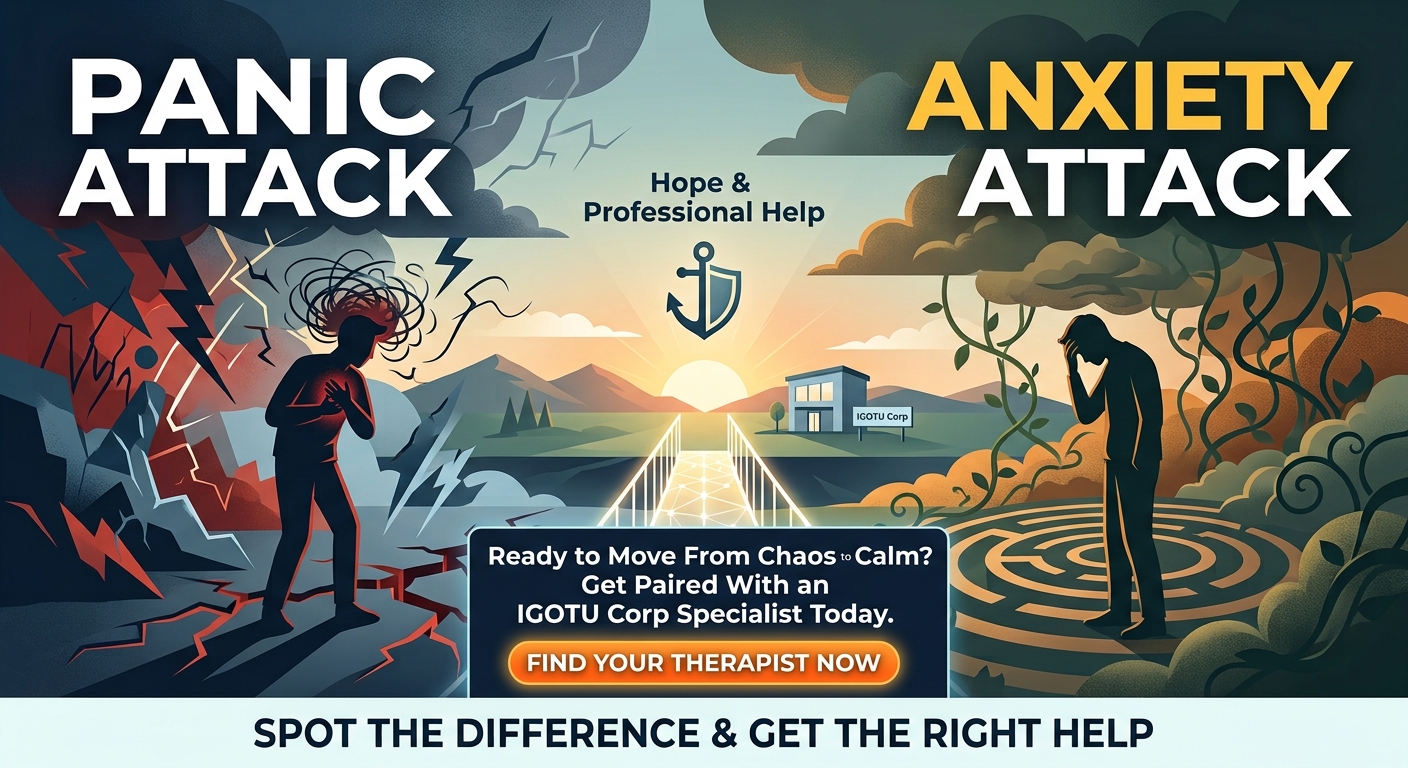
Panic Attack vs. Anxiety Attack: Spot the Difference
Panic attack vs. anxiety attack — most people use these terms interchangeably, but they are clinically distinct experiences with different triggers, timelines, and treatments. Here is exactly how to tell them apart.
Two Words for Two Different Experiences — And Why the Distinction Matters
You are in the middle of something ordinary — a meeting, a grocery store, a quiet evening at home — and suddenly something is very wrong. Your heart is pounding. Your chest is tight. Your thoughts are racing or have gone completely blank. You feel like something terrible is about to happen, or like you are already in the middle of it.
Was that a panic attack? An anxiety attack? Are they the same thing? Does the name even matter if the experience was equally terrifying either way?
The name matters more than most people realize — not because language is important for its own sake, but because panic attacks and anxiety attacks have different neurobiological mechanisms, different triggers, different timelines, and different optimal treatment approaches. Treating a panic disorder with strategies designed for generalized anxiety produces limited results. Understanding what is actually happening gives you the right map for navigating toward something better.
Here is the honest, clinically grounded distinction — without the oversimplification that most resources offer and without the jargon that makes clinical accuracy inaccessible.
The Foundational Distinction: What the Clinical Literature Actually Says
Before anything else, one important clarification: “anxiety attack” is not a formal clinical diagnosis.
The DSM-5 — the Diagnostic and Statistical Manual of Mental Disorders, the primary reference for mental health diagnosis — contains a precise, detailed definition of a panic attack. It does not contain a diagnostic category called “anxiety attack.”
This does not mean anxiety attacks are not real. It means they are a colloquial description of a clinical experience — the experience of severe anxiety that has escalated to a significant acute episode — rather than a precisely defined diagnostic entity. What most people call an anxiety attack falls under the broader category of severe anxiety episodes, often associated with Generalized Anxiety Disorder, specific phobias, social anxiety, or situational stress responses.
Understanding this asymmetry — panic attack is a clinical term with precise diagnostic criteria, anxiety attack is a widely used lay term describing a range of intense anxiety experiences — is the foundation of distinguishing the two accurately.
What Is a Panic Attack? The Clinical Definition
A panic attack is defined in the DSM-5 as an abrupt surge of intense fear or discomfort that reaches a peak within minutes and during which four or more of the following symptoms occur:
Racing or pounding heartbeat — palpitations. Sweating. Trembling or shaking. Sensations of shortness of breath or feeling smothered. Feelings of choking. Chest pain or discomfort. Nausea or abdominal distress. Feeling dizzy, unsteady, lightheaded, or faint. Chills or hot flashes. Numbness or tingling sensations — paresthesia. Derealization — feelings of unreality — or depersonalization — feeling detached from yourself. Fear of losing control or “going crazy.” Fear of dying.
The defining features that distinguish panic attacks clinically are:
Sudden onset. Panic attacks arrive fast — they reach peak intensity within minutes, not hours. The speed of onset is one of the most diagnostically significant features.
Peak and resolution. Most panic attacks peak within 10 minutes and resolve within 20 to 30 minutes, though the aftermath — the anxiety hangover of fatigue, shakiness, and hypervigilance — can persist much longer.
Overwhelming intensity. The physical and psychological symptoms of a panic attack are typically so intense that the majority of first-time experiencers believe they are having a cardiac event or are in immediate danger of dying or losing their mind.
Unexpected or cued. Panic attacks can be unexpected — occurring without any identifiable trigger, sometimes during sleep, often in objectively safe circumstances — or they can be situationally cued, meaning they reliably occur in specific triggering contexts.
What Is an Anxiety Attack? The Lay Definition and Clinical Equivalent
What most people call an anxiety attack is the experience of anxiety that has escalated beyond the manageable — a state in which worry, fear, and the physical symptoms of anxiety have intensified to the point of significant acute distress.
Unlike panic attacks, anxiety attacks:
Build gradually. They typically develop over minutes, hours, or even days — growing in intensity as anticipatory worry builds or as a stressful situation approaches or unfolds.
Have an identifiable trigger. Anxiety attacks are almost always connected to something specific — a stressful event, an anticipated threat, a situation producing significant worry. The fear has an object.
Involve the broader anxiety symptom profile. The experience includes not just acute physical symptoms but the cognitive content of anxiety — the racing, catastrophic thoughts, the worst-case scenario construction, the rumination.
Resolve more gradually. Anxiety attacks do not resolve as abruptly as panic attacks. They tend to diminish gradually as the triggering situation passes or as coping strategies are employed.
Are less physically dramatic. While anxiety attacks are intensely uncomfortable and can include significant physical symptoms — muscle tension, rapid heart rate, shallow breathing, nausea — they are generally less physically overwhelming than panic attacks, which are among the most physically intense experiences the human body can produce.
Side by Side: The Key Differences at a Glance
Onset: Panic attacks arrive suddenly, within seconds to minutes, with no buildup. Anxiety attacks build gradually over time — minutes to hours to days.
Trigger: Panic attacks are often unexpected with no clear trigger — or triggered by specific cues but arriving as if from nowhere. Anxiety attacks are almost always connected to an identifiable source of stress, worry, or threat.
Duration: Panic attacks peak within 10 minutes and typically resolve within 20 to 30 minutes. Anxiety attacks can last hours or longer, diminishing gradually rather than resolving sharply.
Physical intensity: Panic attacks produce some of the most intense physical symptoms the body can generate — they are frequently mistaken for cardiac emergencies. Anxiety attacks produce significant physical discomfort but are generally less physically overwhelming.
Cognitive content: Panic attacks often involve a fear of immediate catastrophe — dying, losing control, going insane — that is not connected to real-world concerns. Anxiety attacks involve worry content connected to real or anticipated stressors.
Predictability: Panic attacks can be completely unpredictable, occurring during sleep or in objectively non-threatening situations. Anxiety attacks are typically more predictable — connected to knowable stressors.
Aftermath: Both can produce a significant aftermath of fatigue, shakiness, and lingering unease. Panic attacks additionally produce anticipatory anxiety about future panic attacks, which is one of the primary ways panic disorder develops.
Clinical status: Panic attack is a precisely defined DSM-5 clinical entity. Anxiety attack is a lay term describing a severe anxiety episode without a precise clinical definition.
The Neuroscience: What Is Happening Differently in Your Brain
Understanding the neurobiological distinction between panic attacks and anxiety attacks helps explain why they feel different and why they respond to somewhat different interventions.
The Panic Attack Brain
Panic attacks are driven by a sudden, massive activation of the amygdala — the brain’s threat-detection center — that fires in the apparent absence of genuine threat or in response to internal stimuli (physical sensations, intrusive thoughts) rather than external danger.
The amygdala’s activation triggers the full sympathetic nervous system stress response in an immediate, overwhelming surge — flooding the body with adrenaline and cortisol, accelerating the heart, constricting blood vessels, and producing the entire cascade of physical symptoms that makes panic attacks so physically dramatic.
A critical feature of panic neurophysiology is interoceptive sensitivity — heightened awareness of internal bodily sensations. People with panic disorder notice their heart rate, their breathing, their body temperature, and their physical sensations with unusual acuity. A slight elevation in heart rate — from climbing stairs, from caffeine, from excitement — can activate the amygdala’s threat response because the sensation is interpreted as the beginning of another panic attack.
This is the fear of fear mechanism — the physiological panic response being triggered not by an external threat but by the body’s own normal fluctuations, which have been catastrophically misinterpreted. It is the core mechanism of panic disorder and the primary target of its most effective treatment.
The Anxiety Attack Brain
Anxiety attacks involve a more sustained, diffuse activation of the anxiety neural circuitry — involving not just the amygdala but the prefrontal cortex (which generates and maintains worrying thought content), the anterior cingulate cortex (involved in threat monitoring), and the hippocampus (which provides contextual memory that informs threat assessment).
The anxiety attack brain is not ambushed. It has been building toward the episode — worrying, anticipating, monitoring — and the anxiety attack is the escalation of that sustained process rather than a sudden ambush.
The physiological stress response is activated, but more gradually and more sustainably — producing the prolonged arousal that characterizes anxiety attacks rather than the acute, overwhelming surge of panic.
Panic Disorder: When Panic Attacks Become a Pattern
A single panic attack, while terrifying, is not the same as panic disorder. Panic disorder develops when panic attacks occur repeatedly and the person develops persistent concern about future attacks and significant behavioral changes in response to that concern.
The defining feature of panic disorder is not the panic attacks themselves — it is the anticipatory anxiety that develops between attacks. The fear of having another panic attack becomes its own source of anxiety, which paradoxically makes future attacks more likely by maintaining a state of physiological hypervigilance.
The behavioral changes that follow from this anticipatory anxiety are what most significantly impair the lives of people with panic disorder — the progressive avoidance of situations associated with previous attacks, the safety behaviors designed to prevent or escape attacks, the agoraphobic restriction that can develop as the feared situations multiply.
Understanding whether you are experiencing isolated panic attacks or panic disorder is clinically important because the treatment targets are different — isolated panic attacks may respond to psychoeducation and specific coping skills, while panic disorder requires the more comprehensive CBT protocol that addresses anticipatory anxiety and avoidance alongside the attacks themselves.
What Triggers Each: Practical Pattern Recognition
Identifying your personal trigger pattern is one of the most practically useful steps toward understanding which experience you are having.
Common Panic Attack Triggers
Certain physical sensations — particularly those that involve increased heart rate, shortness of breath, dizziness, or chest tightness. Caffeine, which produces physiological effects similar to the early stages of a panic attack. Exercise in people with panic disorder, where the increased heart rate of exertion triggers the threat response. Cannabis, which commonly triggers panic attacks in sensitive individuals. Sleep transitions — many people experience nocturnal panic attacks during shifts between sleep stages. Enclosed spaces, heights, crowds, or other phobic triggers in people with situationally cued panic. Apparently nothing — one of the most distressing features of panic attacks is their apparent randomness.
Common Anxiety Attack Triggers
Upcoming stressful events — presentations, difficult conversations, medical appointments, exams. Relationship conflict or interpersonal stress. Financial concerns or work pressure. Health-related worries. Situations of prolonged uncertainty. Accumulation of multiple stressors beyond coping capacity. Exposure to news, social media, or other anxiety-activating content.
When Should You Seek Professional Help?
For a panic attack, any of the following warrants professional attention:
You have had more than one or two panic attacks. You have developed anticipatory anxiety about future attacks. You have started changing your behavior to avoid situations associated with panic. You are using alcohol or substances to manage panic. Your quality of life has been affected by panic-related avoidance.
For anxiety attacks, professional help is indicated when:
Episodes are frequent or increasing in frequency. The anxiety is impairing your functioning at work, in relationships, or in daily activities. Coping strategies are no longer sufficient to manage the intensity. The anxiety is accompanied by persistent worry, avoidance, or significant distress. You have been managing the anxiety for months without meaningful improvement.
For both: if you are ever unsure whether what you experienced was a panic attack or a cardiac event — particularly if chest pain, arm pain, or jaw pain were involved, or if you are over 40 or have cardiovascular risk factors — seek medical evaluation immediately. The symptom overlap between panic attacks and cardiac events is significant enough that medical evaluation is always warranted for a first episode with significant chest symptoms.
Treatment: What Works for Each
CBT for Panic Disorder — The Gold Standard
Cognitive Behavioral Therapy for panic disorder is one of the most extensively evidenced treatments in psychiatry. Its specific protocols for panic — Panic Control Treatment — target the three primary maintaining mechanisms: the catastrophic misinterpretation of physical sensations, the avoidance that develops in response to panic, and the interoceptive sensitivity that makes physical sensations threatening.
The behavioral centerpiece is interoceptive exposure — deliberately inducing the physical sensations associated with panic through exercises like spinning in a chair, breathing through a straw, or running in place. This exposure teaches the nervous system, through direct experience, that the sensations are not dangerous — breaking the fear-of-sensation cycle that maintains panic disorder.
CBT for Anxiety Attacks
CBT for anxiety attacks — typically occurring in the context of GAD, social anxiety, or specific situational anxiety — targets the worry process, cognitive distortions, and avoidance behaviors specific to the underlying anxiety disorder.
Exposure therapy, worry postponement techniques, intolerance of uncertainty work, and the development of distress tolerance skills are all relevant depending on the specific anxiety disorder involved.
EMDR for Trauma-Rooted Episodes
When panic attacks or severe anxiety episodes are rooted in trauma — occurring in response to trauma reminders or as part of a PTSD presentation — EMDR (Eye Movement Desensitization and Reprocessing) addresses the trauma at its source in ways that cognitive techniques alone cannot.
Medication
SSRIs and SNRIs are effective for both panic disorder and the anxiety disorders that produce severe anxiety episodes. For panic disorder specifically, SSRIs reduce the frequency and intensity of panic attacks and the anticipatory anxiety between them. Benzodiazepines are sometimes used for acute panic but are not recommended as long-term treatment due to dependency risk and their interference with the inhibitory learning that CBT-based exposure produces.
Get the Right Support for What You Are Actually Experiencing — Through IGOTU Corp
Whether what you have been experiencing is panic attacks, anxiety attacks, or both — the most important next step is connecting with a licensed mental health professional who can assess your specific presentation accurately and match you with the treatment approach that the evidence shows works for what you are actually dealing with.
Because the treatments for panic disorder and GAD, while sharing CBT as a foundation, have meaningfully different specific protocols. Because treating panic with strategies designed for worry-based anxiety produces limited results, and vice versa. Because accurate clinical assessment is the difference between an intervention calibrated to your specific condition and a generic approach that addresses symptoms without their mechanism.
IGOTU Corp connects you with licensed mental health professionals who specialize in anxiety disorders — including panic disorder, GAD, social anxiety, and the full range of presentations that produce both panic attacks and severe anxiety episodes. Their matching process is built around clinical specificity — ensuring that the therapist you work with has the training and expertise that your specific experience requires.
If you have been experiencing episodes that match what this article describes — sudden overwhelming physical terror, or escalating anxiety that reaches acute intensity, or some combination of both — your next step is a proper clinical assessment from someone equipped to identify exactly what you are dealing with and exactly what will help.
Start that process at IGOTU Corp today. Take their free anxiety assessment, get matched with a licensed specialist, and find out what treatment looks like when it is calibrated to what is actually happening in your specific nervous system — not a generic anxiety protocol, but the approach designed for your experience.
Frequently Asked Questions (FAQs) Panic Attack vs. Anxiety Attack
Q: Can you have both panic attacks and anxiety attacks?
Yes — and many people do. Someone with panic disorder may also have GAD, which produces severe anxiety episodes alongside their panic attacks. The experiences can alternate or overlap, and both conditions can be present simultaneously. Accurate clinical assessment identifies the full picture, which is important because treatment must address all relevant conditions.
Q: Is a panic attack dangerous?
Panic attacks are not physically dangerous in themselves — despite feeling potentially lethal, they do not cause cardiac arrest, brain damage, or any lasting physical harm. The danger of panic attacks is the behavioral and psychological consequences — the avoidance, the life restriction, the anticipatory anxiety — that develop when panic attacks are not treated and panic disorder emerges.
Q: Why do panic attacks sometimes happen during sleep?
Nocturnal panic attacks — waking suddenly from sleep in a state of intense fear with full physiological panic symptoms — occur during non-REM sleep, not during dreaming. They are thought to be triggered by the normal physiological changes of sleep transitions, which the sensitized nervous system of someone with panic disorder interprets as threat signals. They are not nightmares and they are not caused by dreaming.
Q: Can anxiety attacks turn into panic attacks?
They are different experiences rather than a continuum, but for some people severe anxiety escalates into full panic attack territory — the physiological arousal of intense anxiety can trigger the sudden acute surge characteristic of a panic attack. This overlap is one of the reasons accurate assessment matters: understanding what is actually happening allows treatment to target the correct mechanism.
Q: How do I calm down during a panic attack?
The physiological sigh — two sharp inhales through the nose followed by a long exhale through the mouth — has the strongest evidence for rapid reduction of physiological arousal. Cold water on the face activates the diving reflex and immediately slows heart rate. Acceptance rather than resistance — reminding yourself that panic attacks are uncomfortable but not dangerous and will pass — reduces the fear-of-fear amplification. The 5-4-3-2-1 grounding technique engages sensory awareness and interrupts the catastrophic cognitive content.
Q: What is the difference between panic disorder and having panic attacks?
A single or occasional panic attack is not panic disorder. Panic disorder is diagnosed when panic attacks recur and are accompanied by persistent anticipatory anxiety about future attacks and significant behavioral changes in response to that concern. The diagnosis requires both the attacks and the associated anxiety and behavioral response.
Q: How long does it take to treat panic disorder with CBT?
CBT for panic disorder typically produces meaningful improvement within 12 to 16 sessions. Some specialized intensive formats produce significant improvement faster. Panic disorder has one of the highest treatment response rates of any anxiety disorder — research shows that 70-90% of people who complete CBT-based panic treatment experience significant, lasting improvement.
Q: Where can I get properly assessed for panic attacks or anxiety attacks?
IGOTU Corp connects you with licensed mental health professionals who specialize in anxiety disorders — including panic disorder and the full range of anxiety presentations. Their assessment process identifies exactly what you are experiencing and matches you with the treatment approach that the evidence shows works for it. Visit IGOTU Corp today to take their free assessment and get started.
The Bottom Line: Knowing Which One You Have Changes Everything About How to Help It
Panic attack. Anxiety attack. The terms are often used as if they describe the same experience — but they are different neurobiological events with different triggers, different timelines, different trajectories, and different treatment targets.
Knowing which one you are experiencing — or whether you are experiencing both — is not semantic precision for its own sake. It is the information that determines which therapeutic approach will actually address what is happening in your nervous system rather than treating a symptom while leaving the mechanism intact.
Panic attacks are sudden, overwhelming, physiologically dramatic, and often disconnected from identifiable triggers. They respond to interoceptive exposure, cognitive restructuring around physical sensations, and the specific protocols of panic-focused CBT.
Anxiety attacks are gradual, connected to identifiable stressors, sustained in duration, and driven by the worry and anticipatory anxiety of the underlying anxiety disorder. They respond to the cognitive and behavioral interventions designed for that disorder.
Both are treatable. Both respond to the right clinical support. And both are experiences you do not have to keep managing alone with breathing exercises and hope.
IGOTU Corp’s licensed anxiety specialists are ready to assess what you are actually experiencing and build a treatment approach calibrated to it. Visit IGOTU Corp — take the free assessment and take the first step toward finally understanding what is happening and what will genuinely change it.
Recent Posts
Related Posts
How to Set Boundaries Without Guilt: Stop People Pleasing
You said yes again. You knew while the words were leaving your mouth that you did not want to say...
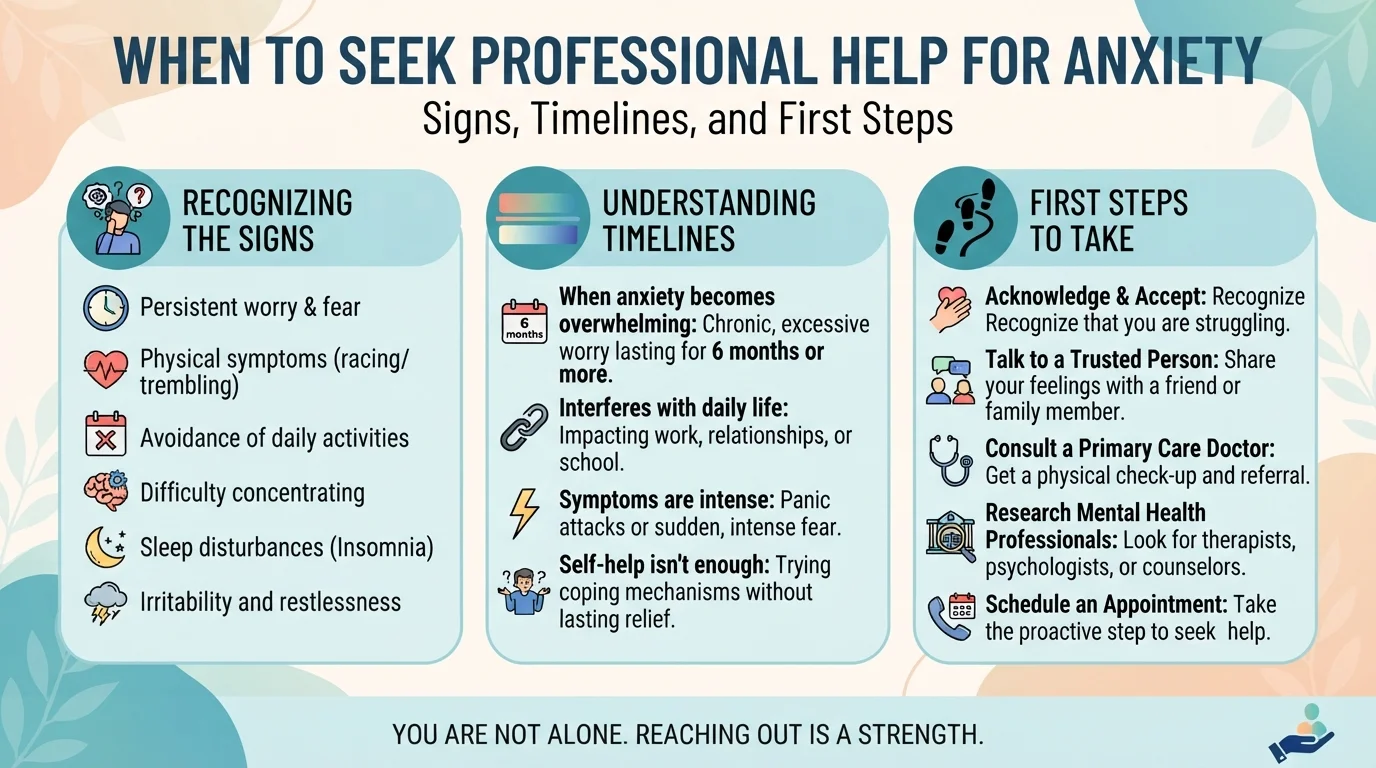
When to Seek Professional Help for Anxiety: Signs, Timelines, and First Steps
Anxiety (anxious distress) is the body's alarm response to a perceived threat, marked by worry, muscle tension, and a faster...
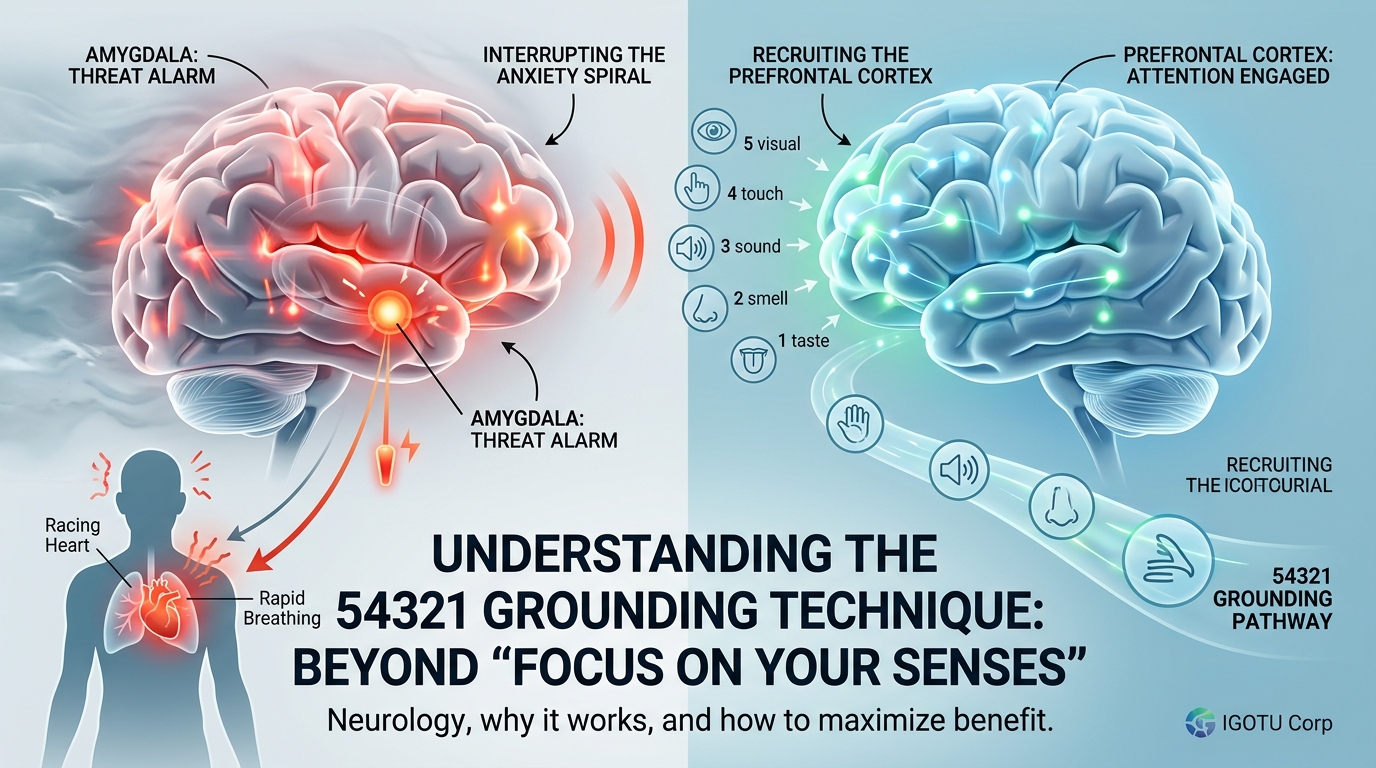
What Is the 54321 Grounding Technique? How Does It Actually Work?
If you have ever looked up what to do during a panic attack, an anxiety spiral, or a moment of...
Can Stress Alone Cause Panic Disorder? IGOTU Corp Guide
The Question That Arrives After the First Attack You were not doing anything dramatic. You were not in danger. You...
ESA Letter vs Service Animal: What’s the Difference in California?
An ESA letter and a service animal are not the same thing under California or federal law, and confusing the...