
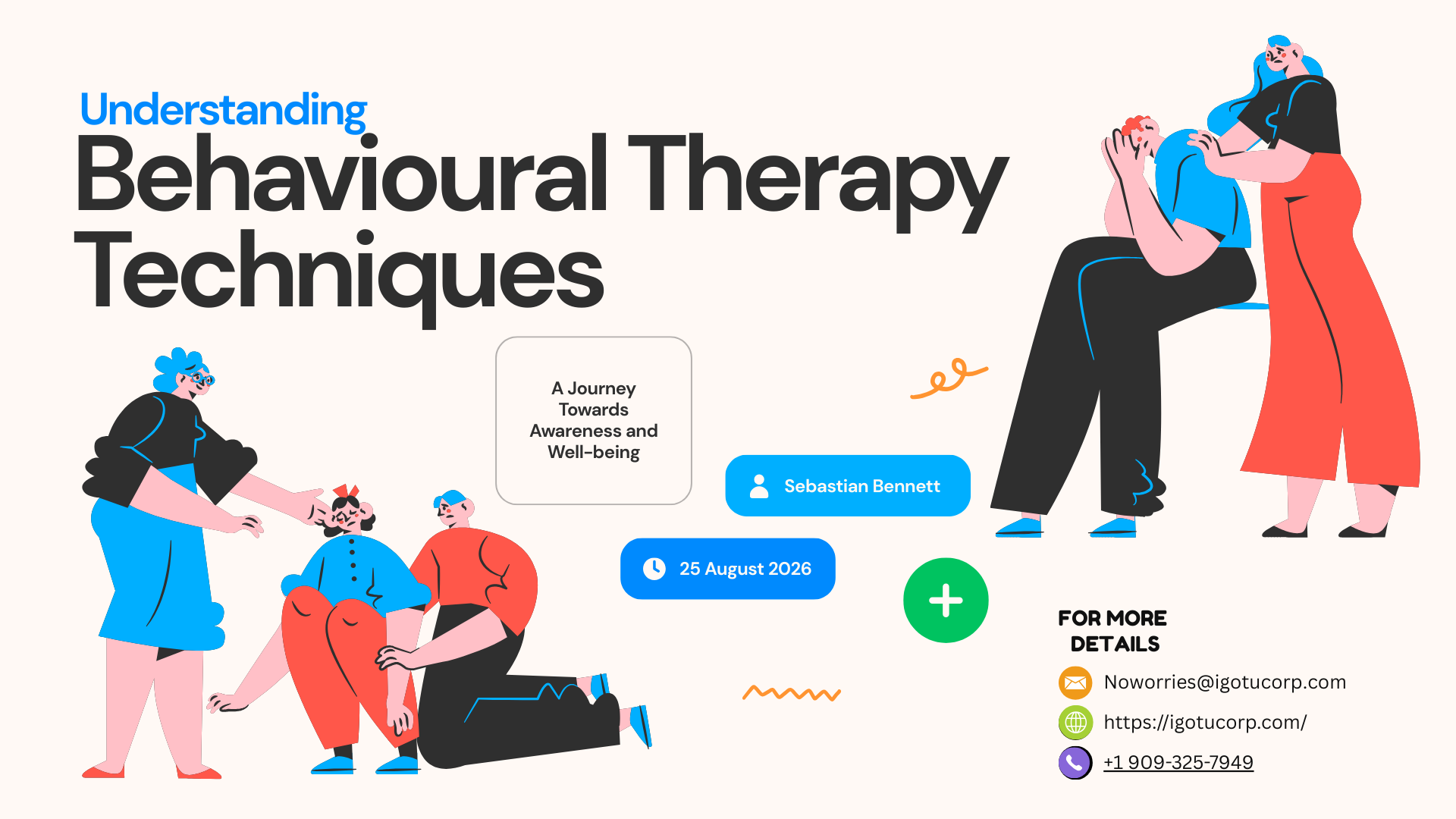
How Behavioral Therapy Techniques Help in Reducing Stress? 5 Proven Techniques
Let’s be real ; stress has become almost unavoidable in today’s world. Between packed schedules, endless notifications, and the pressure to keep up with everything, it’s no wonder so many people feel like they’re running on empty. The good news? You don’t have to just “push through it.” Behavioral therapy offers some incredibly practical, research-backed tools that can genuinely change how you respond to stress ; and we’re not talking about vague advice like “just relax.”
In this article, we’re breaking down five proven behavioral therapy techniques that actually work, along with how you can start using them in your everyday life.
What Is Behavioral Therapy, and Why Does It Work for Stress?
Behavioral therapy is rooted in the idea that our thoughts, feelings, and behaviors are all connected ; and that by changing the patterns in one area, we can create positive shifts in the others. Unlike approaches that focus purely on talking about your past, behavioral therapy is action-oriented. It gives you concrete strategies to interrupt the stress cycle and rewire how your nervous system responds to pressure.
Think of it like this: stress isn’t just something that “happens” to you. A lot of it comes from learned patterns ; how you interpret situations, what habits you’ve built around anxiety, and how your body has been conditioned to react. Behavioral therapy targets those patterns directly.
5 Proven Behavioral Therapy Techniques for Reducing Stress
Cognitive Restructuring ; Challenging the Stories You Tell Yourself
One of the biggest contributors to stress isn’t the situation itself ; it’s the meaning we assign to it. Cognitive restructuring, a core technique in Cognitive Behavioral Therapy (CBT), helps you identify and challenge the distorted thoughts that fuel stress.
For example, if you make a mistake at work and immediately think “I’m going to get fired,” cognitive restructuring asks you to pause and evaluate that thought. Is it actually true? What’s the evidence for and against it? What would you say to a friend in the same situation?
Over time, this practice trains your brain to respond to stressors more rationally rather than catastrophically. Studies consistently show that CBT-based cognitive restructuring significantly reduces anxiety and stress-related symptoms ; and the results tend to stick long after therapy ends.
How to try it: Next time you notice a stressful thought, write it down. Then ask yourself: “Is this thought 100% true? What’s the most realistic outcome here?” You’ll be surprised how often the narrative shifts.
Progressive Muscle Relaxation (PMR) ; Releasing Tension From the Body Up
Stress doesn’t just live in your head ; it lives in your body. Tight shoulders, clenched jaw, a knotted stomach. Progressive Muscle Relaxation is a behavioral technique that works by systematically tensing and then releasing different muscle groups throughout the body.
The process teaches you to notice the contrast between tension and relaxation, helping you recognize when your body is holding stress and how to let it go. It’s like a full-body reset button.
Research has shown PMR to be effective in reducing physiological symptoms of stress, including lowering heart rate, decreasing cortisol levels, and improving sleep quality.
How to try it: Start from your feet and work your way up. Tense each muscle group for about five seconds, then release for 30 seconds. Work through your calves, thighs, abdomen, hands, arms, shoulders, and face. Do this before bed or during a stressful day for immediate relief.
Behavioral Activation ; Breaking the Avoidance Cycle
Here’s something counterintuitive: when we’re stressed, we tend to withdraw from the very activities that would actually help us feel better. We cancel plans, avoid tasks, and retreat ; which only fuels the stress and low mood further.
Behavioral activation is a technique that encourages you to intentionally engage in meaningful, enjoyable, or productive activities, even when you don’t feel like it. The idea is that action comes before motivation, not the other way around.
This is especially powerful for stress that has slid into burnout or mild depression. By gradually scheduling activities that bring a sense of accomplishment or pleasure, you start rebuilding momentum and positive reinforcement loops.
How to try it: Make a short list of activities you used to enjoy or that give you a sense of purpose ; a walk, a creative hobby, catching up with a friend. Schedule at least one each day and notice how your mood and stress levels shift over time.
Mindfulness-Based Stress Reduction (MBSR) ; Learning to Be Where You Are
Mindfulness has become a buzzword, but at its core it’s a powerful behavioral technique backed by decades of research. Mindfulness-Based Stress Reduction (MBSR) was developed by Dr. Jon Kabat-Zinn and focuses on training your attention to anchor in the present moment ; rather than spiraling into worry about the future or ruminating on the past.
When you’re stressed, your mind tends to race forward (“What if this goes wrong?”) or backward (“Why did I do that?”). Mindfulness interrupts that loop by gently bringing your awareness back to what’s happening right now.
Studies have shown that regular mindfulness practice can reduce symptoms of anxiety, depression, and chronic stress ; and even produce measurable changes in the brain’s stress response over time.
How to try it: Start with just five minutes a day. Sit comfortably, focus on your breath, and when your mind wanders (it will), gently bring it back without judgment. Apps or guided recordings can be helpful to get started.
Exposure Therapy (Gradual Desensitization) ; Facing What’s Stressing You Out
A lot of chronic stress comes from avoidance. The thing we’re dreading ; a difficult conversation, a health concern, a looming project ; feels so overwhelming that we avoid it, which paradoxically keeps the stress alive and growing.
Gradual exposure, or systematic desensitization, involves slowly and intentionally approaching the source of your stress in a controlled, manageable way. You start with the least anxiety-provoking version of the situation and work your way up, allowing your nervous system to recalibrate and realize that the feared outcome isn’t as catastrophic as imagined.
This technique is especially useful for phobias, social anxiety, and stress rooted in avoidance patterns.
How to try it: Create a “stress ladder” ; a list of situations related to your stressor, ranked from least to most anxiety-inducing. Start at the bottom and work up gradually, spending enough time at each step that your anxiety naturally decreases before moving forward.
How IGOTU Corp Can Help with Behavioral Therapy Techniques
Understanding these techniques is one thing ; actually integrating them into your life is another. That’s where IGOTU Corp comes in. IGOTU Corp specializes in connecting individuals with evidence-based mental health tools and professional support designed to make behavioral therapy accessible and practical for real, everyday life. Whether you’re looking for guided programs, one-on-one coaching, or digital resources to complement your therapy journey, IGOTU Corp has solutions built around your needs.

Ready to take the first step? Visit IGOTU Corp today and explore how their tailored programs can help you build a lasting stress-management toolkit.
The beauty of behavioral therapy is that these techniques aren’t meant to work in isolation. Cognitive restructuring changes how you think. PMR addresses how your body responds. Behavioral activation gets you moving. Mindfulness grounds you in the present. And gradual exposure helps you stop running from what’s stressing you.
Used together, they create a comprehensive approach to stress that addresses its root causes rather than just masking the symptoms. And unlike medication alone, these skills stay with you ; they become part of how you navigate life.
Frequently Asked Questions (FAQs)
Q1: How long does it take for behavioral therapy techniques to reduce stress?
It varies from person to person, but many people begin noticing changes within a few weeks of consistent practice. Techniques like progressive muscle relaxation and mindfulness can provide immediate short-term relief. The deeper changes from cognitive restructuring and behavioral activation typically develop over 6–12 weeks of regular use. The key word is “consistent” ; like any skill, these techniques strengthen with practice.
Q2: Can I use these techniques on my own, or do I need a therapist?
Many of these techniques can be practiced independently, especially once you understand the basics. Platforms like IGOTU Corp offer both self-guided resources and professional support. So, you can choose the level of guidance that works for you.
Q3: Are behavioral therapy techniques effective for all types of stress?
Behavioral therapy techniques are well-suited for a wide range of stress, including work-related stress, social anxiety, performance pressure, relationship stress, and health-related worry. IGOTU Corp can help match you with the right support for your unique needs.
How Behavioral Therapy Techniques Can Help? Final Word
Stress doesn’t have to be the background noise of your life. Behavioral therapy gives you real, evidence-based tools to change the patterns that keep stress alive ; and the five techniques we’ve covered here are a great place to start.
Whether you try cognitive restructuring on your lunch break, add a PMR session to your bedtime routine, or finally start scheduling that joy back into your week, every small step counts. And if you want expert guidance to make it all stick, remember that IGOTU Corp is here to support your journey every step of the way.
You’ve got this.
Recent Posts
Related Posts

What to Expect During Your First 7 Days at a Depression Center
The night before you start treatment can feel strange. Part of you is relieved that help is finally coming. Another...
How to Protect Your Mental Health Without Sacrificing Your Career
It is Sunday evening and your stomach is already tight. You are replying to emails you will see again in...

How to Find a Licensed Male Therapist in California
Plenty of people know the moment they decide they want therapy. Fewer people know what to type into the search...

How to Do the 5-4-3-2-1 Technique Silently in Class
Learn how to manage anxiety discreetly during class using the simple and effective 5-4-3-2-1 grounding technique in this article. Exclusive...
How to Set Boundaries Without Guilt: Stop People Pleasing
You said yes again. You knew while the words were leaving your mouth that you did not want to say...