
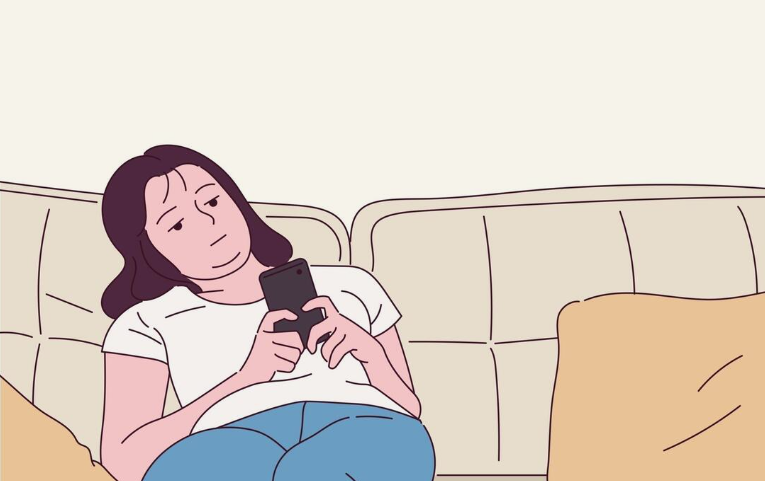
How to Stop Doomscrolling When Depressed: Complete Guide
What Is Doomscrolling and Why Does It Feel Impossible to Stop When You’re Depressed?
You pick up your phone to check one thing. Forty-five minutes later you’re reading about a natural disaster on the other side of the world, a political crisis you can’t influence, a comment section full of people being cruel to each other, and a thread about everything that’s wrong with the economy. You feel worse than when you started. You keep scrolling anyway.
That is doomscrolling — and if you’re depressed, it is not a bad habit you simply haven’t gotten around to fixing. It is a neurological trap that depression itself builds and maintains, specifically designed by the intersection of your struggling brain and platforms engineered by some of the most sophisticated behavioral psychologists and software engineers on earth.
Understanding why doomscrolling and depression are so tightly entangled is not just academically interesting. It is the first step toward actually breaking the cycle — because willpower alone, as anyone who has tried it knows, is almost never enough.
This article breaks down exactly what’s happening in your brain when depression drives you to doomscroll, what the research says about its consequences, and — most importantly — what actually works to stop it, even when depression has drained your motivation to near zero.
Why Depressed People Doomscroll More Than Anyone Else
Not everyone who doomscrolls is depressed. But people who are depressed doomscroll differently — more compulsively, for longer periods, and with more significant psychological consequences. Understanding why requires understanding what depression actually does to the brain.
Depression Hijacks Your Dopamine System
Depression is, among other things, a disorder of the dopamine reward system. The brain’s capacity to generate anticipatory pleasure — the motivational signal that makes you want to get up, engage with the world, pursue goals — is significantly suppressed in depression.
This creates a cruel paradox: the activities most likely to help depression (exercise, social connection, creative work, time in nature) feel least appealing precisely when you most need them. The motivational signal that would normally pull you toward them has gone quiet.
Social media — and particularly the negative, alarming content that doomscrolling delivers — exploits a different neurological pathway. Threat-relevant information captures attention automatically and compulsively, independent of the standard motivational reward system. Your depressed brain, unable to generate much genuine desire for pleasurable activity, is still fully capable of being captured by threat. The scroll continues not because it feels good but because stopping feels harder than continuing.
The Negativity Bias Is Already Turned Up in Depression
Every human brain has a negativity bias — a built-in tendency to weight negative information more heavily than positive information. This was evolutionarily useful: our ancestors needed to prioritize threats over opportunities to stay alive.
Depression amplifies this bias dramatically. Research using neuroimaging consistently shows that the depressed brain shows heightened amygdala reactivity to negative stimuli and reduced responsiveness to positive ones. The world already looks darker through the lens of depression — and doomscrolling is essentially mainlining the darkest content available.
The result is a perfectly calibrated mismatch: a brain primed to find and fixate on negative information, pointed directly at a platform algorithmically optimized to serve exactly that content.
Depression Destroys the Capacity for Behavioral Interruption
One of the most underappreciated effects of depression is its impact on executive function — the cognitive capacity for planning, self-regulation, impulse control, and behavioral flexibility. The prefrontal cortex, which normally applies the brakes to compulsive behavior, is measurably impaired in depression.
This is why telling a depressed person to “just put the phone down” is not helpful advice. The neural machinery that would allow them to interrupt a compulsive behavior and redirect to something more helpful is precisely what depression has compromised. Breaking the doomscrolling cycle when depressed requires strategies that work around impaired executive function — not strategies that depend on it.
Doomscrolling Is a Form of Avoidance
Depression generates an enormous amount of internal pain — low mood, negative thoughts, physical discomfort, anxiety, and a pervasive sense of hopelessness. Doomscrolling, like most compulsive behaviors that accompany depression, functions partly as avoidance — a way of keeping attention directed outward and away from that internal pain.
The problem, as with all avoidance, is that it provides momentary relief while deepening the underlying problem. Avoiding internal experience prevents the processing and integration that allows depression to improve. Doomscrolling keeps you on the surface of yourself, where the pain is temporarily less acute — and where nothing actually changes.
What Doomscrolling Does to Your Brain: The Research
This is not about abstract harm. There is a growing and specific body of research on what habitual doomscrolling does to mental health — and the findings are consistent and concerning.
It Amplifies Anxiety and Depression Simultaneously
A 2022 study published in the journal Technology, Mind, and Behavior identified a pattern the researchers called “problematic news consumption” — characterized by compulsive checking, inability to disengage, and ongoing mental preoccupation with news content even when not actively consuming it. People who scored high on problematic news consumption showed significantly higher levels of anxiety, depression, and stress — and significantly lower wellbeing and physical health — than those with healthier news habits.
The direction of causation runs both ways: depression drives doomscrolling, and doomscrolling deepens depression. The cycle is bidirectional and self-reinforcing.
It Activates Chronic Stress Physiology
Each piece of alarming content encountered during a doomscrolling session triggers a small activation of the stress response — a micro-dose of cortisol and adrenaline. Individual micro-doses are manageable. Hours of accumulated micro-doses produce a state of chronic low-grade stress activation that keeps the nervous system in a persistent state of low-level emergency.
Chronic cortisol elevation suppresses immune function, disrupts sleep, impairs memory consolidation, and — critically — worsens depression by interfering with serotonin and dopamine signaling. Doomscrolling is not just emotionally unpleasant. It is physiologically damaging in ways that directly worsen the neurochemical environment of depression.
It Disrupts Sleep — Which Worsens Depression
The relationship between doomscrolling, sleep disruption, and depression is one of the tightest feedback loops in mental health research. Doomscrolling in the evening — which the majority of people do — disrupts sleep through multiple mechanisms: blue light suppression of melatonin, cognitive arousal from alarming content, and the general stimulation of platform engagement.
Disrupted sleep worsens depression. Worsened depression increases doomscrolling. Increased doomscrolling disrupts sleep further. This three-way loop is one of the most important — and most addressable — maintenance cycles in depression.
It Produces a Specific Kind of Helplessness
Much of the content consumed during doomscrolling involves events the viewer cannot influence — political developments, global disasters, social crises. Repeated, passive exposure to alarming situations over which you have no control produces what psychologists call learned helplessness — the neurological state in which the brain stops generating motivated behavior because experience has taught it that effort doesn’t change outcomes.
Learned helplessness is not just a metaphor for depression. It is one of the primary neurological models of how depression develops and persists. Doomscrolling actively cultivates the psychological state it purports to be a response to.
The Doomscrolling-Depression Cycle: How It Locks In
Understanding the specific cycle is important because breaking it requires interrupting it at a specific point — and different people will find different intervention points more accessible.
The cycle typically runs like this:
Depression creates low mood and low energy → Low mood reduces motivation for effortful positive activities → The path of least resistance is the phone → Phone opens to social media or news → Algorithm serves threat-relevant, emotionally activating content → Negativity bias engages, attention is captured → Cortisol rises, mood worsens → Dopamine system remains suppressed → Screen provides just enough stimulation to prevent disengagement → Time passes, productive activity doesn’t happen → Depression is fed by inactivity, avoidance, cortisol, and sleep disruption → Mood drops further → Phone is picked up again.
The entry point — the moment of picking up the phone — is usually the most accessible intervention point. But any point in the cycle can be interrupted. The strategies below are organized to give you options at multiple points.
How to Stop Doomscrolling When Depressed: Strategies That Actually Work
These are not tips written for someone with full executive function, abundant motivation, and unlimited energy. They are strategies designed for someone whose depression has made the simplest behavioral changes feel enormous — and who needs approaches that work with their current neurological state rather than against it.
1. Make the Default Behavior Harder, Not Just Worse
The single most effective behavioral intervention for doomscrolling is not willpower or intention — it is friction. Making the default behavior (picking up the phone, opening the app) physically harder to do reduces its frequency without requiring conscious decision-making in the moment.
Practical friction-building strategies:
Log out of social media apps after every use. The extra thirty seconds of login is not long — but it is long enough for the automatic, unconscious scroll to be interrupted. You have to make a conscious decision to log in, which activates just enough prefrontal cortex to give you a choice.
Move apps off your home screen. Put social media and news apps in a folder, on a secondary screen, or delete them from your phone entirely and access them only via browser. The automatic muscle memory of tapping the icon is disrupted.
Use app time limits. Both iOS Screen Time and Android Digital Wellbeing allow you to set daily time limits on specific apps. When the limit is reached, the app grays out and requires a conscious override to continue. For someone with depression and impaired executive function, that friction point matters.
Charge your phone outside the bedroom. Nighttime doomscrolling and morning doomscrolling (the first thing many depressed people reach for before getting out of bed) are among the most damaging patterns. Physically removing the phone from the bedroom eliminates both without requiring in-the-moment decision-making.
Use a physical alarm clock. The most common justification for keeping a phone in the bedroom is the alarm. A five-dollar alarm clock removes that justification and removes the phone.
2. Interrupt the Physical Trigger, Not Just the Mental One
Doomscrolling is as much a physical habit as a psychological one. The sequence of reach, unlock, tap, scroll has been performed thousands of times until it is automatic — happening below conscious awareness before the conscious mind has a chance to intervene.
Interrupting the physical trigger means changing the physical environment in ways that break the automatic sequence:
Put your phone face-down on a surface rather than face-up. A face-up phone that lights up with notifications triggers the reach automatically. Face-down, the notification is hidden and the trigger is removed.
Wear a watch. A significant amount of phone-picking-up is technically time-checking that converts into scrolling the moment the phone is in hand. A watch eliminates the time-checking justification.
Keep your hands occupied. Knitting, drawing, squeezing a stress ball, holding a warm drink — any activity that keeps your hands engaged raises the barrier to picking up the phone.
Put the phone in another room during specific times. Not forever. Just for the next hour. The concreteness and temporariness of this makes it more achievable when depression makes permanent behavior change feel impossible.
3. Replace, Don’t Just Remove
Doomscrolling is meeting needs — badly, but meeting them. It provides stimulation, a sense of connection to the world, a feeling of being informed, and a way of passing time that doesn’t require effort or energy. Simply removing it without providing an alternative leaves those needs unmet, which creates pressure toward relapse.
Effective replacement activities for doomscrolling need to have a few specific properties to work when depression is present: low barrier to entry, immediately engaging, and available in the same physical contexts as the phone.
Audiobooks and podcasts: Available on your phone, requiring no more energy than doomscrolling, but providing narrative engagement rather than anxiety activation. The key is choosing content that is absorbing but not emotionally distressing.
Reading physical books: The barrier is higher than a phone, but the cognitive engagement is qualitatively different — slower, deeper, and without the hyperlink structure that makes digital reading so conducive to compulsive behavior. Even five minutes of physical book reading can interrupt a doomscrolling session.
Simple games: Not all phone use is equivalent. A puzzle game, a word game, or a casual strategy game provides the same low-effort, available-anywhere stimulation as doomscrolling but without the cortisol-spiking content. It is a harm-reduction strategy, not a ideal behavior, but in depression, harm reduction matters.
Texting a specific person: Replacing passive, anonymous consumption of social media with direct communication with one specific person provides connection without the algorithmic amplification of distress.
4. Schedule Your Doomscrolling (Seriously)
This is a counterintuitive strategy borrowed from CBT’s stimulus control principles — and it works better than most people expect.
Rather than trying to eliminate doomscrolling entirely (a goal that is often too ambitious for someone in depression), schedule specific, time-limited windows for checking news and social media. Twice a day, for fifteen minutes each, at times that are not first thing in the morning or last thing at night.
The psychological mechanism here is important: scheduled checking reduces the anxiety-driven compulsive checking that happens throughout the day because you always know there is a designated time coming. The content doesn’t accumulate unreviewed, which reduces the anxiety of missing something. And the time limit, when it has been pre-committed to, is easier to honor than an in-the-moment decision to stop.
5. Use the “One Scroll Rule” With a Twist
For moments when you’ve already opened an app and the scroll has begun — when you’re inside the loop rather than preventing entry into it — a simple rule can help: before scrolling further, name out loud or in writing what you’re feeling right now.
This sounds deceptively simple. The reason it works is that doomscrolling functions partly as dissociation from internal experience. The act of pausing to name your emotional state reactivates the internal awareness that doomscrolling suppresses — and often, once you’re aware of what you’re actually feeling, the drive to escape it through the scroll loses some of its automatic power.
Therapists call this affect labeling, and research by Matthew Lieberman at UCLA has shown that naming an emotional experience in words measurably reduces amygdala activation — the same amygdala response that doomscrolling is triggering and that depression amplifies.
6. Address the Depression Directly — Because Nothing Else Fully Works Without This
Every strategy above is genuinely useful. None of them is sufficient as a standalone intervention if the underlying depression is not being actively treated.
Doomscrolling is, in significant part, a symptom of depression — not just a behavior that exists alongside it. Treating the behavior without treating the condition is like treating a fever with cold compresses while leaving the infection unaddressed. It provides some relief, and it is not nothing, but it is not the answer.
Effective depression treatment — whether through CBT, behavioral activation therapy, medication, or a combination — changes the neurological landscape in which doomscrolling thrives. When mood improves even modestly, executive function recovers enough that behavioral strategies become more effective. When the dopamine system begins to recover, genuinely pleasurable activities become more motivating. When sleep improves, the evening doomscrolling pattern weakens. Everything is connected.
Behavioral Activation: The Depression Treatment Most Directly Opposed to Doomscrolling
Among the evidence-based treatments for depression, Behavioral Activation (BA) is worth highlighting specifically in the context of doomscrolling — because it is the most directly targeted intervention for the avoidance and inactivity that doomscrolling both reflects and perpetuates.
Behavioral Activation is built on a simple but powerful principle: depression is maintained by behavioral withdrawal and avoidance, and recovery requires systematically re-engaging with activities that provide mastery, pleasure, or connection — even before motivation returns.
BA directly counters the doomscrolling pattern because it requires scheduling and completing specific, concrete activities as an alternative to avoidance. It does not wait for motivation to appear. It uses behavior to generate mood improvement, rather than waiting for mood improvement to generate behavior.
In practice, BA involves:
Identifying activities that have historically provided a sense of achievement, connection, or pleasure — even small ones.
Scheduling them at specific times, treating them like appointments.
Completing them even at a reduced level — a five-minute walk rather than a thirty-minute one, a paragraph of writing rather than a full page.
Tracking mood before and after to build evidence that activity produces even modest mood improvement.
Over time, the accumulated evidence that behavior changes mood — even slightly, even briefly — builds a counter-narrative to the hopelessness that depression generates. And every hour of Behavioral Activation is an hour not spent doomscrolling.
Ready to Break the Cycle With Professional Support? IGOTU Corp’s Licensed Therapists Specialize in Depression and Digital Behavior
Understanding why doomscrolling and depression are so tightly entangled is genuinely useful. Having the strategies in this article is a real start. But for most people whose depression is significant enough that doomscrolling has become a primary coping mechanism, professional support is the piece that makes everything else actually work.
IGOTU Corp connects you with licensed therapists who specialize in depression, behavioral patterns, and the specific ways that digital behavior both reflects and reinforces mental health struggles. Their clinicians are trained in Cognitive Behavioral Therapy, Behavioral Activation, and evidence-based depression treatment — and they understand that doomscrolling is not a character flaw or a discipline problem. It is a neurological pattern that responds to the right treatment.
Whether you’re looking for help managing the doomscrolling cycle directly, treating the depression that drives it, or both — IGOTU Corp’s licensed therapist network is ready to meet you exactly where you are.
Visit IGOTU Corp today, take their free depression and wellness assessment, and get matched with a licensed therapist who can help you build a real, personalized plan for breaking the cycle. Because you’ve spent long enough scrolling through other people’s pain instead of getting support for your own.
Digital Minimalism as a Mental Health Practice: Going Beyond Stopping Doomscrolling
Breaking the doomscrolling habit is valuable. But for people with depression, the fuller opportunity is using this moment as an entry point into a broader practice of intentional digital life — one that actively supports mental health rather than undermining it.
Digital minimalism, as articulated by researcher Cal Newport, is not about rejecting technology. It is about being deliberate about which technologies you use, how you use them, and whether they are serving your values or replacing them.
For someone with depression, a digital minimalism practice might look like:
Identifying which specific platforms and content types consistently worsen your mood — and removing them specifically, rather than attempting a blanket detox that is unsustainable.
Identifying which digital activities genuinely nourish you — video calls with people you love, podcasts that teach you something absorbing, music that moves you — and protecting space for those specifically.
Creating phone-free periods that are associated with alternative activities you value — a morning walk without the phone, an evening meal without screens, a weekly social media-free day.
Building a personal media diet with the same intentionality you would apply to a physical diet — not restriction for restriction’s sake, but curation in service of how you actually want to feel.
This is not a one-time decision. It is an ongoing practice. And like most practices, it is significantly more sustainable with professional support.
What to Do When You’ve Already Been Doomscrolling for Hours
Sometimes the question isn’t how to prevent doomscrolling — it’s what to do when you’ve already been doing it for two hours, feel worse than when you started, and the depression is now heavier for it.
Here is a practical protocol for that specific moment:
Put the phone down and don’t pick it up again for at least ten minutes. Not forever. Just ten minutes. The specificity and temporariness makes this achievable.
Change your physical position and location. Get up from where you were scrolling. Go to a different room. Go outside if possible. The environmental cue change disrupts the behavioral loop at the physical level.
Drink a glass of water. This sounds trivially simple. It works because it is a concrete, immediate, achievable action that activates agency — the sense that you can do something — which depression suppresses. It also addresses the dehydration that hours of sedentary screen time typically produces.
Do two minutes of physical movement. Not exercise. Two minutes. Walk to the end of the street and back. Stretch in your living room. Do ten jumping jacks. Physical movement generates BDNF (brain-derived neurotrophic factor) — a protein that is measurably reduced in depression and that even brief exercise begins to replenish.
Name what you’re feeling without judgment. Not “I’ve wasted another afternoon and I’m pathetic.” Just: “I feel low. I feel anxious. I feel like I’ve been through something unpleasant.” Accurate, non-judgmental naming of your emotional state is both grounding and reduces amygdala activation.
Do one small thing that is not the phone. Make food. Water a plant. Send one text to one person. Fold one item of laundry. The activity doesn’t matter. Re-establishing agency through any action — however small — begins to shift the neurological state that doomscrolling has deepened.
Parenting, Doomscrolling, and Depression: A Note for Parents
Parents with depression face a specific and compounding version of this challenge. The demands of parenting leave limited space for the kind of intentional digital practice described above. Doomscrolling often happens in the gaps — the feeding in the middle of the night, the moment of collapse after bedtime, the brief window during nap time.
For depressed parents, doomscrolling in these windows is particularly self-defeating because those windows are among the few available for genuine rest and recovery. Doomscrolling colonizes recovery time and converts it into additional cortisol load.
If you are a parent with depression whose doomscrolling is concentrated in the limited quiet windows of your day, the most important intervention is to protect those windows actively — to treat them as recovery time rather than default phone time. Five minutes of stillness, a brief walk outside, or even simply lying quietly without the phone produces measurably better mood recovery than the equivalent time spent scrolling.
Frequently Asked Questions (FAQs) About Doomscrolling and Depression
Q: Why can’t I stop doomscrolling even though I know it makes me feel worse? Because the drive to doomscroll when depressed is not primarily conscious or rational — it is neurological. Depression impairs the executive function (prefrontal cortex) needed to interrupt automatic behaviors. Simultaneously, the depressed brain’s threat-detection systems remain fully active and are easily captured by alarming content. Knowing something is bad for you and being able to stop doing it are two separate neurological capacities, and depression specifically impairs the second.
Q: Is doomscrolling a symptom of depression or a cause? Both — and this is what makes it so difficult to address. Depression creates the psychological and neurological conditions that drive doomscrolling. Doomscrolling worsens depression through cortisol elevation, sleep disruption, learned helplessness, and displacement of recovery activities. The relationship is bidirectional and cyclical.
Q: How long does it take to break the doomscrolling habit? Habit research suggests that behavioral patterns take anywhere from three weeks to three months to change meaningfully, depending on their entrenchment and the conditions in which they’re being changed. For someone with depression, the timeline is typically longer — both because executive function is impaired and because the underlying depression must also be addressed. Meaningful progress within four to six weeks of consistent effort and professional support is realistic.
Q: Does a social media detox help depression? Research on social media detoxes shows modest but real benefits for mood and anxiety — typically in the range of small to moderate effect sizes. A complete detox is not necessary and may not be sustainable. More important than elimination is reducing compulsive, passive, algorithmically-driven consumption specifically — the doomscrolling pattern — while preserving intentional, social, active digital engagement.
Q: What’s the best app to help stop doomscrolling? Practical tools include Freedom (blocks specific websites and apps across devices), One Sec (adds a brief pause and breathing exercise before opening specified apps), Screen Time (iOS) and Digital Wellbeing (Android) for usage limits, and Opal for comprehensive screen management. No app is a substitute for addressing the underlying depression, but friction-creating tools are a legitimate and evidence-adjacent intervention.
Q: Can therapy help with doomscrolling specifically? Yes — particularly Cognitive Behavioral Therapy (CBT), which directly addresses the thought patterns and behavioral cycles that maintain doomscrolling, and Behavioral Activation (BA), which targets the avoidance and inactivity that doomscrolling perpetuates. The most effective approach addresses both the behavior and the depression driving it.
Q: Is it normal to doomscroll for hours when depressed? It is extremely common — reported by a significant majority of people with depression in research surveys. Common does not mean harmless, but it does mean you are not uniquely weak or undisciplined. The pattern makes complete neurological sense given what depression does to the brain and what social media platforms are designed to do to attention. Understanding this reduces shame, which is itself a meaningful intervention.
Q: What do I do when I doomscroll instead of sleeping? Nighttime doomscrolling is the most physically damaging form because of its direct impact on sleep and therefore on next-day mood and resilience. The most effective intervention is phone removal from the bedroom — a physical barrier, not a decision made in the moment when you’re already tired and depleted. A physical alarm clock eliminates the most common justification. If the phone must stay in the bedroom, keeping it charging across the room rather than next to the bed reduces nighttime access meaningfully.
Q: Does doomscrolling make anxiety worse too? Significantly. Doomscrolling activates the stress response repeatedly through exposure to threat-relevant content, elevates cortisol, and maintains the nervous system in a state of low-grade arousal that is antithetical to anxiety recovery. For people with co-occurring depression and anxiety — which is the majority of people with either condition — doomscrolling is particularly harmful.
Q: Where can I get professional help for depression and doomscrolling? IGOTU Corp connects you with licensed therapists who specialize in depression, behavioral patterns, and evidence-based interventions for exactly the kind of cycle described in this article. Their assessment process identifies your specific needs and matches you with the right clinician — removing the burden of navigating an overwhelming mental health system while already depleted by depression. Visit IGOTU Corp to get started today.
The Bottom Line: Doomscrolling Is Not a Discipline Problem — It’s a Mental Health Problem With a Real Solution
If you have read this far, you already know something important: the reason you can’t stop doomscrolling when you’re depressed is not that you lack willpower, intelligence, or self-awareness. You probably have all three in abundance. The reason is that depression does specific, documented things to the brain that make stopping genuinely hard — and that the platforms you’re scrolling were engineered by people who understood exactly how to exploit those vulnerabilities.
That is not an excuse to keep scrolling indefinitely. It is a reason to approach the problem with the right tools rather than the wrong ones — with structural friction, behavioral strategies, and professional support for the underlying depression, rather than shame, self-criticism, and increasingly desperate attempts at willpower that depression has already depleted.
Every hour you spend doomscrolling is an hour you could have spent recovering. Not doing something heroic or productive — just recovering. Resting. Being with yourself in a way that allows your nervous system to begin the repair work that depression requires.
You deserve that recovery. And you deserve the support that makes it possible.
IGOTU Corp’s licensed therapists are ready to help you address both the doomscrolling pattern and the depression that drives it — with evidence-based treatment that actually works, delivered by clinicians who understand what you’re really dealing with. Visit IGOTU Corp today, take the free assessment, and take the first real step toward a relationship with your phone — and your mental health — that actually serves you.
Recent Posts
Related Posts
How to Set Boundaries Without Guilt: Stop People Pleasing
You said yes again. You knew while the words were leaving your mouth that you did not want to say...
When to Seek Professional Help for Anxiety: Signs, Timelines, and First Steps
Anxiety (anxious distress) is the body's alarm response to a perceived threat, marked by worry, muscle tension, and a faster...
What Is the 54321 Grounding Technique? How Does It Actually Work?
If you have ever looked up what to do during a panic attack, an anxiety spiral, or a moment of...
Can Stress Alone Cause Panic Disorder? IGOTU Corp Guide
The Question That Arrives After the First Attack You were not doing anything dramatic. You were not in danger. You...
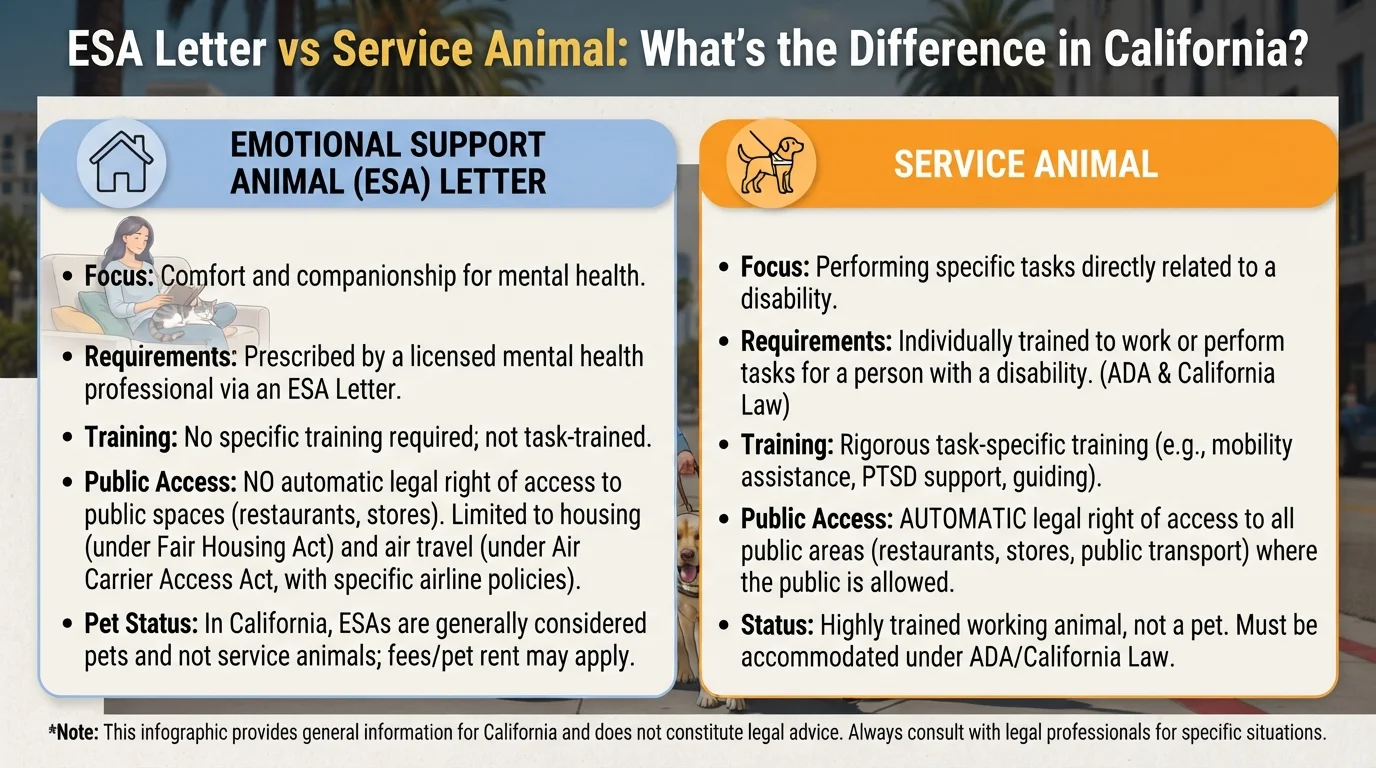
ESA Letter vs Service Animal: What’s the Difference in California?
An ESA letter and a service animal are not the same thing under California or federal law, and confusing the...