
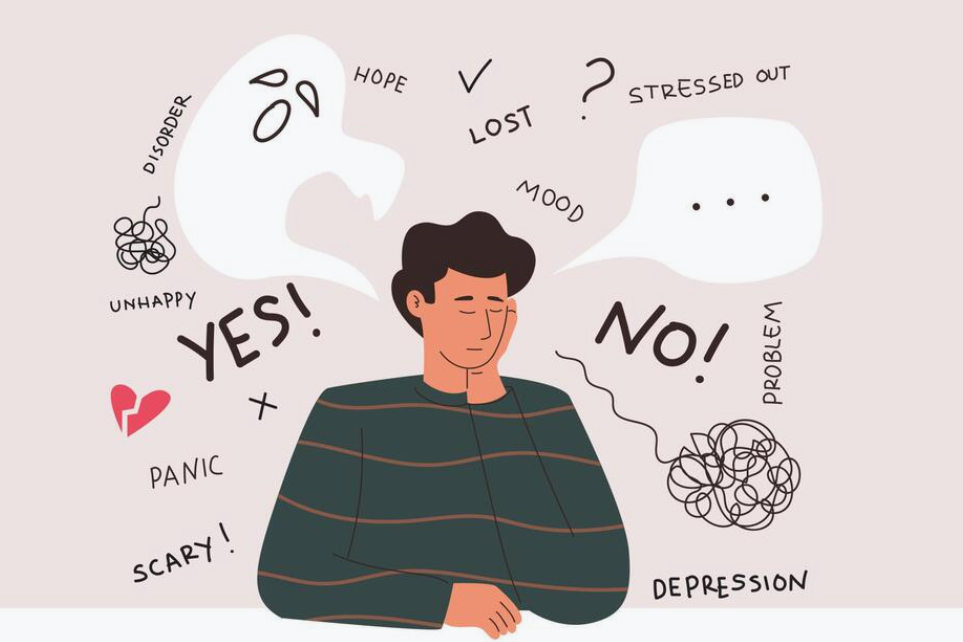
Understanding Functional Depression: The Silent Struggle
The Depression Nobody Notices — Including Sometimes You
You got up this morning. You made coffee. You answered your emails. You showed up to the meeting, said the right things, smiled when it was appropriate. From the outside, everything looks fine.
From the inside, everything feels like it is happening behind glass. Like you are watching your own life from a slight but permanent distance. Like the things that used to matter have quietly stopped mattering, and you have been going through the motions for so long that the motions have started to feel like the whole of what you are.
You are not lying in bed unable to move. You are not crying at your desk. You are not in crisis in any way that the word crisis usually implies. You are functional. You are, by most external measures, fine.
But you are not fine. And the particular cruelty of what you are experiencing is that its invisibility — to others, and often to yourself — is one of its defining features.
This is functional depression. And it is one of the most common, most undertreated, and most misunderstood forms of depression that exists.
What Is Functional Depression?
Functional depression is not a standalone DSM-5 diagnostic category — it is a colloquial term used to describe depression in people who continue to meet their daily obligations and responsibilities despite experiencing significant depressive symptoms. The clinical conditions most commonly described as functional depression include Persistent Depressive Disorder (PDD), also known as dysthymia, and high-functioning major depressive disorder — major depression that has not yet or does not consistently cross the threshold of complete functional collapse.
What distinguishes functional depression from the more familiar picture of depression is not the absence of symptoms — the symptoms are real, clinically significant, and often more enduring than those of acute major depressive episodes. What distinguishes it is that the person keeps going.
They go to work. They maintain their relationships, at least on the surface. They fulfill their responsibilities. They appear, to everyone who observes them from the outside, to be managing adequately. Sometimes they appear to be thriving. And all the while, internally, they are carrying something heavy and quiet and persistent that nobody seems to see — partly because it does not look the way depression is supposed to look, and partly because the person carrying it has become so skilled at carrying it that the weight has become invisible even to themselves.
Persistent Depressive Disorder: The Clinical Foundation of Functional Depression
The clinical condition most directly corresponding to what people describe as functional depression is Persistent Depressive Disorder (PDD) — formerly known as dysthymia — which is defined in the DSM-5 as a depressed mood occurring for most of the day, for more days than not, for at least two years in adults.
Two years. The duration is not incidental. It is one of the defining and most devastating features of this condition — the chronicity that distinguishes it from a bad patch, from ordinary sadness, from the low periods that most people move through and out of.
PDD requires the presence of at least two of the following symptoms alongside the depressed mood:
Poor appetite or overeating. Insomnia or hypersomnia. Low energy or fatigue. Low self-esteem. Poor concentration or difficulty making decisions. Feelings of hopelessness.
What is notable about this list is how ordinary each item sounds in isolation. Low energy. Poor concentration. Feelings of hopelessness. Any one of these, in isolation, on a particular week, most people would recognize as a temporary state rather than a clinical condition. The clinical significance lies in their persistence — in the fact that they have been present, consistently, for months and years rather than days and weeks.
And because each symptom individually sounds ordinary, because the person is still functioning, because there is no visible crisis — the condition goes unrecognized. By family members, by colleagues, by friends, by doctors who ask “are you depressed?” and receive the honestly uncertain answer “I don’t know — I mean, I’m functioning” — and move on.
How Functional Depression Feels From the Inside
Clinical descriptions of PDD capture the diagnostic criteria. They do not capture what it actually feels like to live inside it — which is important, because recognition is the first gateway to treatment.
Everything Requires More Effort Than It Should
The simplest tasks — tasks that other people appear to complete with ease and without thought — require what feels like a disproportionate mobilization of will. Getting up. Starting a task. Making a decision. Initiating a conversation. None of these things is impossible. All of them are exhausting in a way that feels fundamentally different from ordinary tiredness.
This is not laziness. It is the motivational deficit that depression produces through its effects on the dopamine and norepinephrine systems — the neurochemical signals that make action feel worthwhile and achievable. When those signals are muted, everything requires more conscious effort to initiate and sustain. The person with functional depression is not doing less because they care less — they are doing the same amount while working against a neurological current that others are not navigating.
Nothing Feels Particularly Worth It
Anhedonia — the inability to experience pleasure or interest in activities that previously brought both — is one of the most diagnostically significant symptoms of depression and one of the most difficult to articulate to someone who has not experienced it.
It is not sadness. Sadness has an object — you know what you are sad about. Anhedonia is more like the absence of signal. Things that used to generate interest no longer generate interest. Things that used to be anticipated are approached with neutrality. Things that should feel satisfying feel flat.
The person with functional depression often continues doing the activities they used to enjoy — going to the gym, seeing friends, engaging with hobbies — because they know they are supposed to enjoy these things, because they remember that they used to. But something essential is missing from the experience. They are present in their life but not quite inside it.
The Flatness That Never Fully Lifts
Perhaps the most characteristic feature of functional depression — and the one that most clearly distinguishes it from acute major depressive episodes — is its persistent, low-grade quality. There is rarely a dramatic bottom. There is instead a kind of emotional flatness that becomes the baseline — a consistent dampening of emotional range in which the highs are less high, the engagement less engaged, the aliveness less alive.
Many people with functional depression do not identify this flatness as abnormal because it has been present for so long. They have gradually recalibrated to a baseline that is actually depressed — they have forgotten what it felt like to not feel this way, and so the current state feels like simply who they are rather than a deviation from their true baseline.
The Performance Is Exhausting
People with functional depression are often performing — performing engagement, performing enthusiasm, performing capability — in a way that is invisible to observers but profoundly depleting to the person doing it. Every social interaction requires a calculation: what does functional, okay, together look like, and how do I produce that right now?
This performance is not dishonest in the ordinary sense. It is adaptive — a strategy for meeting the demands of life and relationships while managing an internal state that would make those demands impossible to meet if it were fully visible. But it is exhausting in a way that adds to the existing depletion — and it is isolating, because the performance is precisely what prevents others from seeing what is actually happening.
The Low Self-Esteem That Feels Like Accurate Self-Assessment
One of the most insidious features of functional depression is the distorted self-perception it produces. The negative self-view of depression — the belief that you are inadequate, that you are not trying hard enough, that other people manage better than you with less effort — does not present itself as distortion. It presents itself as accurate assessment.
The person with functional depression who believes they are underperforming, lazy, ungrateful, or simply not as capable as they should be is not engaging in melodrama. They are genuinely experiencing their internal state as evidence of personal failing rather than as a symptom of a condition. And because they are continuing to function — which in the depressed mind becomes evidence that they should be able to do more, feel better, engage more fully — the standard against which they judge themselves remains impossibly high.
Why Functional Depression Goes Unrecognized for So Long
Functional depression is systematically underdiagnosed — by clinicians, by loved ones, and by the people experiencing it. Understanding why is important because the mechanisms of non-recognition are the same ones that delay treatment.
It Doesn’t Look Like Depression Is Supposed to Look
The cultural template for depression — the person who cannot get out of bed, who has stopped functioning, who is visibly unable to cope — is real, but it describes only one presentation of a condition that presents in many ways. Functional depression specifically contradicts this template: the person is getting out of bed, is functioning, is coping — at least visibly. The mismatch between the template and the reality creates a blind spot in which the actual condition goes unseen.
The Person Themselves Discounts It
The person with functional depression routinely discounts their own experience — because they are functioning, because others seem to have it harder, because they believe depression should look a certain way and they do not look that way. They tell themselves they are just tired, just stressed, just going through a phase. They compare their invisible internal experience to the visible struggles of others and conclude that theirs does not qualify.
This discounting is itself a symptom of the condition — the diminished self-regard, the minimization of one’s own experience, the belief that suffering is only legitimate when it reaches a certain threshold of visibility. And it means that the person most affected by functional depression is often the last to seek help for it.
Functioning Reads as Evidence of Not Being Sick
In a medical framework that tends to assess severity by functional impairment, continuing to function is read as evidence of absence of serious condition. The person who goes to work every day, who maintains relationships, who meets their obligations — this person does not look like someone who needs clinical attention. And so they often do not receive it.
This is a structural failure of the medical and mental health system — but understanding it helps individuals recognize that their capacity to function does not disqualify their experience as depression or their need for treatment.
The Gradual Onset Normalizes the Symptoms
PDD, by definition, develops gradually over months and years. Unlike acute major depressive episodes, which often have an identifiable onset, functional depression tends to creep — each month slightly darker than the last, each year slightly more depleted, each adjustment to the new baseline so gradual that no individual moment feels like a crisis. By the time the condition has been present for two or three years, it has been normalized into the fabric of who the person believes themselves to be.
The Consequences of Untreated Functional Depression
Because functional depression is less dramatically visible than acute depression, its consequences are sometimes dismissed as less serious. They are not.
Accumulated life restriction. Over months and years of anhedonia and motivational deficit, the person with functional depression gradually stops pursuing things — opportunities, relationships, experiences — that would require engagement and investment they cannot sustain. The life that results is smaller than it would have been, and the losses are often invisible because they are unmade choices rather than visible failures.
Relationship erosion. The emotional flatness, the withdrawal, the performance of engagement rather than genuine engagement — these affect intimate relationships in ways that are slow but significant. Partners, friends, and family members who do not understand what is happening often experience the withdrawal as a reflection of how the person feels about them, which creates relational damage on top of the depressive symptoms.
Increased risk of major depressive episodes. PDD significantly increases the risk of developing major depressive episodes — a pattern sometimes called double depression, in which acute MDD episodes layer on top of the chronic dysthymic baseline. The person who has been managing functional depression for years may be particularly vulnerable to acute episodes under significant stress.
Physical health consequences. Chronic depression, including functional depression, is associated with elevated cortisol, increased systemic inflammation, suppressed immune function, disrupted sleep architecture, and increased risk of cardiovascular disease. The body pays the cost of unaddressed chronic depression in ways that are entirely physical and entirely real.
What Actually Helps: Evidence-Based Treatment for Functional Depression
Psychotherapy — The Most Durable Intervention
Psychotherapy is the most evidence-supported treatment for persistent depressive disorder and functional depression — and several specific modalities have demonstrated particular effectiveness.
Cognitive Behavioral Therapy (CBT) addresses the cognitive distortions that maintain functional depression — the negative self-view, the pessimistic interpretation of neutral events, the catastrophic thinking — and the behavioral patterns that perpetuate it, particularly withdrawal and reduced engagement with previously rewarding activities.
Behavioral Activation (BA) is particularly relevant for functional depression because it directly targets anhedonia and motivational deficit — the symptoms most central to the functional depression experience. BA involves systematically re-engaging with activities that provide mastery, pleasure, or connection — not waiting for motivation to return before acting, but using action to generate the mood improvement that motivation would otherwise require. For the person who has been going through the motions, BA provides a structured framework for re-inhabiting those motions with genuine engagement.
Cognitive Behavioral Analysis System of Psychotherapy (CBASP) was developed specifically for chronic depression and persistent depressive disorder — making it particularly well-matched to the functional depression presentation. CBASP focuses on the interpersonal consequences of depressive behavior and helps the person develop more effective patterns of social engagement and problem-solving.
Acceptance and Commitment Therapy (ACT) addresses the experiential avoidance and values disconnection that functional depression produces — helping the person reconnect with what genuinely matters to them and recommit to behavior aligned with those values rather than organized around the management of depressive symptoms.
Medication
Antidepressants — primarily SSRIs and SNRIs — are effective for persistent depressive disorder and are often used in combination with psychotherapy for more significant presentations. Research suggests that the combination of medication and psychotherapy produces better outcomes for chronic depression than either treatment alone.
For functional depression that has been present for years, medication can provide the neurochemical foundation — restoring enough of the dopaminergic and serotonergic signaling that depression has suppressed — to make the behavioral and cognitive work of therapy more accessible and more effective.
Lifestyle Factors That Matter More Than They Sound
Physical exercise is one of the most robustly evidence-supported interventions for depression — producing neurobiological effects through BDNF release, HPA axis regulation, endorphin signaling, and sleep quality improvement that directly address the mechanisms of functional depression. The challenge for the person with functional depression is that the motivational deficit that exercise most directly addresses is also the symptom that makes starting exercise most difficult.
Sleep regularity — going to bed and waking at consistent times — has significant effects on the mood dysregulation of depression through its effects on circadian rhythm and sleep architecture. The disrupted sleep common in functional depression worsens every other symptom. Addressing sleep directly, including through CBT-I when chronic insomnia is present, produces meaningful downstream improvement.
Social connection — even when it requires the performance that functional depression makes exhausting — is neurobiologically protective against depression through its effects on oxytocin, cortisol regulation, and the parasympathetic nervous system. Prioritizing the specific relationships that provide genuine restoration rather than additional energy demand is a meaningful practical step.
Get Support for Functional Depression Through IGOTU Corp
Functional depression is one of the most treatable conditions in psychiatry — and one of the most undertreated, precisely because its invisibility means people spend years carrying it without the support that would change it.
IGOTU Corp connects you with licensed mental health professionals who specialize in depression — including the persistent, high-functioning presentations that are so frequently missed by systems designed to identify more acute presentations. Their clinicians understand that functioning does not mean fine, that the absence of crisis does not mean the absence of need, and that the quiet, chronic quality of functional depression deserves the same clinical seriousness as its more dramatic forms.
Whether you are recognizing yourself in this article for the first time, or have known something was wrong for years without having the language or the pathway to address it — IGOTU Corp’s licensed therapist network is ready to meet you exactly where you are.
Visit IGOTU Corp today, take their free mental health assessment, and get matched with a licensed therapist who understands functional depression and is equipped to treat it. Because the flatness you have been living inside is not who you are. It is a condition. And conditions, with the right treatment, change.
Frequently Asked Questions (FAQs) About Functional Depression
Q: Is functional depression a real diagnosis? Functional depression is a widely used clinical term rather than a formal DSM-5 diagnostic category. The conditions it most commonly describes — Persistent Depressive Disorder (dysthymia) and high-functioning major depressive disorder — are formal diagnoses. The term “functional depression” is useful because it captures a specific presentation — depression in people who continue to function — that is frequently missed precisely because of the functioning.
Q: How is functional depression different from just being unhappy? Functional depression is distinguished from ordinary unhappiness by its duration, its pervasiveness, and its specific symptom profile — including anhedonia, motivational deficit, cognitive distortions, low self-esteem, and the physical symptoms that accompany depression. Unhappiness has identifiable causes and typically lifts with time or changed circumstances. Functional depression persists across circumstances, is present even when external conditions are objectively good, and does not resolve without targeted intervention.
Q: Can you have functional depression and not know it? Yes — and this is one of its most defining features. The gradual onset normalizes the symptoms over time. The functioning provides evidence that things cannot be that bad. The negative self-view reframes the symptoms as personal failing rather than clinical condition. Many people with functional depression spend years — sometimes decades — unaware that what they are experiencing is a treatable medical condition rather than simply who they are.
Q: Does functional depression get worse over time if untreated? It typically does not resolve on its own, and it frequently worsens over time through the accumulated consequences of untreated depression — life restriction, relationship erosion, increased risk of acute major depressive episodes, and physical health consequences. Early treatment produces better outcomes than extended untreated duration.
Q: How long does treatment for functional depression take? Because functional depression is typically chronic by the time it is identified, treatment tends to be longer than for acute depression — often 6 to 12 months of consistent therapy, sometimes longer for presentations that have been present for many years. Meaningful improvement is typically noticeable within 8 to 12 weeks of appropriate treatment, with continued improvement over the full treatment course.
Q: Can lifestyle changes alone treat functional depression? For very mild presentations, structured lifestyle interventions — particularly exercise, sleep regularity, and social engagement — can produce meaningful improvement. For moderate to significant functional depression, lifestyle changes are an important adjunct to treatment but are typically insufficient as standalone interventions. The motivational deficit that characterizes functional depression also makes lifestyle changes particularly difficult to initiate and sustain without additional support.
Q: Is medication necessary for functional depression? Not always. Many people with functional depression achieve significant improvement through psychotherapy alone — particularly CBT, Behavioral Activation, and CBASP. For more significant presentations, or when psychotherapy alone has not produced sufficient improvement, medication in combination with therapy typically produces better outcomes than either alone.
Q: Where can I get help for functional depression? IGOTU Corp connects you with licensed mental health professionals who specialize in depression — including the persistent, high-functioning presentations that so often go untreated. Visit IGOTU Corp today to take their free mental health assessment and get matched with a licensed therapist who is equipped to help with exactly what you are experiencing.
The Bottom Line: The Quiet Struggle Deserves a Real Response
Functional depression is quiet. That is its defining quality and its primary defense against recognition and treatment. It does not announce itself. It does not collapse you visibly. It simply makes everything a little harder, a little flatter, a little more distant — and it does this for so long, so consistently, that it eventually stops feeling like a problem and starts feeling like a personality.
It is not a personality. It is a condition. It has a name, a neurobiological basis, and a substantial body of evidence for treatments that produce real, meaningful change.
The person who keeps going — who shows up, who functions, who performs okay well enough that nobody worries — deserves support just as much as the person whose depression is immediately visible. Invisible suffering is still suffering. Functional struggle is still struggle. And the fact that you have been managing does not mean you have to keep managing this way.
The flatness is not permanent. The distance from your own experience is not fixed. The quiet that has settled over things that used to feel alive — that quiet can lift.
IGOTU Corp’s licensed therapists are ready to help you find your way back. Visit IGOTU Corp today — take the free assessment, get matched with a clinician who understands what functional depression actually looks like, and begin the treatment that can genuinely change what has felt unchangeable for too long.
Recent Posts
Related Posts

What to Expect During Your First 7 Days at a Depression Center
The night before you start treatment can feel strange. Part of you is relieved that help is finally coming. Another...

How to Protect Your Mental Health Without Sacrificing Your Career
It is Sunday evening and your stomach is already tight. You are replying to emails you will see again in...

How to Find a Licensed Male Therapist in California
Plenty of people know the moment they decide they want therapy. Fewer people know what to type into the search...

How to Do the 5-4-3-2-1 Technique Silently in Class
Learn how to manage anxiety discreetly during class using the simple and effective 5-4-3-2-1 grounding technique in this article. Exclusive...
How to Set Boundaries Without Guilt: Stop People Pleasing
You said yes again. You knew while the words were leaving your mouth that you did not want to say...