
How to Obtain an ESA Letter in California in 2026 | Complete Guide
Why Getting Your ESA Letter Right in 2026 Matters More Than Ever
If you have been searching for information about how to get an Emotional Support Animal letter in California, you have almost certainly already encountered the problem: the internet is flooded with services offering instant ESA letters, online registrations, official-looking certificates, and same-day approvals — most of which are legally worthless, ethically questionable, and increasingly likely to be rejected by landlords who have learned to spot them.
California in 2026 is not a forgiving environment for fraudulent or improperly obtained ESA documentation. Landlords are more informed than they were five years ago. Housing courts are more experienced with ESA disputes. And California’s own legislative landscape around ESAs has continued to evolve — making it more important than ever to obtain your ESA letter through a process that is clinically legitimate, legally defensible, and connected to a real therapeutic relationship with a licensed professional.
This article is the complete, honest guide to obtaining an ESA letter in California in 2026 — what it requires, what makes a letter valid, how to find the right licensed professional, what your rights are under current law, and how to avoid the scams that waste your money and ultimately fail you when you need the documentation most.
What Is an ESA Letter and What Does It Actually Do?
An Emotional Support Animal (ESA) letter is an official document written by a licensed mental health professional that states two things: that you have a diagnosed emotional or psychological condition, and that an emotional support animal is a recommended part of your treatment plan for that condition.
The letter is what transforms a pet into an ESA in the legal sense — not a vest, not a registration certificate, not an ID card purchased online, and not a tag attached to a collar. The letter is the only documentation that carries legal weight under federal and California housing law.
What an ESA letter does, specifically:
Under the Fair Housing Act (FHA): It entitles you to request a reasonable accommodation from your landlord — allowing your ESA to live with you even in housing with a no-pets policy, and exempting your ESA from pet deposits and pet fees. This protection applies to most housing in California, including apartments, condominiums, and rental homes.
It does not: Grant your ESA access to restaurants, stores, hotels, public transportation, or other public accommodations the way a trained service animal has. It does not require airlines to allow your ESA in the cabin under current regulations. And it does not create any kind of public registration that needs to be maintained or renewed through a third-party service.
Understanding precisely what the letter does and does not do is the foundation of navigating the ESA process correctly in California in 2026.
Who Can Write an ESA Letter in California in 2026?
This is the most important question in the entire process — and the answer has become increasingly specific as fraudulent ESA services have proliferated and California has responded with clearer legislative standards.
In California, a valid ESA letter must be written by a licensed mental health professional who is:
Licensed in the state of California in one of the following categories:
Licensed Clinical Social Worker (LCSW): Master’s level clinician licensed by the California Board of Behavioral Sciences after completing 3,000 supervised hours and passing the LCSW licensing exam.
Licensed Marriage and Family Therapist (LMFT): Master’s level clinician licensed by the California Board of Behavioral Sciences, qualified to treat individuals despite the name.
Licensed Professional Clinical Counselor (LPCC): California’s counselor license category, requiring master’s level education and 3,000 supervised hours.
Licensed Psychologist (PhD or PsyD): Doctoral level clinician licensed by the California Board of Psychology.
Psychiatrist (MD): Medical doctor specializing in mental health, licensed by the California Medical Board.
The critical requirement in California — one that distinguishes legitimate letters from fraudulent ones — is that the licensed professional must have established a professional relationship with you before writing the ESA letter. California Assembly Bill 468, which took effect in January 2022 and remains in force in 2026, specifically requires that a mental health professional must have provided services to the client for at least 30 days before issuing an ESA recommendation — unless specific exceptions apply.
This means that a letter produced after a five-minute online questionnaire from someone you have never previously interacted with is not compliant with California law. A landlord familiar with AB 468 can legitimately challenge such a letter.
California AB 468: What the Law Actually Requires in 2026
California Assembly Bill 468 represents the most significant state-level legislation specifically addressing ESA letters, and its requirements remain the governing standard in 2026.
Under AB 468, a mental health professional providing an ESA recommendation in California must:
Hold a valid California license. The professional must be licensed in California — not in another state, not operating under a provisional status, not unlicensed.
Be acting within their scope of practice. The ESA recommendation must be for a condition within the professional’s area of competence and licensure.
Have an established client relationship. The professional must have provided mental health services to the client for at least 30 days before issuing the recommendation, unless the client is in acute crisis or similar exceptional circumstances apply.
Not advertise ESA letters as a commercial product. Professionals are prohibited from mass-marketing ESA letters as a standalone service disconnected from genuine mental health treatment.
Provide accurate, honest documentation. The letter must accurately reflect the client’s diagnosed condition and the professional’s clinical judgment about the role of an ESA in treatment.
Violations of AB 468 by mental health professionals can result in disciplinary action by their licensing board, including license revocation. This means that legitimate California clinicians take these requirements seriously — which is precisely why legitimate ESA letters require more than a quick online questionnaire.
What Makes an ESA Letter Legally Valid in California?
A valid ESA letter in California in 2026 must contain the following elements:
The professional’s full name, license type, and license number. This allows the letter recipient — typically a landlord — to verify the professional’s California licensure independently.
The professional’s contact information. A legitimate professional stands behind their letter and can be contacted to verify its authenticity.
The date of issuance. ESA letters are generally valid for one year from the date of issue.
A statement that you are under the professional’s care. The letter should confirm an established professional relationship, not just a one-time consultation.
A statement of your disability or condition. The letter does not need to — and generally should not — specify your exact diagnosis in detail. It needs to confirm that you have a condition recognized under the Fair Housing Act as a disability.
A statement that your condition substantially limits one or more major life activities. This is the legal threshold for disability under the FHA.
A statement that an ESA is recommended as part of your treatment. This is the clinical recommendation that activates your housing rights.
The professional’s signature. On their official letterhead, ideally — though letterhead is not a strict legal requirement.
California-specific compliance language. In 2026, letters that reference compliance with AB 468 and note the established professional relationship carry more weight with landlords and, if necessary, in housing court.
What a valid ESA letter does NOT include: an animal registration number, a certification number from a third-party registry, a barcode, a QR code, or any reference to a national or state ESA database — because none of these things exist as official entities.
Step-by-Step: How to Get a Legitimate ESA Letter in California in 2026
Step 1: Determine Whether You Have a Qualifying Condition
ESA letters are appropriate for people with diagnosed emotional or psychological conditions listed in the DSM-5 that substantially limit one or more major life activities. Common qualifying conditions include:
Anxiety disorders — generalized anxiety, panic disorder, social anxiety, PTSD. Depression and major depressive disorder. Bipolar disorder. OCD. ADHD. Phobias. Adjustment disorders. Eating disorders. Schizophrenia and other psychotic disorders.
You do not need to be in crisis or severely impaired to qualify. You need a genuine, diagnosed condition for which an emotional support animal provides meaningful therapeutic benefit as part of your treatment.
Step 2: Connect With a Licensed California Mental Health Professional
This is the step where most people either get it right or get it wrong — and it determines whether your ESA letter will actually hold up when you need it to.
You need a licensed mental health professional in California who will:
Conduct a genuine clinical assessment of your condition. Establish an ongoing professional relationship with you — not just a one-time consultation. Make a genuine clinical determination about whether an ESA is appropriate for your treatment. Provide a letter that reflects that genuine clinical relationship and judgment.
This professional can be someone you already see — your existing therapist, psychiatrist, or counselor — or someone new. If you are starting with a new professional, the AB 468 requirement for 30 days of established relationship means the process takes time — which is exactly the point. A legitimate ESA letter comes from a real professional relationship, not a vending machine.
Step 3: Discuss Your ESA Need Openly in Your Clinical Sessions
If you are already working with a therapist or psychiatrist, the conversation is relatively straightforward: explain that you have an ESA or are considering one, describe the therapeutic benefit you believe it provides, and ask whether they believe it is appropriate to document this recommendation in an ESA letter.
If you are beginning a new professional relationship specifically to establish an ESA letter, be honest about your goals from the start. A legitimate clinician will conduct a proper assessment and make their own clinical judgment — which may or may not result in an ESA recommendation, depending on their evaluation.
Step 4: Receive Your ESA Letter
Once the professional relationship is established and the clinical determination has been made, your clinician will issue the letter. Review it to confirm it contains all the elements described above — particularly the license number, date, and confirmation of the professional relationship.
Step 5: Provide the Letter to Your Landlord
Under the Fair Housing Act, you submit your ESA letter to your landlord as a request for reasonable accommodation. The landlord has the right to verify the letter’s authenticity — including confirming your clinician’s California licensure — but cannot demand access to your detailed medical records, your specific diagnosis, or information about the nature of your disability beyond what is contained in the letter.
The landlord must respond to your accommodation request within a reasonable time and cannot charge you a pet deposit or pet fee for an ESA. They may deny the request only in limited circumstances — if the accommodation poses an undue financial burden, fundamentally alters the nature of their housing, or if the specific animal poses a direct threat to others.
Get Your Legitimate ESA Letter Through IGOTU Corp’s Licensed California Therapists
Navigating the AB 468 requirements, finding a licensed California professional, establishing the required professional relationship, and ensuring your letter meets the current legal standard — all of this takes time, knowledge, and access to the right clinician.
IGOTU Corp connects California residents with licensed mental health professionals who are fully versed in California’s ESA requirements — including AB 468 compliance — and who provide genuine, clinically grounded ESA assessments as part of real therapeutic relationships.
IGOTU Corp’s licensed California therapists will conduct a thorough evaluation of your condition, establish a legitimate professional relationship that satisfies California’s legal requirements, and issue ESA letters that are legally defensible, clinically honest, and built to withstand landlord scrutiny.
There are no instant letters, no fake registrations, and no five-minute questionnaires. Just real clinical care from licensed California professionals who take both your mental health and your legal rights seriously.
Visit IGOTU Corp today, take their free mental health assessment, and get connected with a licensed California therapist who can provide the legitimate ESA evaluation and documentation you need. Because a legitimate letter, from a real clinician, is the only kind that actually protects you.
California Landlord Rights and Tenant Rights in ESA Situations
Understanding both sides of the landlord-tenant dynamic in ESA situations prepares you to navigate the process confidently and to respond appropriately if your request is challenged.
What Your Landlord Can Do
Request documentation. Your landlord can ask for an ESA letter from a licensed mental health professional. They cannot require you to use a specific format or a specific service — just documentation from a legitimate California-licensed clinician.
Verify the professional’s license. Your landlord can look up your clinician’s California license through the Department of Consumer Affairs’ BreEZe online lookup tool. This is legitimate and appropriate — and is another reason why your letter must come from a genuinely licensed professional.
Contact the professional to verify authenticity. Your landlord can contact your clinician to confirm that the letter is genuine. A clinician who issued a legitimate letter will confirm this. A mill that issues fraudulent letters typically cannot provide meaningful verification.
Deny requests for animals that pose direct threats. If a specific animal has a documented history of aggression or poses a genuine safety threat, a landlord may deny the accommodation — but this determination must be based on the specific animal, not on breed, species, or assumptions.
What Your Landlord Cannot Do
Refuse to engage with your ESA request because they have a no-pets policy. The ESA accommodation supersedes no-pets policies under the FHA.
Charge you a pet deposit or pet fee for your ESA. The FHA explicitly prohibits this. However, you remain responsible for any actual damage your ESA causes to the property.
Demand your specific psychiatric diagnosis or detailed medical records. The ESA letter confirming your disability and the recommendation is sufficient documentation.
Retaliate against you for making an ESA accommodation request. California tenant protection laws apply, and retaliation for exercising FHA rights is both illegal and actionable.
Deny your request based on the species or breed of your ESA without an individualized assessment. A landlord cannot categorically refuse all dogs of a certain breed or all animals of a certain species as ESAs without assessing the specific animal’s behavior.
ESA Scams to Avoid in California in 2026
The ESA space has attracted a significant ecosystem of fraudulent services that prey on people who genuinely need accommodation support. Knowing what to avoid protects both your money and your legal standing.
Instant online ESA letters with no consultation. If a service offers an ESA letter within minutes of completing an online questionnaire, it is not AB 468 compliant and will not hold up to a landlord who knows California law. A legitimate ESA letter requires an established professional relationship — by definition, that cannot happen instantly.
National ESA registries and databases. No official national or California ESA registry exists. Services that charge you to “register” your ESA and issue registration certificates, ID cards, or vest patches are selling products with no legal value whatsoever. No legitimate landlord, housing authority, or court recognizes ESA registration as meaningful documentation.
ESA certification programs. Similarly, there is no such thing as official ESA certification. Your animal does not need to be certified, trained to a specific standard, or approved by any organization. The only documentation that matters is the ESA letter from a licensed California professional.
Services that guarantee approval regardless of condition. Any service that guarantees you an ESA letter without conducting a genuine clinical assessment is, by definition, issuing fraudulent documentation. A legitimate clinician makes a clinical judgment — they cannot guarantee a particular outcome before conducting an evaluation.
Out-of-state practitioners. For California housing purposes, your ESA letter should come from a professional licensed in California. Out-of-state practitioners writing ESA letters for California residents are on legally uncertain ground and their letters may not meet California-specific requirements.
Unusually low prices for instant services. Legitimate clinical consultations take time and professional expertise. A $29 ESA letter is not a bargain — it is a red flag that the service is not providing genuine clinical care.
Online vs. In-Person ESA Evaluations in California: What the Law Says
A common question in 2026 is whether online ESA evaluations — conducted via video — are legally equivalent to in-person evaluations.
The answer is yes. California law and the FHA do not require in-person evaluation for ESA documentation. Telehealth evaluations conducted by a California-licensed mental health professional are legally equivalent to in-person evaluations, provided the professional relationship requirements are otherwise satisfied.
This is practically significant because it expands access to legitimate ESA evaluations across California — including for residents in rural areas, people with mobility limitations, people with social anxiety, and anyone for whom in-person clinical visits are logistically difficult.
The key requirement is not the modality of the evaluation — video or in-person — but the genuineness of the professional relationship and the clinical legitimacy of the assessment. A thorough, genuine video evaluation from a licensed California clinician is legally sound. A cursory in-person questionnaire from a mill operation is not.
How Long Is an ESA Letter Valid in California?
ESA letters in California are generally considered valid for one year from the date of issuance. After one year, landlords may request updated documentation — a reasonable request, since your clinical status may have changed.
Renewing your ESA letter involves returning to your licensed professional for an updated assessment and renewed documentation. This renewal process is typically straightforward if you have an established ongoing relationship with a clinician — another reason why working with a genuine professional rather than a one-time service is practically advantageous beyond just legal compliance.
Some landlords accept longer periods between renewals, particularly if you have a well-established long-term tenancy and the clinical relationship is clearly ongoing. But one year is the standard expectation, and annual renewal with your licensed therapist is the cleanest practice.
Frequently Asked Questions (FAQs) About ESA Letters in California in 2026
Q: Can my regular doctor write my ESA letter in California? A medical doctor (MD) who is also your treating psychiatrist can write an ESA letter in California. A general practitioner or family doctor who is not a licensed mental health professional should not — ESA letters should come from mental health professionals specifically, because the letter concerns a mental health condition and a mental health treatment recommendation. Some general practitioners do write ESA letters, but they are on less solid legal ground than licensed mental health professionals.
Q: How long does it take to get an ESA letter in California under AB 468? Because AB 468 requires a minimum 30-day professional relationship before an ESA letter can be issued (absent exceptional circumstances), the process takes at least a month from the start of your professional relationship with a new clinician. If you already have an established relationship with a therapist, the process can be much faster — sometimes a single session to discuss the recommendation followed by the letter.
Q: Can my landlord reject my ESA even with a valid letter? A landlord can reject an ESA accommodation in limited circumstances — if the animal poses a direct threat to health or safety that cannot be eliminated by reasonable accommodation, if the accommodation would impose an undue financial burden, or if the housing is in a category exempt from the FHA (single-family homes sold or rented without a broker and certain owner-occupied buildings with four or fewer units). In most California rental situations, a valid ESA letter from a licensed professional entitles you to the accommodation.
Q: Do I need a new ESA letter for every new apartment I move to? You do not need a new evaluation for each move, but you will need to submit your current ESA letter to each new landlord as a new accommodation request. If your letter is still within its one-year validity period, you can typically use the same letter. If it has expired, your clinician should issue a renewal.
Q: What if my landlord still refuses after I provide a valid ESA letter? If your landlord refuses a properly documented ESA accommodation request, you have several options. You can file a complaint with the U.S. Department of Housing and Urban Development (HUD), which investigates FHA violations. You can file a complaint with the California Department of Fair Employment and Housing (DFEH). You can consult a tenant rights attorney — California has robust tenant protection laws and legal aid organizations. Document everything in writing from the moment you submit your accommodation request.
Q: Is there a difference between an ESA and a psychiatric service dog in California? Yes — significantly. A psychiatric service dog is a trained service animal under the ADA that performs specific disability-related tasks (such as interrupting self-harm behaviors, reminding the handler to take medication, or providing deep pressure therapy during panic attacks). Service dogs have broader public access rights than ESAs. ESAs do not need task training and have legal protections primarily under housing law rather than the ADA’s public access provisions.
Q: Can a child have an ESA in California? Yes. Children with qualifying mental health conditions can have ESAs, with the ESA letter written by a licensed mental health professional who works with children — a child psychologist, pediatric therapist, or similar clinician. The same AB 468 requirements apply.
Q: How do I verify that an online ESA service is legitimate? Check that the clinician named in the service is actually licensed in California — look them up on the Department of Consumer Affairs BreEZe database. Confirm that the service involves a genuine clinical consultation and an established professional relationship, not just a questionnaire. Be skeptical of any service that offers instant letters, guarantees approval, or sells registration certificates. IGOTU Corp’s licensed California therapists meet all AB 468 requirements — visit IGOTU Corp to get started with a legitimate evaluation.
Q: Does IGOTU Corp provide ESA letters that comply with California AB 468? Yes. IGOTU Corp connects you with licensed California mental health professionals who conduct genuine clinical assessments, establish proper professional relationships, and issue ESA letters that are fully compliant with California AB 468 and FHA requirements. Visit IGOTU Corp today to take the first step.
The Bottom Line: A Legitimate ESA Letter Is Worth Doing Right
In California in 2026, the difference between a legitimate ESA letter and a fraudulent one is not just a matter of legal technicality. It is the difference between housing protection that actually holds up when challenged and documentation that fails at the exact moment you need it most.
The legitimate path requires a real licensed professional, a genuine clinical relationship, and a real evaluation of your condition and your need. It takes more time than a five-minute online questionnaire. It costs more than a $29 instant certificate. And it is the only path that actually protects you under California and federal law.
Your mental health, your housing security, and your relationship with your ESA are all worth doing this correctly. The process, when navigated with the right professional guidance, is straightforward — and the protection it provides is genuine and durable.
IGOTU Corp makes the legitimate path accessible. Their licensed California therapists conduct real ESA evaluations, establish genuine professional relationships, and provide AB 468-compliant ESA letters that hold up to scrutiny. No fake registrations. No instant certificates. Just real clinical care from real licensed professionals who take your rights and your wellbeing seriously.
Visit IGOTU Corp today, take their free mental health assessment, and start the process of getting the legitimate ESA letter that California law requires and your situation deserves.
Recent Posts
Related Posts
How to Set Boundaries Without Guilt: Stop People Pleasing
You said yes again. You knew while the words were leaving your mouth that you did not want to say...
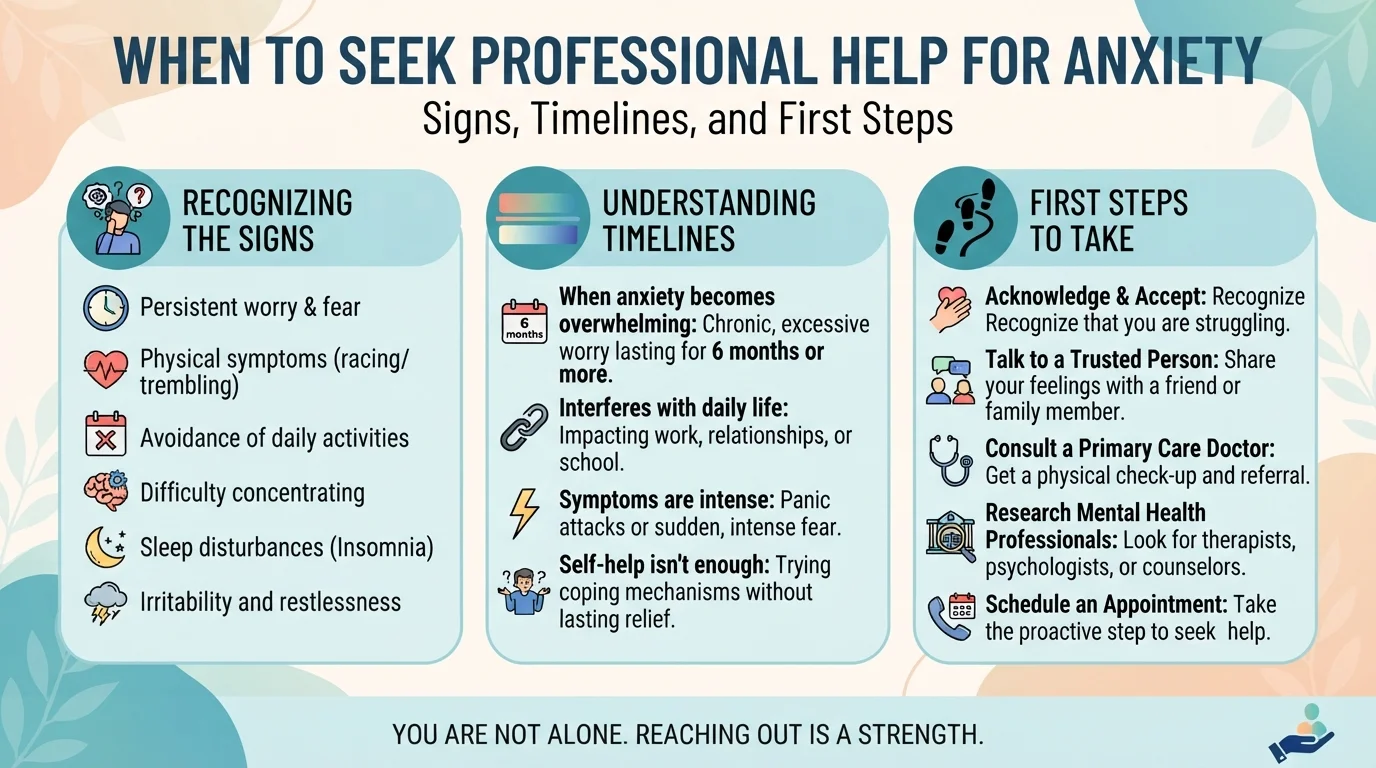
When to Seek Professional Help for Anxiety: Signs, Timelines, and First Steps
Anxiety (anxious distress) is the body's alarm response to a perceived threat, marked by worry, muscle tension, and a faster...
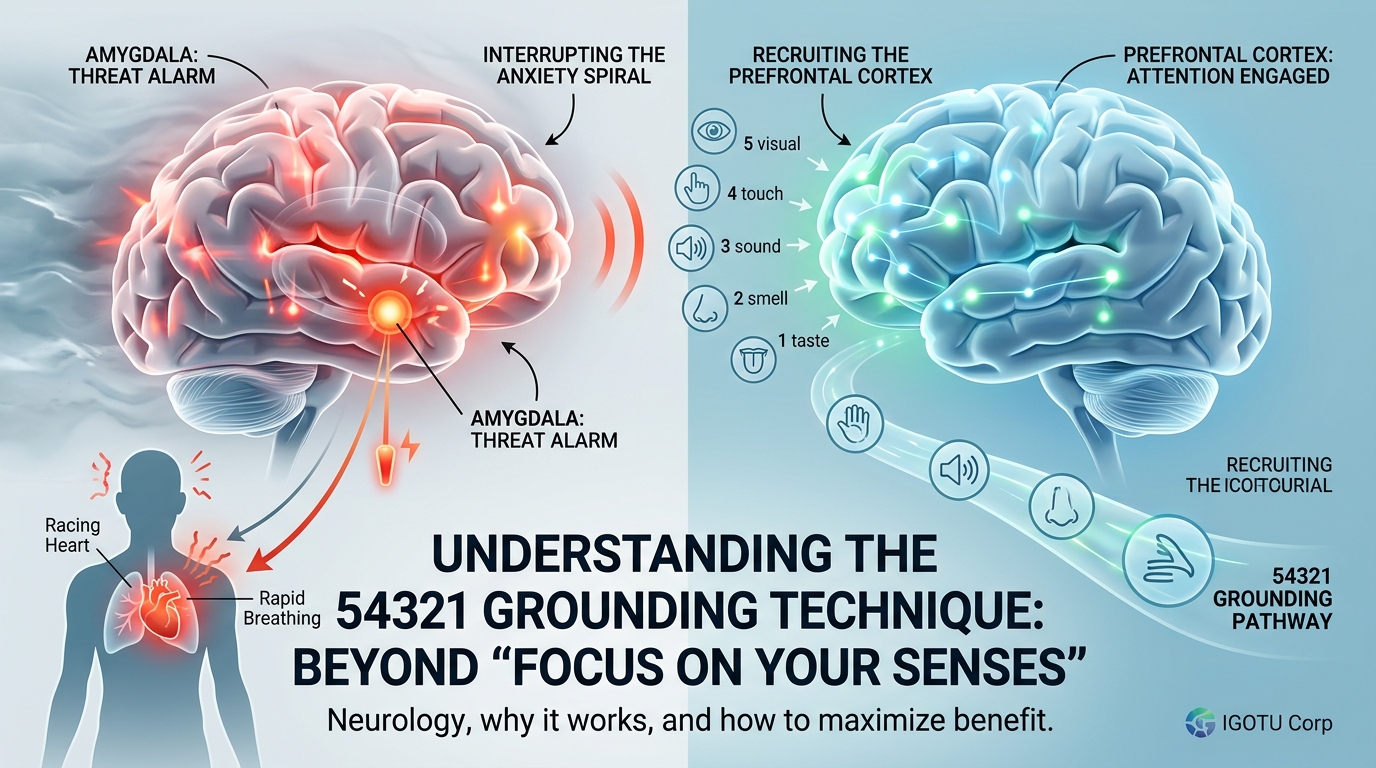
What Is the 54321 Grounding Technique? How Does It Actually Work?
If you have ever looked up what to do during a panic attack, an anxiety spiral, or a moment of...
Can Stress Alone Cause Panic Disorder? IGOTU Corp Guide
The Question That Arrives After the First Attack You were not doing anything dramatic. You were not in danger. You...
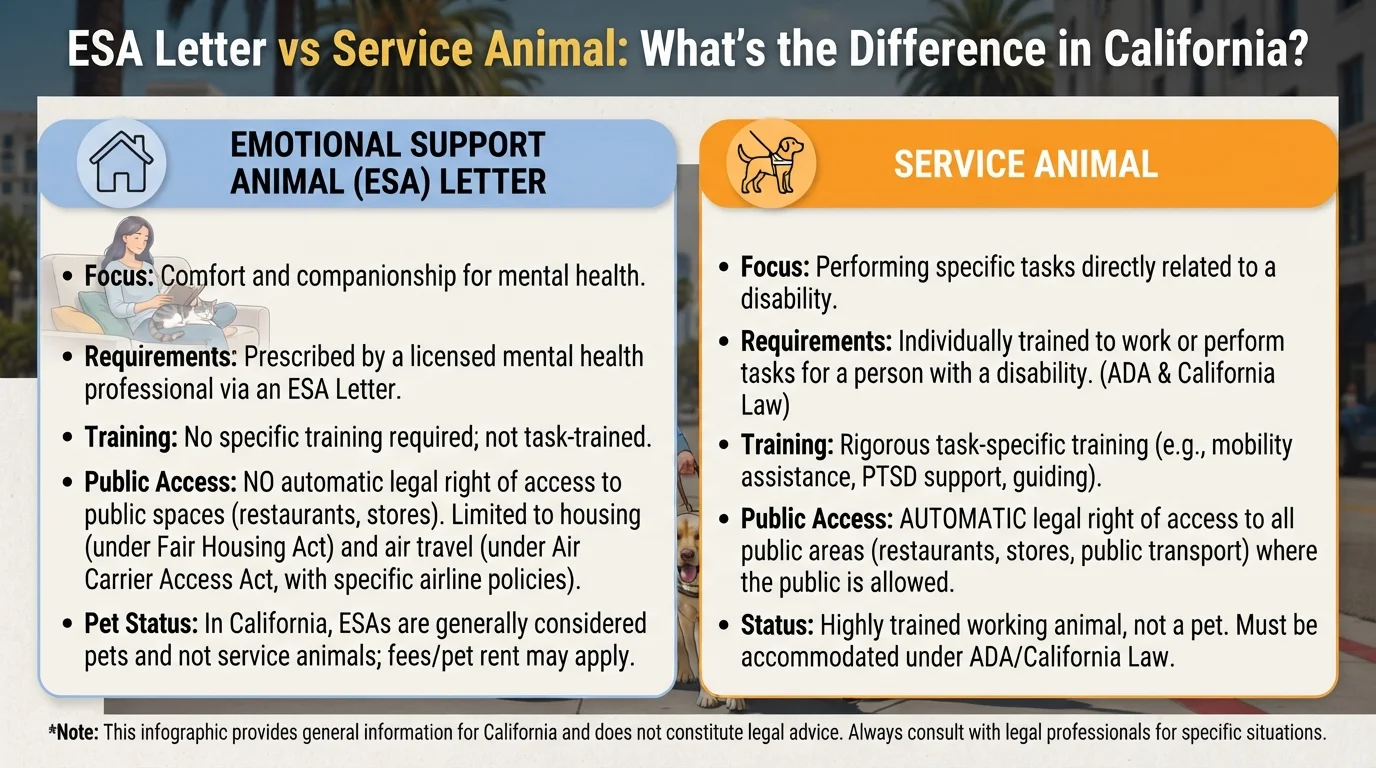
ESA Letter vs Service Animal: What’s the Difference in California?
An ESA letter and a service animal are not the same thing under California or federal law, and confusing the...