
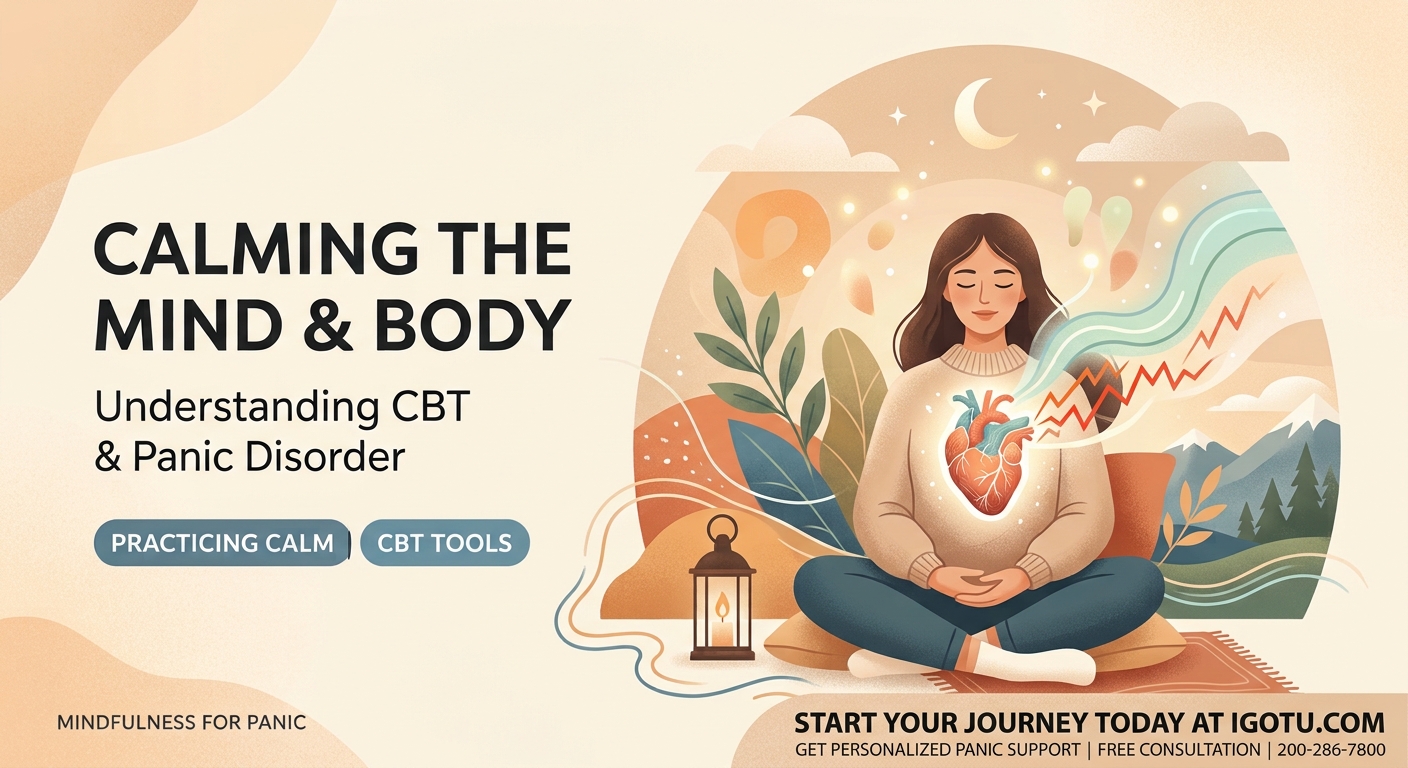
CBT for Panic Attacks: What It Is, How It Works
Your heart suddenly pounds. Your chest tightens and your hands tingle. The room feels like it is tilting, and one thought takes over: something is terribly wrong with me. A few minutes later it fades, and you are left shaky, drained and afraid it will happen again.
If that sounds familiar, you are far from alone. Panic attacks are common, and for some people they turn into panic disorder, a pattern where the fear of the next attack starts running your life. The good news is that panic disorder is one of the most treatable anxiety conditions, and Cognitive Behavioral Therapy, or CBT, is one of the best studied ways to treat it.
This guide explains what panic disorder is, how the fear cycle keeps it going, how CBT breaks that cycle and what to expect in sessions. It is written for adults who want a clear, honest picture before taking the next step.
Struggling with panic attacks? The licensed therapists at IGotU Corp offer anxiety treatment online and in person for adults across California. Request an appointment and start with a free consultation.
What Is a Panic Attack and What Is Panic Disorder?
A panic attack is a sudden surge of intense fear that peaks within minutes. It can come with a pounding heart, sweating, trembling, shortness of breath, chest discomfort, nausea, dizziness, chills or tingling. Many people also feel detached from their surroundings or afraid they are losing control, going crazy or dying.
One panic attack does not mean you have panic disorder. Lots of people have one or two in their lives, often during a stressful stretch. Panic disorder is diagnosed when attacks keep coming, seem to arrive out of nowhere and are followed by at least a month of ongoing worry about more attacks or changes in behavior to avoid them.
That second part is the heart of it. Panic disorder is not only about the attacks. It is about living in fear of them.
Why Do Panic Attacks Feel So Real and So Dangerous?
Because the body reaction is real. During a panic attack, your fight or flight system fires as if you were in immediate danger. Adrenaline floods your body, your heart speeds up, your breathing quickens and your muscles tense. All of this is normal survival machinery. It is simply switching on at the wrong time, with no actual threat in the room.
The trouble is how we read those sensations. A racing heart feels like a heart attack. Dizziness feels like fainting. A tight throat feels like choking. Your mind grabs the most frightening explanation, and that fear pushes the body to react even harder.
That loop has a name, and understanding it is the first step to breaking it.
What Is the Panic Fear Cycle?
The fear cycle, sometimes called the panic cycle, is how one scary moment turns into a long term problem. It usually runs like this.
- A trigger. This can be a physical sensation like a fast heartbeat after coffee or climbing stairs, a stressful thought or sometimes nothing you can identify.
- A frightening thought. “What if this is a heart attack?” or “What if I lose control?”
- More anxiety. The fear sends more adrenaline through your body.
- Stronger body symptoms. Your heart pounds harder and your breathing gets faster.
- Even bigger fear. The stronger symptoms seem to confirm your worst thought, so the fear climbs.
- The peak. The attack reaches its height, then slowly fades.
- Avoidance and safety behaviors. Afterward you start protecting yourself by avoiding places, activities or sensations tied to the attack.
- Fear of the next one. Avoidance teaches your brain that the danger was real and that you only survived because you escaped.
Each lap around the cycle makes it stronger. Step seven is the sneaky part. Avoiding feels like relief in the moment, but over time it shrinks your world and keeps the fear alive.
What Is Cognitive Behavioral Therapy?
Cognitive Behavioral Therapy is a structured, skills based form of talk therapy. It is built on a simple idea. How you think about a situation affects how you feel and what you do, and those three things feed each other. When thoughts are fearful and behaviors are avoidant, anxiety grows. When you change one part, the whole pattern can shift.
CBT is practical and focused on the present. You and your therapist set clear goals, learn specific tools and practice them between sessions. If you want a broader look at the method, you can read about Cognitive Behavioral Therapy in California.
How Does CBT Treat Panic Disorder?
CBT goes after the fear cycle from several angles at once. Most programs include the following parts.
Learning how panic works
Treatment usually starts with education. Your therapist explains what happens in the body during a panic attack, why the symptoms are uncomfortable but not dangerous and how the cycle keeps itself going. Many people feel a wave of relief just from understanding that the attack has an explanation and an end point.
Tracking your attacks
You may keep a short log of when attacks happen, what you were doing, what you felt and what you were thinking. This reveals patterns and helps you and your therapist see which thoughts and situations matter most.
Cognitive restructuring
This is the “cognitive” part of CBT. You learn to spot the frightening predictions your mind makes during panic, such as “I am going to faint” or “I cannot breathe,” and look at them with more care. Together you ask questions like these.
- What is the evidence for this thought?
- What has actually happened in past attacks?
- What is a more balanced way to see this?
The goal is not forced positive thinking. It is replacing catastrophic guesses with more accurate ones. If you have had twenty panic attacks and none of them ended in fainting, that is useful information.
Interoceptive exposure
This one sounds intimidating but it is a core piece of treatment for panic. Interoceptive exposure means deliberately and safely bringing on the body sensations you fear, with your therapist guiding you. Examples include spinning in a chair to feel dizzy, breathing quickly for a short time to feel lightheaded or running in place to raise your heart rate.
Why do this? Because the sensations are not the real enemy. The fear of them is. When you feel a racing heart on purpose, and nothing terrible happens, your brain learns that those sensations are uncomfortable but safe. Over repeated practice the alarm quiets down.
This is done gradually, at your pace and with support. Your therapist will not throw you into the deep end.
Exposure to feared situations
Many people with panic disorder start avoiding places where an attack could happen, such as driving, crowded stores, public transit, elevators or being alone. This can slide into agoraphobia, where life keeps shrinking.
In CBT, you build a step by step list of avoided situations, from easiest to hardest, and work through them one at a time. Each time you stay in a situation and the fear rises and falls without disaster, your confidence grows. This is how avoidance loses its grip.
Dropping safety behaviors
Safety behaviors are the small things you do to feel protected, like carrying water everywhere, sitting near the exit, always bringing a phone or a trusted person, or checking your pulse. They seem harmless, but they tell your brain that you needed the crutch to survive. Part of CBT is gradually letting these go, so you learn you can handle things without them.
Breathing and relaxation skills
Some programs teach slow breathing or relaxation to help you ride out the physical symptoms. These work best as one tool among many, not as an escape route. The point is to build a sense of control, not to hold the panic at bay.
Relapse prevention
Near the end, you review what you have learned, build a plan for tough days and learn how to handle a setback. A single bad day is not a return to square one.
How Does CBT Break the Fear Cycle Step by Step?
Here is how the pieces line up with the cycle above.
| Part of the cycle | What CBT does |
|---|---|
| Frightening thought | Cognitive restructuring builds more accurate thinking |
| Fear of body sensations | Interoceptive exposure shows sensations are safe |
| Avoidance of places | Gradual exposure rebuilds your world |
| Safety behaviors | Dropping them proves you can cope without them |
| Fear of the next attack | Skills and confidence reduce the dread |
Each step weakens one link in the chain. When enough links loosen, the cycle loses its power.
Does CBT Work for Panic Disorder?
Yes. CBT is considered a first line treatment for panic disorder, and many studies have found it helps a large share of people reduce or stop panic attacks. Medication, such as certain antidepressants, can also help, and some people use both. Research generally shows that benefits from CBT tend to last after treatment ends, since you keep the skills.
That said, no treatment works the same for everyone. Progress depends on factors like how long you have had symptoms, whether you also deal with depression or other conditions and how consistently you practice. A licensed therapist can help you figure out the right plan.
How Long Does CBT for Panic Disorder Take?
Many programs run about twelve to sixteen weekly sessions, though some people feel better sooner and others need longer. Shorter, focused treatment is common because CBT is goal based. Sessions are often 45 to 60 minutes.
You will usually be asked to practice between sessions. This might mean logging attacks, trying a thought exercise or doing a planned exposure. The homework is where much of the change happens, so even small, steady efforts matter.
What Happens in a First CBT Session for Panic?
If you are nervous about starting, it may help to know what the first meeting looks like.
- You talk about what brought you in, how often attacks happen and how they affect your life
- Your therapist asks about your health, sleep, caffeine, alcohol, medications and past treatment
- You may be asked to see a doctor to rule out medical causes for symptoms like chest pain or a racing heart
- You start to map out your own fear cycle
- You and your therapist set goals together
You are not expected to dive into the hardest exercises on day one. Early sessions are about understanding the problem and building trust.
Can You Do CBT for Panic Disorder Online?
Yes. Research on online and video based CBT for anxiety is encouraging, and many people find it easier to attend regularly. It also removes the commute and the stress of traveling to an appointment, which can be a big plus if you avoid certain places. For many adults in California, online therapy is a comfortable way to begin, and some people mix online and in person sessions as they move through exposure work.
Ready to talk with a licensed therapist? IGotU Corp offers a free consultation. Request an appointment or call 909-325-7949.
What Can You Do Right Now to Cope With a Panic Attack?
While you work toward treatment, a few simple strategies can help in the moment.
Remind yourself it will pass. A panic attack usually peaks within minutes and then eases. Saying “this is panic, it is uncomfortable and it will end” can take the edge off.
Slow your breathing. Breathe in gently through your nose and let a longer breath out. Fast, shallow breathing can add to dizziness and tingling.
Ground yourself. Try the 5-4-3-2-1 technique. Quietly name five things you see, four you feel, three you hear, two you smell and one you taste. It pulls attention out of your head and into the room.
Stay where you are if you can. Leaving every time reinforces avoidance. If it is safe, let the wave rise and fall.
Cut back on triggers. Large amounts of caffeine, nicotine and alcohol can make symptoms worse for some people.
These tools can help, but they are not a replacement for treatment if panic keeps coming back.
When Should You See a Doctor or Therapist About Panic Attacks?
Make an appointment if:
- Attacks keep happening or you worry constantly about the next one
- You are avoiding places, activities or people because of fear
- Panic is hurting your work, sleep, relationships or daily life
- You are using alcohol or other substances to cope
- You also feel depressed or hopeless
Because some medical problems can mimic panic, it is wise to check in with a doctor, especially if you have chest pain, fainting or symptoms that feel new or different. After that, a licensed therapist can build a treatment plan with you. If panic sits alongside low mood, depression treatment may also be part of the picture, and skills based options like Dialectical Behavior Therapy can help when emotions feel overwhelming.
If you ever have chest pain that feels severe or you think you may be having a medical emergency, call 911. If you are having thoughts of harming yourself, call or text 988 any time to reach the Suicide and Crisis Lifeline.
Frequently Asked Questions | CBT for Panic Attacks
What is CBT for panic disorder?
It is a structured form of therapy that helps you understand panic, change fearful thoughts, face feared body sensations and situations in small steps and drop avoidance habits. The aim is to stop the fear cycle that keeps attacks going.
Is CBT the best treatment for panic disorder?
CBT is considered a first line treatment and has strong research support. Medication can also help, and some people benefit from a combination. A licensed professional can help you choose.
How long does it take for CBT to work for panic attacks?
Many people notice some improvement within several weeks, and full programs often run about three to four months. The pace depends on the person and how consistently they practice.
Final Thoughts | CBT for Panic Attacks
Panic disorder can make you feel like your own body has turned against you. But the fear cycle is not a life sentence. It is a pattern, and patterns can be changed. CBT works by helping you understand the cycle, challenge the thoughts that fuel it and face the sensations and situations you have been avoiding, one small step at a time.
You do not have to wait for the perfect moment or for things to get worse. One honest conversation with a licensed therapist can be the start of getting your life back.
Take the Next Step With IGotU Corp
Licensed therapists. Online and in-person care across California. Support for anxiety, panic, depression, trauma and life transitions.
- Request an appointment
- Explore anxiety treatment
- Learn about CBT
- Call 909-325-7949 or email Noworries@igotucorp.com
Recent Posts
Related Posts
CBT for Panic Attacks: What It Is, How It Works
Your heart suddenly pounds. Your chest tightens and your hands tingle. The room feels like it is tilting, and one...

What to Expect During Your First 7 Days at a Depression Center
The night before you start treatment can feel strange. Part of you is relieved that help is finally coming. Another...
How to Protect Your Mental Health Without Sacrificing Your Career
It is Sunday evening and your stomach is already tight. You are replying to emails you will see again in...

How to Find a Licensed Male Therapist in California
Plenty of people know the moment they decide they want therapy. Fewer people know what to type into the search...

How to Do the 5-4-3-2-1 Technique Silently in Class
Learn how to manage anxiety discreetly during class using the simple and effective 5-4-3-2-1 grounding technique in this article. Exclusive...