
Does Cutting Sugar Help Anxiety? What the Science Says
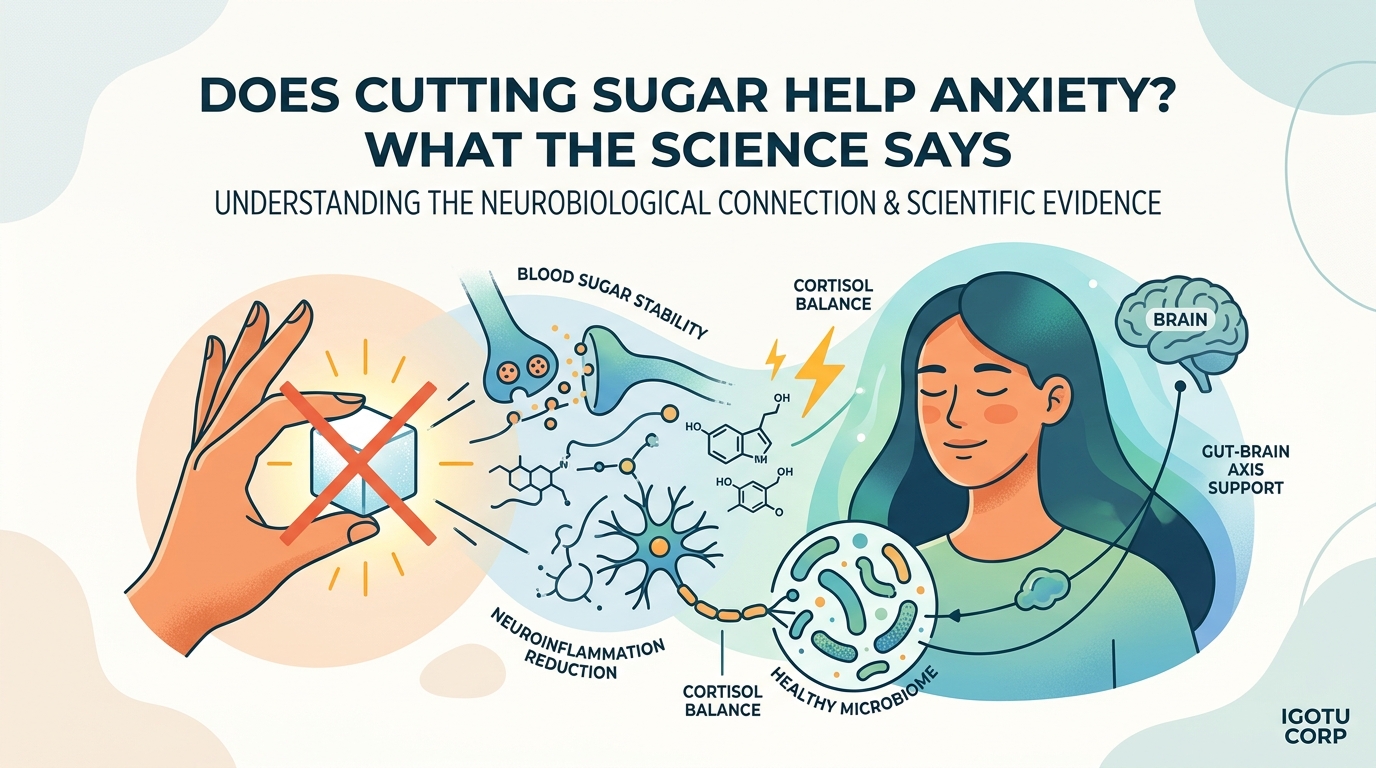
Does cutting sugar help anxiety? Research links refined sugar to cortisol spikes, gut microbiome disruption, and neuroinflammation — all of which worsen anxiety.
You have probably tried the standard anxiety advice. The breathing exercises. The journaling. Maybe therapy, maybe medication, maybe both. And somewhere along the way, someone — a wellness account, a podcast, a friend who read something — suggested that cutting sugar might help your anxiety.
Your first instinct was probably skepticism. Anxiety is a neurobiological condition. Sugar is food. The idea that what you eat for breakfast has anything to do with the fear response firing in your amygdala sounds like the kind of oversimplified wellness claim that substitutes dietary moralizing for actual clinical understanding.
That skepticism is reasonable. And it is also, as it turns out, partially wrong.
The relationship between sugar consumption and anxiety is not a wellness myth. It is a documented neurobiological reality — with specific, well-understood mechanisms that connect the food you eat to the state of your nervous system in ways that are clinically meaningful and practically important.
This article explains what the science actually says — without the wellness industry’s tendency to overclaim or the medical establishment’s tendency to dismiss nutrition as irrelevant to mental health. Just the honest evidence, what it means, and what it can and cannot do for anxiety.
First: What Is Actually Happening in Your Body When You Eat Sugar
To understand how sugar affects anxiety, you need a basic understanding of what sugar does physiologically — because the mechanism is specific and the specificity matters for understanding both why it affects anxiety and what cutting it actually changes.
When you consume refined sugar or high-glycemic carbohydrates, your blood glucose rises rapidly. Your pancreas responds by releasing insulin to clear the glucose from your bloodstream. If the sugar load is large — a sugary drink, a piece of cake, a bag of sweets — the insulin response can be significant, clearing glucose so efficiently that blood sugar drops below the pre-eating level. This drop is called reactive hypoglycemia.
Here is where anxiety enters the picture.
When blood glucose drops — whether from reactive hypoglycemia or from skipping meals — your body treats it as a physiological emergency. It activates the same stress response system that activates in response to psychological threat: the hypothalamic-pituitary-adrenal (HPA) axis and the sympathetic nervous system. Adrenaline and cortisol are released to mobilize stored glucose — raising blood sugar back to a functional level.
The physiological experience of this emergency response is indistinguishable from anxiety. Racing heart. Shakiness. Sweating. Irritability. Difficulty concentrating. A feeling of unease or impending doom. These are symptoms of hypoglycemia — and they are also symptoms of a panic attack.
For people with anxiety disorders, this overlap is clinically significant. A blood sugar crash does not cause an anxiety disorder. But it can trigger an anxiety episode in someone whose nervous system is already primed for threat response — and it does so through a purely physiological mechanism that has nothing to do with psychological content.
Does Cutting Sugar Help Anxiety? What Research Actually Shows
Blood Sugar Instability Directly Activates the Stress Response
A 2019 study published in Frontiers in Psychiatry found that dietary patterns high in refined sugar and processed foods were significantly associated with higher rates of anxiety and depression — even after controlling for other lifestyle and demographic factors. The authors proposed blood sugar instability as a primary mechanism: the repeated activation of the stress response through reactive hypoglycemia maintains a chronic low-grade physiological arousal state that is neurologically indistinguishable from anxiety.
Research on hypoglycemia and anxiety symptoms has consistently confirmed this connection. A 2016 study in Psychoneuroendocrinology found that experimentally induced hypoglycemia produced significant increases in anxiety symptoms, irritability, and difficulty concentrating — effects that were mediated by adrenaline release.
The Gut-Brain Axis: Sugar Disrupts the Microbiome That Regulates Your Mood
The gut-brain axis — the bidirectional communication highway between the enteric nervous system in your gut and your central nervous system — is one of the most significant emerging areas of mental health research, and sugar’s effects on it are substantial.
Refined sugar promotes the growth of specific bacterial species in the gut microbiome — particularly species that thrive on sugar — while reducing the diversity of beneficial bacteria that produce neurotransmitters and anti-inflammatory compounds.
Approximately 90% of the body’s serotonin is produced in the gut — not in the brain. The gut microbiome plays a direct role in serotonin production, and disruption of microbiome diversity through high sugar consumption reduces serotonergic tone in ways that directly affect mood regulation and anxiety.
A landmark 2019 study published in Nature Microbiology found that people with depression and anxiety had measurably different microbiome compositions than non-anxious controls — with specific bacterial species showing the most consistent associations with anxiety severity. High sugar diets are among the most potent disruptors of the microbiome diversity that appears most protective against anxiety.
Neuroinflammation: Sugar and the Inflamed Anxious Brain
Chronic inflammation is increasingly recognized as a significant factor in both anxiety and depression — and refined sugar is one of the most potent dietary drivers of systemic inflammation.
High sugar consumption promotes the release of inflammatory cytokines — particularly interleukin-6 and tumor necrosis factor-alpha — that cross the blood-brain barrier and activate microglial cells, producing neuroinflammation. Neuroinflammation has documented effects on the amygdala, the prefrontal cortex, and the hippocampus — the brain regions most directly involved in anxiety, emotional regulation, and stress response.
Research published in JAMA Psychiatry found that elevated inflammatory markers were significantly associated with treatment-resistant depression and anxiety — suggesting that neuroinflammation may be one of the mechanisms by which standard treatments fail for some people, and by which dietary inflammation reduction may produce therapeutic benefit.
The Cortisol Connection: Sugar Directly Raises Your Stress Hormone
Several studies have specifically examined the relationship between sugar consumption and cortisol — the body’s primary stress hormone — and the findings are consistent: sugar consumption elevates cortisol.
A 2020 study at the University of California, Davis found that consumption of sugar-sweetened beverages elevated cortisol levels in young adults, with the effect being particularly pronounced for fructose-sweetened drinks. A 2019 study found that habitual high sugar consumption was associated with chronically elevated cortisol levels — independently of other dietary and lifestyle factors.
Chronically elevated cortisol is, functionally, chronic stress. The person who consumes high amounts of refined sugar is maintaining a physiological stress state — elevated cortisol, activated HPA axis, heightened sympathetic nervous system tone — that is neurobiologically identical to the chronic stress state that both produces and worsens anxiety.
The Dopamine Trap: Sugar, Reward Dysregulation, and Anxiety
Sugar activates the dopamine reward system in ways that share neurobiological features with addictive substances — producing a dopamine spike upon consumption followed by a relative dopamine deficit as the spike resolves. This dopamine deficit is experienced as low mood, craving, and in people with anxiety, increased anxiety.
The dopaminergic effects of sugar are not just about craving more sugar. They affect the broader motivational system — the system that generates the energy, interest, and engagement that are impaired in anxiety and depression. Repeated sugar-driven dopamine dysregulation contributes to the motivational flatness and reward insensitivity that frequently accompany anxiety disorders.
What Cutting Sugar Actually Does to Anxiety: The Evidence
The Withdrawal Phase Is Real — And Looks Like Anxiety
Before discussing the benefits of cutting sugar, honesty requires acknowledging that the initial phase of significantly reducing sugar consumption produces symptoms that often include increased anxiety, irritability, difficulty concentrating, fatigue, and mood instability.
This is not imagined. It is a real physiological response to the withdrawal of a substance that has been activating the dopamine and stress response systems. For people with anxiety, the withdrawal phase — which typically lasts three to seven days — can feel like a significant worsening of their condition before improvement begins.
Understanding this prevents premature abandonment of a dietary change that would ultimately be beneficial. The withdrawal phase is temporary. What follows is the relevant outcome.
Blood Sugar Stability Reduces Physiological Anxiety Triggers
When refined sugar is significantly reduced and replaced with foods that produce a more gradual, stable blood glucose response — complex carbohydrates, protein, healthy fats, fiber — the reactive hypoglycemia cycle is broken. The repeated physiological stress responses triggered by blood sugar crashes no longer occur.
For people whose anxiety has a significant physiological-trigger component — who notice anxiety spikes in the afternoon when blood sugar typically dips, or who experience anxiety symptoms that correlate with their eating patterns — this stabilization can produce meaningful, relatively rapid reduction in anxiety episode frequency and intensity.
Research on glycemic index and mental health has consistently supported this. A 2015 study in the American Journal of Clinical Nutrition found that higher glycemic load diets were significantly associated with higher rates of depression and anxiety — and that lower glycemic diets were associated with better mood regulation.
Reduced Neuroinflammation Takes Weeks to Months
The anti-inflammatory benefits of significantly reducing refined sugar take longer to manifest than blood sugar stabilization — because microbiome recovery and inflammatory marker reduction are slower biological processes than glucose regulation.
Research on dietary intervention and inflammation suggests that meaningful reductions in inflammatory markers following significant dietary changes occur over a period of four to eight weeks. For anxiety rooted in or amplified by neuroinflammation, this timeline means that the full benefit of dietary change may not be apparent in the first week or two — which contributes to the perception that dietary change “didn’t work” when it simply hasn’t been sustained long enough.
The Evidence From Dietary Intervention Studies
Several well-designed dietary intervention studies have specifically examined the mental health outcomes of reducing refined sugar and improving overall dietary quality.
The SMILES trial — published in BMC Medicine in 2017 — found that a dietary intervention focused on reducing processed foods and improving overall dietary quality produced significant reductions in depression scores compared to social support alone, with effect sizes comparable to pharmacological treatment.
A 2020 meta-analysis in Nutritional Neuroscience examining the relationship between dietary sugar intake and anxiety found a consistent positive association between sugar consumption and anxiety severity across multiple study designs — with the most consistent effects in studies examining refined sugar specifically rather than total carbohydrate intake.
What Cutting Sugar Cannot Do: The Important Limits
The honest answer to “does cutting sugar help anxiety” must include what sugar reduction cannot do — because overstating dietary effects is as misleading as ignoring them.
It does not treat anxiety disorders as a standalone intervention. Sugar reduction addresses specific physiological contributors to anxiety — blood sugar instability, neuroinflammation, cortisol elevation — but it does not address the neurobiological substrate of anxiety disorders, the cognitive distortions that maintain them, or the behavioral avoidance that perpetuates them. For people with clinical anxiety disorders, dietary change is a meaningful adjunct to evidence-based treatment, not a replacement for it.
It does not address the psychological and relational roots of anxiety. For anxiety rooted in trauma, attachment patterns, cognitive distortions, or the accumulated consequences of adverse experience — dietary change produces no direct therapeutic effect. These dimensions require clinical intervention.
Effects are individual and vary significantly. The strength of the sugar-anxiety connection varies by individual — some people are more physiologically sensitive to blood sugar fluctuations, more prone to reactive hypoglycemia, or more significantly affected by dietary inflammation than others. Dietary change produces more dramatic anxiety reduction in people whose anxiety has a significant physiological-trigger component and less dramatic effects in those whose anxiety is primarily driven by cognitive and relational factors.
Cutting sugar is not the same as adopting a healthy diet. Some people replace refined sugar with artificial sweeteners that have their own effects on gut microbiome. Others cut sugar while maintaining other dietary patterns that affect anxiety. The full dietary context matters — not just the absence of sugar.
What to Eat Instead: The Anxiety-Protective Diet Pattern
Research on diet and anxiety does not just identify what to reduce — it identifies dietary patterns associated with lower anxiety risk. The pattern that emerges most consistently from the research:
Protein at regular intervals. Protein slows glucose absorption, supports neurotransmitter synthesis (serotonin and dopamine are both produced from amino acid precursors), and reduces blood sugar variability. Regular protein intake — at breakfast particularly, given the morning cortisol peak — stabilizes the physiological stress state throughout the day.
Complex carbohydrates over refined ones. Whole grains, legumes, and vegetables produce slow, stable glucose responses that avoid the spike-crash cycle. They also provide prebiotic fiber that supports the gut microbiome diversity associated with better mood regulation.
Omega-3 fatty acids. Consistently associated with reduced neuroinflammation and improved anxiety outcomes in multiple randomized controlled trials. Fatty fish, walnuts, and flaxseed are dietary sources. Fish oil supplementation has been specifically studied for anxiety — a 2018 meta-analysis in JAMA Network Open found significant reduction in anxiety symptoms with omega-3 supplementation.
Fermented foods. Yogurt, kefir, kimchi, sauerkraut, and other fermented foods provide live bacterial cultures that support microbiome diversity. A 2022 study at Stanford found that a high-fermented-food diet significantly increased microbiome diversity and reduced inflammatory markers compared to a high-fiber diet alone.
Magnesium-rich foods. Magnesium is involved in over 300 enzymatic reactions, including several directly relevant to anxiety — it modulates the HPA axis stress response and supports GABA receptor function. Research consistently shows that magnesium deficiency is associated with higher anxiety. Leafy greens, nuts, seeds, and dark chocolate (low sugar) are reliable dietary sources.
Get Comprehensive Anxiety Support That Addresses the Full Picture — Including the Physiological — Through IGOTU Corp
Understanding that sugar affects anxiety neurobiologically is genuinely useful. It adds a lever — a dietary one — to the toolkit for managing anxiety that most people have not previously considered.
But that lever works most effectively in combination with clinical support that addresses the other dimensions of anxiety — the cognitive patterns, the behavioral avoidance, the relational factors, and for many people, the trauma history — that dietary change alone cannot reach.
IGOTU Corp connects you with licensed mental health professionals who take a comprehensive approach to anxiety treatment — one that considers the full picture of what is maintaining your anxiety and builds a treatment plan that addresses the neurobiological, psychological, and behavioral dimensions simultaneously.
Their licensed therapists understand that anxiety is not only a psychological problem — it is a whole-body experience with physiological dimensions that deserve attention alongside the cognitive and behavioral work of evidence-based therapy.
If you have been managing anxiety in pieces — trying dietary changes here, breathing exercises there, supplements somewhere else — and you are ready for clinical support that addresses the full picture, visit IGOTU Corp today. Take their free anxiety assessment and get matched with a licensed therapist who will help you build a comprehensive approach rather than a collection of partial solutions.
Frequently Asked Questions (FAQs) About Sugar and Anxiety
Q: How quickly will cutting sugar help anxiety? The physiological effects operate on different timelines. Blood sugar stabilization — and the reduction in reactive hypoglycemia-triggered anxiety episodes — can be noticeable within one to two weeks of significantly reducing refined sugar. Microbiome recovery and neuroinflammation reduction take four to eight weeks of sustained dietary change. Full assessment of dietary impact on anxiety requires at least six to eight weeks of consistent change.
Q: Does sugar cause anxiety or just make it worse? Both, depending on the mechanism and the individual. For people without an underlying anxiety disorder, habitual high sugar consumption can produce physiological anxiety symptoms — blood sugar instability, elevated cortisol, blood sugar crash-triggered stress responses — that constitute anxiety experience without a pre-existing disorder. For people with anxiety disorders, high sugar consumption amplifies the condition through the same mechanisms, making episodes more frequent and more intense.
Q: Is artificial sweetener a good substitute for sugar if I have anxiety? The evidence is mixed and specific by sweetener type. Some artificial sweeteners — particularly saccharin and sucralose — have shown negative effects on gut microbiome in animal studies, though human evidence is less definitive. Stevia appears more microbiome-neutral. Natural whole-food sources of sweetness — fruit, in reasonable quantities — are generally preferable to artificial sweeteners for people prioritizing the gut-brain axis component of anxiety management.
Q: What about natural sugars in fruit? Should I cut those too? No — and conflating whole fruit with refined sugar is one of the most common and most consequential dietary misconceptions in anxiety management. Whole fruit contains fiber, vitamins, minerals, and phytonutrients that fundamentally change how the sugar is absorbed and metabolized. Fructose from whole fruit does not produce the same blood sugar spikes or microbiome disruption as fructose from refined sugar or high-fructose corn syrup. The research on diet and anxiety consistently supports fruit consumption as beneficial, not harmful.
Q: Does alcohol affect anxiety the same way sugar does? There is significant overlap. Alcohol is metabolized as sugar, produces blood sugar instability, elevates cortisol, disrupts gut microbiome, and drives neuroinflammation — all of the same mechanisms through which refined sugar affects anxiety. Alcohol additionally suppresses the nervous system in ways that produce anxiety rebound as it clears the system — the morning-after anxiety that many people experience after drinking. For anxiety management, alcohol reduction is at least as important as sugar reduction.
Q: Can cutting sugar replace therapy for anxiety? No. Sugar reduction addresses specific physiological contributors to anxiety — blood sugar instability, neuroinflammation, cortisol elevation — but does not address the neurobiological substrate of anxiety disorders, the cognitive distortions that maintain them, or the behavioral avoidance that perpetuates them. For clinical anxiety, dietary change is a meaningful adjunct to evidence-based treatment, not a substitute for it.
Q: Should I tell my therapist I am cutting sugar for anxiety? Yes — and a good therapist will be interested. Comprehensive anxiety treatment considers the full picture of what is maintaining the condition, including physiological factors. A therapist who integrates awareness of diet, sleep, and exercise into their clinical formulation — alongside cognitive, behavioral, and relational dimensions — provides more complete care than one who treats anxiety as purely psychological.
Q: How do I find a therapist who takes a comprehensive approach to anxiety? IGOTU Corp’s matching process connects you with licensed therapists who understand anxiety as a whole-body condition with physiological, psychological, and behavioral dimensions — not only a cognitive problem to be restructured. Visit IGOTU Corp today to take their free assessment and get matched with a clinician who will help you build a comprehensive approach to anxiety management.
The Bottom Line: Sugar Affects Anxiety. The Science Is Clear. The Limits Are Also Clear.
The relationship between sugar and anxiety is real, documented, and neurobiologically specific. Blood sugar instability triggers the physiological stress response. Refined sugar disrupts the gut microbiome that produces most of the body’s serotonin. High sugar consumption elevates cortisol and drives neuroinflammation — both of which directly worsen anxiety. These are not wellness claims. They are documented mechanisms with supporting research.
Cutting refined sugar — and adopting a dietary pattern that produces blood glucose stability, supports microbiome diversity, and reduces systemic inflammation — is a meaningful, evidence-supported contribution to anxiety management. For people whose anxiety has a significant physiological-trigger component, the effects can be substantial.
But cutting sugar is not anxiety treatment. It is one lever among several — a physiological one, with real effects operating through real mechanisms, that works most powerfully in combination with clinical support that addresses the cognitive, behavioral, relational, and neurobiological dimensions of anxiety that dietary change alone cannot reach.
The most effective approach to anxiety is comprehensive — addressing all of the dimensions that maintain it, including but not limited to the dietary ones. That comprehensive approach requires clinical expertise, accurate assessment, and evidence-based treatment tailored to your specific presentation.
IGOTU Corp’s licensed anxiety specialists are ready to help you build that comprehensive approach. Visit IGOTU Corp today — take the free assessment, get matched with the right therapist, and start working with someone who understands that anxiety lives in the whole person, not only in the mind.
Recent Posts
Related Posts

What to Expect During Your First 7 Days at a Depression Center
The night before you start treatment can feel strange. Part of you is relieved that help is finally coming. Another...

How to Protect Your Mental Health Without Sacrificing Your Career
It is Sunday evening and your stomach is already tight. You are replying to emails you will see again in...

How to Find a Licensed Male Therapist in California
Plenty of people know the moment they decide they want therapy. Fewer people know what to type into the search...

How to Do the 5-4-3-2-1 Technique Silently in Class
Learn how to manage anxiety discreetly during class using the simple and effective 5-4-3-2-1 grounding technique in this article. Exclusive...
How to Set Boundaries Without Guilt: Stop People Pleasing
You said yes again. You knew while the words were leaving your mouth that you did not want to say...