

Dialectical Behavior Therapy Techniques That Actually Change Lives
Have you ever felt like your emotions run your life rather than the other way around? Like the intensity of what you feel in a single moment can undo hours, days, or even years of progress? You are not alone — and more importantly, you are not beyond help.
Dialectical behavior therapy (DBT) was developed specifically for people who experience emotions at a higher intensity than average — and it has become one of the most evidence-based, life-changing approaches in modern mental health care. Whether you are navigating borderline personality disorder, chronic depression, anxiety, trauma, or simply the overwhelming weight of daily emotional experience, DBT offers a concrete, skill-based path forward.
In this guide, we break down exactly what dialectical behavior therapy techniques are, how they work, and how you can begin applying them to your own life.
“DBT is not about fixing what is wrong with you. It is about building a life worth living — on your own terms.”
What Is Dialectical Behavior Therapy (DBT)?
Dialectical behavior therapy was developed in the late 1980s by psychologist Dr. Marsha Linehan at the University of Washington. Originally created to treat chronically suicidal individuals and those with borderline personality disorder (BPD), DBT has since been adapted for a wide range of conditions including depression, eating disorders, PTSD, substance use disorders, and anxiety.
The word ‘dialectical’ refers to the balance of opposites — most centrally, the balance between acceptance and change. DBT teaches that you can accept yourself exactly as you are right now while simultaneously working to change the thoughts, emotions, and behaviors that are making your life harder. This is the philosophical core that makes DBT unique among therapeutic approaches.
DBT therapy is structured around four core skill modules, each targeting a different dimension of emotional and interpersonal functioning. Together, these modules equip clients with practical, teachable tools that can be used in real situations, in real time.
Did You Know: DBT is one of the few therapies with substantial randomized controlled trial evidence behind it. It is endorsed by the American Psychological Association (APA) as an evidence-based treatment.
The 4 Core Dialectical Behavior Therapy Skills Modules
DBT therapy is organized into four interconnected skill areas. Each module addresses a specific challenge that people with emotional dysregulation commonly face.
1. Mindfulness — The Foundation of All DBT Skills
Mindfulness is the first and most fundamental of all dialectical behavior therapy skills. Before you can regulate your emotions, tolerate distress, or improve your relationships, you need to develop the ability to observe your own experience without immediately reacting to it.
DBT mindfulness is not about sitting cross-legged and emptying your mind. It is about learning to be aware of what is happening — in your thoughts, your body, and your environment — with curiosity rather than judgment. Core mindfulness skills in DBT include:
■ Observe: Notice your thoughts and feelings without getting swept away by them
■ Describe: Put words to your experience without over-interpreting or judging
■ Participate: Engage fully in the present moment
■ Non-judgmentally: Let go of ‘good’ and ‘bad’ labels for your experiences
■ One-mindfully: Do one thing at a time, with full attention
■ Effectively: Focus on what works, not what is fair or right in theory
2. Distress Tolerance — Surviving a Crisis Without Making It Worse
Life will always contain moments of intense pain, conflict, or crisis. Distress tolerance skills are the dialectical behavior therapy techniques designed to help you get through those moments without making impulsive decisions that create new problems.
Rather than eliminating distress (which is often impossible), distress tolerance teaches you to endure painful situations without resorting to self-destructive behaviors. Key techniques include:
■ TIPP: Temperature (splash cold water on your face to activate the dive reflex), Intense exercise, Paced breathing, Progressive relaxation
■ STOP skill: Stop, Take a step back, Observe, Proceed mindfully
■ Pros and Cons: Weighing the benefits and costs of tolerating versus acting on distress
■ Self-soothing using the five senses: sight, sound, smell, taste, touch
■ ACCEPTS: Activities, Contributing, Comparisons, Emotions, Pushing away, Thoughts, Sensations — ways to distract yourself safely during a crisis
These are not avoidance strategies — they are survival strategies designed to buy time until the emotional wave passes and wise decision-making becomes possible again.
3. Emotion Regulation — Understanding and Managing Your Emotional Life
Emotion regulation is often considered the heart of dialectical behavior therapy techniques. This module teaches you to understand what emotions are, why they happen, and how to change emotional experiences that are causing suffering.
A key insight in DBT is that emotions serve a function — they carry information and communicate needs. The goal is not to eliminate emotions but to stop them from controlling behavior. Emotion regulation skills include:
■ Check the Facts: Identifying whether your emotional response matches the actual facts of the situation
■ Opposite Action: Acting opposite to the urge your emotion is driving (e.g. approaching what you fear rather than avoiding it)
■ PLEASE skills: treating PhysicaL illness, balanced Eating, Avoiding mood-altering substances, balanced Sleep, and Exercise — the lifestyle foundation for emotional stability
■ Accumulating Positive Emotions: Deliberately building positive experiences to create a buffer against emotional dysregulation
■ Building Mastery: Regularly doing things that give you a sense of competence and achievement
DBT Example: A client feels intense shame and wants to cancel plans and isolate. Using Opposite Action, they go to the event instead — and gradually the shame diminishes because the behavior was not reinforced.
4. Interpersonal Effectiveness — Getting What You Need Without Destroying Relationships
Many people with emotional dysregulation struggle in relationships — either giving too much of themselves, saying yes when they mean no, or responding to conflict in ways that push people away. Interpersonal effectiveness skills help you ask for what you need, set limits, and maintain self-respect while preserving important relationships.
The three core acronyms of this module are:
■ DEAR MAN: Describe, Express, Assert, Reinforce, stay Mindful, Appear confident, Negotiate — a step-by-step structure for making requests or saying no effectively
■ GIVE: Gentle, Interested, Validate, Easy manner — for maintaining the quality and warmth of important relationships
■ FAST: Fair, no Apologies (for existing or having needs), Stick to values, Truthful — for maintaining self-respect in interactions
“The goal of DBT is not to be perfectly in control. It is to be skillful enough, often enough, that your life moves in the direction you choose.”
Dialectical Behavior Therapy for Borderline Personality Disorder
DBT was originally developed as a treatment for borderline personality disorder (BPD) — and it remains the gold-standard, most researched treatment for this condition. BPD is characterized by intense emotional reactivity, unstable relationships, impulsivity, fear of abandonment, and chronic feelings of emptiness. These are precisely the areas that DBT’s four skill modules address.
Research consistently shows that DBT reduces suicidal behavior, self-harm, psychiatric hospitalizations, and dropout from therapy among people with BPD — while simultaneously improving quality of life, relationship stability, and emotional regulation. For anyone living with or supporting someone with BPD, dialectical behavior therapy is not just an option — it is the evidence-based treatment of choice.
That said, DBT has been adapted successfully for adolescents, couples, families, and individuals with conditions beyond BPD, making its reach far broader than its origins suggest.
Dialectical Behavior Therapy Examples in Real Life
Understanding DBT techniques in theory is one thing. Seeing how they play out in real situations brings them to life. Here are three brief examples of DBT skills in action:
Example 1: Managing a Panic Attack at Work
A client feels a panic attack building before an important meeting. Using TIPP, they step into the bathroom, splash cold water on their face, take five slow paced breaths, and do 60 seconds of intense physical movement. The parasympathetic nervous system activates, the physical symptoms reduce, and they return to the meeting regulated and present.
Example 2: Navigating a Conflict with a Partner
After a difficult argument, a client feels the urge to send angry messages that will escalate the situation. Using STOP, they pause, step back, observe that they are in emotional mind rather than wise mind, and choose to wait 30 minutes before responding. Using DEAR MAN, they then communicate their needs clearly without attacking or shutting down.
Example 3: Breaking a Shame Spiral
A client makes a mistake at work and spirals into intense shame and self-criticism. Using Check the Facts, they examine whether the facts of the situation actually justify the intensity of the shame response. They find that the mistake was minor and fixable. They use Opposite Action to speak kindly to themselves rather than engaging in self-attack, and the emotional intensity reduces within the hour.
How to Access DBT Therapy
If you are wondering how to find dialectical behavior therapy near you, there are several pathways to access DBT support depending on your needs and circumstances.
Individual DBT Therapy
Traditional DBT involves weekly one-on-one sessions with a trained therapist alongside a structured skills training group. This is the most comprehensive format and is recommended for individuals with significant emotional dysregulation or BPD. When searching for dialectical behavior therapy near you, look specifically for therapists with DBT certification training or who are members of DBT-Linehan Board of Certification programs.
Online DBT Therapy
Online DBT therapy has expanded access dramatically in recent years. Many licensed therapists now offer DBT skills training and individual therapy via telehealth platforms, making this approach accessible regardless of location, mobility, or schedule. Online DBT therapy is particularly valuable for those in areas with limited mental health resources.
DBT Skills Groups
DBT skills training groups provide the four modules in a structured, classroom-style format. Many people benefit from skills groups even without individual therapy, particularly those who want to build practical coping tools rather than process deeper therapeutic issues.
Self-Guided DBT Resources
For those beginning to explore DBT or supplementing therapy, self-guided resources can be valuable. The Dialectical Behavior Therapy Skills Workbook by Matthew McKay is one of the most widely recommended dialectical behavior therapy books for non-clinicians. Many therapists also provide dialectical behavior therapy PDF handouts and worksheets for at-home practice.
For Clinicians: Structured DBT training for therapists includes intensive training programs, consultation teams, and DBT certification training through the Linehan Institute and other accredited bodies. Therapists seeking to formally offer DBT should pursue intensive training before implementing the full model.
You Deserve a Life Worth Living – DBT Can Help You Build It
Dialectical behavior therapy is not a magic solution, and it is not easy. Building new skills takes practice, patience, and the courage to keep trying even when progress feels slow. But for the millions of people who have gone through DBT, the results speak clearly: it works, and it changes lives.
Whether you are struggling with overwhelming emotions, damaged relationships, self-destructive patterns, or simply the sense that life is harder for you than it seems to be for everyone else — DBT offers something rare in mental health: a concrete, teachable, evidence-based path toward a life that feels worth living.
At I Got U Corp, our team of compassionate, licensed professionals is trained in DBT and related approaches. We offer individual therapy, skills support, and a warm, non-judgmental space where your healing is the only priority.
TAKE THE FIRST STEP TODAY
You Don’t Have to Figure This Out Alone.
Whether you are looking for DBT therapy, want to learn more about DBT skills, or simply need someone to talk to — I Got U Corp is here. Our team understands how hard it is to ask for help, and we are ready to meet you exactly where you are. Reach out today.
[ Contact Us Now — No Worries, We Got You ]
GET IN TOUCH
- 9431 Haven Ave Suite 100-151, Rancho Cucamonga, CA 91730, United States
- +1 909-325-7949
- Noworries@igotucorp.com
All inquiries are confidential. We respond within 24 hours.
Recent Posts
Related Posts

How to Protect Your Mental Health Without Sacrificing Your Career
It is Sunday evening and your stomach is already tight. You are replying to emails you will see again in...

How to Find a Licensed Male Therapist in California
Plenty of people know the moment they decide they want therapy. Fewer people know what to type into the search...

How to Do the 5-4-3-2-1 Technique Silently in Class
Learn how to manage anxiety discreetly during class using the simple and effective 5-4-3-2-1 grounding technique in this article. Exclusive...
How to Set Boundaries Without Guilt: Stop People Pleasing
You said yes again. You knew while the words were leaving your mouth that you did not want to say...
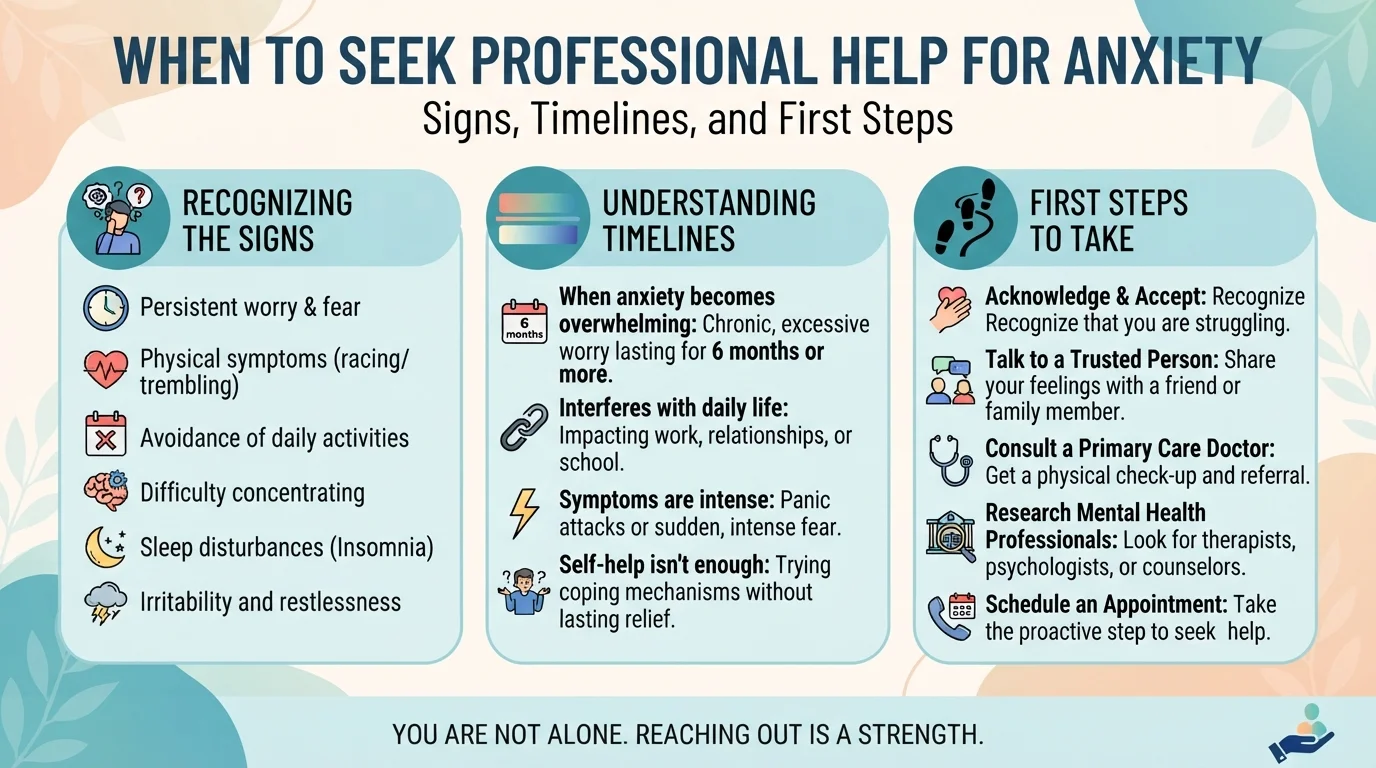
When to Seek Professional Help for Anxiety: Signs, Timelines, and First Steps
Anxiety (anxious distress) is the body's alarm response to a perceived threat, marked by worry, muscle tension, and a faster...