
IGotU Corp

Dialectical behavior therapy pros and cons

Pros and Cons of Dialectical Behavior Therapy (DBT)

July 23, 2025

Dialectical Behavior Therapy (DBT) has become a widely recognized and valuable treatment for a range of mental health conditions. Developed by Marsha Linehan in the late 1980s, DBT initially targeted individuals with borderline personality disorder (BPD) but has since been expanded to treat various other conditions. DBT focuses on teaching individuals coping skills, mindfulness, emotional regulation, and interpersonal effectiveness. Despite its effectiveness, DBT, like all therapies, has its pros and cons. This article will delve into the dialectical behavior therapy pros and cons, exploring its benefits, limitations, and effectiveness.

What is DBT Therapy?

Dialectical Behavior Therapy (DBT) is a form of cognitive-behavioral therapy (CBT) developed by Marsha Linehan to help individuals with intense emotional and behavioral difficulties. DBT integrates aspects of mindfulness, acceptance, and change strategies, combining them into a structured therapeutic approach. The term “dialectical” refers to the integration of opposites—accepting the client’s emotional state while encouraging change for better mental health.

DBT therapy involves individual therapy sessions, group skills training, and coaching, focusing on helping individuals regulate their emotions, tolerate distress, and improve interpersonal relationships. The therapy uses specific techniques, including mindfulness exercises, distress tolerance skills, emotional regulation strategies, and interpersonal effectiveness techniques.

Key Components of DBT Therapy:

  • Mindfulness: Helping individuals remain present and non-judgmental in the moment.

  • Distress Tolerance: Building skills to cope with extreme emotions.

  • Emotional Regulation: Managing intense emotions and reactions.

  • Interpersonal Effectiveness: Improving relationships and communication skills.

What Mental Health Conditions Does DBT Treat?

DBT is effective for a range of mental health conditions, particularly those involving emotional dysregulation, intense moods, and difficulty managing relationships. While it was initially designed for borderline personality disorder (BPD), DBT has proven effective for various other mental health conditions, including:

  • Borderline Personality Disorder (BPD): DBT was developed for individuals with BPD to help them manage intense emotions, impulsivity, and unstable relationships.

  • Post-Traumatic Stress Disorder (PTSD): DBT has been adapted for trauma survivors, helping them process trauma-related distress while improving coping strategies.

  • Depression: DBT can be helpful for individuals struggling with chronic depression, especially when combined with other therapeutic approaches.

  • Eating Disorders: It has been shown to support individuals with anorexia, bulimia, and binge-eating disorders, aiding in emotional regulation and reducing self-destructive behaviors.

  • Substance Use Disorders: DBT provides effective tools for people in recovery to cope with urges and manage triggers.

  • Anxiety Disorders: DBT can help individuals regulate anxiety and stress, focusing on creating balance in their emotional responses.

DBT is considered an effective treatment for these mental health conditions, but how does it work in practice?

Is DBT Effective?

Yes, DBT is effective for many individuals, particularly those who struggle with emotional dysregulation and self-destructive behaviors. Research shows that DBT can significantly reduce symptoms of borderline personality disorder, decrease self-harm behaviors, improve emotional regulation, and enhance interpersonal functioning. Additionally, studies have shown its benefits in treating conditions like PTSD, eating disorders, and substance use disorders.

The effectiveness of DBT lies in its focus on both acceptance and change, helping individuals understand and embrace their emotions while working to change unhealthy behavior patterns. It’s important to note that DBT requires time and commitment from both the therapist and client for maximum benefit.

Major Benefits of DBT

Dialectical behavior therapy pros and cons can be better understood when comparing the benefits to the limitations. Let’s start by outlining the major benefits of DBT therapy:

1. Improves Emotional Regulation

One of the most significant benefits of DBT is that it helps individuals regulate their emotions more effectively. Many clients with mental health conditions struggle with emotional outbursts, impulsive behaviors, or emotional numbness. DBT teaches skills to manage overwhelming emotions, preventing individuals from acting impulsively or harming themselves in moments of emotional distress.

2. Reduces Self-Harm and Suicidal Behaviors

Research consistently shows that DBT significantly reduces self-harm behaviors, including suicide attempts, cutting, and other forms of self-injury. The skills taught in DBT, such as distress tolerance and mindfulness, help individuals cope with emotional pain in healthier ways.

3. Improves Interpersonal Relationships

DBT includes a significant focus on interpersonal effectiveness, helping individuals communicate more clearly, assertively, and compassionately. This is particularly helpful for individuals with BPD, who often struggle with unstable relationships and interpersonal conflict. With DBT, individuals learn how to navigate conflicts, express needs, and build healthier, more stable relationships.

4. Increases Mindfulness and Present-Moment Awareness

DBT’s emphasis on mindfulness helps clients learn to be present in the moment, free from judgment or distraction. This practice promotes self-awareness and self-compassion, which are essential for emotional regulation and mental well-being. Increased mindfulness can help reduce rumination and anxiety, leading to a more balanced emotional state.

5. Promotes Long-Term Change

Unlike some therapies that focus only on symptom management, DBT aims to create lasting behavioral changes. Through the combination of acceptance strategies and change-oriented interventions, DBT supports sustainable recovery from emotional and behavioral difficulties.

6. Adaptable to Various Mental Health Conditions

As mentioned, DBT was initially developed for individuals with BPD, but it has since been adapted for various other mental health conditions. This adaptability has made DBT a versatile and widely applicable therapeutic approach for many different types of clients.

Drawbacks or Limitations of DBT

As with any therapy, dialectical behavior therapy pros and cons should be weighed before deciding if it’s the right fit. Here are some drawbacks to consider:

1. Time-Intensive Commitment

DBT is an intensive therapy requiring significant time commitment. Typically, it includes weekly individual therapy sessions, group skills training, and access to phone coaching for crises. This can be overwhelming for individuals with limited time or those who have difficulty committing to a long-term treatment plan.

2. Not Suitable for All Clients

While DBT is beneficial for many, it may not be suitable for everyone. DBT’s intensity and structure can be challenging for individuals who are not motivated or committed to the process. Clients who are not ready for the work involved may find the therapy overwhelming or frustrating.

3. Limited Availability of DBT Trained Therapists

DBT is a specialized form of therapy, and not all therapists are trained in its methods. As a result, finding a qualified DBT therapist may be difficult in certain areas. In some cases, clients may need to travel to access appropriate care.

4. Emotional Intensity

DBT can be emotionally intense. While it offers coping strategies for distressing emotions, the therapy often requires clients to confront painful thoughts and experiences, which can be overwhelming or emotionally taxing for some individuals. This emotional intensity may be difficult for some individuals to handle without additional support.

5. Requires Active Participation

DBT requires active participation from clients, including practicing skills between sessions. For individuals with severe mental health conditions or those who struggle with motivation, this active participation may be difficult to maintain, which could limit the effectiveness of the therapy.

6. Expensive and Lengthy Process

DBT therapy can be costly, particularly for individuals without insurance or with limited coverage for mental health care. Additionally, the therapy can take months or even years to show significant results, which may make it impractical for some individuals seeking more immediate help.

Who is DBT Most Effective For?

DBT therapy is most effective for individuals who struggle with emotional dysregulation, self-destructive behaviors, and difficulty in relationships. It is especially beneficial for people with:

  • Borderline Personality Disorder (BPD): DBT was originally developed for this condition and remains one of the most effective treatments for BPD.

  • People with Self-Harm Behaviors or Suicidal Ideation: DBT significantly reduces self-harm behaviors and suicidal thoughts through its focus on distress tolerance and emotional regulation.

  • Individuals with PTSD or Trauma Histories: The therapy helps individuals process trauma and develop coping strategies for emotional regulation.

  • Individuals with Chronic Mental Health Conditions: DBT can help those with long-standing mental health challenges, including depression, eating disorders, and substance use disorders, gain more control over their emotions.

Table: Comparison of DBT’s Effectiveness for Various Conditions

Condition Effectiveness of DBT
Borderline Personality Disorder Very High
Post-Traumatic Stress Disorder High
Depression Moderate
Eating Disorders High
Substance Use Disorders Moderate to High
Anxiety Disorders Moderate

Frequently Asked Questions (FAQs) About Dialectical Behavior Therapy (DBT)

What is DBT therapy, and how does it work?

DBT (Dialectical Behavior Therapy) is a type of cognitive-behavioral therapy designed to help individuals manage intense emotions, reduce self-destructive behaviors, and improve interpersonal relationships. It involves mindfulness, distress tolerance, emotional regulation, and interpersonal effectiveness techniques to help clients navigate challenges more effectively.

Who can benefit from DBT therapy?

DBT is particularly effective for individuals with emotional dysregulation and mental health conditions like Borderline Personality Disorder (BPD), post-traumatic stress disorder (PTSD), eating disorders, substance use disorders, and chronic depression. It’s most helpful for people who struggle with extreme emotions and self-destructive behaviors.

What are the main benefits of DBT?

The key benefits of DBT include:

  • Improved emotional regulation

  • Reduced self-harm and suicidal behaviors

  • Enhanced interpersonal skills

  • Increased mindfulness and self-awareness

  • Long-term behavioral changes

Are there any drawbacks or limitations to DBT?

While DBT offers many benefits, some drawbacks include:

  • Time-intensive commitment (requires ongoing sessions and skills practice)

  • Emotional intensity (may be overwhelming for some)

  • Limited availability of trained DBT therapists

  • Requires active participation and motivation from clients

How long does DBT therapy last?

DBT therapy can last several months to years, depending on the individual’s progress and goals. Typically, it involves weekly individual therapy sessions, group skills training, and phone coaching. The duration of treatment varies based on the severity of the mental health condition being treated.

Is DBT effective for anxiety disorders?

Yes, DBT can be helpful for individuals with anxiety disorders. The therapy’s focus on emotional regulation, mindfulness, and distress tolerance helps reduce anxiety by teaching individuals to manage stress and respond more effectively to triggers.

Can DBT be combined with other therapies?

Yes, DBT can be combined with other therapeutic approaches, such as cognitive-behavioral therapy (CBT) or medication. DBT is often used alongside other treatments, especially for conditions like depression, PTSD, and eating disorders, to maximize results.

Is DBT suitable for children or adolescents?

DBT has been adapted for use with adolescents, particularly those with self-harming behaviors or emotional regulation difficulties. It includes components tailored to younger individuals, with family involvement often playing a significant role in treatment.

How much does DBT cost?

The cost of DBT can vary depending on location, therapist fees, and whether it’s covered by insurance. It’s considered a specialized therapy, so it may be more expensive than standard psychotherapy. Some therapists offer sliding scale fees or telehealth options to make DBT more accessible.

What is the difference between DBT and CBT?

While both DBT and CBT are cognitive-behavioral therapies, DBT places a greater emphasis on mindfulness, emotional regulation, and acceptance. CBT primarily focuses on changing negative thought patterns, while DBT combines change strategies with acceptance techniques, making it particularly effective for individuals with intense emotions.

Can DBT help with substance use disorders?

Yes, DBT has shown effectiveness in treating substance use disorders by teaching individuals coping mechanisms for dealing with cravings and emotional distress. The skills learned in DBT can help people in recovery manage triggers and reduce the risk of relapse.

Conclusion: DBT Therapy—Weighing the Pros and Cons

Dialectical Behavior Therapy offers numerous benefits, particularly for individuals struggling with emotional regulation, self-destructive behaviors, and interpersonal issues. The primary strengths of DBT include its focus on mindfulness, emotional regulation, and interpersonal effectiveness. While it may be challenging for some individuals due to its time commitment and emotional intensity, DBT’s comprehensive approach has been proven effective for a variety of mental health conditions.

If you believe DBT might be the right treatment for you or a loved one, it’s important to consult with a qualified therapist trained in DBT. The process may take time, but the skills learned in DBT can offer lasting benefits, helping individuals lead more stable, balanced lives.

If you’re considering DBT therapy, connect with a licensed professional trained in DBT today. Learn more about our specialized approach to Online DBT therapy, designed to support individuals struggling with emotional dysregulation and self-destructive behaviors.

Contact Details:

If you are interested in learning more about Dialectical Behavior Therapy (DBT) or would like to schedule an appointment with a trained DBT therapist, feel free to reach out to us.

Phone:

Call us at 909.325.7949 for more information or to book a consultation.

Email:

For inquiries or appointment requests, email us at Noworries@igotucorp.com.

Website:

Visit our website for additional resources, including articles, testimonials, and therapist directories:
https://igotucorp.com/

Office Address:

9431 Haven Ave, Suite 100-151 Rancho Cucamonga, CA, 91730

Feel free to reach out with any questions or to schedule a session. We are here to help you on your journey to better mental health.

Related Posts

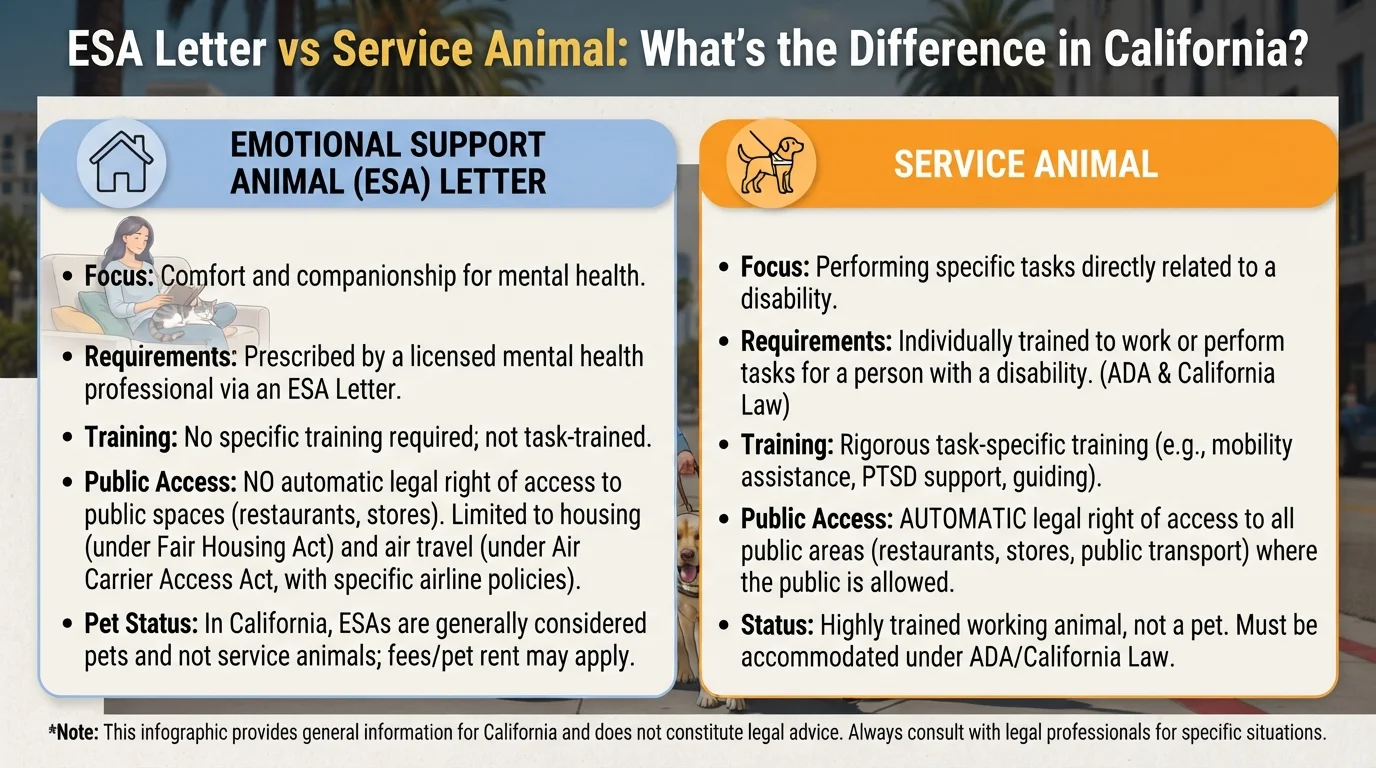
California ESA Laws Explained: The 30-Day Rule for Valid Landlord Letters Meta Description: California's AB 468 changed everything about how ESA letters work for landlords and tenants. Here's the complete, legally accurate breakdown of the 30-day rule, what makes a letter valid in 2025, and how to protect your housing rights. The Law Changed. Most People Don't Know It Yet. If you have been researching Emotional Support Animals in California — whether you are a tenant trying to secure housing for your ESA, a landlord trying to understand your obligations, or someone who purchased an ESA letter online and is now wondering if it will hold up — there is a good chance the information you have found is outdated, incomplete, or written by a service with a financial interest in obscuring the legal reality. California's ESA landscape shifted significantly with the passage of Assembly Bill 468, which took effect on January 1, 2022 and remains the governing law in 2025. This legislation introduced requirements that fundamentally changed what makes an ESA letter valid in California — and the most important of those requirements is one that most online ESA services either don't mention or actively obscure: the 30-day rule. Understanding this rule — what it requires, why it exists, how landlords can verify compliance, and what happens when letters don't meet the standard — is not optional information for anyone navigating ESA housing situations in California. It is the foundation of whether your documentation will actually protect you when it matters most. This article provides the complete, legally accurate, plainly written explanation of California's ESA laws — with specific attention to the 30-day rule, landlord rights and obligations, tenant protections, and how to ensure your documentation is built to withstand scrutiny. What AB 468 Actually Says: The Foundation of California ESA Law Before the specifics of the 30-day rule, it is worth understanding what AB 468 actually does — because it is the single most important piece of California-specific legislation governing ESA letters, and its requirements go significantly beyond what federal law mandates. AB 468, codified in California Health and Safety Code Section 122318, regulates the conduct of mental health professionals who provide ESA documentation in California. It does not change the Fair Housing Act protections that ESA owners have — those remain intact. What it changes is the standard of conduct required of the professionals who provide the letters and the circumstances under which those letters are considered legitimate. The core requirements AB 468 imposes on mental health professionals issuing ESA letters in California: Licensure requirement. The professional must hold a valid California license in a qualifying mental health profession — LCSW, LMFT, LPCC, Licensed Psychologist, or Psychiatrist. Out-of-state licensure is insufficient for California ESA letters. Scope of practice requirement. The professional must be providing services within their authorized scope of practice — they cannot issue ESA letters for conditions outside their clinical expertise or licensure. The 30-day relationship requirement. The professional must have provided mental health services to the client for at least 30 days before issuing the ESA recommendation — with limited exceptions for acute crisis situations. No fraudulent representation. The professional cannot misrepresent the existence of a professional relationship or the nature of the client's condition. Prohibition on commercial ESA letter mills. Professionals are prohibited from operating in ways that essentially function as commercial document mills — providing ESA letters as a product rather than as a clinical recommendation emerging from genuine treatment. Violations of AB 468 can result in disciplinary action by the professional's licensing board — up to and including license revocation. This means that legitimate California clinicians take these requirements seriously, and it means that services providing instant letters without genuine clinical relationships are operating outside the law. The 30-Day Rule Explained: What It Requires and Why It Matters The 30-day rule is the provision of AB 468 that most directly affects people seeking ESA letters in California — and it is the provision most frequently violated by online ESA services that continue to offer instant or same-day letters. What the Rule Actually Requires Section 122318 specifies that a mental health professional providing an ESA recommendation must have provided mental health services to the individual for no less than 30 days before issuing the recommendation. This is not a 30-day waiting period from the date of application. It is a requirement that a genuine professional relationship — involving actual mental health services — has been established and maintained for at least 30 days prior to the letter being issued. The distinction matters enormously. A single consultation, however thorough, does not satisfy the 30-day requirement. An intake session followed by a letter issued the same week does not satisfy the 30-day requirement. An online questionnaire followed by an automated letter issued within hours does not come close to satisfying the requirement — and letters produced this way are not legally compliant with California law regardless of how official they look. Why the Rule Exists The 30-day requirement was not arbitrary. It was a legislative response to a specific and documented problem: the proliferation of commercial ESA letter mills that were issuing documentation to anyone willing to pay a fee, with no genuine clinical assessment and no actual therapeutic relationship. The consequences of this proliferation were significant. Landlords — particularly smaller independent landlords — were receiving waves of ESA accommodation requests accompanied by letters from online services with no verifiable clinical basis. The frequency and obvious fraudulence of many of these requests was creating significant resistance to legitimate ESA accommodation requests from tenants with genuine mental health needs and genuine clinical relationships. AB 468's 30-day requirement was designed to create a meaningful distinction between genuine clinical ESA recommendations — which emerge from real therapeutic relationships with real licensed professionals — and commercial document products with no clinical basis. By requiring a 30-day professional relationship, the law ensures that the professional issuing the letter actually knows the client, has assessed their condition over time, and is making a genuine clinical judgment rather than completing a commercial transaction. The Exceptions to the 30-Day Requirement AB 468 includes limited exceptions to the 30-day rule — circumstances in which an ESA recommendation may be issued without the full 30-day relationship period. These exceptions are narrow and specific: Acute crisis situations. If a client is in acute mental health crisis and housing stability is immediately necessary for their safety and wellbeing, a professional may issue a recommendation with less than 30 days of established relationship. This exception is designed for genuine emergencies, not for people who simply want a letter quickly. Referral from an established provider. If a professional receives a referral from another mental health professional who has an established relationship with the client, and that referral includes relevant clinical history, the 30-day requirement may be satisfied through the combined relationship rather than requiring an entirely new 30-day period. These exceptions are not a mechanism for circumventing the 30-day requirement. They are narrow carve-outs for genuinely exceptional circumstances, and a landlord presented with an ESA letter invoking these exceptions is entitled to seek verification of the circumstances. What Makes a Valid ESA Letter in California Under Current Law The 30-day relationship requirement is the most significant California-specific requirement, but it is not the only element of a valid ESA letter. A letter that is legally defensible in California in 2025 must contain all of the following: Complete Professional Identification The letter must identify the issuing professional with sufficient specificity to allow verification — their full name, license type (LCSW, LMFT, LPCC, Psychologist, Psychiatrist), California license number, and contact information. The license number is not optional — it is the mechanism by which a landlord (or, if necessary, a court) can verify that the professional is genuinely licensed in California and that their license is in good standing. Confirmation of the Professional Relationship A California-compliant ESA letter should confirm that the professional has provided mental health services to the client — ideally with language that references the 30-day relationship requirement of AB 468. Letters that are vague about the professional relationship, that use language suggesting a one-time consultation, or that cannot be linked to an actual ongoing therapeutic relationship are legally vulnerable. Disability Acknowledgment Without Diagnosis Disclosure The letter must confirm that the client has a condition that qualifies as a disability under the Fair Housing Act — defined as a physical or mental impairment that substantially limits one or more major life activities. Crucially, the letter does not need to — and generally should not — specify the exact diagnosis. Landlords are not entitled to your diagnosis. They are entitled to confirmation that a disability exists and that an ESA is recommended as part of treatment. The ESA Recommendation The letter must clearly state that an Emotional Support Animal is recommended as part of the client's treatment plan for their qualifying condition. This recommendation must be a genuine clinical judgment — not a commercial service delivered to anyone who pays — and it must be one that the issuing professional can stand behind if contacted for verification. Date and Signature The letter must be dated and signed by the licensed professional. ESA letters are generally considered valid for one year from the date of issue, after which landlords may request updated documentation. Landlord Rights Under California ESA Law: What They Can and Cannot Do One of the most practically important aspects of California's ESA framework is the specific delineation of what landlords can and cannot do in response to an ESA accommodation request. What California Landlords Can Legitimately Do Request ESA documentation. Landlords can require a tenant to provide an ESA letter from a licensed mental health professional before granting an accommodation. They cannot require a specific format, a specific service, or documentation from a specific provider — but they can require documentation. Verify the professional's California license. This is entirely legitimate and increasingly common among landlords who have become sophisticated about ESA documentation. The California Department of Consumer Affairs maintains the BreEZe online verification system at breeze.dca.ca.gov, where anyone can verify whether a named professional holds a current, active California license. A landlord who looks up the license number on an ESA letter and finds it invalid, expired, or belonging to someone licensed in a different state has legitimate grounds to question the documentation. Contact the professional to verify authenticity. A landlord may contact the issuing professional to confirm that they issued the letter and that they have an established professional relationship with the tenant. A professional who issued a genuine letter will confirm this. A commercial ESA service that issued a letter without genuine clinical contact typically cannot provide meaningful verification. Request updated documentation annually. ESA letters are generally considered valid for one year. After that period, landlords may request a new letter. This is a reasonable and legitimate request. Deny accommodation for specific, documented reasons. A landlord may deny an ESA accommodation if the specific animal poses a direct threat to the health or safety of others that cannot be mitigated by reasonable accommodation, or if the accommodation would impose undue financial or administrative burden. These are high bars and must be based on specific, documented circumstances — not breed assumptions, species preferences, or general discomfort with animals. What California Landlords Cannot Do Apply a no-pets policy to an ESA. Under the Fair Housing Act, no-pets policies do not apply to Emotional Support Animals. The FHA's reasonable accommodation requirement supersedes lease provisions restricting pets. Charge a pet deposit or pet fee for an ESA. This is one of the most frequently violated tenant rights in ESA situations. An ESA is not a pet under the FHA — pet deposits and pet fees do not apply. The tenant remains responsible for actual damages caused by the animal, but cannot be charged in advance as a condition of the accommodation. Demand your specific diagnosis or medical records. A landlord is entitled to confirmation that you have a disability and that an ESA is recommended. They are not entitled to your diagnosis, your treatment history, your medication, or any other medical information beyond what is contained in the ESA letter. Apply breed or weight restrictions to ESAs. Landlord policies restricting specific dog breeds or imposing weight limits do not apply to ESAs — these restrictions cannot override a valid FHA accommodation request based on general policy alone. If a specific animal poses a direct threat, that determination must be individualized and documented. Retaliate for an ESA accommodation request. California tenant protection law prohibits retaliation against tenants for exercising their legal rights — including the right to request an ESA accommodation. Get Your Legitimate ESA Letter Through IGOTU Corp — Built to Meet California's 30-Day Standard Here is the practical reality: most of the ESA letters available online today do not meet California's AB 468 requirements. They are issued without the 30-day professional relationship. They come from professionals not licensed in California. They are produced by commercial services explicitly prohibited by the legislation. And they fail — sometimes immediately, sometimes when a legally informed landlord looks up the license number — at the exact moment they are supposed to protect you. IGOTU Corp does it differently. IGOTU Corp connects California residents with genuinely licensed California mental health professionals who conduct real clinical assessments, establish real therapeutic relationships, and issue ESA letters that are fully compliant with AB 468 — including the 30-day requirement. Their process is not a five-minute questionnaire followed by an automated certificate. It is a clinical pathway that takes the law seriously because the people going through it deserve documentation that will actually hold up. If you are a California tenant who needs an ESA letter that a landlord cannot legitimately challenge, IGOTU Corp is where that process starts. Not because they make it easy in the way that mill services make it easy — but because they make it right, which is the only kind of easy that matters when you are in a housing dispute and your documentation is being scrutinized. Start your legitimate ESA evaluation at IGOTU Corp today. The 30-day relationship requirement exists because you deserve a clinician who actually knows you — and IGOTU Corp's licensed therapist network is built to provide exactly that. Common ESA Letter Scams to Avoid in California California's AB 468 was specifically designed to address the proliferation of fraudulent ESA services — but those services continue to operate, often with increasingly sophisticated websites and official-looking documentation. Knowing what to avoid protects both your money and your housing security. Instant or same-day letters. Any service offering an ESA letter within hours of an online questionnaire is, by definition, not compliant with AB 468's 30-day requirement. The letter may look legitimate. It will not hold up to a landlord who knows the law. ESA registration and certification services. No official ESA registry exists in California or at the federal level. Services charging fees to "register" your ESA or issue certification documents are selling products with no legal value. A registered ESA certificate from a commercial service carries exactly the same legal weight as a piece of paper you printed yourself. Out-of-state practitioners issuing California ESA letters. AB 468 requires California licensure. An ESA letter from a licensed psychologist in Texas, or a therapist licensed in Florida, does not satisfy California's requirements and is legally vulnerable in California housing disputes. Services that guarantee approval. A legitimate clinical assessment may or may not result in an ESA recommendation — the clinician must make a genuine professional judgment. A service guaranteeing a letter before conducting any assessment is confirming, by the guarantee itself, that it is not conducting a genuine assessment. What to Do If Your Landlord Challenges Your ESA Letter Even with a legitimate, AB 468-compliant ESA letter, some landlords will push back. Knowing your options in that situation is important. Respond in writing. Any communication about an ESA accommodation should be documented in writing. If your landlord raises objections verbally, follow up with a written summary of the conversation and your response. Provide verification. Offer to have your issuing professional confirm the letter's authenticity and the existence of the professional relationship. A legitimate professional will do this. This offer itself often resolves disputes with landlords who suspected a fraudulent letter. File a complaint with HUD. The U.S. Department of Housing and Urban Development investigates FHA violations including unjustified denial of ESA accommodation requests. Filing a HUD complaint is free and can be done online. File a complaint with the California Civil Rights Department (CRD). Formerly the DFEH, the CRD investigates housing discrimination complaints under California's Fair Employment and Housing Act, which provides additional protections beyond the federal FHA. Consult a tenant rights attorney. California has robust tenant protection laws and a network of legal aid organizations that provide free or low-cost legal assistance to tenants facing housing discrimination. A single consultation with a tenant rights attorney can clarify your options and, in many cases, resolve a landlord dispute without litigation. Frequently Asked Questions (FAQs) About California ESA Laws and the 30-Day Rule Q: Does the 30-day rule mean I have to wait 30 days after starting therapy to get my ESA letter? Yes — under AB 468, the mental health professional must have provided services to you for at least 30 days before issuing an ESA recommendation, except in limited acute crisis circumstances. This means the process takes a minimum of 30 days from the start of a new professional relationship. If you already have an established therapist, the 30-day requirement may already be satisfied. Q: Can my existing therapist write my ESA letter? Yes — and this is often the most straightforward path. If you have been working with a California-licensed therapist for more than 30 days, they can potentially issue your ESA letter based on the existing relationship. Discuss it with them directly. Q: What if my landlord refuses to accept my ESA letter? Document everything in writing. Provide verification from your issuing professional. File complaints with HUD and/or the California Civil Rights Department if the refusal appears to violate the FHA. Consult a tenant rights attorney. IGOTU Corp's letters are built to withstand landlord scrutiny — but if a dispute arises, you have legal options. Q: Does AB 468 apply to all housing in California? AB 468 regulates mental health professionals issuing ESA letters — it applies statewide. The Fair Housing Act protections for ESA tenants apply to most California housing, with limited exceptions for certain owner-occupied small buildings and single-family homes rented without a broker. Q: How do I verify that a California therapist is legitimately licensed? Use the California Department of Consumer Affairs BreEZe online system at breeze.dca.ca.gov. Enter the professional's name or license number to confirm their license type, license number, issue date, expiration date, and any disciplinary history. Q: Can my landlord ask how long I have been seeing my therapist? A landlord can ask questions designed to assess whether an ESA letter is legitimate — including whether you have an established professional relationship with the issuing clinician. They cannot demand access to your therapy records or specific details about your treatment. A letter that references AB 468 compliance and confirms the existence of the professional relationship is typically sufficient. Q: Is IGOTU Corp's ESA letter process AB 468 compliant? Yes. IGOTU Corp's process is specifically designed around California's AB 468 requirements — connecting clients with genuinely licensed California professionals who establish real therapeutic relationships and issue letters that satisfy the 30-day rule and all other AB 468 standards. Visit IGOTU Corp to learn more about how the process works and to begin your evaluation. The Bottom Line: In California, Legitimate Means Legal — and Legal Means Protected The 30-day rule exists for a reason. It exists because your housing security is too important to rest on a document produced by a commercial service in five minutes, signed by someone who has never met you, and issued by a professional who may not even be licensed in California. It exists because landlords who have been flooded with fraudulent ESA letters deserve a meaningful standard by which to distinguish genuine clinical recommendations from commercial products. And it exists because tenants with genuine mental health needs and genuine therapeutic relationships deserve documentation that will hold up — in a landlord conversation, in a HUD complaint, in a housing court — when it matters most. The right ESA letter in California is not the fastest one or the cheapest one. It is the one that comes from a real licensed professional who actually knows you, has provided real services to you for at least 30 days, and is making a genuine clinical judgment that an ESA is part of your treatment. That letter protects you. Everything else is a risk. IGOTU Corp builds that letter, through that process, with those professionals. If you are ready to start the legitimate pathway to a California-compliant ESA letter, visit IGOTU Corp today — because the only documentation worth having is the kind that actually works.

California ESA Laws Explained: 30-Day Rule for Valid

  California ESA Laws Changed. Most People Don't Know It Yet. If you have been researching Emotional Support Animals in...

Why Do I Feel Lonely and Depressed? Understanding the Connection

Why Do I Feel Lonely and Depressed? Understanding the Connection

  Quick answer: Why do I feel lonely and depressed? Learn the real neurological connection between loneliness and depression, what...

Why I Feel Stressed

Why I Feel Stressed All the Time? Causes and Treatment

QUICK ANSWER: Feeling stressed all the time is not just a personality trait or a busy life — it is...

Understanding Functional Depression: The Silent Struggle

Understanding Functional Depression: The Silent Struggle

  The Depression Nobody Notices — Including Sometimes You You got up this morning. You made coffee. You answered your...

what is social anxiety

What Is Social Anxiety Disorder? 5 Steps to Handle it

You are standing outside the door of a room full of people. From the outside, nothing looks wrong. But inside...