

Is It Gaslighting or Dismissive Behavior? How to Tell the Difference
Somewhere in the last several years, “gaslighting” became one of the most overused words in our emotional vocabulary. It gets applied to everything from a partner who genuinely forgot a conversation to a friend who simply disagrees with your version of events. This linguistic inflation isn’t harmless — it makes it harder to recognize the real thing when it’s actually happening to you, and it can unfairly brand people as manipulators when what they actually did was something far more common and far less sinister: they were dismissive, distracted, or emotionally unavailable.
Both gaslighting and dismissive behavior can leave you feeling unheard, doubting your perception, and emotionally exhausted. But they are not the same thing, and the difference matters enormously — for how you protect yourself, for how you communicate, and for whether the relationship is salvageable.
This article breaks down the real distinction, grounded in psychological research rather than internet shorthand, so you can name what’s actually happening to you with accuracy instead of assumption.
What Is Gaslighting, Really?
Gaslighting is a form of psychological manipulation in which one person systematically causes another to doubt their own perception, memory, or judgment. The term comes from the 1944 film Gas Light, in which a husband manipulates his wife into believing she is losing her mind — dimming the gas lights in their home and then denying anything has changed when she notices.
The defining feature of gaslighting is not disagreement or even dishonesty in isolation. It is the deliberate, repeated erosion of someone’s trust in their own reality as a method of control. Gaslighting typically includes:
Denying things that demonstrably happened. Not “I don’t remember it that way,” but flat denial of events the other person clearly recalls, often paired with confidence and conviction that makes the denial more disorienting.
Trivializing your emotional responses. Telling you that you’re “too sensitive,” “overreacting,” or “crazy” when you express a legitimate reaction — used not as an occasional frustrated comment but as a consistent strategy to make you distrust your own emotional reality.
Rewriting history. Insisting that previous agreements, promises, or events happened differently than they did, often with enough specificity and confidence that you start to question your own memory.
Isolating you from outside validation. Discouraging you from talking to friends or family about the relationship, or undermining your trust in people who might confirm your perception of events.
Strategic contradiction. Saying one thing and later denying having said it, creating a persistent sense of confusion and self-doubt that builds over time.
The psychological purpose of gaslighting is control. The gaslighter benefits from your diminished confidence in your own perception because it makes you easier to manage, less likely to challenge them, and more dependent on their version of reality.
What Is Dismissive Behavior, Really?
Dismissive behavior, by contrast, involves a failure to engage with, validate, or take seriously someone’s thoughts, feelings, or needs — but without the deliberate intent to make that person doubt their grip on reality.
Dismissiveness often looks like:
Minimizing your feelings without malicious intent. Saying “it’s not a big deal” or changing the subject when you bring up something that’s bothering you — often reflecting the other person’s own discomfort with emotional conversations rather than a calculated strategy to control you.
Genuine forgetfulness or distraction. Not remembering a conversation, missing the emotional weight of something you said, or being too preoccupied with their own stress to fully register your experience.
Emotional avoidance. Some people are dismissive because they were raised in environments where emotional expression was discouraged, and they genuinely don’t know how to sit with someone else’s difficult feelings — so they deflect, joke, or change the subject.
Self-centeredness rather than control-seeking. A dismissive person may simply be more focused on their own experience than yours — not because they want power over you, but because empathy and attunement are not their strong suit.
Inconsistent attentiveness. Sometimes engaged and present, other times checked out — reflecting variable capacity rather than a calculated pattern designed to confuse you.
The psychological root of dismissiveness is usually avoidance, limitation, or self-focus — not control. The dismissive person isn’t trying to make you doubt your reality. They simply aren’t engaging with it fully, often because of their own emotional limitations, attachment style, or lack of awareness.
The Core Difference: Intent and Pattern
The single most important distinguishing factor between gaslighting and dismissiveness is intent — though intent can be hard to assess directly, which is why looking at the pattern of behavior over time is the more reliable diagnostic tool.
Gaslighting is a strategy. It is repeated, targeted, and specifically aimed at destabilizing your confidence in your own perception. It tends to escalate over time and often intensifies precisely when you start to assert yourself or express doubt about the relationship.
Dismissiveness is a limitation. It reflects what someone is capable of or willing to offer emotionally, but it is not designed to make you question your sanity. A dismissive partner might say “you’re overreacting” once in frustration during an argument; a gaslighter will tell you that every time you have a reaction, training you over months or years to distrust your own emotional responses by default.
Here’s a practical way to think about it: dismissiveness happens to your feelings. Gaslighting happens to your reality.
If someone consistently fails to validate how you feel, that’s dismissive. If someone consistently tells you that what you remember happening didn’t happen, that you’re imagining things, that your perception of events is fundamentally unreliable — that’s gaslighting.
A Side-by-Side Comparison
Frequency and consistency: Dismissiveness can be occasional, situational, or tied to specific stress. Gaslighting is typically a consistent, repeated pattern that forms the backbone of how the person relates to you.
What’s being challenged: Dismissiveness challenges the importance of your feelings (“that’s not worth being upset about”). Gaslighting challenges the validity of your perception itself (“that never happened” or “you’re imagining it”).
Response to pushback: A dismissive person, when called out, often responds with guilt, surprise, or genuine effort to do better — because they didn’t fully realize the impact. A gaslighter, when called out, typically doubles down, escalates, or turns the confrontation back onto you as evidence of your instability.
Effect on your self-trust: After an interaction with a dismissive person, you might feel unheard, frustrated, or hurt — but you generally still trust your own memory and judgment. After sustained gaslighting, you begin to doubt your memory, your sanity, and your ability to accurately read situations, even in contexts unrelated to the relationship.
Underlying motivation: Dismissiveness usually stems from discomfort, distraction, limited emotional capacity, or differing priorities. Gaslighting stems from a need for control and power over the narrative of the relationship.
Why Gaslighting Causes Deeper Psychological Harm
Both patterns are painful, but the psychological damage of gaslighting tends to be more profound and longer-lasting, because it attacks something more fundamental than emotional validation — it attacks your epistemic trust, your basic confidence in your own mind as a reliable instrument for understanding the world.
Sustained gaslighting has been associated in clinical literature with anxiety, depression, complex trauma symptoms, and a phenomenon sometimes described as “walking on eggshells” syndrome — a state of chronic hypervigilance in which a person is constantly second-guessing their own perceptions before they even have the chance to express them.
Dismissiveness, while genuinely hurtful and capable of eroding intimacy and trust over time, does not typically produce this same destabilization of reality-testing. You may feel lonely, unimportant, or emotionally neglected in a relationship with a dismissive partner — but you generally still know what you know.
This distinction matters clinically because the recovery process is different. Healing from chronic dismissiveness often involves grief, boundary-setting, and sometimes couples therapy to build better emotional communication. Healing from gaslighting often requires rebuilding trust in your own perception from the ground up — frequently with the support of a trauma-informed therapist.
Not sure which pattern you’re navigating, or how deep the impact has gone? A licensed therapist can help you untangle what’s actually happening and what it’s done to you. IGOTU Corp connects you with licensed mental health professionals who specialize in relational trauma and emotional manipulation — explore IGOTU Corp’s therapist network today.
Real-World Examples to Help You Identify the Difference
Scenario: You bring up that your partner was an hour late and didn’t text.
Dismissive response: “I was busy, it’s not a big deal, I don’t know why you’re making this such an issue.”
Gaslighting response: “I texted you. I definitely texted you. You probably just didn’t see it, or you’re remembering it wrong — you do this a lot, you know.”
The first response minimizes your feelings about a real event. The second denies the event itself and redirects blame onto your memory and character.
Scenario: You mention that a comment your friend made hurt your feelings.
Dismissive response: “I didn’t mean anything by it, you’re reading too much into it.”
Gaslighting response: “I never said that. I would never say something like that. You’re putting words in my mouth — this is exactly why people think you’re too dramatic.”
Again, the dismissive response minimizes impact while not denying the event. The gaslighting response denies the event entirely and uses a reference to outside opinion (“people think”) as a manipulation tactic to further destabilize your confidence.
How to Tell Which One You’re Dealing With
Ask yourself these questions honestly, ideally while journaling or speaking with someone you trust outside the relationship:
Do I generally still trust my own memory of events, even when this person disagrees with me? If yes, you’re likely dealing with dismissiveness. If you’ve started to doubt your memory across the board, that’s a sign of gaslighting’s deeper effect.
Does this person ever acknowledge they were wrong, even occasionally? Dismissive people, while frustrating, are often capable of accountability when approached calmly. Gaslighters rarely offer genuine accountability — admissions, when they happen, are often followed by a return to the same pattern.
Do I feel confused about what actually happened after talking to them, even about things I was previously certain of? This specific feeling — a kind of reality-vertigo — is one of the most reliable markers of gaslighting.
Is the behavior escalating when I push back or try to assert my perspective? Gaslighting tends to intensify in response to your growing confidence or attempts to leave; dismissiveness, while it may continue, usually doesn’t escalate strategically.
Has anyone in my life — a friend, family member, therapist — expressed concern about how this person talks to me about my own experiences? Outside perspective is one of the most valuable tools for identifying gaslighting, precisely because the manipulation is designed to isolate you from exactly that kind of clarity.
What to Do If You’re Experiencing Dismissive Behavior
If the pattern you’re recognizing is dismissiveness rather than gaslighting, the path forward usually involves direct communication and boundary-setting. Tell the person specifically what you need — “When I share something that’s bothering me, I need you to actually engage with it rather than changing the subject” — and observe whether they’re willing and able to adjust.
Many dismissive patterns improve with awareness, especially in people who weren’t taught emotional attunement growing up. Couples or individual therapy can be genuinely transformative here, helping both people build the skills for deeper emotional engagement.
Get Support for What You’re Experiencing — IGOTU Corp’s Licensed Therapists Can Help
If you’re experiencing dismissive behavior, gaslighting, or you’re simply not sure which one you’re navigating, you don’t have to figure it out alone. IGOTU Corp connects you with licensed therapists who specialize in relationship dynamics, communication patterns, and recovery from emotional manipulation. Whether you need support building boundaries with a dismissive partner or processing the deeper impact of sustained gaslighting, their clinicians can help you name what’s happening and build a real path forward.
Visit IGOTU Corp today and take their free assessment to get matched with a licensed therapist who understands exactly what you’re going through.
What to Do If You’re Experiencing Gaslighting
Gaslighting requires a different approach, because direct confrontation alone is often insufficient and can sometimes escalate the manipulation. Begin documenting events as they happen — dates, specific words used, what actually occurred — which helps preserve your confidence in your own perception even as the gaslighting attempts to erode it.
Seek outside validation deliberately. Talk to trusted friends, family, or a therapist about specific incidents, not to “build a case” but to maintain a connection to objective reality outside the relationship.
Work with a trauma-informed therapist if the gaslighting has been sustained. Rebuilding trust in your own mind after gaslighting is real psychological work, and professional support makes a meaningful difference in both the speed and completeness of that recovery.
Consider whether the relationship is safe to remain in. Gaslighting is a recognized pattern in emotionally abusive relationships, and in many cases, the most protective response is distance — whether that means significant boundaries or ending the relationship entirely.
Frequently Asked Questions (FAQs)
Q: Can someone gaslight you without realizing they’re doing it? This is debated among clinicians. Some gaslighting is consciously manipulative, but some people gaslight as a deeply ingrained, partially unconscious defense mechanism — particularly people with certain personality patterns who have learned that denying reality protects them from accountability. Regardless of conscious intent, the impact on the person experiencing it is the same and deserves to be taken seriously.
Q: Is dismissiveness a form of emotional abuse? Chronic, severe dismissiveness can contribute to emotional neglect within a relationship and cause real harm over time, but it is generally considered distinct from emotional abuse unless it’s part of a broader pattern of control, contempt, or degradation. Context and severity matter.
Q: Can a relationship with a dismissive partner improve? Often, yes — particularly when the dismissiveness stems from limited emotional skills rather than a desire for control. Many dismissive partners respond well to clear communication, couples therapy, and consistent practice in emotional attunement.
Q: Can a relationship with a gaslighter improve? This is more difficult to answer definitively. Genuine change is possible but requires the gaslighter to take real accountability and often engage in individual therapy specifically addressing the controlling behavior. Many gaslighting patterns persist because they are reinforced by a felt sense of power, which can make sustained change harder to achieve without significant intervention.
Q: How do I know if I’m being too sensitive or if this is really gaslighting? If you’re asking this question, it’s worth taking seriously rather than dismissing. Genuine gaslighting often produces exactly this kind of self-doubt as one of its core effects. Speaking with a therapist or trusted outside party about specific incidents can help you assess the situation more clearly than trying to evaluate it entirely on your own. IGOTU Corp’s licensed therapists can help you work through specific incidents with clarity and professional insight — visit IGOTU Corp to get started.
The Bottom Line
Gaslighting and dismissive behavior can both leave you feeling unseen and hurt, but they are fundamentally different in mechanism, intent, and impact. Dismissiveness is a failure to fully engage with your emotional experience — frustrating, sometimes deeply painful, but not designed to make you doubt your own mind. Gaslighting is a deliberate or deeply ingrained pattern of eroding your trust in your own perception as a means of control.
Knowing which one you’re facing changes everything about how you respond — whether the path forward is direct communication and patience, or documentation, outside support, and serious consideration of your safety and wellbeing in the relationship. Trust the patterns you’re noticing. Your perception of your own experience is worth taking seriously, regardless of which dynamic you’re navigating.
If you’re ready to talk to someone who can help you make sense of it all, IGOTU Corp’s licensed therapists are ready to support you. Visit IGOTU Corp today to take the first step toward clarity and recovery.
Recent Posts
Related Posts

How to Protect Your Mental Health Without Sacrificing Your Career
It is Sunday evening and your stomach is already tight. You are replying to emails you will see again in...

How to Find a Licensed Male Therapist in California
Plenty of people know the moment they decide they want therapy. Fewer people know what to type into the search...

How to Do the 5-4-3-2-1 Technique Silently in Class
Learn how to manage anxiety discreetly during class using the simple and effective 5-4-3-2-1 grounding technique in this article. Exclusive...
How to Set Boundaries Without Guilt: Stop People Pleasing
You said yes again. You knew while the words were leaving your mouth that you did not want to say...
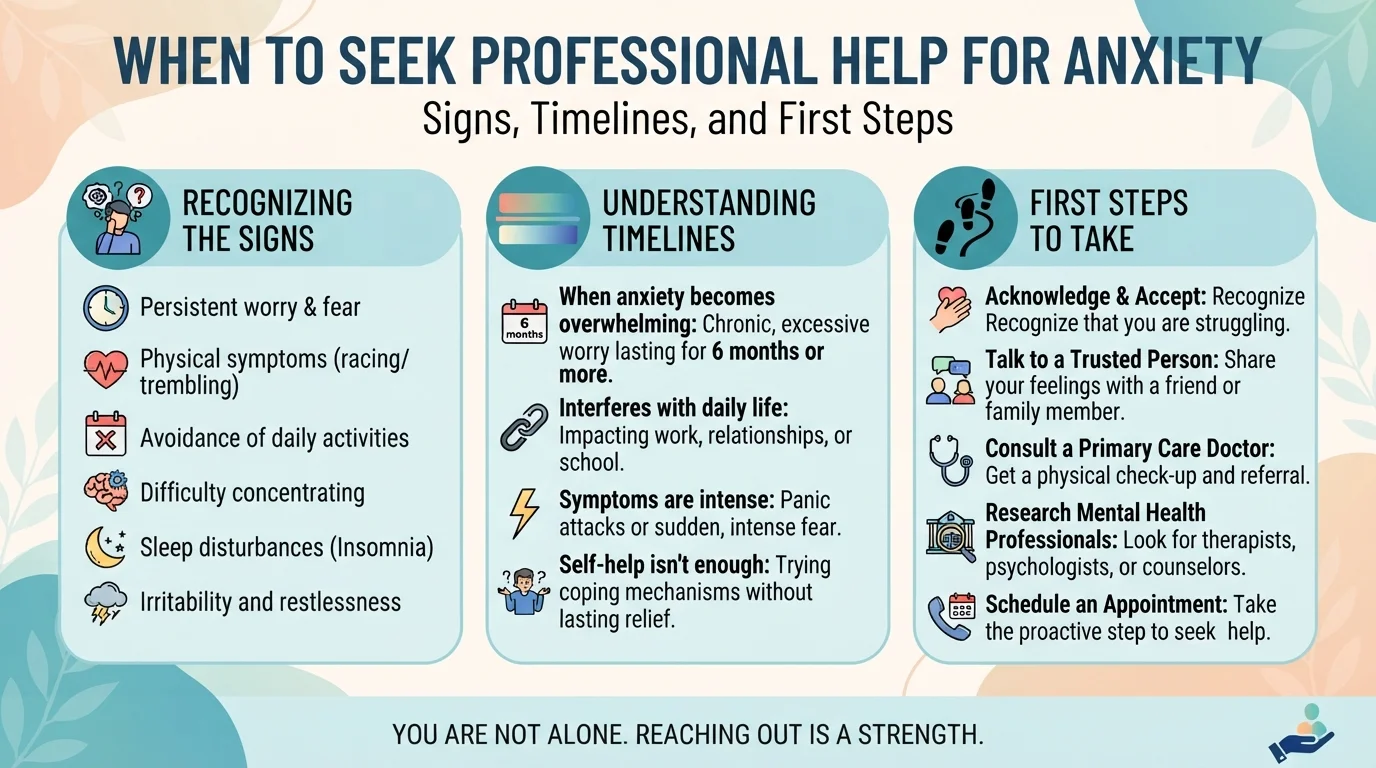
When to Seek Professional Help for Anxiety: Signs, Timelines, and First Steps
Anxiety (anxious distress) is the body's alarm response to a perceived threat, marked by worry, muscle tension, and a faster...