
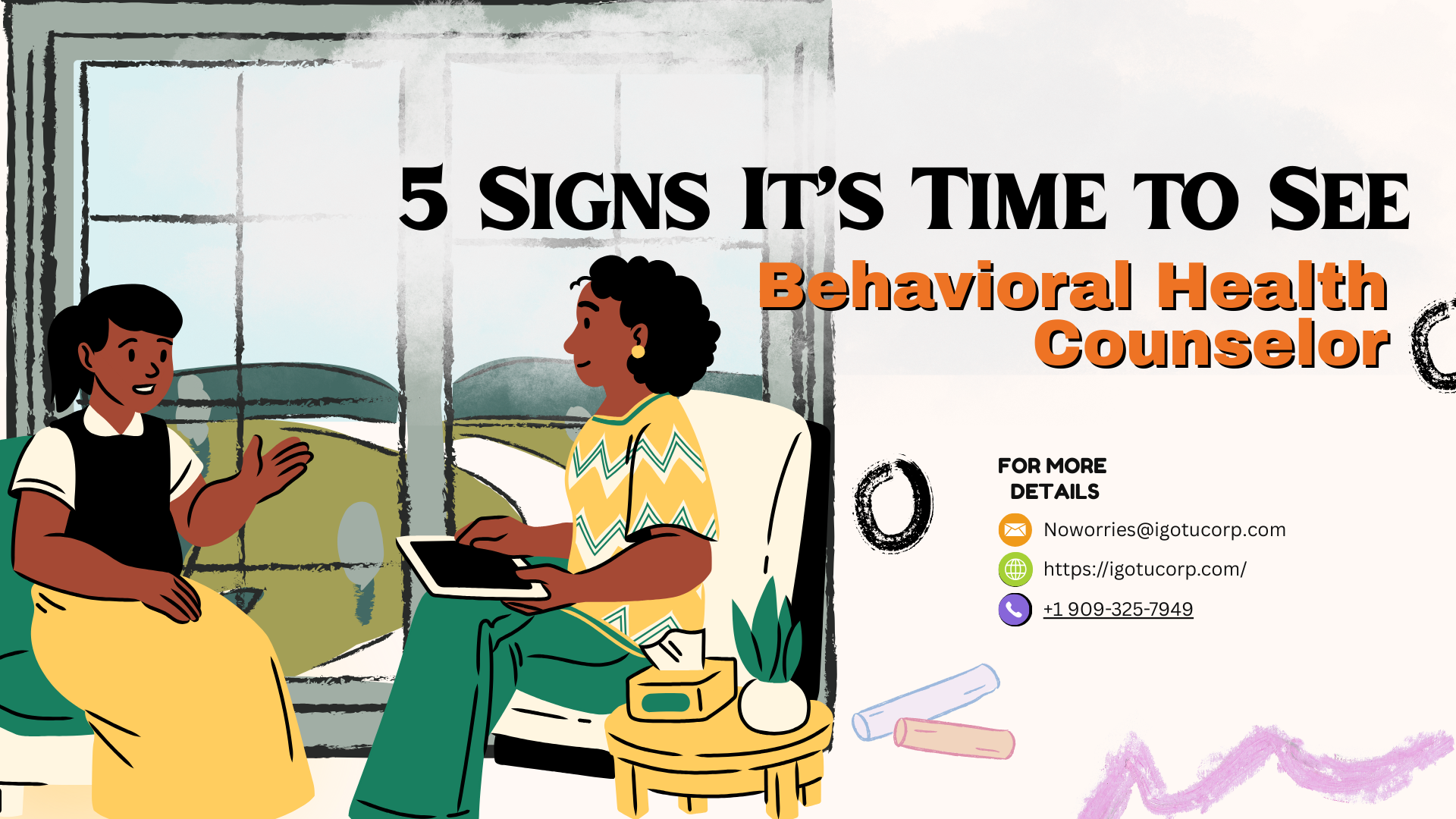
getWe all go through rough patches. A stressful week at work. A bad breakup. A season where nothing seems to go right. That’s just life. But sometimes, what feels like a “rough patch” is actually something deeper. Something that doesn’t go away on its own.
That’s where a behavioral health counselor comes in.
A behavioral health counselor is a trained professional who helps people manage mental, emotional, and behavioral challenges. They work with conditions like anxiety, depression, trauma, substance use, grief, and more. Think of them as a guide — someone who helps you understand what’s going on inside and gives you practical tools to move forward.
But here’s the thing: most people wait way too long before reaching out. According to the National Alliance on Mental Illness (NAMI), the average person waits 11 years between the first symptoms of a mental health condition and actually getting treatment. That’s more than a decade of unnecessary suffering.
You don’t have to wait that long. If you’re not sure where to start, IGOTU Corp connects you with qualified behavioral health counselors who are ready to help — on your schedule, without the runaround. So how do you know when it’s time to make that call? Here are five clear 5 Signs It’s Time to See a Behavioral Health Counselor.
Sign #1: Your Emotions Feel Out of Control
Everyone gets angry. Everyone cries sometimes. That’s normal. But if your emotions feel like a rollercoaster you can’t get off — that’s worth paying attention to.
Maybe you find yourself snapping at people over small things. Or maybe you feel completely numb and disconnected, like you’re just going through the motions. You might swing from feeling okay to feeling devastated within hours — with no obvious reason.
Emotional dysregulation — the clinical term for difficulty managing emotions — can show up in many ways. Some people experience intense mood swings. Others feel a constant low-level sadness that never quite lifts. Some feel rage they can’t explain. Others feel nothing at all.
These emotional extremes aren’t a character flaw. They’re often signs that something deeper is going on — like unprocessed trauma, anxiety, depression, or a mood disorder. A behavioral health counselor can help you identify patterns, understand triggers, and build healthier emotional habits.
Ask yourself: Do your emotions often feel bigger than the situation warrants? Do they interfere with your relationships or daily life? If yes, it’s time to talk to someone.
Sign #2: Your Daily Functioning Is Starting to Slip
There’s a big difference between having a rough week and struggling to function day to day.
When mental health challenges go unaddressed, they start affecting the basics. You stop keeping up with hygiene. You can’t concentrate at work. Deadlines slip. You skip meals, you can’t cry — or you can’t stop eating. Sleep becomes either impossible or all you want to do.
This is called functional impairment, and it’s one of the clearest signals that you need professional support.
You might notice things like:
- You’ve stopped doing activities you used to enjoy
- Your performance at work or school has dropped noticeably
- You’re isolating yourself from friends and family
- Basic tasks like cooking, cleaning, or running errands feel overwhelming
These aren’t signs of laziness or weakness. They’re signs that your brain is under stress it can’t manage alone. A counselor can help you rebuild structure, restore motivation, and address the underlying issues that are making everyday life feel so hard.
Ask yourself: Have people around you noticed a change? Are you struggling to meet your own basic needs? That’s your cue to reach out.
Sign #3: You’re Using Substances or Unhealthy Behaviors to Cope
We all have ways we decompress. A glass of wine after a hard day. Scrolling your phone when you’re anxious. These things aren’t inherently bad. But when coping mechanisms start to take over — that’s a warning sign.
Ask yourself: Are you drinking more than usual? Using substances to get through the day — or to sleep? Turning to gambling, binge eating, excessive shopping, or risky behaviors to feel better or numb out?
This kind of coping is sometimes called avoidance behavior. It doesn’t fix the problem. It just delays dealing with it — often while making things worse in the meantime.
Behavioral health counselors are specifically trained to work with people navigating substance use and behavioral addictions. They won’t judge you. They’ll help you understand why you’re reaching for those coping tools and work with you to find healthier ones.
It’s also worth knowing: if substance use has become a significant part of your life, early intervention matters enormously. The sooner you get support, the easier recovery tends to be.
Ask yourself: Are you using something — alcohol, substances, food, screens, gambling — to avoid feeling something? Is it increasing over time? These are signs to pay attention to.
Sign #4: You’ve Experienced Something Traumatic
Trauma is more common than most people realize. It doesn’t only come from big, obvious events like accidents or violence. It can also come from childhood neglect, an emotionally abusive relationship, a medical diagnosis, loss of a loved one, or years of chronic stress.
The tricky thing about trauma is that it doesn’t always look the way people expect. You might think you’ve “gotten over it” — but trauma has a way of living in the body and the mind long after the event is over.
Signs of unprocessed trauma include:
- Intrusive memories, flashbacks, or nightmares
- Feeling “on edge” or easily startled
- Avoiding people, places, or situations that remind you of what happened
- Emotional numbness or feeling detached from your life
- Difficulty trusting others or feeling safe in relationships
Conditions like Post-Traumatic Stress Disorder (PTSD) don’t resolve on their own for most people. Research from the U.S. Department of Veterans Affairs consistently shows that trauma-focused therapy — like EMDR or Cognitive Processing Therapy — produces meaningful, lasting results for trauma survivors.
You don’t have to keep white-knuckling your way through life. A behavioral health counselor can provide a safe, structured space to process what happened and reclaim your sense of security.
Ask yourself: Is there something in your past that still affects how you feel, think, or relate to others today? If it’s still showing up in your present, it deserves attention.
Sign #5: The People Around You Are Worried
Sometimes, we’re the last ones to notice how much we’ve changed. We adapt and consider it normalize. We tell ourselves “I’m fine” so many times we start to believe it — even when we’re not.
That’s why it’s worth listening when people close to you express concern.
If a partner, parent, close friend, or coworker has gently (or not so gently) said something like “I’m worried about you” or “You haven’t seemed like yourself lately” — take that seriously. The people who love you and know you well can often see what we can’t.
This doesn’t mean other people get to decide how you feel. But it does mean that consistent concern from multiple people is worth reflecting on.
It’s also common to feel defensive when someone brings this up. That’s okay. But try to hear the love behind the words. They’re not judging you — they’re scared for you.
Reaching out to a behavioral health counselor doesn’t mean you’re broken. It means you’re taking care of yourself. And frankly, it takes real courage to do that.
Ask yourself: Has someone you trust expressed concern about your mental health or behavior? Have multiple people said something? That’s worth taking seriously.
You Don’t Have to Be in Crisis to Ask for Help
Here’s something that doesn’t get said enough: you don’t have to hit rock bottom before you see a counselor.
You don’t have to be suicidal or unable to get out of bed. You can simply feel stuck, overwhelmed, or like you want to understand yourself better.
Behavioral health counseling is for anyone who wants to live a fuller, healthier life. It’s preventative care — just like going to the doctor for a check-up before you’re seriously ill.
If you’ve been on the fence, consider this your nudge. Reaching out is the hardest part. Everything after that is just working together toward something better.
Ready to Take the First Step? IGOTU Corp Can Help.
You’ve recognized the signs. Now it’s time to act.
IGOTU Corp makes it simple to connect with experienced behavioral health counselors who truly understand what you’re going through. Whether you’re dealing with anxiety, trauma, burnout, relationship stress, or just feel “off” — there’s a counselor ready to help you work through it.
Book your first session with IGOTU Corp today — and take the first real step toward feeling like yourself again.
visit https://igotucorp.com/ or contact below;
Noworries@igotucorp.com
Frequently Asked Questions (FAQs)
Q1: What is a behavioral health counselor, and how are they different from a therapist or psychiatrist?
A behavioral health counselor focuses on how thoughts and behaviors affect mental well-being. A therapist is a broader term that includes counselors, psychologists, and social workers. However, a psychiatrist is a medical doctor who can prescribe medication — counselors cannot, but they can refer you to one.
Q2: How do I know if I need counseling or medication?
Start with a counselor. They’ll help you figure out what you need. Some people do well with therapy alone. Others benefit from both. If medication seems right, your counselor can refer you to a prescriber.
Q3: What if I can’t afford counseling?
There are options. Many counselors offer sliding scale fees. Community mental health centers provide low-cost or free services. Notably, most insurance plans — including Medicaid — are legally required to cover mental health care. Check your benefits. You may pay less than you expect.
Q4: What happens in a first counseling session?
It’s mostly a conversation. Your counselor will ask what’s been going on and what you hope to get out of therapy. No pressure to share everything right away. It’s also your chance to see if the counselor is a good fit — and if they’re not, it’s okay to try someone else.
Q5: Will seeing a counselor affect my job or reputation?
No. Counseling is confidential. Your mental health records are protected by federal law (HIPAA) and cannot be shared with your employer without your written consent. Your sessions stay private.
Recent Posts
Related Posts
Live Anywhere with Your Pet: Emotional Support Animal Letter California
Finding pet-friendly housing in California is challenging. With “no pets” policies dominating rental markets from San Francisco to San Diego,...
2026’s Checklist for Choosing the Best Depression Treatment Centers
Finding the right depression treatment center in 2026 feels less like a medical appointment and more like choosing a partner...

Get Your Emotional Support Animal Letter California Today (2026 Process)
If you’re struggling with anxiety, depression, PTSD, or other mental health challenges in California, an Emotional Support Animal (ESA) can provide invaluable...
Finding the Licensed Therapists in California and Online Options
Introduction: Why Finding the Right Therapist Matters Mental health is just as important as physical health, and more people in...
Evolution of the 8 Minute Rule Therapy: What’s Different Now
The 8 minute rule therapy has fundamentally shaped how physical therapists, occupational therapists, and speech-language pathologists bill for time-based services...