

Get Your Emotional Support Animal Letter California Today (2026 Process)
If you’re struggling with anxiety, depression, PTSD, or other mental health challenges in California, an Emotional Support Animal (ESA) can provide invaluable therapeutic benefits. However, to legally establish your pet as an ESA and access your rights under federal housing laws, you need one critical document: a legitimate Emotional Support Animal Letter California issued by a licensed mental health professional.
The process of obtaining a legal ESA letter guide California has evolved significantly, especially after regulatory changes aimed at eliminating fraudulent ESA documentation. In 2026, it’s more important than ever to understand California ESA requirements and work with legitimate providers like I Got U Corp who connect you with licensed California therapists following all legal protocols.
This comprehensive guide walks you through everything you need to know about getting your legitimate Emotional Support Animal Letter in California—from understanding requirements through avoiding scams and finally obtaining your legal documentation.
Understanding California ESA Requirements
California follows federal Fair Housing Act (FHA) guidelines while maintaining specific state-level protections and requirements for ESA documentation.

What is an Emotional Support Animal?
An ESA is not a pet—it’s an animal that provides therapeutic benefit to individuals with diagnosed mental or emotional disabilities. Unlike service animals, ESAs don’t require specialized training but must provide comfort or emotional support that alleviates one or more symptoms of your disability.
Legal Framework in California
Federal Protection: The Fair Housing Act requires landlords to make reasonable accommodations for ESAs, including: – Waiving no-pet policies – Waiving pet deposits and fees – Allowing ESAs in pet-restricted housing
Important Note: ESAs do NOT have public access rights. They’re protected in housing only, not in restaurants, stores, or other public spaces (unlike service animals).
Who Can Issue a Legitimate Emotional Support Animal Letter?
Only licensed mental health professionals can issue valid ESA letters in California:
- Licensed Clinical Psychologists (PhD, PsyD)
- Licensed Clinical Social Workers (LCSW)
- Licensed Marriage and Family Therapists (LMFT)
- Licensed Professional Clinical Counselors (LPCC)
- Psychiatrists (MD, DO)
- Psychiatric Nurse Practitioners
The professional must be licensed in California and have established a legitimate therapeutic relationship with you—which can be conducted via telehealth.
Fake vs Real ESA Letters: Critical Differences
The ESA industry has been plagued by fraudulent services selling worthless “certificates” and fake letters. Understanding fake vs real ESA letters protects you from scams and legal issues.
Table 1: Fake vs Real ESA Letters Comparison
| Feature | Fake/Illegitimate Letters | Real/Legitimate Letters |
| Source | Online “registries,” instant websites | Licensed CA therapist after evaluation |
| Consultation | None or automated questionnaire | Real telehealth or in-person session |
| Therapist License | No verifiable license or out-of-state | Valid CA license (verifiable) |
| Processing Time | Instant to 24 hours | 24-48 hours after evaluation |
| Price | Often suspiciously cheap ($50-100) | Reasonable professional fee ($150-250) |
| Includes | Generic certificate, ID cards, vests | Professional letter only (what’s legally required) |
| Legal Validity | None—landlords can reject | Legally valid under FHA |
| Follow-up Care | None | Ongoing access to therapist |
| Red Flags | Guarantees, no evaluation, instant approval | Proper evaluation process |
Warning Signs of ESA Letter Scams
Immediate Red Flags: – “Instant approval” or “guaranteed approval” – No video/phone consultation required – “Register your ESA” language (no registry exists) – Selling ID cards, vests, or certificates (not legally required) – No verifiable therapist license information – Out-of-state therapist for California resident – Suspiciously low prices
The Reality: Legitimate mental health professionals cannot guarantee ESA approval before evaluating you. If a service promises instant approval, it’s a scam.
The Legal ESA Letter Guide: 2026 Process with I Got U Corp
Obtaining your legitimate Emotional Support Animal Letter through I Got U Corp follows a straightforward, legally compliant process designed to connect you with licensed California therapists.
Step 1: Initial Assessment (5-10 Minutes)
Begin with a brief online assessment covering: – Your mental health symptoms – How your animal provides support – Your living situation and ESA needs – Basic qualifying information
This assessment helps match you with an appropriate licensed therapist and ensures you understand the process.
Step 2: Therapist Consultation (30-45 Minutes)
Schedule a telehealth video or phone consultation with a California-licensed mental health professional. During this session:
The Therapist Will: – Conduct a clinical evaluation of your mental health – Assess whether you have a qualifying condition – Evaluate how an ESA would provide therapeutic benefit – Determine if an ESA letter is appropriate for your situation – Answer your questions about ESAs and your rights
You’ll Discuss: – Your mental health history and current symptoms – How your animal helps with your condition – Your housing situation and accommodation needs – Any previous mental health treatment
Important: This must be a real clinical evaluation—legitimate therapists cannot approve everyone and may determine an ESA isn’t appropriate for your specific situation.
Step 3: Letter Issuance (24-48 Hours)
If the therapist determines an ESA is appropriate, they’ll issue your legitimate Emotional Support Animal Letter California within 24-48 hours. The letter includes:
Required Elements: – Therapist’s letterhead and contact information – Your name (patient information) – Statement that you have a mental/emotional disability – Confirmation that the ESA provides therapeutic benefit – Recommendation for ESA as reasonable accommodation – Therapist’s license number, type, and signature – Date of issuance
What’s NOT Included (Because It’s Not Required): – Specific diagnosis (protected by privacy laws) – Details about your condition – Information about your animal – “Certification” or “registration” (these don’t exist)
Step 4: Receive and Use Your Letter
You’ll receive your letter via email (PDF) and optionally physical mail. Present it to: – Current or prospective landlords – Property management companies – Housing authorities
Step 5: Annual Renewal
ESA letters are typically valid for one year. I Got U Corp provides streamlined annual renewal consultations to maintain your ESA status.
California ESA Requirements: What Your Letter Must Include
To ensure your ESA letter meets legal standards, verify it contains these elements:
Table 2: Required Components of Valid California ESA Letters
| Component | Why It’s Required | Verification |
| Licensed Professional Info | Proves letter is from qualified provider | Check CA license database |
| License Number | Enables verification of credentials | Look up on CA DCA website |
| License Type | Confirms appropriate credential | Must be LMFT, LCSW, LPCC, etc. |
| Professional Letterhead | Indicates legitimate practice | Includes contact information |
| Patient Name | Identifies who letter applies to | Your legal name |
| Disability Statement | Establishes legal basis for accommodation | General statement, no details |
| ESA Recommendation | Specifies accommodation requested | Clear ESA recommendation |
| Date | Shows currency of evaluation | Within last year typically |
| Signature | Authenticates the letter | Original signature |
Your Rights with a Legitimate ESA Letter in California
Once you have a valid Emotional Support Animal Letter California, you’re entitled to specific housing accommodations:
Landlord Must: – Consider your ESA request as reasonable accommodation – Waive no-pet policies for your ESA – Waive pet deposits and monthly pet fees – Allow your ESA regardless of breed or size restrictions
Landlord Cannot: – Charge pet deposits or fees for ESAs – Refuse housing based on animal type (with rare exceptions) – Require ESA “registration” or “certification” – Demand specific training for ESAs
You Must: – Provide legitimate ESA letter when requested – Ensure your animal doesn’t cause damage or disturbance – Follow general tenant responsibilities – Clean up after your animal – Ensure animal is not a threat to health/safety
Exceptions Where Landlords Can Refuse: – Building with 4 or fewer units where landlord lives in one – Animal poses direct threat to health/safety of others – Animal causes significant property damage – Accommodation creates undue financial/administrative burden
Why Choose I Got U Corp for Your ESA Letter?
The market is flooded with illegitimate ESA services, making it crucial to work with a trustworthy provider. I Got U Corp stands out through:
Licensed California Therapists: All consultations conducted by professionals licensed in California, ensuring legal validity.
Legitimate Process: Real clinical evaluations, not rubber-stamp approvals—we follow all legal and ethical guidelines.
Transparent Pricing: Clear, upfront costs with no hidden fees or unnecessary add-ons.
Ongoing Support: Continued access to your therapist for questions and annual renewals.
Legal Compliance: Our letters meet all federal and California requirements, accepted by landlords statewide.
Privacy Protection: HIPAA-compliant processes protecting your health information.
No Scammy Add-Ons: We don’t sell useless ID cards, vests, or “registrations”—just the legally required letter.
Frequently Asked Questions About ESA Letters in California
How much does a legitimate Emotional Support Animal Letter California cost?
Legitimate ESA letters from licensed therapists typically cost $150-250, reflecting the professional consultation required. Prices significantly lower than this raise red flags about legitimacy. Prices significantly higher may indicate overcharging. I Got U Corp offers competitive, transparent pricing for legitimate ESA evaluations and letters.
Can I get an ESA letter online in California?
Yes—telehealth consultations are legally valid for ESA evaluations in California. However, the consultation must be conducted by a California-licensed therapist via live video or phone, not just an automated questionnaire. I Got U Corp connects you with licensed CA therapists through secure telehealth platforms, making the process convenient while maintaining legal validity.
How long does it take to get an ESA letter?
With I Got U Corp, the process typically takes 2-3 business days from initial assessment through receiving your letter. Timeline: online assessment (immediate), therapist consultation scheduling (1-2 days), consultation (30-45 minutes), letter issuance (24-48 hours after approval). Rush options may be available for urgent housing situations.
What’s the difference between ESA letters and service animal documentation?
Service animals are trained to perform specific tasks for physical disabilities and have public access rights under the ADA. They don’t require letters but need training certification. ESAs provide emotional support for mental health conditions, have housing rights only (not public access), and require letters from mental health professionals. The documentation requirements and legal protections are completely different.
Can landlords reject my ESA letter?
Landlords can request your ESA letter and verify your therapist’s license. If your letter is legitimate (from a licensed CA therapist following proper evaluation), landlords must generally approve your accommodation request. They can only deny if: the building qualifies for exemptions, the animal poses direct threat to health/safety, or the accommodation creates undue hardship. They cannot reject letters simply because they don’t like ESAs.
Do I need to renew my ESA letter?
Yes. ESA letters are typically valid for one year, after which you’ll need renewal. This ensures your ongoing need for ESA accommodation is current and verified. I Got U Corp offers streamlined annual renewal consultations—shorter than initial evaluations since your therapist already knows your history. Renewal consultations ensure continued compliance with legal requirements.
Get Your Legitimate Emotional Support Animal Letter California Today
If your animal provides crucial emotional support for your mental health, you deserve legal protection for that relationship. Don’t risk your housing rights with fake ESA letters from scam websites. Work with I Got U Corp to obtain a legitimate Emotional Support Animal Letter California from licensed therapists following all legal requirements.
Our process is simple, legal, and designed to connect Californians with the mental health support and housing accommodations they need. Within just a few days, you can have a valid ESA letter protecting your right to live with your emotional support animal.
Ready to get started? Take the first step toward protecting your ESA relationship today.
Contact I Got U Corp
Don’t wait—landlords can request ESA documentation at any time. Get your legitimate Emotional Support Animal Letter California today and ensure your housing rights are protected.
I Got U Corp: Connecting Californians with Licensed Therapists for Legitimate ESA Letters
Disclaimer: This article provides general information about ESA letters in California and is not legal or medical advice. ESA letter issuance depends on clinical evaluation by a licensed mental health professional. Not all applicants will qualify for ESA letters. Consult with appropriate professionals regarding your specific situation.
Recent Posts
Related Posts

How to Protect Your Mental Health Without Sacrificing Your Career
It is Sunday evening and your stomach is already tight. You are replying to emails you will see again in...

How to Find a Licensed Male Therapist in California
Plenty of people know the moment they decide they want therapy. Fewer people know what to type into the search...

How to Do the 5-4-3-2-1 Technique Silently in Class
Learn how to manage anxiety discreetly during class using the simple and effective 5-4-3-2-1 grounding technique in this article. Exclusive...
How to Set Boundaries Without Guilt: Stop People Pleasing
You said yes again. You knew while the words were leaving your mouth that you did not want to say...
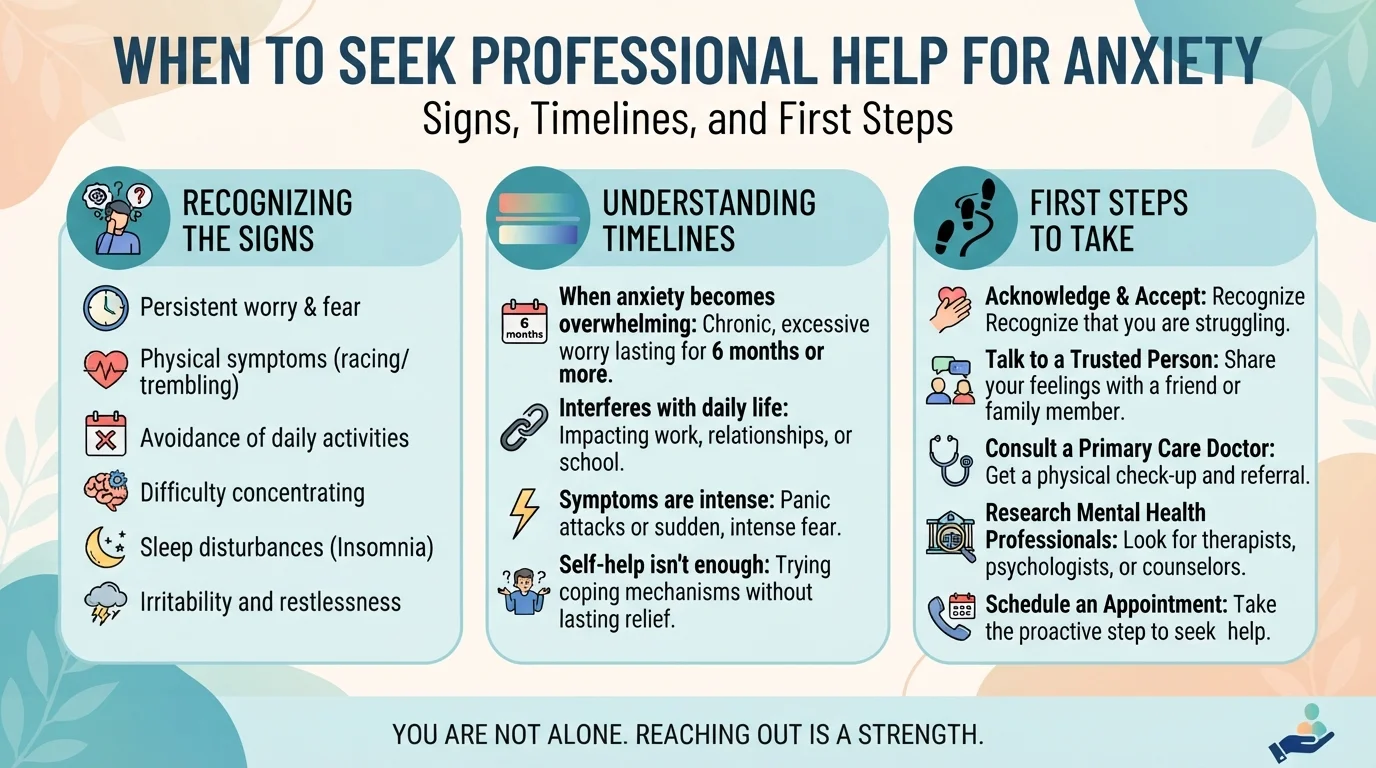
When to Seek Professional Help for Anxiety: Signs, Timelines, and First Steps
Anxiety (anxious distress) is the body's alarm response to a perceived threat, marked by worry, muscle tension, and a faster...