
IGotU Corp

Online Counseling Tips for 2025

Making Marriages Work in Digital Age: Online Counseling Tips for 2025

January 20, 2025

Marriage counseling, also called relationship counseling or couples therapy, is a form of therapy that helps significant others bridge their divides, work through their issues, and improve their relationships. Online Marriage Counseling can also help couples breathe new life into their romantic bonds and reinforce the reasons that brought them together in the first place.

Marriage counseling relies on therapy sessions between both partners and a shared therapist, who will listen closely and try to distill and simplify any issues affecting the relationship. Then, they will collaborate with couples on a personalized, evidence-based course of action to help solve their relationship’s problems.

Many different kinds of couples seek Online Marriage Counseling and marriage counseling therapists can also facilitate pre-wedding discussions for non-married or engaged couples during premarital counseling sessions.

What are the signs that indicate a need for Online Marriage Counseling?

Recognizing the signs that indicate a need for Online Marriage Counseling can help couples address issues early on and prevent them from escalating into larger problems. Here are some common signs that may suggest it’s time to seek professional psychologist help:

Frequent lack of communication or miscommunication: If you find yourselves unable to communicate effectively or often misunderstand each other, it may be a sign that underlying issues need to be addressed.

Frequent Quarrelling: Constant arguing or conflicts over minor issues can indicate deeper problems within the relationship that require intervention.

Avoiding conversations or spending time together: If you or your partner consistently avoid spending time together or make excuses to avoid discussions or commitments, it may signal emotional disconnection or unresolved issues.

Trying to prove your partner wrong: Constantly trying to prove your partner wrong or belittling their opinions can create resentment and damage the relationship.

Keeping secrets: Secrets or withholding important information from each other can erode trust and lead to further breakdowns in communication.

Affairs or infidelity: Discovering that one or both partners are having an affair is a significant indication that the relationship needs professional intervention to address underlying issues and rebuild trust.

Significant changes in intimacy levels: A noticeable decrease in physical intimacy or emotional closeness can be a red flag for deeper relationship problems.

Lack of trust: Trust issues, whether due to past betrayals or ongoing suspicions, can create a toxic environment in the relationship and indicate a need for top psychologist help.

Unrealistic expectations: Holding unrealistic expectations of your partner or the relationship can lead to disappointment and frustration, depressed, and sad mood, anxious making it difficult to maintain a healthy dynamic.

When these signs are present, seeking the guidance of a trained Online Therapy California professional can provide couples with the tools and support needed to address their issues, improve communication, rebuild trust, and strengthen their relationship. By addressing problems early on, couples can prevent further damage and work towards a healthier and more fulfilling partnership.

Is Online Marriage Counseling Helpful?

Online Marriage Counseling can be incredibly helpful for couples navigating relationship challenges. Therapists focus on improving communication, understanding each other’s emotions, and setting shared goals. By identifying underlying issues and developing tailored strategies for improvement, couples can address conflicts more effectively and strengthen their emotional bond. Through guided sessions, therapists help couples empathize with each other’s perspectives and work towards solutions that benefit both partners. Research suggests that marriage counseling has a success rate of around 75%, but the willingness of both partners to actively participate and engage in the process is key to its effectiveness. Overall, marriage counseling provides a supportive and structured environment for couples to address their concerns, rebuild trust, and create a healthier, more fulfilling relationship.

Can I do Marriage Counselling Online?

Marriage counseling is readily available online, thanks to advancements in technology and the increasing popularity of telehealth services. Many clinics and individual practitioners now offer their services through online platforms, making it convenient and accessible for couples to seek help from the comfort of their own homes. Online counseling platforms, such as I Got U Corp, provide Online Marriage Counseling services at affordable prices in a confidential manner through HIPAA-compliant platforms. Experienced marriage counselors specializing in online counseling are available to provide support and guidance to couples facing relationship challenges. Don’t hesitate to seek help if you’re struggling in your marriage—reach out to the best marriage counselors near you and take the first step towards improving your relationship.

Online Marriage Counseling Tips for 2025:

How to prepare for online couples counseling?

Unlike in-person couples counseling, online counseling offers a unique advantage in that couples have total control over their space. That makes it all the more important to set up a session in a way that feels comfortable to you and also allows your counselor a full view of what’s happening in the room. Make sure you’re physically and mentally prepared for sessions by considering the following:

Double-check your WIFI speed:

Internet with a bandwidth of at least 10 Mbps is recommended for the highest quality and to prevent connection issues. Check your connection by searching “internet speed test,” and clicking on the blue button that says “Run Speed Test.”

If it shows your WIFI is under 10mbps, you may want to restart your router or use your phone’s hotspot.

Show as much of your body in the camera as possible:

Mental Health Therapist in California, recommends that couples use a computer (rather than phones) for sessions because it makes it easier to see both of them on the screen.

Place the computer several feet away so the therapist can see as much of your body as possible.

It’s helpful, as a therapist to be able to get a sense of what you are communicating with your body as well as your words, and being able to see you helps with that visually.

Mitigate distractions:

You both must have a plan to mitigate distractions, both inside and outside of the room.

If you have kids, who are old enough to spend time alone, Pre Marriage Counseling experts recommend setting clear expectations for privacy by using a room with a closed door. Set them up with an activity in a separate room and set up a timer for them, so they know when their parents will be done.

Make sure all external technological distractions are eliminated, too! I Got U Corp recommends putting your phone away and turning notifications off from your computer, as both can be distracting during sessions.

Get creative with scheduling:

The counselor also stresses the importance of creative scheduling of Online Marriage Counseling sessions, and relying on your quarantine “village” if possible. If your kids are too young to occupy themselves while you’re in session, having someone to babysit or do sessions during nap time or after bedtime could work.

Consider joining from separate rooms!

Even though you’re addressing the relationship together, note that it’s not required that couples occupy the same physical space to benefit from online couples counseling.

For couples who are long-distance or currently separated, joining individually may be the default option; but according to Experts, it’s also an option for folks who live together. “Some couples prefer to join from different rooms in the house, depending on what the presenting issues are, as sometimes if there is an intense situation being discussed, partners prefer to have some physical space during this particular session.”

If you’re opting to join separately, make sure both devices are tested and ready before the session.

What happens in the first online couples counseling session?

Each therapist has their unique intake process, but many follow a three-step system in which they meet with the couple together first and then meet one time with each partner individually.

The first joint meeting allows the provider to learn about your history as a couple and your reasons for seeking therapy now. As Online Marriage Counselor explains, “I want to keep the focus on what has brought the couple into therapy. In a first session, my objective is to get a clear understanding of who they are, how they see their relationship, and what they want to work on.” The Marriage Counselor agrees, adding that her goal is to “get a good initial picture of what is happening in the relationship, from both partner’s perspectives.”

To better understand your relationship and dynamic, counselors might ask questions at the initial Online Marriage Counseling session like:

  • What is bringing you to Online Therapy California now?
  • What has or hasn’t worked for your relationship?
  • How did you meet? What attracted you to each other?
  • What significant events have you faced in your time together?
  • What small conflict has arisen in your daily life recently?

In addition to using this first meeting to get a lay of the land, it’s “also an opportunity for the couple to assess whether I am a good fit for them before they get too deep into treatment.”

The two individual sessions that follow allow your therapist to obtain background on your personal childhood, family, and life issues – all of which might contribute to the couple’s current struggles, says Marriage Counselor at I Got U.

When beginning online couples counseling, you can also expect some paperwork. Therapists may electronically send required documents, such as consent to treat virtually, and practice scheduling and confidentiality policies.

As Online Marriage Counseling progresses, you might be given other questionnaires to help devise strengths and deficits.

Related Posts

Therapy Without Insurance in California

What is the Cost of Therapy Without Insurance in California?

Here is the direct answer: therapy without insurance in California in 2026 costs between $0 and $400 per session, depending...

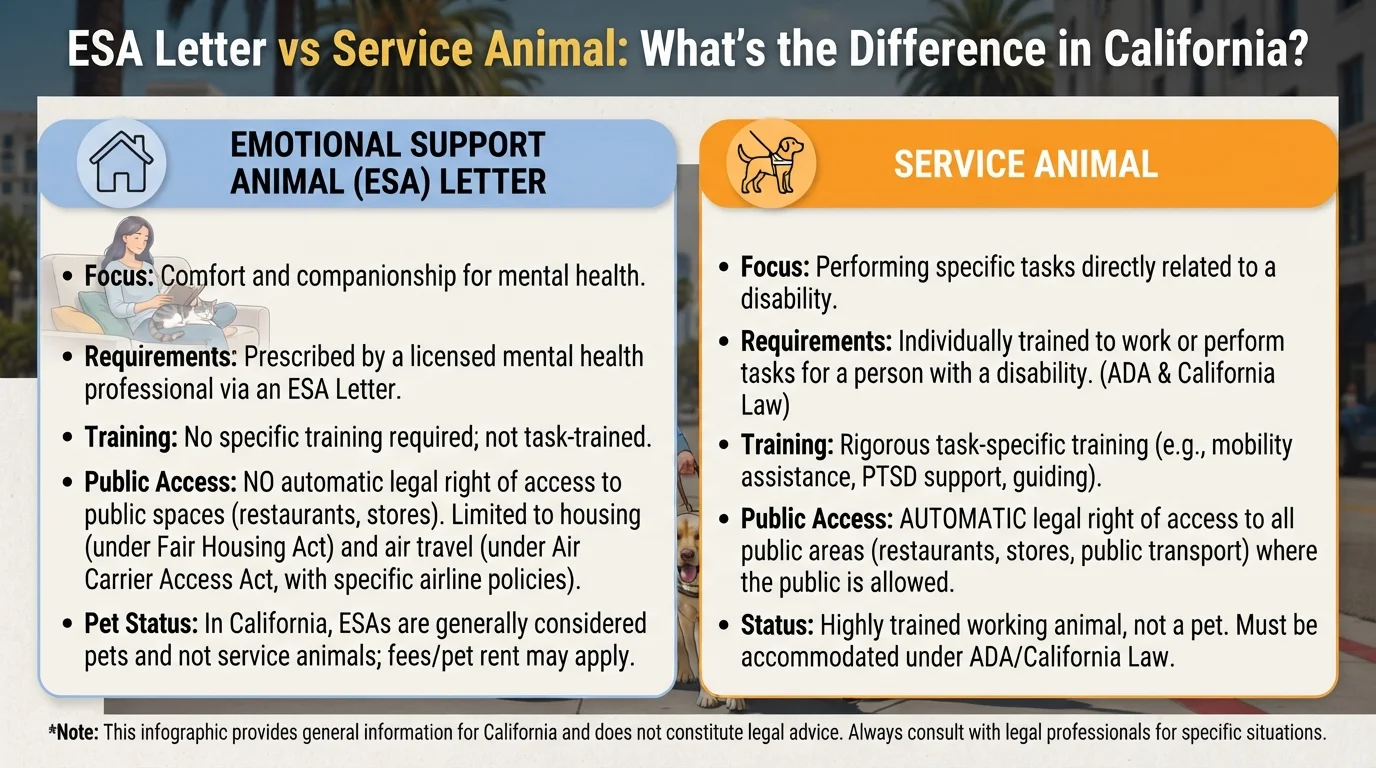
California ESA Laws Explained: The 30-Day Rule for Valid Landlord Letters Meta Description: California's AB 468 changed everything about how ESA letters work for landlords and tenants. Here's the complete, legally accurate breakdown of the 30-day rule, what makes a letter valid in 2025, and how to protect your housing rights. The Law Changed. Most People Don't Know It Yet. If you have been researching Emotional Support Animals in California — whether you are a tenant trying to secure housing for your ESA, a landlord trying to understand your obligations, or someone who purchased an ESA letter online and is now wondering if it will hold up — there is a good chance the information you have found is outdated, incomplete, or written by a service with a financial interest in obscuring the legal reality. California's ESA landscape shifted significantly with the passage of Assembly Bill 468, which took effect on January 1, 2022 and remains the governing law in 2025. This legislation introduced requirements that fundamentally changed what makes an ESA letter valid in California — and the most important of those requirements is one that most online ESA services either don't mention or actively obscure: the 30-day rule. Understanding this rule — what it requires, why it exists, how landlords can verify compliance, and what happens when letters don't meet the standard — is not optional information for anyone navigating ESA housing situations in California. It is the foundation of whether your documentation will actually protect you when it matters most. This article provides the complete, legally accurate, plainly written explanation of California's ESA laws — with specific attention to the 30-day rule, landlord rights and obligations, tenant protections, and how to ensure your documentation is built to withstand scrutiny. What AB 468 Actually Says: The Foundation of California ESA Law Before the specifics of the 30-day rule, it is worth understanding what AB 468 actually does — because it is the single most important piece of California-specific legislation governing ESA letters, and its requirements go significantly beyond what federal law mandates. AB 468, codified in California Health and Safety Code Section 122318, regulates the conduct of mental health professionals who provide ESA documentation in California. It does not change the Fair Housing Act protections that ESA owners have — those remain intact. What it changes is the standard of conduct required of the professionals who provide the letters and the circumstances under which those letters are considered legitimate. The core requirements AB 468 imposes on mental health professionals issuing ESA letters in California: Licensure requirement. The professional must hold a valid California license in a qualifying mental health profession — LCSW, LMFT, LPCC, Licensed Psychologist, or Psychiatrist. Out-of-state licensure is insufficient for California ESA letters. Scope of practice requirement. The professional must be providing services within their authorized scope of practice — they cannot issue ESA letters for conditions outside their clinical expertise or licensure. The 30-day relationship requirement. The professional must have provided mental health services to the client for at least 30 days before issuing the ESA recommendation — with limited exceptions for acute crisis situations. No fraudulent representation. The professional cannot misrepresent the existence of a professional relationship or the nature of the client's condition. Prohibition on commercial ESA letter mills. Professionals are prohibited from operating in ways that essentially function as commercial document mills — providing ESA letters as a product rather than as a clinical recommendation emerging from genuine treatment. Violations of AB 468 can result in disciplinary action by the professional's licensing board — up to and including license revocation. This means that legitimate California clinicians take these requirements seriously, and it means that services providing instant letters without genuine clinical relationships are operating outside the law. The 30-Day Rule Explained: What It Requires and Why It Matters The 30-day rule is the provision of AB 468 that most directly affects people seeking ESA letters in California — and it is the provision most frequently violated by online ESA services that continue to offer instant or same-day letters. What the Rule Actually Requires Section 122318 specifies that a mental health professional providing an ESA recommendation must have provided mental health services to the individual for no less than 30 days before issuing the recommendation. This is not a 30-day waiting period from the date of application. It is a requirement that a genuine professional relationship — involving actual mental health services — has been established and maintained for at least 30 days prior to the letter being issued. The distinction matters enormously. A single consultation, however thorough, does not satisfy the 30-day requirement. An intake session followed by a letter issued the same week does not satisfy the 30-day requirement. An online questionnaire followed by an automated letter issued within hours does not come close to satisfying the requirement — and letters produced this way are not legally compliant with California law regardless of how official they look. Why the Rule Exists The 30-day requirement was not arbitrary. It was a legislative response to a specific and documented problem: the proliferation of commercial ESA letter mills that were issuing documentation to anyone willing to pay a fee, with no genuine clinical assessment and no actual therapeutic relationship. The consequences of this proliferation were significant. Landlords — particularly smaller independent landlords — were receiving waves of ESA accommodation requests accompanied by letters from online services with no verifiable clinical basis. The frequency and obvious fraudulence of many of these requests was creating significant resistance to legitimate ESA accommodation requests from tenants with genuine mental health needs and genuine clinical relationships. AB 468's 30-day requirement was designed to create a meaningful distinction between genuine clinical ESA recommendations — which emerge from real therapeutic relationships with real licensed professionals — and commercial document products with no clinical basis. By requiring a 30-day professional relationship, the law ensures that the professional issuing the letter actually knows the client, has assessed their condition over time, and is making a genuine clinical judgment rather than completing a commercial transaction. The Exceptions to the 30-Day Requirement AB 468 includes limited exceptions to the 30-day rule — circumstances in which an ESA recommendation may be issued without the full 30-day relationship period. These exceptions are narrow and specific: Acute crisis situations. If a client is in acute mental health crisis and housing stability is immediately necessary for their safety and wellbeing, a professional may issue a recommendation with less than 30 days of established relationship. This exception is designed for genuine emergencies, not for people who simply want a letter quickly. Referral from an established provider. If a professional receives a referral from another mental health professional who has an established relationship with the client, and that referral includes relevant clinical history, the 30-day requirement may be satisfied through the combined relationship rather than requiring an entirely new 30-day period. These exceptions are not a mechanism for circumventing the 30-day requirement. They are narrow carve-outs for genuinely exceptional circumstances, and a landlord presented with an ESA letter invoking these exceptions is entitled to seek verification of the circumstances. What Makes a Valid ESA Letter in California Under Current Law The 30-day relationship requirement is the most significant California-specific requirement, but it is not the only element of a valid ESA letter. A letter that is legally defensible in California in 2025 must contain all of the following: Complete Professional Identification The letter must identify the issuing professional with sufficient specificity to allow verification — their full name, license type (LCSW, LMFT, LPCC, Psychologist, Psychiatrist), California license number, and contact information. The license number is not optional — it is the mechanism by which a landlord (or, if necessary, a court) can verify that the professional is genuinely licensed in California and that their license is in good standing. Confirmation of the Professional Relationship A California-compliant ESA letter should confirm that the professional has provided mental health services to the client — ideally with language that references the 30-day relationship requirement of AB 468. Letters that are vague about the professional relationship, that use language suggesting a one-time consultation, or that cannot be linked to an actual ongoing therapeutic relationship are legally vulnerable. Disability Acknowledgment Without Diagnosis Disclosure The letter must confirm that the client has a condition that qualifies as a disability under the Fair Housing Act — defined as a physical or mental impairment that substantially limits one or more major life activities. Crucially, the letter does not need to — and generally should not — specify the exact diagnosis. Landlords are not entitled to your diagnosis. They are entitled to confirmation that a disability exists and that an ESA is recommended as part of treatment. The ESA Recommendation The letter must clearly state that an Emotional Support Animal is recommended as part of the client's treatment plan for their qualifying condition. This recommendation must be a genuine clinical judgment — not a commercial service delivered to anyone who pays — and it must be one that the issuing professional can stand behind if contacted for verification. Date and Signature The letter must be dated and signed by the licensed professional. ESA letters are generally considered valid for one year from the date of issue, after which landlords may request updated documentation. Landlord Rights Under California ESA Law: What They Can and Cannot Do One of the most practically important aspects of California's ESA framework is the specific delineation of what landlords can and cannot do in response to an ESA accommodation request. What California Landlords Can Legitimately Do Request ESA documentation. Landlords can require a tenant to provide an ESA letter from a licensed mental health professional before granting an accommodation. They cannot require a specific format, a specific service, or documentation from a specific provider — but they can require documentation. Verify the professional's California license. This is entirely legitimate and increasingly common among landlords who have become sophisticated about ESA documentation. The California Department of Consumer Affairs maintains the BreEZe online verification system at breeze.dca.ca.gov, where anyone can verify whether a named professional holds a current, active California license. A landlord who looks up the license number on an ESA letter and finds it invalid, expired, or belonging to someone licensed in a different state has legitimate grounds to question the documentation. Contact the professional to verify authenticity. A landlord may contact the issuing professional to confirm that they issued the letter and that they have an established professional relationship with the tenant. A professional who issued a genuine letter will confirm this. A commercial ESA service that issued a letter without genuine clinical contact typically cannot provide meaningful verification. Request updated documentation annually. ESA letters are generally considered valid for one year. After that period, landlords may request a new letter. This is a reasonable and legitimate request. Deny accommodation for specific, documented reasons. A landlord may deny an ESA accommodation if the specific animal poses a direct threat to the health or safety of others that cannot be mitigated by reasonable accommodation, or if the accommodation would impose undue financial or administrative burden. These are high bars and must be based on specific, documented circumstances — not breed assumptions, species preferences, or general discomfort with animals. What California Landlords Cannot Do Apply a no-pets policy to an ESA. Under the Fair Housing Act, no-pets policies do not apply to Emotional Support Animals. The FHA's reasonable accommodation requirement supersedes lease provisions restricting pets. Charge a pet deposit or pet fee for an ESA. This is one of the most frequently violated tenant rights in ESA situations. An ESA is not a pet under the FHA — pet deposits and pet fees do not apply. The tenant remains responsible for actual damages caused by the animal, but cannot be charged in advance as a condition of the accommodation. Demand your specific diagnosis or medical records. A landlord is entitled to confirmation that you have a disability and that an ESA is recommended. They are not entitled to your diagnosis, your treatment history, your medication, or any other medical information beyond what is contained in the ESA letter. Apply breed or weight restrictions to ESAs. Landlord policies restricting specific dog breeds or imposing weight limits do not apply to ESAs — these restrictions cannot override a valid FHA accommodation request based on general policy alone. If a specific animal poses a direct threat, that determination must be individualized and documented. Retaliate for an ESA accommodation request. California tenant protection law prohibits retaliation against tenants for exercising their legal rights — including the right to request an ESA accommodation. Get Your Legitimate ESA Letter Through IGOTU Corp — Built to Meet California's 30-Day Standard Here is the practical reality: most of the ESA letters available online today do not meet California's AB 468 requirements. They are issued without the 30-day professional relationship. They come from professionals not licensed in California. They are produced by commercial services explicitly prohibited by the legislation. And they fail — sometimes immediately, sometimes when a legally informed landlord looks up the license number — at the exact moment they are supposed to protect you. IGOTU Corp does it differently. IGOTU Corp connects California residents with genuinely licensed California mental health professionals who conduct real clinical assessments, establish real therapeutic relationships, and issue ESA letters that are fully compliant with AB 468 — including the 30-day requirement. Their process is not a five-minute questionnaire followed by an automated certificate. It is a clinical pathway that takes the law seriously because the people going through it deserve documentation that will actually hold up. If you are a California tenant who needs an ESA letter that a landlord cannot legitimately challenge, IGOTU Corp is where that process starts. Not because they make it easy in the way that mill services make it easy — but because they make it right, which is the only kind of easy that matters when you are in a housing dispute and your documentation is being scrutinized. Start your legitimate ESA evaluation at IGOTU Corp today. The 30-day relationship requirement exists because you deserve a clinician who actually knows you — and IGOTU Corp's licensed therapist network is built to provide exactly that. Common ESA Letter Scams to Avoid in California California's AB 468 was specifically designed to address the proliferation of fraudulent ESA services — but those services continue to operate, often with increasingly sophisticated websites and official-looking documentation. Knowing what to avoid protects both your money and your housing security. Instant or same-day letters. Any service offering an ESA letter within hours of an online questionnaire is, by definition, not compliant with AB 468's 30-day requirement. The letter may look legitimate. It will not hold up to a landlord who knows the law. ESA registration and certification services. No official ESA registry exists in California or at the federal level. Services charging fees to "register" your ESA or issue certification documents are selling products with no legal value. A registered ESA certificate from a commercial service carries exactly the same legal weight as a piece of paper you printed yourself. Out-of-state practitioners issuing California ESA letters. AB 468 requires California licensure. An ESA letter from a licensed psychologist in Texas, or a therapist licensed in Florida, does not satisfy California's requirements and is legally vulnerable in California housing disputes. Services that guarantee approval. A legitimate clinical assessment may or may not result in an ESA recommendation — the clinician must make a genuine professional judgment. A service guaranteeing a letter before conducting any assessment is confirming, by the guarantee itself, that it is not conducting a genuine assessment. What to Do If Your Landlord Challenges Your ESA Letter Even with a legitimate, AB 468-compliant ESA letter, some landlords will push back. Knowing your options in that situation is important. Respond in writing. Any communication about an ESA accommodation should be documented in writing. If your landlord raises objections verbally, follow up with a written summary of the conversation and your response. Provide verification. Offer to have your issuing professional confirm the letter's authenticity and the existence of the professional relationship. A legitimate professional will do this. This offer itself often resolves disputes with landlords who suspected a fraudulent letter. File a complaint with HUD. The U.S. Department of Housing and Urban Development investigates FHA violations including unjustified denial of ESA accommodation requests. Filing a HUD complaint is free and can be done online. File a complaint with the California Civil Rights Department (CRD). Formerly the DFEH, the CRD investigates housing discrimination complaints under California's Fair Employment and Housing Act, which provides additional protections beyond the federal FHA. Consult a tenant rights attorney. California has robust tenant protection laws and a network of legal aid organizations that provide free or low-cost legal assistance to tenants facing housing discrimination. A single consultation with a tenant rights attorney can clarify your options and, in many cases, resolve a landlord dispute without litigation. Frequently Asked Questions (FAQs) About California ESA Laws and the 30-Day Rule Q: Does the 30-day rule mean I have to wait 30 days after starting therapy to get my ESA letter? Yes — under AB 468, the mental health professional must have provided services to you for at least 30 days before issuing an ESA recommendation, except in limited acute crisis circumstances. This means the process takes a minimum of 30 days from the start of a new professional relationship. If you already have an established therapist, the 30-day requirement may already be satisfied. Q: Can my existing therapist write my ESA letter? Yes — and this is often the most straightforward path. If you have been working with a California-licensed therapist for more than 30 days, they can potentially issue your ESA letter based on the existing relationship. Discuss it with them directly. Q: What if my landlord refuses to accept my ESA letter? Document everything in writing. Provide verification from your issuing professional. File complaints with HUD and/or the California Civil Rights Department if the refusal appears to violate the FHA. Consult a tenant rights attorney. IGOTU Corp's letters are built to withstand landlord scrutiny — but if a dispute arises, you have legal options. Q: Does AB 468 apply to all housing in California? AB 468 regulates mental health professionals issuing ESA letters — it applies statewide. The Fair Housing Act protections for ESA tenants apply to most California housing, with limited exceptions for certain owner-occupied small buildings and single-family homes rented without a broker. Q: How do I verify that a California therapist is legitimately licensed? Use the California Department of Consumer Affairs BreEZe online system at breeze.dca.ca.gov. Enter the professional's name or license number to confirm their license type, license number, issue date, expiration date, and any disciplinary history. Q: Can my landlord ask how long I have been seeing my therapist? A landlord can ask questions designed to assess whether an ESA letter is legitimate — including whether you have an established professional relationship with the issuing clinician. They cannot demand access to your therapy records or specific details about your treatment. A letter that references AB 468 compliance and confirms the existence of the professional relationship is typically sufficient. Q: Is IGOTU Corp's ESA letter process AB 468 compliant? Yes. IGOTU Corp's process is specifically designed around California's AB 468 requirements — connecting clients with genuinely licensed California professionals who establish real therapeutic relationships and issue letters that satisfy the 30-day rule and all other AB 468 standards. Visit IGOTU Corp to learn more about how the process works and to begin your evaluation. The Bottom Line: In California, Legitimate Means Legal — and Legal Means Protected The 30-day rule exists for a reason. It exists because your housing security is too important to rest on a document produced by a commercial service in five minutes, signed by someone who has never met you, and issued by a professional who may not even be licensed in California. It exists because landlords who have been flooded with fraudulent ESA letters deserve a meaningful standard by which to distinguish genuine clinical recommendations from commercial products. And it exists because tenants with genuine mental health needs and genuine therapeutic relationships deserve documentation that will hold up — in a landlord conversation, in a HUD complaint, in a housing court — when it matters most. The right ESA letter in California is not the fastest one or the cheapest one. It is the one that comes from a real licensed professional who actually knows you, has provided real services to you for at least 30 days, and is making a genuine clinical judgment that an ESA is part of your treatment. That letter protects you. Everything else is a risk. IGOTU Corp builds that letter, through that process, with those professionals. If you are ready to start the legitimate pathway to a California-compliant ESA letter, visit IGOTU Corp today — because the only documentation worth having is the kind that actually works.

California ESA Laws Explained: 30-Day Rule for Valid

  California ESA Laws Changed. Most People Don't Know It Yet. If you have been researching Emotional Support Animals in...

Why Do I Feel Lonely and Depressed? Understanding the Connection

Why Do I Feel Lonely and Depressed? Understanding the Connection

  Quick answer: Why do I feel lonely and depressed? Learn the real neurological connection between loneliness and depression, what...

Why I Feel Stressed

Why I Feel Stressed All the Time? Causes and Treatment

QUICK ANSWER: Feeling stressed all the time is not just a personality trait or a busy life — it is...

Understanding Functional Depression: The Silent Struggle

Understanding Functional Depression: The Silent Struggle

  The Depression Nobody Notices — Including Sometimes You You got up this morning. You made coffee. You answered your...