

LCSW Mental Health Therapy California; How to Choose the Right Treatment?
Mental health sits at the heart of how we feel and function day to day, and in California, that truth is sparking fresh energy to care that everyone can reach. Whether therapy has been on your radar for a while or is a sudden thought, learning about the kinds of helpers out there there-Licensed Clinical Social Workers, for example, figuring out what fits you is a smart first step. In this post, we’ll walk you through important bits of the therapy scene in California, weaving in expert stories and shining a light on people like Vincente Mozell who make the work matter.
What is an LCSW and Why Choose One?
A Licensed Clinical Social Worker (LCSW) is a highly trained mental health professional with a master’s degree in social work and years of experience guiding clients. LCSWs know how to treat different mental health conditions, offering a holistic approach that considers individual, family, and societal factors impacting mental well-being. Their training often emphasizes evidence-based practices, making them a reliable choice for effective therapy.
While facing mental health conditions such as anxiety, depression, or additional symptoms of the brain and mind, it can be problematic to know where to find the right treatment. To some extent, the trial of finding the right LCSW, Mental Health Therapy California, stems from the extremely flexible manner in which mental health problems can arise. One person’s problem, for example, may be very different from anyone else’s, and the similarities can be seen in attention issues, nervousness, post-traumatic stress, substance use illnesses, and even phobias.
There are likewise lots of diverse types of mental health treatment options out there doing all types of separate clinical work. It can be frightening to even recognize where to begin searching for assistance, but frequently telling your primary care doctor about your symptoms, and if necessary, asking for a recommendation to a specialist, is the best place to start. If your doctor determines that a particular treatment is required, you will possibly be referred to a psychiatrist who can do a global evaluation of your clinical requirements. It might be the case that you will benefit most from a cohesive treatment tactic that features both medications and psychotherapy, or you might be referred mainly to one treatment or another.
There are lots of questions when it comes to selecting the right doctor and treatment. In any behavioral health therapy center, experienced staff will comprise counselors and therapists who are experts at helping people move through the stages of withdrawal and equip them with the knowledge, education, and medicine to live effective lives after therapy. Regrettably, not all black therapist near me provides the same service. For example, there are several approaches to helping somebody who is fighting with mental health disorders. Just as no problem is produced by the same cause, treatment programs are appropriately varied. Some people might respond improved to month-long programs, while others get the most benefit from immersive, inclusive treatment. No matter what the reason is, there is always a treatment choice out there. This is how to choose the right treatment for yourself.
Do I need Therapy? Guide
Telling somebody they must go to therapy or that they need therapy can be insulting. It may be problematic to watch a loved one dealing with mental health problems, but people must choose to pursue assistance on their own, provided they aren’t putting themselves or anybody else at hazard. Cheering somebody you care about to explore possible therapy options, even reviewing nearby therapists with them, is normally an improved way to show support. People who are involuntarily in therapy may feel resilient and find it easier to put in the work required to make a change.
While therapy can assist people in working through problems that cause suicidal thoughts, it’s typically not the best option for people in crisis. If you are in a calamity, you can get assistance right away by reaching out to a Mental health therapist. You might be stimulated to call or visit the adjacent emergency room. A therapist can support you to go forward once you are no longer in a disaster. When any kind of mental health or emotional anxiety affects daily life and the mind, therapy may be suggested. Therapy can support you in learning about what you’re feeling, why you might be feeling it, and how to manage it.
What Type of Therapy Do You Need?
The provider’s discipline is an additional important matter to think about early in the managerial procedure. Professional therapists and licensed mental health counselors can recommend medications, so if you’ve expressed that you need to be on medication, or you consider that you possibly will benefit from medication, begin by finding a provider who can counsel you. In numerous cases, though, your primary care physician (PCP) can grip the narrow part. This method may be obliging in parts of the country where there aren’t many nurse practitioners or psychiatrists.
For talk therapy, also called psychotherapy, search for a licensed clinician. Request them to define the evidence base for the treatment model they rehearse. There are many diverse behavioral treatments accessible now, which can be a little dizzying for a beginner. If the provider can’t effortlessly define what the beginning, middle, and end of treatment would look like, you might inquire whether this is the correct treatment from the right therapist for you. Remember that there are not many therapists who do medication management and psychotherapy together. It may, consequently, be problematic to syndicate medication and talk therapy in one professional, but not unbearable.
How can you find a mental health Treatment?
To find the best option for LCSW Mental Health Therapy California, you have some options below:
- Enquire your health insurance company for a list of included providers. Various insurance companies make a list of providers they cover accessible on the internet.
- Try to find a recommendation or reference from your main care provider.
- Inquire with important friends, family members, or the priesthood.
- Check to see whether your corporation’s employee assistance program (EAP) or student health center offers mental health services, or request a recommendation.
- Interact with a resident or national mental health organization via phone or on the internet, for example, the National Alliance on Mental Illness (NAMI).
- Search the internet for specialized associations that have directories of mental health providers.
- Search the internet or check phone book listings under groups, for example, counselors, community service numbers, psychiatrists, psychologists, or social service organizations.
What should you look for in a mental health therapist?
While choosing a black therapist near me, I must use to think about these issues:
- Schooling, training, certifying, and years in rehearsal, and licensing requirements diverge extensively by state.
- Areas they concentrate on and the exact services they offer.
- Treatment methods and viewpoint.
- Which insurance beneficiaries do they work with
- Fees, Office hours, and span of sessions
Don’t hesitate to enquire about lots of queries. Finding the accurate match is decisive to establishing an upright relationship and getting the most out of your treatment.
- Road to Recovery:
After you have resolved the matters above and selected a treatment option from a licensed mental health counselor to go back to, please remember that you’re not indebted to stay with that provider. While there are virtues to being patient, think of a change in the treatment course if your condition is not improving. Just as you wouldn’t continue going to a cafeteria that constantly serves you unpleasant food, you shouldn’t go back to a therapist who isn’t serving you well. Feel authorized as a mental health consumer. Do whatever you can to find the right Mental Health Treatment provider in your journey toward recovery.
Contact I GOT U today and let Vincente Mozell help you live a healthy life yet again.
FAQs:
What is the new law in California for mental health?
California has been actively working to strengthen its mental health care system. Recent legislative efforts include Senate Bill 42 (SB 42), which sets new requirements for California’s CARE Court, an initiative aimed at providing court-ordered services and treatments for individuals with serious mental illnesses. Additionally, Senate Bill 43 (SB 43) expands who can be placed on an involuntary psychiatric hold, offering hope for families with loved ones refusing treatment. The Behavioral Health Services Act (BHSA), which replaces the Mental Health Services Act (MHSA), reforms behavioral health care funding to prioritize services for those with the most significant needs, including substance use disorders, expands housing interventions and aims to increase the behavioral health workforce. Another significant law, SB 221, effective July 1, 2022, requires HMOs and health insurers to provide follow-up mental health and substance use disorder therapy appointments within 10 business days, ensuring timely access to care. Proposition 1, passed in March 2024, includes a bond for behavioral health infrastructure and reforms the BHSA to focus on serious illnesses and substance disorders.
Q: How to Choose the Right Mental Health Treatment?
There are likewise lots of diverse types of mental health treatment options out there doing all types of separate clinical work. It can be frightening to even recognize where to begin searching for assistance, but frequently telling your primary care doctor about your symptoms, and if necessary, asking for a recommendation to a specialist, is the best place to start. If your doctor determines that a particular treatment is required, you will be referred to a psychiatrist who can do a comprehensive evaluation of your clinical requirements. It might be the case that you will benefit most from a cohesive treatment tactic that features both medications and psychotherapy, or you might be referred mainly to one treatment or another. There are lots of questions when it comes to selecting the right doctor and treatment. In any treatment center, experienced staff will comprise counselors and behavioral health therapy services providers who are experts at helping people move through the stages of withdrawal and equipping them with the knowledge, education, and medicine to live effective lives after therapy.
Q: What are the factors to consider while choosing a Mental health therapist?
Consider these factors while choosing among the many types of mental health treatments:
- Your concern or disorder. Most mental health treatment options deal with a variety of conditions, but one with a particular focus may be more right for your requirements. For example, if you have an ingestion illness, you may see a psychologist who specializes in that area. If you’re having marital problems, you might need to turn to a licensed marriage and family therapist. As a whole, the added severe your symptoms or complex your analysis, the more know-how and training you want to search for in a mental health provider.
- Whether you want counseling, medications, or both, some mental health providers are not qualified to recommend medications. Therefore, your choice may be contingent, in part, on your level of concern and the severity of your symptoms. You might need to see more than one mental health provider. For example, you might be required to visit a psychiatrist to manage your medications and a psychologist or any other adult mental health services provider for counseling.
- Your health insurance coverage. Your insurance policy might have a list of detailed mental health providers who are covered or might only cover certain types of mental health providers. Check in advance with your insurance company to see what kind of LCSW Mental Health Therapy California is covered and what your benefit restrictions are. Here is the complete guide of mental health therapy and mental health counseling in California .
Recent Posts
Related Posts
How to Protect Your Mental Health Without Sacrificing Your Career
It is Sunday evening and your stomach is already tight. You are replying to emails you will see again in...

How to Find a Licensed Male Therapist in California
Plenty of people know the moment they decide they want therapy. Fewer people know what to type into the search...

How to Do the 5-4-3-2-1 Technique Silently in Class
Learn how to manage anxiety discreetly during class using the simple and effective 5-4-3-2-1 grounding technique in this article. Exclusive...
How to Set Boundaries Without Guilt: Stop People Pleasing
You said yes again. You knew while the words were leaving your mouth that you did not want to say...
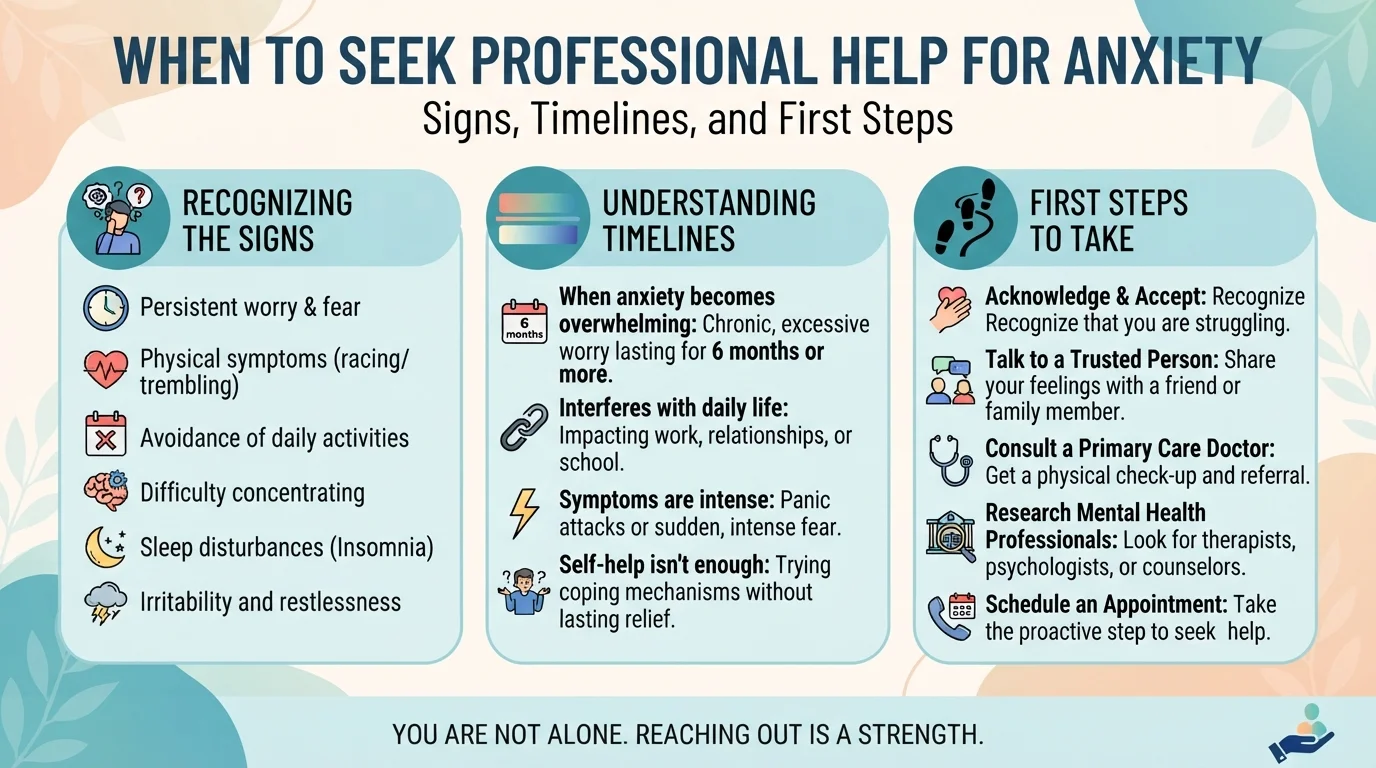
When to Seek Professional Help for Anxiety: Signs, Timelines, and First Steps
Anxiety (anxious distress) is the body's alarm response to a perceived threat, marked by worry, muscle tension, and a faster...