
You’re sitting in a meeting, and someone’s tone of voice suddenly makes your heart race. You’re watching a movie, and a specific scene makes your chest tighten for reasons you can’t quite explain. You walk into a room that smells like your childhood home, and suddenly you’re flooded with anxiety—or maybe you feel inexplicably safe.
What’s happening in these moments isn’t random, and it’s not all in your head. Your body is speaking a language you might not fully understand yet—the language of stored stress.
Have you ever wondered why your body remembers a traumatic event even when your mind has moved on? Or why certain situations trigger physical reactions—racing heart, sweaty palms, muscle tension—before you even consciously register what’s happening? Maybe you’ve noticed that no matter how much you try to “think positively” or “just relax,” your body seems stuck in a loop of tension, anxiety, or emotional overwhelm.
Here’s the truth that changes everything: Your nervous system isn’t broken. It’s actually doing exactly what it was designed to do—protect you based on everything you’ve experienced. The problem is, it sometimes keeps protecting you from threats that no longer exist, running an outdated security program that exhausts you and limits your life.
The good news? Understanding how your nervous system stores stress isn’t just fascinating neuroscience—it’s the roadmap to genuine healing and freedom. And that’s exactly where Dialectical Behavior Therapy (DBT) comes in, offering practical, body-based tools to work with your nervous system rather than against it.
At IGOTU CORP, we’ve seen countless individuals transform their relationship with stress, anxiety, and overwhelming emotions by learning to work with their nervous system instead of fighting it. This article will walk you through the science of how stress gets stored in your body and, more importantly, how you can release it and reclaim your sense of safety and calm.
Let’s dive into what’s really happening beneath the surface—and how you can start your journey toward regulation and healing today.
How your Nervous System Stores Stress?
Think of your nervous system as your body’s personal security team, constantly scanning for threats and deciding how to respond. But unlike a simple on-off switch, your nervous system operates more like a sophisticated three-tier response system.
The Three-State System
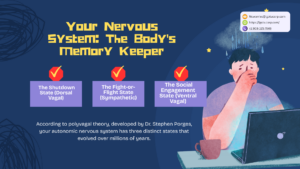
According to polyvagal theory, developed by Dr. Stephen Porges, your autonomic nervous system has three distinct states that evolved over millions of years:
- The Social Engagement State (Ventral Vagal) This is your “safe and connected” mode. When you’re in this state, your body hums along smoothly—your heart rate is steady, digestion works properly, and you can connect with others easily. Your face is expressive, your voice has natural intonation, and you’re able to think clearly and creatively. This is where healing happens.
- The Fight-or-Flight State (Sympathetic) When your nervous system detects danger, it shifts into this mobilization mode. Your heart races, breathing quickens, muscles tense, and blood flow increases to your limbs. You’re ready to either confront the threat or run from it. While this response is essential for survival, it’s not meant to be a permanent state.
- The Shutdown State (Dorsal Vagal) If the threat feels overwhelming or inescapable, your nervous system may shift into this most primitive response—shutdown or freeze. Heart rate drops, you feel numb or disconnected, energy plummets, and you might dissociate from the present moment. This is your body’s last-ditch survival strategy.
The problem? Your nervous system doesn’t always distinguish between a genuine threat (like a car about to hit you) and a perceived threat (like a difficult conversation with your boss). And when you’ve experienced trauma or chronic stress, your system can get stuck in these defensive states, constantly perceiving danger even when you’re safe.
How Stress Gets “Stuck” in Your Body
Here’s where things get really interesting—and a bit unsettling. Stress isn’t just something you experience emotionally; it’s physically encoded in your nervous system and body tissues.
Somatic Memory: When Your Body Remembers
Research has shown that traumatic experiences are stored not just as narrative memories in your brain, but as what’s called “somatic memories” or “body memories.” These are implicit memories—you can’t consciously recall them like you would remember what you had for breakfast, but your body responds to them automatically.
For example, someone who experienced a car accident might feel their chest tighten and heart race when they hear a car horn, even years later. A person who experienced childhood trauma might feel nausea or muscle tension in certain social situations without understanding why. The body is responding to stored patterns from the past, treating the present moment as if the original threat is still happening.
This happens because during a traumatic or highly stressful event, your nervous system goes into overdrive. Stress hormones flood your system, your muscles brace for impact, and your breathing changes. If you can’t complete the natural defensive response—if you can’t fight, flee, or the threat just goes on too long—that activated energy can remain stored in your body.
Think of it like this: your nervous system pressed the gas pedal hard, but never got to hit the brakes. The engine is still revving.
The Neuroception Problem
Dr. Porges introduced the concept of “neuroception”—your nervous system’s unconscious ability to detect safety or danger. This happens below the level of conscious awareness, which means your body might be reacting to cues you don’t even consciously notice.
When chronic stress or trauma has dysregulated your nervous system, your neuroception can become overly sensitive. Your alarm system develops a hair trigger. Neutral facial expressions might be interpreted as threatening. Low-frequency sounds might trigger anxiety. A perfectly safe situation might activate a full-blown stress response.
This isn’t a character flaw or something you’re doing wrong—it’s your nervous system trying to protect you based on past experiences. But it can make daily life exhausting and overwhelming.
How DBT Helps?
This is where Dialectical Behavior Therapy becomes a game-changer. Developed by Dr. Marsha Linehan in the 1980s, DBT was originally designed to help people experiencing intense emotions and self-destructive behaviors, particularly those with borderline personality disorder. But its effectiveness extends far beyond that.
DBT recognizes something crucial: you can’t just “think” your way out of a dysregulated nervous system. You need body-based strategies that work at the physiological level.
The DBT Approach to Nervous System Regulation
At its core, DBT helps you develop four key skill sets, several of which directly target nervous system regulation:
- Mindfulness: Tuning Into Your Body Mindfulness in DBT isn’t just about meditation (though that can help). It’s about developing awareness of what’s happening in your body right now. When you can notice “my chest is tight” or “my jaw is clenched” without judgment, you’re developing the interoceptive awareness needed to catch stress responses early.
This matters because you can’t regulate what you can’t detect. Mindfulness helps you recognize when you’re shifting out of that safe, social engagement state before you’re completely overwhelmed.
- Distress Tolerance: Immediate Nervous System Relief These are your crisis tools—techniques to rapidly shift your nervous system when emotions become overwhelming. The most well-known is the TIPP skill:
- Temperature: Cold water or ice on your face activates the “dive reflex,” which slows your heart rate and activates your parasympathetic (calming) nervous system. It’s like hitting a reset button.
- Intense Exercise: A burst of physical activity (jumping jacks, running in place, dancing) helps discharge the mobilized energy that builds up during stress. Remember, your body prepared for action—giving it that action helps complete the cycle.
- Paced Breathing: Slow, deliberate breathing, especially with longer exhales, directly signals your nervous system to calm down. When you breathe in for 4, hold for 6, and exhale for 8, you’re manually engaging the parasympathetic brake.
- Paired Muscle Relaxation: Tensing and releasing muscle groups helps release stored tension and brings awareness to where you’re holding stress.
These aren’t just feel-good exercises—they’re physiological interventions that work with your body’s built-in regulation systems.
- Emotion Regulation: Understanding the Body-Emotion Connection DBT teaches you to recognize how emotions show up in your body. Anger might feel like heat rising in your chest. Anxiety might manifest as butterflies in your stomach or tension in your shoulders. Shame might feel like heaviness or the urge to make yourself small.
By identifying these physical signatures, you can:
- Catch emotions early before they escalate
- Choose appropriate regulation strategies
- Reduce your vulnerability to emotional overwhelm through lifestyle choices (sleep, nutrition, exercise)
The emotion regulation module also teaches you to work with emotions rather than trying to suppress them, which often backfires and keeps your nervous system in a state of tension.
- Interpersonal Effectiveness: Safe Connection Remember that social engagement state we talked about? One of the best ways to regulate your nervous system is through safe, positive connection with others. DBT’s interpersonal skills help you communicate effectively, maintain relationships, and set boundaries—all of which contribute to feeling safer and more regulated.
When you can express your needs clearly and maintain your self-respect while relating to others, your nervous system receives the message: “It’s safe here. We can connect.”
What is the Neuroscience Behind DBT
Research has shown that DBT actually changes your brain. Regular practice of DBT skills creates new neural pathways, particularly in areas responsible for emotional regulation. Studies have found alterations in the prefrontal cortex (involved in decision-making and emotional control), the amygdala (your threat detection center), and the insula (involved in interoceptive awareness).
Essentially, DBT helps rewire the neural circuitry that keeps you stuck in defensive states, making it easier to access that calm, connected state where healing happens.
The Dialectic: Acceptance AND Change
One of DBT’s most powerful elements is right there in the name: dialectical. This means holding two seemingly opposite things as true at the same time.
You need to accept yourself and your nervous system exactly as they are right now—recognizing that your responses make sense given your history. Your body isn’t broken; it’s doing what it learned to do to survive.
AND you can change. You can develop new patterns, teach your nervous system new responses, and create more flexibility in how you navigate the world.
This both/and approach prevents the shame spiral that often comes with mental health struggles. You’re not being told you’re wrong or bad for how your nervous system responds. Instead, you’re learning new skills while honoring the protective strategies that got you this far.
Practical Integration: Daily Nervous System Care
The beauty of DBT is that these skills aren’t just for crisis moments—they’re preventative maintenance for your nervous system. Here’s how you might integrate them into daily life:
Morning: Start with a brief body scan. Notice where you’re holding tension without trying to change it. Take three slow breaths. This sets the tone for nervous system awareness throughout the day.
Throughout the day: Check in with your body periodically. Are you in that safe, social engagement state? If you notice activation building, use a quick regulation skill before you tip into overwhelm.
When triggered: Use TIPP or another distress tolerance skill. The goal isn’t to never feel stressed—it’s to have tools to navigate stress when it arises.
Evening: Process your day. What situations felt safe? Which activated your nervous system? This isn’t about judgment—it’s about gathering data to understand your patterns.
Building safety: Actively cultivate experiences that activate your social engagement system. This might be time with supportive friends, petting a dog, listening to calming music, or spending time in nature.
The Path Forward
Understanding how your nervous system stores stress doesn’t erase past experiences, but it does offer something powerful: a roadmap for healing. When you recognize that your body’s responses are adaptive survival strategies rather than personal failings, shame loses its grip.
DBT provides the practical tools to work with your nervous system’s natural capacity for regulation and healing. It’s not about never experiencing stress—that’s neither possible nor desirable. It’s about developing the flexibility to move through stress responses and return to a regulated state.
Your nervous system has an incredible capacity for change and healing. With the right understanding and tools, those old patterns of stored stress can gradually shift. The alarm system can learn to distinguish between real threats and false alarms. The body can learn that it’s okay to let down its guard.
It takes practice, patience, and often support from a trained therapist. But it is possible. Your body’s wisdom, combined with these evidence-based skills, can help you move from survival mode to a life where you’re not just surviving but truly thriving.
Ready to Start Your Healing Journey with IGOTU CORP?
Understanding how your nervous system stores stress is the first step—but you don’t have to walk the path to regulation alone. At IGOTU CORP, we specialize in evidence-based approaches that honor both the science of nervous system healing and the uniqueness of your personal journey.
Our trained professionals understand that healing isn’t linear, and they’re equipped with the tools and compassion to meet you exactly where you are. Whether you’re dealing with past trauma, chronic stress, overwhelming emotions, or simply want to develop better regulation skills, we offer comprehensive support tailored to your specific needs.
What sets IGOTU CORP apart:
- Therapists trained in DBT and trauma-informed care
- Holistic approaches that integrate mind-body healing
- Individualized treatment plans that respect your pace
- A safe, non-judgmental space to explore and heal
- Practical skills you can use immediately in your daily life
Your nervous system has been working overtime to protect you. It’s time to give it—and yourself—the support needed to truly thrive. Taking the first step toward regulation and healing is an act of courage, and we’re here to support you every step of the way.
Contact IGOTU CORP today to learn more about our DBT programs and how we can help you work with your nervous system, not against it.
Frequently Asked Questions
1. How long does it take for DBT to help regulate a dysregulated nervous system?
The timeline varies significantly from person to person, but many people notice some improvement within the first few months of consistent DBT practice. Research shows that standard DBT programs typically run for about a year, and studies have documented meaningful improvements in controlling self-harmful behaviors and regulating emotions within this timeframe.
However, it’s important to understand that nervous system regulation isn’t a destination—it’s an ongoing practice. You might notice immediate relief from using distress tolerance skills like the TIPP technique during a crisis, while deeper changes in how your nervous system responds to stress develop gradually over months and years of practice.
Some factors that influence the timeline include:
- The severity and duration of past trauma or chronic stress
- How consistently you practice the skills
- Whether you’re working with a trained DBT therapist
- Your support system and living environment
- Other treatments or therapies you’re using alongside DBT
Think of it like building muscle at the gym—you might feel stronger after your first workout, but developing real strength takes consistent practice over time. The neural pathways that support nervous system regulation grow stronger with repetition.
2. Can I practice DBT skills on my own, or do I need a therapist?
Both approaches have value, though they serve different purposes. Many people benefit from learning DBT skills through self-study using workbooks, online courses, or apps. The skills themselves—mindfulness, distress tolerance techniques, emotion regulation strategies—can be learned and practiced independently, and even self-directed practice can provide meaningful relief.
However, the full DBT treatment package offers several components that are difficult to replicate alone:
- Individual therapy sessions where you work one-on-one with a therapist to apply skills to your specific situations and receive personalized guidance
- Skills training groups where you learn alongside others and practice skills in a supportive environment
- Phone coaching where you can reach out to your therapist during difficult moments in real life
- Therapist consultation teams that help ensure your therapist is providing the best possible care
If you’re dealing with complex trauma, severe emotional dysregulation, self-harm behaviors, or conditions like PTSD or borderline personality disorder, working with a trained DBT therapist is strongly recommended. They can help you navigate intense emotions safely and tailor interventions to your specific nervous system needs.
That said, self-study can be a great starting point or supplement to therapy. Many people use DBT skills they’ve learned independently between therapy sessions, or they start with self-study to see if DBT resonates with them before committing to formal treatment.
3. Is DBT only for people with borderline personality disorder, or can it help with other conditions?
While DBT was originally developed to treat borderline personality disorder (BPD), its applications have expanded dramatically. The reason DBT works for such a wide range of conditions is that many mental health challenges stem from difficulty regulating intense emotions and a dysregulated nervous system.
DBT has been proven effective for:
- Post-traumatic stress disorder (PTSD) and complex PTSD
- Depression, particularly treatment-resistant depression
- Anxiety disorders
- Substance use disorders
- Eating disorders, especially binge-eating disorder and bulimia
- Self-harm and suicidal behaviors
- Chronic pain conditions with emotional components
- Mood disorders
Beyond diagnosed conditions, DBT skills are valuable for anyone who:
- Experiences emotions very intensely
- Struggles with impulsive behaviors
- Has difficulty maintaining relationships
- Feels overwhelmed by stress frequently
- Wants to improve their emotional regulation
The nervous system regulation techniques in DBT work because they’re based on how the human nervous system functions—not on any specific diagnosis. Whether your nervous system dysregulation stems from trauma, chronic stress, genetics, or a combination of factors, the skills can help you develop greater flexibility and resilience.
Even people without diagnosed mental health conditions use DBT skills for personal growth, improving relationships, and managing everyday stress more effectively. The mindfulness practices, communication skills, and emotion regulation strategies are universally applicable tools for navigating life’s challenges.
The key is that DBT addresses a fundamental human need: learning to manage difficult emotions and stress in healthy ways while building a life that feels meaningful and worth living.
Recent Posts
Related Posts
Live Anywhere with Your Pet: Emotional Support Animal Letter California
Finding pet-friendly housing in California is challenging. With “no pets” policies dominating rental markets from San Francisco to San Diego,...
2026’s Checklist for Choosing the Best Depression Treatment Centers
Finding the right depression treatment center in 2026 feels less like a medical appointment and more like choosing a partner...

Get Your Emotional Support Animal Letter California Today (2026 Process)
If you’re struggling with anxiety, depression, PTSD, or other mental health challenges in California, an Emotional Support Animal (ESA) can provide invaluable...
Finding the Licensed Therapists in California and Online Options
Introduction: Why Finding the Right Therapist Matters Mental health is just as important as physical health, and more people in...

Evolution of the 8 Minute Rule Therapy: What’s Different Now
The 8 minute rule therapy has fundamentally shaped how physical therapists, occupational therapists, and speech-language pathologists bill for time-based services...