
IGotU Corp

online trauma therapy

Overcoming Trauma with Online Therapy: What You Need to Know?

February 13, 2025

Trauma therapy is a type of mental health treatment that can help you deal with the physical, emotional, and psychological effects of trauma. Trauma therapy is based on the understanding that negative experiences affect a person’s emotional and behavioral responses.

With trauma treatment, you can learn skills and strategies to understand negative experiences, learn to cope, and process negative emotions and memories connected to a traumatic event. This type of therapy is growing in popularity and has proven to be effective in decreasing troubling symptoms.

Online trauma therapy can help you heal from painful experiences. Continue reading to learn how Online Trauma Counselling can change your life by supporting your recovery and fostering personal growth.

What Is Trauma?

Trauma is an emotional response to a shocking or distressing event. Common causes of trauma include the following:

  • Sexual, physical, and emotional abuse
  • Violence
  • Neglect
  • Grief
  • Illnesses
  • Accidents
  • Natural disasters

Trauma can impact anyone, including children. According to the National Child Traumatic Stress Network, approximately 25% of children will experience a traumatic event before age 16. It’s common for trauma to negatively affect people long after the event occurred. About 4% of children eventually develop post-traumatic stress disorder (PTSD), which involves frequent thoughts and flashbacks about the traumatic event.

Symptoms of Trauma:

The symptoms of trauma experienced by survivors can vary from person to person; even individuals who experience the same traumatic event can have differing symptoms. Common trauma symptoms include flashbacks, nightmares, or distress when something reminds of traumatic events. You might feel emotionally numb, notice less interest in activities, or feel detached from reality.

Some trauma survivors feel irritable, have difficulty sleeping and concentrating, or engage in reckless behaviors. There might be a strong desire to avoid feelings, thoughts, or situations that remind you of the traumatic experience.

Emotional Trauma Symptoms:

Trauma-related symptoms are separated into two main categories: emotional and physical.

Emotional symptoms can include the following:

  • Shock, denial, or disbelief
  • Confusion, disorientation, or difficulty concentrating
  • Anger, irritability, mood swings, emotional outbursts
  • Anxiety and fear
  • Guilt, shame, self-blame
  • Withdrawing from others
  • Feeling sad or hopeless
  • Feeling disconnected from others or emotionally numb
  • Intrusive thoughts of the traumatic event occurring unexpectedly
  • Nightmares or flashbacks
  • Visual images of the event play repeatedly
  • Loss of memory
  • Depression
  • Emotional shock or disbelief

Trauma survivors might redirect inexplicable strong feelings toward loved ones such as friends, family members, others, or even toward themselves.

Physical Trauma Symptoms:

Along with strong emotional symptoms, you might feel physical symptoms related to traumatic experiences.

Physical symptoms can include the following:

  • Extreme fatigue and exhaustion, lethargy
  • Paleness
  • Poor concentration
  • Increased heart rate or racing pulse
  • Diaphoresis (sweating)
  • Panic attacks
  • Anxiety
  • Difficulty coping in certain situations that bring the traumatic event to mind
  • Easily startled
  • Edginess
  • Insomnia
  • Chronic muscle spasms
  • Sexual dysfunction
  • Changes in sleeping and eating patterns
  • Vague complaints of aches and pains throughout the body or chronic pain
  • Extreme alertness; always on the lookout for warnings of potential danger

Physical trauma symptoms can present similar to a physical injury or illness.

What Is Online Trauma Therapy?

When trauma develops into PTSD, there are often serious effects on mental health. For example, up to 40% of PTSD patients also have alcohol use disorder. About 50% of patients experience major depression. Fortunately, early intervention can help reduce the risk of social and emotional effects, especially in children.

To treat trauma, many people begin online trauma therapy. Put simply, trauma-focused therapy explores the link between a traumatic event and its physical, mental, and emotional repercussions. By working with a specialist, patients learn how to process emotions and cope with traumatic memories. The ultimate goal is to help patients deal with trauma in a healthy way and avoid becoming traumatized again.

While Virtual Trauma Therapy is often associated with in-person sessions, more and more people are relying on Online Trauma Counselling, which includes messaging, phone calls, and video chats. In last year, almost 60% of therapy patients opted for online treatment. Not only does online therapy allow patients to access mental health support from the comfort of their homes, but it can also reduce anxiety. One clinical trial revealed that online PTSD treatment helped lower distress in patients and was ultimately effective in improving mental wellness.

Does Online Trauma Therapy Work?

Both EMDR and TF-CBT online therapies are effective treatments that aim to lessen the impact the trauma has on mental wellbeing. In a recent study, participants who experience PTSD symptoms received 7 sessions of either TF-CBT or EMDR therapy. At a one-month follow-up, it was found that their anxiety was reduced by 30% and trauma-related symptoms by 55%.

Patients treated with online trauma therapy report fewer negative feelings associated with the upsetting memory, relieve trauma less, and have an improved quality of life.

How Long Does Online Trauma Therapy Last?

The length of the Virtual Trauma Therapy will depend on your individual symptoms, circumstances and how well you respond to treatment. In general, you can expect TF-CBT to last for approximately 12-15 sessions and EMDR about 3 to 12 sessions.

What Are the Advantages of Online Trauma Therapy?

Online therapy is as effective as in-person therapy and offers a range of benefits that will help you overcome trauma-related symptoms. Additionally, the online nature of the therapy has the following advantages:

Convenience:

Online therapies are more convenient than face-to-face therapies. If you decide to attend therapy online, you won’t have to waste time on getting to your therapist’s office or worry about making it on time. You’ll also be more likely to find a time that suits your needs the most.

Accessibility:

Online Trauma Counselling allows you to choose a Trauma Therapist Online that best suits your needs and preferences even if you don’t live in close proximity. It’s also a great solution for those with disabilities that make it difficult to travel to therapy sessions.

Familiarity:

The prospect of attending therapy in an unfamiliar environment might be anxiety-producing. In those cases, online therapy might be a better option as it allows you to stay in a place you feel most secure at.

Affordability:

Doing Online Trauma Therapy means less commuting, which in turns is likely to reduce the overall costs (e.g., commuting) associated with your therapy.

At I Got U Corp, we have qualified Trauma Therapist Online that specialize in online trauma therapies. Contact us for a consultation to see if our help would fit your needs.

Related Posts

Depression Center

What to Expect During Your First 7 Days at a Depression Center

The night before you start treatment can feel strange. Part of you is relieved that help is finally coming. Another...

How to Protect Your Mental Health Without Sacrificing Your Career

How to Protect Your Mental Health Without Sacrificing Your Career

It is Sunday evening and your stomach is already tight. You are replying to emails you will see again in...

How to Find a Licensed Male Therapist in California (Online & In-Person)

How to Find a Licensed Male Therapist in California

Plenty of people know the moment they decide they want therapy. Fewer people know what to type into the search...
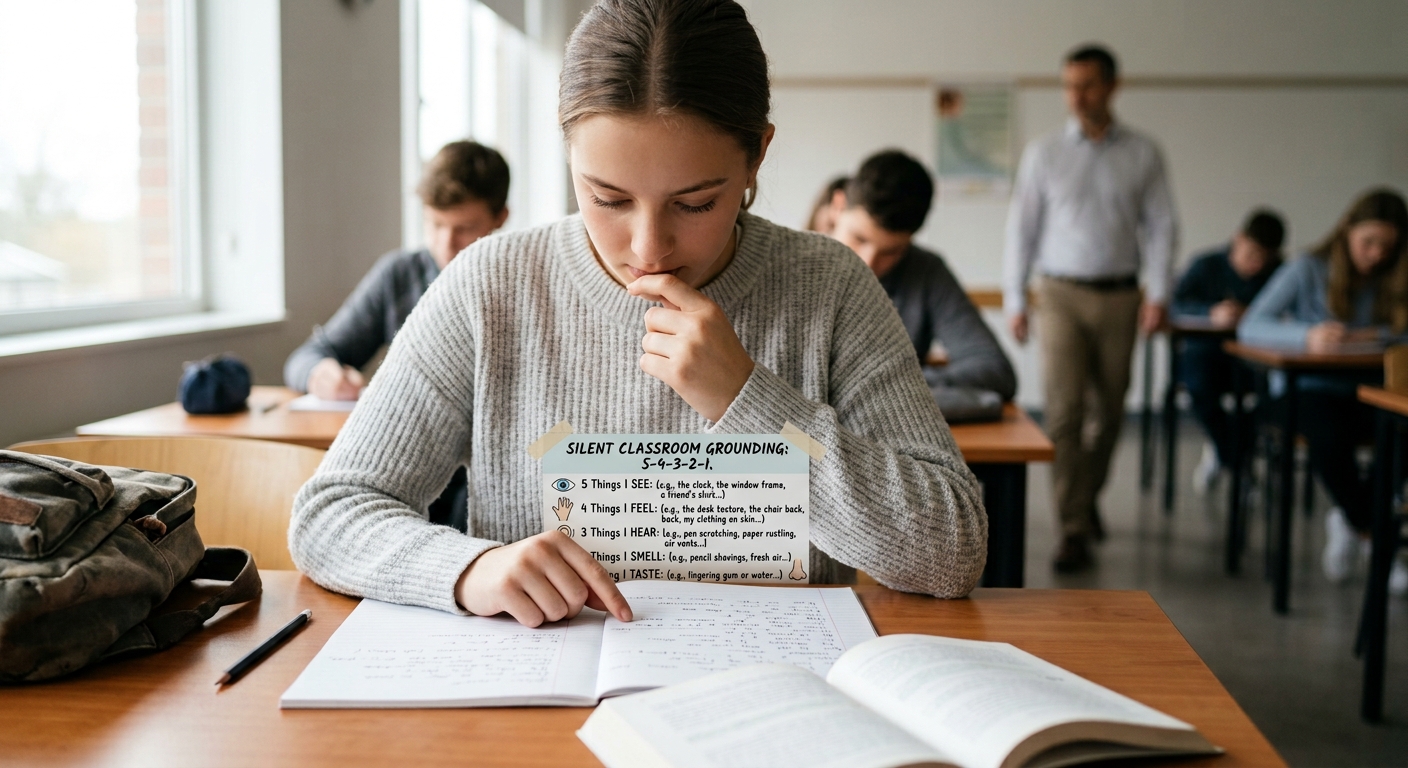
How to Do the 5-4-3-2-1 Technique Silently in Class Your heart starts pounding right when the teacher says “pop quiz.” Or you get called on and your mind goes blank. Or the room feels too loud, too bright and too small all at once. If you have ever felt that way at your desk, you know the worst part is that you cannot just stand up and walk out. Everyone would notice. The good news is that you can calm your body down right where you sit, and nobody has to know. The 5-4-3-2-1 technique is one of the easiest grounding tools out there, and it works with no sound and no movement. This guide shows you exactly how to do it silently in a classroom, how long it takes and what to do when things are not going smoothly. What Is the 5-4-3-2-1 Technique? The 5-4-3-2-1 technique is a grounding exercise that pulls your attention away from racing thoughts and back to the present moment through your five senses. You notice: 5 things you can see 4 things you can feel 3 things you can hear 2 things you can smell 1 thing you can taste Counselors, therapists and school psychologists use it with kids, teens and adults who deal with anxiety, panic or overwhelming stress. It takes about two minutes, it costs nothing and you do not need any equipment. Why Does the 5-4-3-2-1 Technique Work? When you feel anxious, your brain shifts into alert mode. Your breathing gets quick and shallow, your muscles tighten and your thoughts jump ahead to everything that could go wrong. Your mind is living in the future, and your body is reacting as if the danger is already here. Grounding gives your brain a different job. Finding five objects, noticing textures and listening for faint sounds takes real mental effort. Your attention has limited room, so when it fills up with sensory detail, there is less space left for spiraling thoughts. Many therapists describe this as bringing yourself back to the here and now. It also tells your body something simple. Right now, in this room, you are safe. That message helps your breathing slow and your shoulders drop. Why Do It Silently in a Classroom? At home you could say each item out loud, and many guides suggest that. A classroom is different. Talking would interrupt the lesson, draw attention to you and maybe make the anxious feeling worse. The silent version keeps all the benefits. You do the exact same steps inside your head. Nobody sees a thing, and you can use it during a lecture, a test, a presentation or a group discussion. It works at your desk, in the hallway between classes or in the lunchroom. How Do You Do the 5-4-3-2-1 Technique Silently? Step by Step Before you begin, sit comfortably. Put both feet on the floor. If you can, take one slow breath in through your nose and let it out gently. Nobody can see a calm breath, so this part is safe to do in class. Step 1: Find 5 Things You Can See Let your eyes move slowly around the room and pick out five objects. Do not just glance. Really look at each one and name it quietly in your mind with a small detail added. For example, you might think “blue marker on the whiteboard tray,” “a crack in the ceiling tile,” “the clock with the red second hand,” “a green backpack on the floor” and “the pencil mark on my desk.” Adding a detail like color, shape or size makes your brain work a little harder, and that is the whole point. You are giving your mind something specific to hold on to. Step 2: Find 4 Things You Can Feel Now shift your attention to your body and to what your body is touching. You can do this without moving much at all. Notice four things like these. Your feet pressing against the floor inside your shoes The chair holding up your back The surface of the desk under your forearms or hands The fabric of your sleeve or pants against your skin If you want a stronger sensation and can do it discreetly, press your fingertips together under the desk or rest your palm flat on your knee. Notice whether things feel warm, cool, rough, smooth, soft or hard. Step 3: Find 3 Things You Can Hear Close your eyes if that feels okay, or just soften your gaze toward your desk. Listen carefully and pick out three sounds. Start with the loud ones and then try to find quieter ones underneath. In a classroom you might hear the teacher’s voice, a pencil scratching, the hum of the lights or the air conditioner, a cough two rows over or footsteps in the hallway. Try to name each sound inside your head. Sometimes you will notice sounds that were there the whole time and you were just too stressed to hear them. Step 4: Find 2 Things You Can Smell This one can feel tricky in class, and that is okay. Breathe in gently through your nose and see what you notice. Maybe it is the dry-erase markers, the paper in your notebook, your hoodie, the eraser or a trace of someone’s lunch. If you cannot smell anything, that is fine. Just think of two smells you like. Fresh bread, rain on the ground, your favorite shampoo or the inside of a new book all count. Your brain responds to remembered smells almost the same way it responds to real ones. A small tip is to keep something with a pleasant scent in your bag. A bit of lip balm, a scented hand lotion or a mint in your pocket gives you something real to smell without anyone paying attention. Step 5: Find 1 Thing You Can Taste Pay attention to the inside of your mouth. You may notice the taste of your toothpaste from this morning, your last drink or just the plain taste of your mouth. If you are allowed to have a snack or water, a small sip or a mint can be your one taste. If not, you can imagine a flavor you love. Picture the first bite of your favorite food and let yourself taste it in your mind. Finish With One Slow Breath When you reach the end, take one more slow breath in and out. Then check in with yourself. Is your heartbeat a little slower? Are your shoulders lower? Is your jaw a little looser? You do not have to feel perfect. Even a small shift means the exercise worked. Can You Use Your Fingers to Count Silently? Yes, and many students find this makes the exercise easier to follow. Rest your hand on your lap or on your leg where it is not noticeable. As you find each item, press one finger down against your thumb or your leg. Start with five fingers up for the five things you see and fold one finger down as you spot each object. Then repeat with four fingers for the next sense and so on. The counting gives your hands something to do and keeps you from losing your place if your mind wanders. What Is a Quick Version of the 5-4-3-2-1 Technique? Sometimes you only have thirty seconds. Maybe the teacher is about to call on you or the test papers are being handed out. Here is a short version that still works. Name three things you can see Name two things you can feel Name one thing you can hear You can also do a one-sense version. Choose a single sense and go deep. For example, spend one full minute looking for details in a single object, like a poster on the wall. Notice every color, every letter and every shadow. Short versions are not as strong as the full exercise, but they can take the edge off when time is tight. When Should Students Use the Silent 5-4-3-2-1 Technique? Think of this as a tool you can reach for at any time. Some moments where it helps a lot include these. Right before a test starts or when you feel stuck partway through When you are waiting to give a presentation When you are called on and your mind goes blank After getting upsetting news or a harsh comment When the room is loud and feels overwhelming During a panic or strong anxiety wave When your thoughts keep looping about something at home or with friends It also helps to practice when you feel fine. If you try it at home a few times, it becomes familiar. Then when you really need it in class, your brain already knows the steps and you do not have to think about how. How Can Teachers Support Silent Grounding in the Classroom? Teachers play a big part in making this tool easy to use. A few simple habits make a real difference. Teach it to the whole class. When everyone learns the technique at the same time, no single student feels singled out. It becomes a normal classroom skill, like taking a deep breath before a test. Offer a silent signal. Some classrooms use a small card on the desk or a hand gesture that tells the teacher “I need a minute.” The student can then ground themselves without having to explain anything. Put a poster on the wall. A simple chart that lists the five senses and the numbers gives students a visual reminder. They can glance at it without anyone knowing why. Build in short calm moments. A one minute grounding break before an exam or after a noisy activity helps the whole room settle down. Respect privacy. If a student is using the technique, let them. Do not call attention to it or ask them to explain in front of peers. What Mistakes Should You Avoid? A few common things can make the exercise feel harder than it needs to be. Rushing. The technique works best at a slow pace. Give yourself a few seconds on each item instead of racing through the list. Being too hard on yourself. If your mind wanders, that is normal. Just come back to where you were without any self-criticism. Forcing it. Some days the exercise will feel great and other days it will feel plain. Both are fine. The more you practice, the more reliable it becomes. Expecting it to fix everything. Grounding helps you through a hard moment. It does not replace help from a counselor, a doctor or a trusted adult if anxiety is a regular struggle for you. Frequently Asked Questions How long does the 5-4-3-2-1 technique take? The full version takes about two to five minutes depending on how slowly you go. A short version can take less than a minute. Can I do the 5-4-3-2-1 technique during an exam? Yes. Because it is silent and still, it will not disturb anyone. Many students use it right at the start of a test to settle their nerves, or in the middle if they freeze up. What if I cannot smell or taste anything? That happens often, and it is completely fine. Think of smells and tastes you enjoy and imagine them as clearly as you can. Your brain still gets the benefit. Does the 5-4-3-2-1 technique work for panic attacks? Many people find it helpful during panic because it pulls attention away from fear and toward the surroundings. It may not stop a panic attack completely, but it can make the wave feel smaller. If you have frequent panic attacks, please talk to a doctor or counselor. Is the technique safe for kids? Yes. It is simple, gentle and has no side effects. School counselors often teach it to children as young as six or seven using simple language and pictures. Should I practice it before I need it? Yes. Practicing when you feel calm builds the habit, so the steps come easily when you are stressed. What if it does not work for me? Not every tool fits every person. You can try other grounding methods like slow breathing, pressing your feet into the floor or holding a small object in your pocket. If nothing seems to help and your worry affects school or sleep, reach out to a school counselor or healthcare provider. Final Thoughts You do not need a quiet room, a special place or any permission to calm your mind. With a little practice, the 5-4-3-2-1 technique fits into the small gaps of a school day. A few slow looks around the room, a few moments of noticing your body and a couple of quiet breaths can change how the next hour feels. Try it once this week while you feel fine. Then you will have it ready the next time your heart starts racing in the middle of class.

How to Do the 5-4-3-2-1 Technique Silently in Class

Learn how to manage anxiety discreetly during class using the simple and effective 5-4-3-2-1 grounding technique in this article. Exclusive...
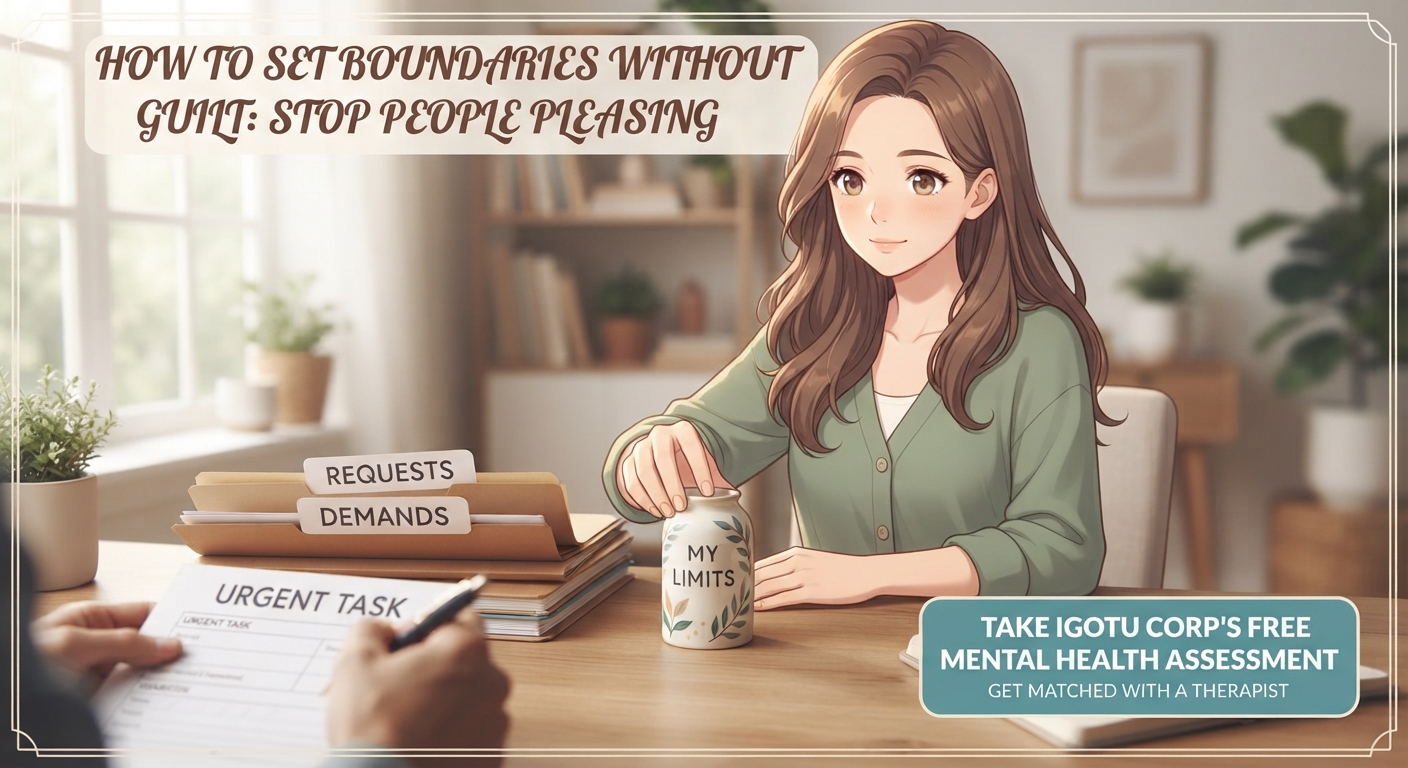
how to set boundaries without guilt

How to Set Boundaries Without Guilt: Stop People Pleasing

You said yes again. You knew while the words were leaving your mouth that you did not want to say...