
IGotU Corp

Individual Relationship Counseling

Power of Individual Relationship Counseling: Heal, Grow, and Thrive

February 13, 2025

Dating and relationships in today’s world can often feel confusing and overwhelming. Individual relationship counseling can give you the space, time and freedom to explore the effects and understand the implications of dealing with the modern approach to dating.

What is individual relationship counseling?

Relationship Counseling does not have to mean couples counseling – having individual counseling for relationships can benefit us as individuals and benefit us within our relationships, both romantic and non-romantic.  With the help of a qualified counselor, you can gain insight into your personal relationship issues, such as how to build trust, communication and respect, how to negotiate conflict, and how to discover and create healthy boundaries. Individual relationship counseling can help you to understand yourself and the other person better and find ways to resolve issues and move forward.

Why consider individual relationship therapy?

If you are struggling in your relationships, either romantic or other, therapy for relationship issues can help you understand in depth what it is that you are struggling with and ways in which to address this.

Individual relationship therapy can help you to understand your partner or family member more, work through issues that are causing tension and conflict, learn better communication and problem-solving skills, and build stronger and healthier relationships. It can also help to identify any underlying issues that may be causing difficulties and address them in a safe and supportive environment.

Having a safe space, to be honest, and vulnerable to explore these concerns can be incredibly healing. It can help to rebuild trust, understanding, and communication, and develop your confidence and understanding of yourself in relationships. Ultimately, it can help you to create more positive, healthy, and fulfilling relationships.

How does individual relationship counseling work?

Individual relationship counseling offers you a safe space to explore your relationships in depth, to better understand your own emotional processes and help you understand any insecurities and anxieties you may have.  It can help you to identify patterns of behaviour in your relationships and develop strategies to communicate more effectively and resolve conflicts. It can also help to increase your self-awareness and understanding of how you interact with others in relationships.

Therapy can even save your relationships. Therapy will help you understand your relationships better, and help you find ways to cope with aspects of your relationship that you may be struggling with. Through therapy for relationship issues, individuals can learn to recognize patterns of behaviour and communicate more effectively. It can provide a safe space to talk about difficult topics and can help you to develop skills for resolving conflicts. Individual Relationship Counseling can also help you establish if the best course of action would be to end the relationship, and can help you navigate this process.

It can also help identify when a relationship is too broken, and the best course of action. Counseling can help you to communicate better, establish healthy boundaries, and resolve conflicts. It can also help you to get to the root of the issues that have been causing the relationship to suffer, and help you to learn how to better handle those issues in the future. Being able to be vulnerable, and completely open and honest about these things in a safe and nurturing environment can be hugely healing.

Can a counselor give relationship advice?

The role of your counselor is not to give advice about your relationship, but help you to explore and understand it better. Your counselor will help you to explore your feelings, beliefs and behaviours within the relationship, to gain a better understanding of your situation and the choices you have.  This can help you to develop a deeper understanding of your relationship and make decisions that are right for you. Throughout this process, you will become more aware of what you need and require in a relationship and how to address this if you feel you are not getting what you need.

Power of Individual Relationship Counseling:

Emotional Support and Safe Space:

Individual Relationship Counseling provides a haven to express your feelings openly without fear of judgment. Your therapist becomes a trusted companion on your journey, offering empathy, understanding, and a listening ear. This emotional support is like a sturdy bridge, helping you traverse the turbulent waters of your emotions and providing stability in times of uncertainty.

Fostering Self-Awareness:

Self-awareness is a cornerstone of healthy relationships. Individual relationship therapy for relationship problems is a space for deep introspection. You gain insights into your behaviors, thoughts, and emotions through guided conversations. This newfound self-awareness is akin to holding a mirror to your soul, allowing you to recognize patterns and triggers that may negatively impact your relationships. With this knowledge, you can make conscious choices to change and grow.

Improved Communication and Conflict Resolution Skills:

One of the most significant benefits of individual therapy for relationship issues is enhancing your communication and conflict resolution skills. Your therapist helps you hone your ability to express yourself clearly and authentically. You’ll also learn strategies to navigate conflicts constructively. This newfound skill set equips you with the tools needed to defuse tensions and foster more harmonious interactions with your loved ones.

Addressing Underlying Personal Issues:

Relationship issues often have roots in personal struggles. Individual therapy for relationship problems digs deep to unearth these underlying issues. Whether it’s past trauma, unresolved emotional baggage, or insecurities, your therapist assists you in addressing these core issues. By confronting and resolving these personal challenges, you pave the way for healthier, more fulfilling relationships. It’s like tending to the roots of a tree to ensure its growth and stability.

Conclusion:

Individual Relationship Counseling is also sometimes called interpersonal therapy. Interpersonal Therapy aims to improve the quality of your relationships. It helps to identify your patterns of behaviours within relationships and helps you navigate through challenges and difficulties that may come up. It is focused on helping you to develop more effective communication and problem-solving skills, as well as helping to address any unresolved issues from past relationships. It is a practical, focused and structured approach that can help to improve your relationships with others.

Related Posts

Depression Center

What to Expect During Your First 7 Days at a Depression Center

The night before you start treatment can feel strange. Part of you is relieved that help is finally coming. Another...

How to Protect Your Mental Health Without Sacrificing Your Career

How to Protect Your Mental Health Without Sacrificing Your Career

It is Sunday evening and your stomach is already tight. You are replying to emails you will see again in...

How to Find a Licensed Male Therapist in California (Online & In-Person)

How to Find a Licensed Male Therapist in California

Plenty of people know the moment they decide they want therapy. Fewer people know what to type into the search...
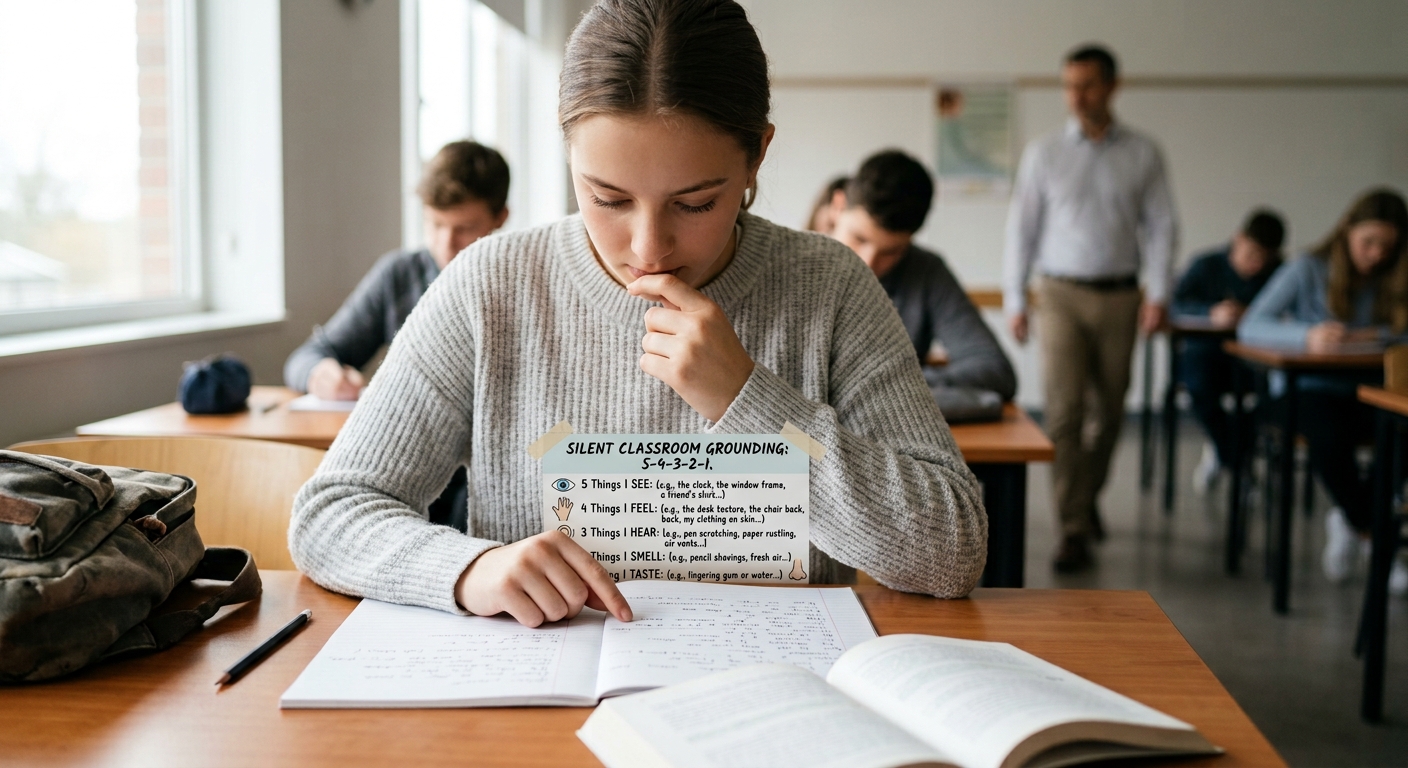
How to Do the 5-4-3-2-1 Technique Silently in Class Your heart starts pounding right when the teacher says “pop quiz.” Or you get called on and your mind goes blank. Or the room feels too loud, too bright and too small all at once. If you have ever felt that way at your desk, you know the worst part is that you cannot just stand up and walk out. Everyone would notice. The good news is that you can calm your body down right where you sit, and nobody has to know. The 5-4-3-2-1 technique is one of the easiest grounding tools out there, and it works with no sound and no movement. This guide shows you exactly how to do it silently in a classroom, how long it takes and what to do when things are not going smoothly. What Is the 5-4-3-2-1 Technique? The 5-4-3-2-1 technique is a grounding exercise that pulls your attention away from racing thoughts and back to the present moment through your five senses. You notice: 5 things you can see 4 things you can feel 3 things you can hear 2 things you can smell 1 thing you can taste Counselors, therapists and school psychologists use it with kids, teens and adults who deal with anxiety, panic or overwhelming stress. It takes about two minutes, it costs nothing and you do not need any equipment. Why Does the 5-4-3-2-1 Technique Work? When you feel anxious, your brain shifts into alert mode. Your breathing gets quick and shallow, your muscles tighten and your thoughts jump ahead to everything that could go wrong. Your mind is living in the future, and your body is reacting as if the danger is already here. Grounding gives your brain a different job. Finding five objects, noticing textures and listening for faint sounds takes real mental effort. Your attention has limited room, so when it fills up with sensory detail, there is less space left for spiraling thoughts. Many therapists describe this as bringing yourself back to the here and now. It also tells your body something simple. Right now, in this room, you are safe. That message helps your breathing slow and your shoulders drop. Why Do It Silently in a Classroom? At home you could say each item out loud, and many guides suggest that. A classroom is different. Talking would interrupt the lesson, draw attention to you and maybe make the anxious feeling worse. The silent version keeps all the benefits. You do the exact same steps inside your head. Nobody sees a thing, and you can use it during a lecture, a test, a presentation or a group discussion. It works at your desk, in the hallway between classes or in the lunchroom. How Do You Do the 5-4-3-2-1 Technique Silently? Step by Step Before you begin, sit comfortably. Put both feet on the floor. If you can, take one slow breath in through your nose and let it out gently. Nobody can see a calm breath, so this part is safe to do in class. Step 1: Find 5 Things You Can See Let your eyes move slowly around the room and pick out five objects. Do not just glance. Really look at each one and name it quietly in your mind with a small detail added. For example, you might think “blue marker on the whiteboard tray,” “a crack in the ceiling tile,” “the clock with the red second hand,” “a green backpack on the floor” and “the pencil mark on my desk.” Adding a detail like color, shape or size makes your brain work a little harder, and that is the whole point. You are giving your mind something specific to hold on to. Step 2: Find 4 Things You Can Feel Now shift your attention to your body and to what your body is touching. You can do this without moving much at all. Notice four things like these. Your feet pressing against the floor inside your shoes The chair holding up your back The surface of the desk under your forearms or hands The fabric of your sleeve or pants against your skin If you want a stronger sensation and can do it discreetly, press your fingertips together under the desk or rest your palm flat on your knee. Notice whether things feel warm, cool, rough, smooth, soft or hard. Step 3: Find 3 Things You Can Hear Close your eyes if that feels okay, or just soften your gaze toward your desk. Listen carefully and pick out three sounds. Start with the loud ones and then try to find quieter ones underneath. In a classroom you might hear the teacher’s voice, a pencil scratching, the hum of the lights or the air conditioner, a cough two rows over or footsteps in the hallway. Try to name each sound inside your head. Sometimes you will notice sounds that were there the whole time and you were just too stressed to hear them. Step 4: Find 2 Things You Can Smell This one can feel tricky in class, and that is okay. Breathe in gently through your nose and see what you notice. Maybe it is the dry-erase markers, the paper in your notebook, your hoodie, the eraser or a trace of someone’s lunch. If you cannot smell anything, that is fine. Just think of two smells you like. Fresh bread, rain on the ground, your favorite shampoo or the inside of a new book all count. Your brain responds to remembered smells almost the same way it responds to real ones. A small tip is to keep something with a pleasant scent in your bag. A bit of lip balm, a scented hand lotion or a mint in your pocket gives you something real to smell without anyone paying attention. Step 5: Find 1 Thing You Can Taste Pay attention to the inside of your mouth. You may notice the taste of your toothpaste from this morning, your last drink or just the plain taste of your mouth. If you are allowed to have a snack or water, a small sip or a mint can be your one taste. If not, you can imagine a flavor you love. Picture the first bite of your favorite food and let yourself taste it in your mind. Finish With One Slow Breath When you reach the end, take one more slow breath in and out. Then check in with yourself. Is your heartbeat a little slower? Are your shoulders lower? Is your jaw a little looser? You do not have to feel perfect. Even a small shift means the exercise worked. Can You Use Your Fingers to Count Silently? Yes, and many students find this makes the exercise easier to follow. Rest your hand on your lap or on your leg where it is not noticeable. As you find each item, press one finger down against your thumb or your leg. Start with five fingers up for the five things you see and fold one finger down as you spot each object. Then repeat with four fingers for the next sense and so on. The counting gives your hands something to do and keeps you from losing your place if your mind wanders. What Is a Quick Version of the 5-4-3-2-1 Technique? Sometimes you only have thirty seconds. Maybe the teacher is about to call on you or the test papers are being handed out. Here is a short version that still works. Name three things you can see Name two things you can feel Name one thing you can hear You can also do a one-sense version. Choose a single sense and go deep. For example, spend one full minute looking for details in a single object, like a poster on the wall. Notice every color, every letter and every shadow. Short versions are not as strong as the full exercise, but they can take the edge off when time is tight. When Should Students Use the Silent 5-4-3-2-1 Technique? Think of this as a tool you can reach for at any time. Some moments where it helps a lot include these. Right before a test starts or when you feel stuck partway through When you are waiting to give a presentation When you are called on and your mind goes blank After getting upsetting news or a harsh comment When the room is loud and feels overwhelming During a panic or strong anxiety wave When your thoughts keep looping about something at home or with friends It also helps to practice when you feel fine. If you try it at home a few times, it becomes familiar. Then when you really need it in class, your brain already knows the steps and you do not have to think about how. How Can Teachers Support Silent Grounding in the Classroom? Teachers play a big part in making this tool easy to use. A few simple habits make a real difference. Teach it to the whole class. When everyone learns the technique at the same time, no single student feels singled out. It becomes a normal classroom skill, like taking a deep breath before a test. Offer a silent signal. Some classrooms use a small card on the desk or a hand gesture that tells the teacher “I need a minute.” The student can then ground themselves without having to explain anything. Put a poster on the wall. A simple chart that lists the five senses and the numbers gives students a visual reminder. They can glance at it without anyone knowing why. Build in short calm moments. A one minute grounding break before an exam or after a noisy activity helps the whole room settle down. Respect privacy. If a student is using the technique, let them. Do not call attention to it or ask them to explain in front of peers. What Mistakes Should You Avoid? A few common things can make the exercise feel harder than it needs to be. Rushing. The technique works best at a slow pace. Give yourself a few seconds on each item instead of racing through the list. Being too hard on yourself. If your mind wanders, that is normal. Just come back to where you were without any self-criticism. Forcing it. Some days the exercise will feel great and other days it will feel plain. Both are fine. The more you practice, the more reliable it becomes. Expecting it to fix everything. Grounding helps you through a hard moment. It does not replace help from a counselor, a doctor or a trusted adult if anxiety is a regular struggle for you. Frequently Asked Questions How long does the 5-4-3-2-1 technique take? The full version takes about two to five minutes depending on how slowly you go. A short version can take less than a minute. Can I do the 5-4-3-2-1 technique during an exam? Yes. Because it is silent and still, it will not disturb anyone. Many students use it right at the start of a test to settle their nerves, or in the middle if they freeze up. What if I cannot smell or taste anything? That happens often, and it is completely fine. Think of smells and tastes you enjoy and imagine them as clearly as you can. Your brain still gets the benefit. Does the 5-4-3-2-1 technique work for panic attacks? Many people find it helpful during panic because it pulls attention away from fear and toward the surroundings. It may not stop a panic attack completely, but it can make the wave feel smaller. If you have frequent panic attacks, please talk to a doctor or counselor. Is the technique safe for kids? Yes. It is simple, gentle and has no side effects. School counselors often teach it to children as young as six or seven using simple language and pictures. Should I practice it before I need it? Yes. Practicing when you feel calm builds the habit, so the steps come easily when you are stressed. What if it does not work for me? Not every tool fits every person. You can try other grounding methods like slow breathing, pressing your feet into the floor or holding a small object in your pocket. If nothing seems to help and your worry affects school or sleep, reach out to a school counselor or healthcare provider. Final Thoughts You do not need a quiet room, a special place or any permission to calm your mind. With a little practice, the 5-4-3-2-1 technique fits into the small gaps of a school day. A few slow looks around the room, a few moments of noticing your body and a couple of quiet breaths can change how the next hour feels. Try it once this week while you feel fine. Then you will have it ready the next time your heart starts racing in the middle of class.

How to Do the 5-4-3-2-1 Technique Silently in Class

Learn how to manage anxiety discreetly during class using the simple and effective 5-4-3-2-1 grounding technique in this article. Exclusive...
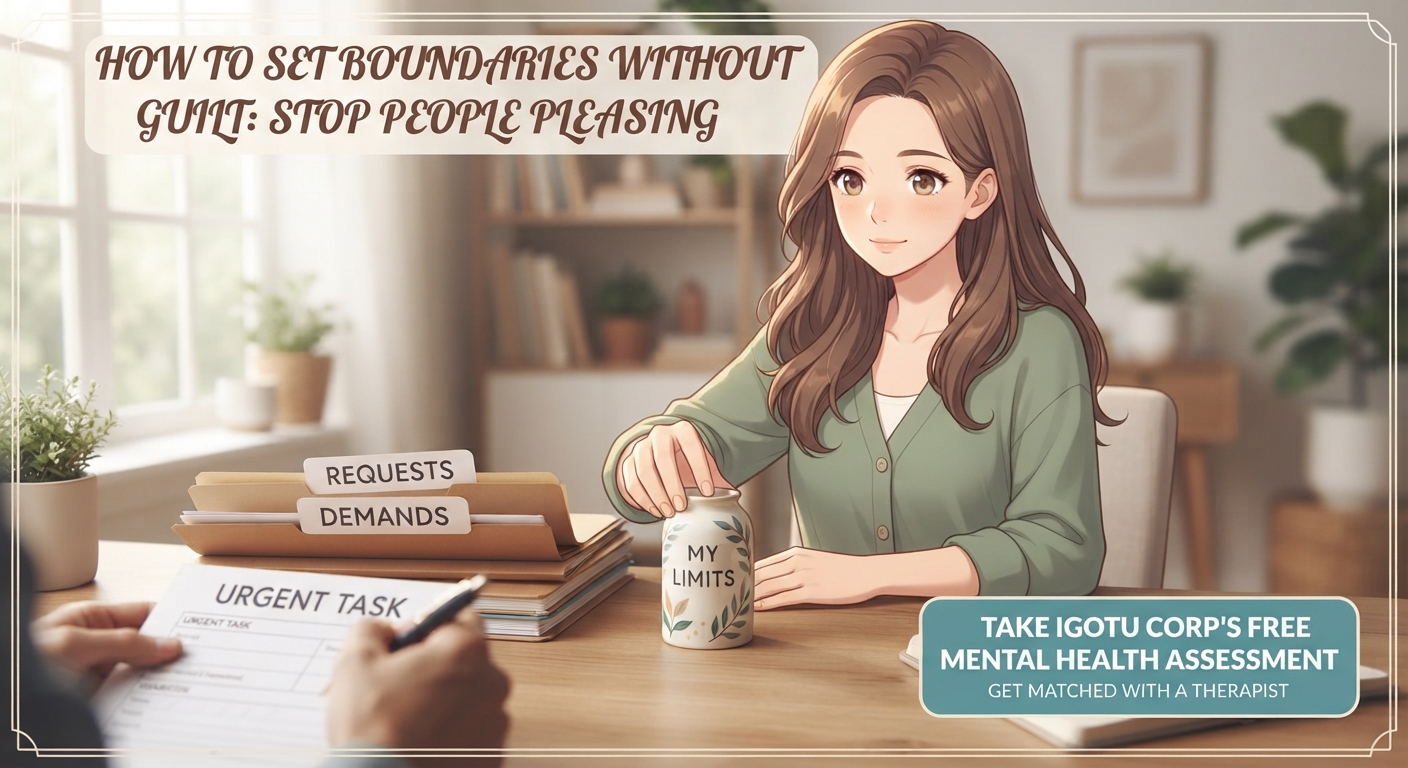
how to set boundaries without guilt

How to Set Boundaries Without Guilt: Stop People Pleasing

You said yes again. You knew while the words were leaving your mouth that you did not want to say...