
By Vincente Mozell, LCSW, MSHM – IGotU Corp
When sadness stays longer than you expect, it can leave you asking, “Why am I so sad? Nothing major even happened. Why does this feel so heavy?” I often begin sessions by saying, “Give me two words to ground us today,” because those two words help me understand the emotional temperature of what your system has been holding. Words like overwhelmed, tired, empty, or unsure show up often. The words are not the issue. It is the meaning you attach to them, the beliefs you learned growing up, and the parts of you that never felt seen.
Sadness is not random.
It has a job.
It has history.
It has a voice.
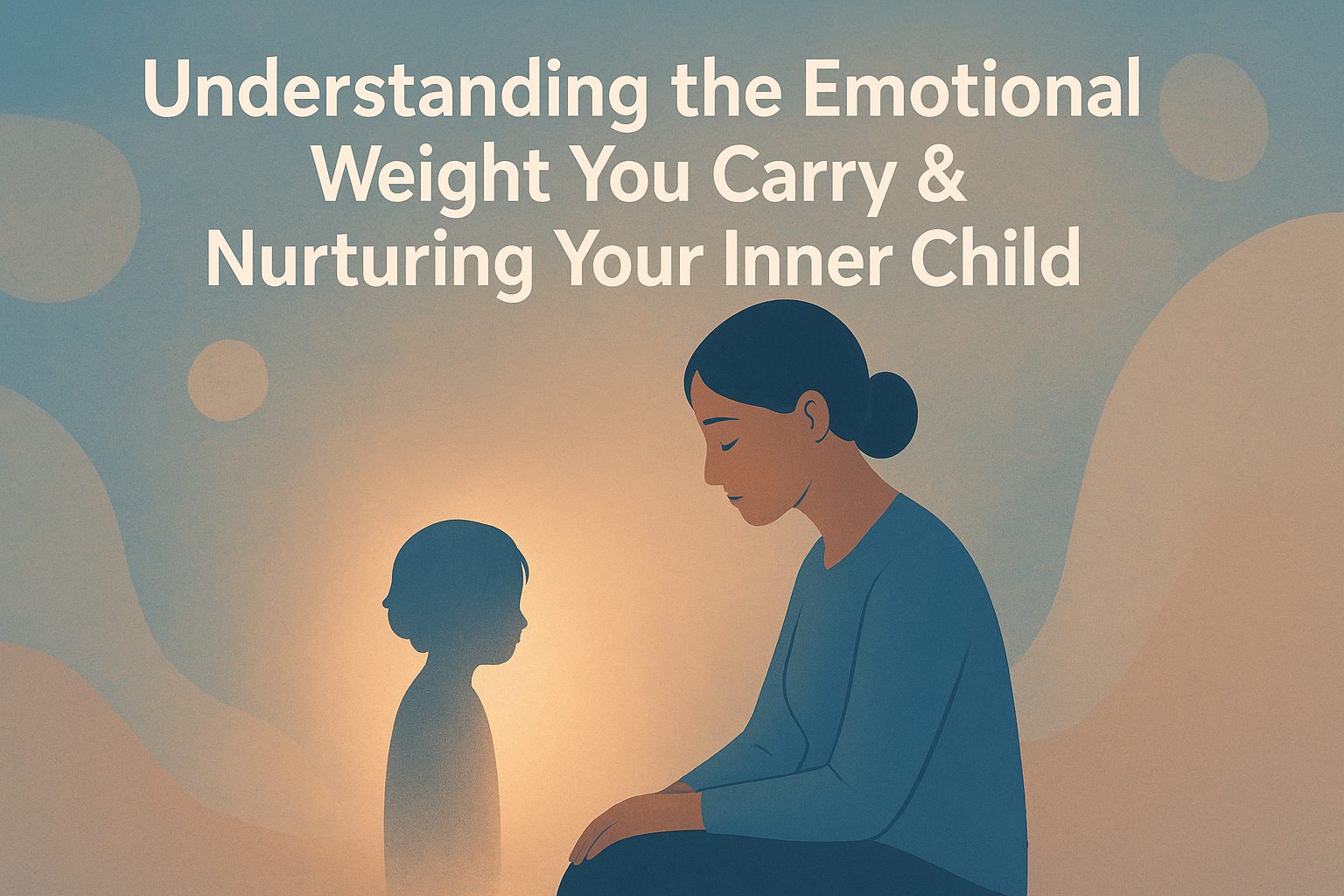
Often, that voice belongs to the inner child who has been waiting for acknowledgment.
Here are six reasons sadness may be showing up, even when your life appears stable on the outside.
-
Your Brain and Body Are Signaling Emotional Overload
Sadness can be your body’s way of saying, “I have been carrying too much for too long.” Your emotional system depends on neurotransmitters such as serotonin and dopamine to regulate mood and motivation. When they shift, sadness and fatigue increase.
According to the National Institute of Mental Health, about 7 percent of adults experience major depression each year (NIMH, 2024). This does not mean persistent sadness equals depression, but it does mean you should pay attention to it.
You may notice:
- Low energy even with rest
- Reduced interest in activities
- Irritability
- Feeling emotionally flat
This is not a moral failing.
It is your nervous system doing everything it can to keep you functioning.
-
Your Thoughts May Be Falling Into Old Patterns
When sadness lingers, your thoughts may begin shifting on their own. This is not intentional. It is automatic.
I tell clients often, “Your feelings are valid, but they are not facts.”
Sadness becomes heavier when your mind returns to familiar patterns such as:
- Emotional reasoning
- Personalization
- Black and white thinking
- Catastrophizing
If you grew up needing to anticipate danger, rejection, or disappointment, your mind learned to scan for threats. As an adult, that becomes an emotional reflex.
Research shows these thinking patterns reinforce sadness and anxiety (American Psychological Association, 2023). This is not evidence of failure. It is evidence of what you had to adapt to.
-
Your Inner Child Is Carrying Something You Have Not Addressed Yet
Persistent sadness often has roots in experiences you never had the space to process. In therapy, we explore your inner child, the part of you who learned early what safety did or did not feel like. This part of you holds emotional memories long after your adult self has moved forward.
Signs your inner child may be activated include:
- Shame or guilt that feels old
- Over-apologizing
- Feeling like a burden
- Emotional numbness
- Needing reassurance others cannot give
- Sadness that feels larger than the current moment
Unresolved trauma does not disappear.
Without support, it transforms into sadness, anxiety, panic, withdrawal, or self-blame.
You cannot outwork trauma.
You cannot outrun it.
You cannot out-achieve it.
You must turn toward it with curiosity rather than judgment. That is how you walk the middle path.
-
Your Lifestyle May Be Quietly Wearing Down Your Emotional Capacity
Sadness often increases when your body is depleted. Emotional regulation becomes harder without a stable foundation.
According to the CDC, one in three adults does not get enough sleep (CDC, 2023). Lack of sleep directly increases irritability, sadness, and emotional instability.
Lifestyle factors that often intensify sadness include:
- Poor sleep
- Isolation
- Lack of consistent routine
- Heavy digital or social media use
- Limited movement
- Limited sunlight
- Inconsistent meals
Your body communicates what your words cannot.
Sadness is often the clue.
-
You Are Moving Through a Life Transition or Identity Shift
Any change, even positive change, can activate sadness. Transitions create uncertainty, and uncertainty often reminds the inner child of earlier instability.
This may include:
- Moving
- Relationship changes
- Career shifts
- Loss or grief
- Shifts in responsibilities
- Financial pressure
- Changes in community or support
Sadness during transitions is not a sign that you are failing.
It may be grief over who you used to be or fear around who you are becoming.
This is part of psychological reorganization, the emotional work your mind does before settling into a new identity.
-
Sadness May Be Connected to Depression or a Mood Disorder
If sadness becomes your emotional baseline and begins interrupting daily functioning, such as sleep, appetite, relationships, or concentration, it may indicate a mood disorder.
According to the American Psychiatric Association, up to 17 percent of people experience depression at some point in their lifetime (APA, 2022).
Common symptoms include:
- Persistent sadness
- Loss of interest in previously enjoyable activities
- Difficulty concentrating
- Sleep changes
- Appetite shifts
- Hopelessness or worthlessness
- Thoughts about death or not wanting to exist
Depression is not weakness, failure, or a lack of trying. It is a mental health condition that deserves support and compassion.
When You Should Reach Out for Support?
Consider speaking with a therapist if:
- Sadness lasts more than two weeks
- You feel disconnected from your life
- Your motivation or energy has decreased
- You notice changes in sleep or appetite
- You are withdrawing socially
- You feel stuck in emotional cycles
- The sadness feels heavier than normal
Seeking help is not a sign of weakness.
It is a decision to stop suffering silently and to hold the line for yourself and your emotional well-being.
How Therapy Helps You Navigate Sadness?
At IGotU Corp, we use evidence-based and trauma-informed approaches such as:
- Cognitive Behavioral Therapy
- Dialectical Behavior Therapy
- Trauma-focused work
- Inner-child healing and reparenting
- Emotional regulation and grounding skills
- Strength-based and insight-oriented therapy
Therapy helps you understand the emotional patterns beneath the sadness, challenge the thought processes that intensify it, and build the emotional capacity you need to feel grounded again.
Frequently Asked Questions
Is it normal to feel sad without knowing why?
Yes. There is always a reason, even if it is not conscious.
Can stress cause sadness?
Yes. Chronic stress disrupts the body’s ability to regulate emotions (NIMH, 2023).
Is sadness the same as depression?
Not always. Persistent sadness can be a symptom of depression, but sadness alone does not mean someone is depressed.
Can lifestyle changes help?
Yes, but ongoing sadness often needs deeper emotional work.
When should someone talk to a therapist?
Whenever sadness affects functioning, relationships, or overall quality of life.
You Do Not Have to Carry This Alone
If you are asking, “Why am I so sad,” it means you are already becoming more aware of what is happening inside you. Awareness matters.
Sadness is not proof that you are failing.
It is information.
It is your emotional system saying, “Please do not ignore me.”
It is your inner child saying, “I need you.”
You deserve support as you learn how to sit with this instead of running from it.
No worries. I got you.
IGotU Corp – Mental Health Services
9431 Haven Ave Suite 100 151, Rancho Cucamonga, CA 91730
Phone: 909 325 7949
Email: noworries@igotucorp.com
Website: www.igotucorp.com
About the Author: Vincente Mozell, LCSW, MSHM
I help clients understand their emotional world, reconnect with their inner child, and challenge the patterns keeping them stuck. My work is grounded in trauma-informed care, curiosity, compassion, and the belief that healing begins when we stop abandoning the parts of ourselves that needed us the most.
Recent Posts
Related Posts
2026’s Checklist for Choosing the Best Depression Treatment Centers
Finding the right depression treatment center in 2026 feels less like a medical appointment and more like choosing a partner...

Get Your Emotional Support Animal Letter California Today (2026 Process)
If you’re struggling with anxiety, depression, PTSD, or other mental health challenges in California, an Emotional Support Animal (ESA) can provide invaluable...
Finding the Licensed Therapists in California and Online Options
Introduction: Why Finding the Right Therapist Matters Mental health is just as important as physical health, and more people in...
Evolution of the 8 Minute Rule Therapy: What’s Different Now
The 8 minute rule therapy has fundamentally shaped how physical therapists, occupational therapists, and speech-language pathologists bill for time-based services...

Does Online DBT Therapy Work? Research and Patient Outcomes
Dialectical Behavior Therapy (DBT) has transformed mental health treatment since Dr. Marsha Linehan developed it in the 1980s, particularly for...