
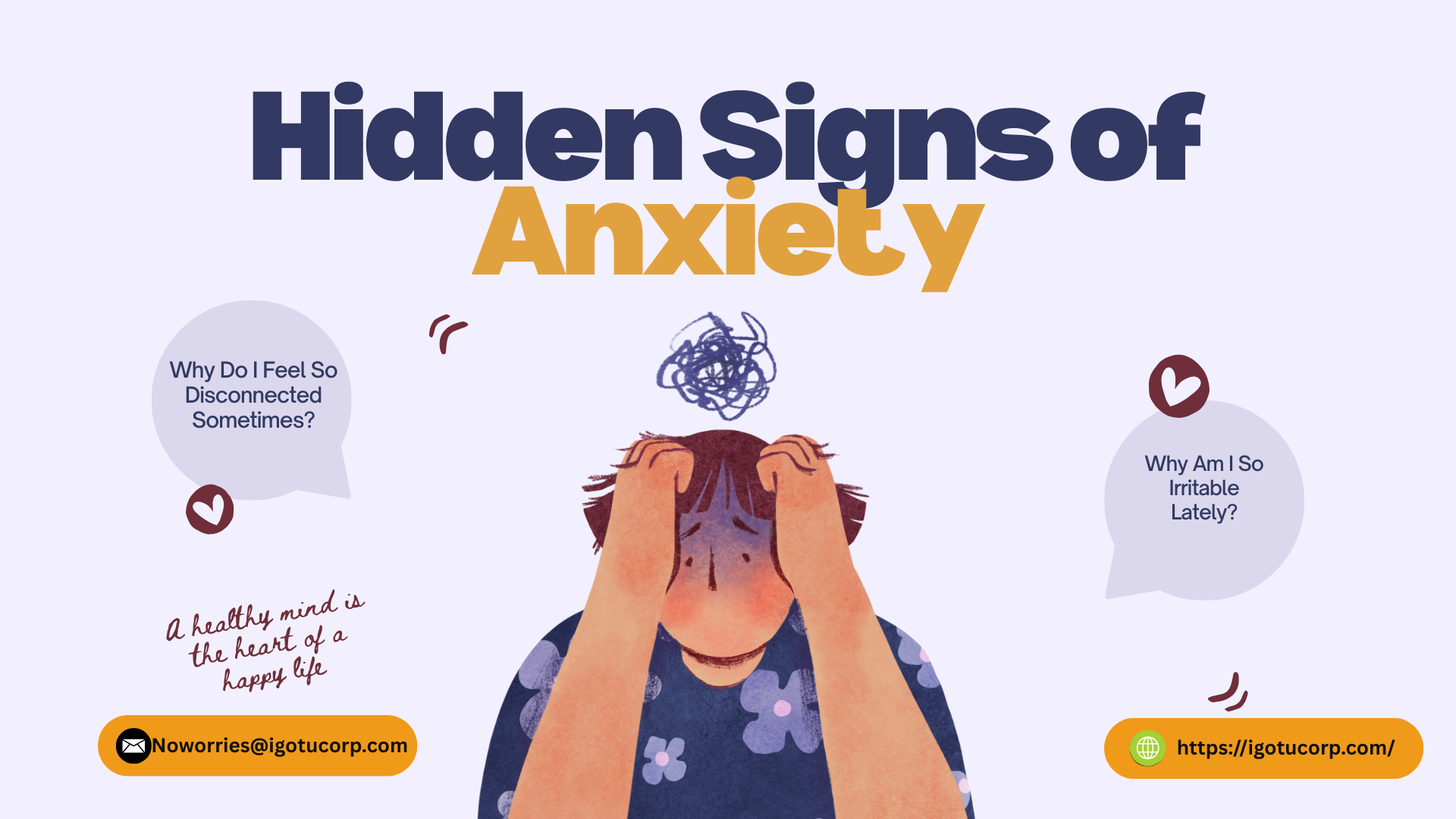
You know that feeling when you’re scrolling through your phone at 2 AM, unable to sleep, telling yourself you’re “just not tired yet”? Or when you snap at someone over something tiny and think, “Wow, where did that come from?”
Here’s the thing: anxiety doesn’t always announce itself with panic attacks or obvious worry. Sometimes it shows up in ways so subtle, so seemingly unrelated, that we brush them off as personality quirks or bad habits. But your body and mind might be trying to tell you something important.
This article will provide you complete detail on what are the earliest hidden signs of anxiety that may result into severe anxiety disorders.
What are the Hidden Signs of Anxiety?
Let me walk you through some of the hidden signs of anxiety that often go completely unnoticed—signs that might just explain a lot about what you’ve been experiencing lately.
Feeling overwhelmed by persistent physical symptoms that often go unnoticed? IGOTU Corp specializes in comprehensive mental health support that addresses the mind-body connection. Our experienced professionals can help you understand what your body might be trying to tell you.
Below, we have shared the most common and repetitive behavioral patterns that are often caused by anxiety.
Why Am I So Tired All the Time?
You got eight hours of sleep. You didn’t run a marathon. Yet you feel absolutely exhausted—not just physically, but mentally drained. You sit down to start a simple task and it feels like climbing a mountain.
This isn’t laziness. This is one of anxiety’s sneakiest disguises.
Anxiety is mentally and physically exhausting because your brain is constantly running worst-case scenarios in the background, even when you’re not consciously aware of it. It’s like having dozens of browser tabs open on your computer—everything slows down, even though you’re only looking at one screen.
This fatigue often shows up as:
- Difficulty concentrating or that “brain fog” feeling
- Needing to reread the same paragraph multiple times
- Feeling tired despite sleeping enough hours
- Lacking motivation to do things you usually enjoy
- Decision fatigue—even small choices feel overwhelming
What makes this particularly confusing is that people with anxiety often can’t pinpoint what they’re anxious about. They just feel… drained. And then they feel guilty for being tired “for no reason,” which creates even more anxiety. It’s a vicious cycle.
Why Can’t I Make Simple Decisions Anymore?
Standing in the cereal aisle for fifteen minutes trying to decide between two boxes. Agonizing over responding to a text message. Changing your outfit five times before leaving the house.
Decision paralysis is a huge red flag for hidden anxiety that most people don’t recognize as such.
When you’re anxious, every decision feels weighted with potential consequences. Your brain goes into overdrive analyzing every possible outcome, trying to find the “perfect” choice that will prevent something bad from happening. The problem? There is no perfect choice, so you get stuck in analysis paralysis.
This might look like:
- Avoiding making plans because committing feels too stressful
- Asking others to make decisions for you, even small ones
- Second-guessing choices you’ve already made
- Spending excessive time researching minor purchases or decisions
- Feeling physically uncomfortable until you’ve made “the right” choice
What’s really happening is that your anxiety has convinced you that making the wrong choice—any wrong choice—will lead to catastrophe. So instead of deciding, you freeze. And the longer you take to decide, the more anxious you become about the fact that you can’t decide.
Why Do I Keep Avoiding Things I Used to Enjoy?
You used to love going to concerts, but now the thought of buying tickets makes you anxious about parking, crowds, and what if you need to leave early.
This is avoidance behavior, and it’s one of the most damaging hidden signs of anxiety because it shrinks your world without you fully realizing it’s happening.
Avoidance feels like a relief in the moment. When you cancel plans, you feel that immediate sense of, “Ah, I don’t have to deal with that now.” But what you’re really doing is teaching your brain that certain situations are dangerous, which reinforces the anxiety rather than helping you overcome it.
Common avoidance patterns include:
- Making excuses to skip social events you committed to
- Putting off important tasks until they become emergencies
- Avoiding phone calls and letting them go to voicemail
- Not pursuing opportunities because “what if it doesn’t work out?”
- Staying in your comfort zone even when you’re unhappy there
Why Am I So Irritable Lately?
Your partner asks what you want for dinner and you snap at them. Your coworker makes a small mistake and you’re unreasonably annoyed. You feel like everyone is getting on your nerves, and you don’t understand why you’re so on edge.
Irritability is an anxiety mask. When we think of anxiety, we think of worry and fear. But anxiety also shows up as anger, impatience, and a short fuse.
Here’s why: when you’re anxious, your nervous system is already activated and on high alert. You’re already at a six or seven on a scale of one to ten. So when something mildly annoying happens—something that would normally register as a two—it pushes you right over the edge because you were already so close to your threshold.
This hidden anxiety manifests as:
- Getting disproportionately upset over minor inconveniences
- Feeling constantly frustrated with people around you
- Having a low tolerance for noise, mess, or anything “not quite right”
- Snapping at loved ones and immediately regretting it
- Feeling like you’re always on the verge of losing your temper
Why Do I Feel So Disconnected Sometimes?
You’re in a conversation but feel like you’re watching it from outside your body. Things don’t quite feel real. You look at your hands and they feel like they belong to someone else. You’re going through the motions of life but not fully present in it.
This is called dissociation or depersonalization, and it’s a protective response to overwhelming anxiety that many people don’t recognize for what it is.
When anxiety becomes too intense, your brain essentially creates distance from the experience as a way to cope. It’s like your mind is saying, “This is too much, so I’m going to numb this out.” The problem is that you can’t selectively numb—when you disconnect from the anxiety, you disconnect from everything else too.
This might feel like:
- Watching your life like it’s a movie rather than living it
- Feeling emotionally flat or numb
- Going through entire days on autopilot with little memory of them
- Feeling disconnected from your own thoughts and feelings
- Experiencing the world as dreamlike or unreal
This is one of the most frightening hidden symptoms because it can make you feel like you’re losing touch with reality. But it’s actually your brain’s way of trying to protect you—it’s just not a very helpful strategy in the long run.
Experiencing disconnection, persistent physical symptoms, or behaviors that don’t feel like “you”? These could be signs of anxiety that need professional attention. IGOTU Corp’s team of mental health specialists understands the complex ways anxiety manifests and can create a personalized treatment plan that addresses your unique symptoms. Connect with IGOTU Corp today—you don’t have to navigate this alone.
What Are the Major Symptoms of Anxiety Disorder?
Now that we’ve covered the hidden signs, let’s talk about the more recognizable symptoms of anxiety. Sometimes anxiety is obvious, but even then, people don’t always connect their experiences to an anxiety disorder.
The classic symptoms include excessive worry that’s difficult to control, especially about everyday things. This worry is persistent—it doesn’t just pop up occasionally, it’s there most days, interfering with your ability to focus on other things.
Physical symptoms are incredibly common and include:
- Rapid heartbeat or heart palpitations
- Shortness of breath or feeling like you can’t get enough air
- Sweating, trembling, or shaking
- Chest tightness or pain
- Dizziness or lightheadedness
- Nausea or stomach problems
Mental and emotional symptoms include:
- Feeling on edge or unable to relax
- Difficulty concentrating or mind going blank
- Overwhelming sense of dread or impending doom
- Intrusive thoughts that won’t go away
- Feeling like you’re losing control or going crazy
Behavioral symptoms show up in how you act:
- Avoiding situations that make you anxious
- Seeking constant reassurance from others
- Difficulty sleeping or staying asleep
- Restlessness and inability to sit still
- Procrastinating or having trouble completing tasks
The key difference between normal anxiety and an anxiety disorder is intensity, duration, and impact. Everyone feels anxious sometimes—that’s normal and even helpful in dangerous situations. But when anxiety becomes chronic, overwhelming, and starts limiting your life, that’s when it crosses into disorder territory.
What Is the Best Treatment for Anxiety?
Here’s the truth: there’s no single “best” treatment for anxiety because everyone’s experience is different. What works beautifully for one person might not work as well for another. The most effective approach is usually a combination of treatments tailored to your specific needs.
Therapy is considered the gold standard for treating anxiety, particularly Cognitive Behavioral Therapy (CBT). CBT helps you identify and change the thought patterns and behaviors that fuel anxiety. You learn to recognize when your thoughts are distorted or unhelpful, challenge them, and replace them with more balanced perspectives.
Other effective therapeutic approaches include:
- Exposure therapy, which gradually helps you face feared situations in a safe, controlled way
- Acceptance and Commitment Therapy (ACT), which teaches you to accept anxiety rather than fight it
- Mindfulness-Based Stress Reduction (MBSR), which uses meditation and awareness practices
- Psychodynamic therapy, which explores underlying emotional conflicts
Lifestyle modifications are essential and often underestimated:
- Regular exercise, which is as effective as medication for some people
- Sleep hygiene—getting consistent, quality sleep
- Reducing caffeine and alcohol, which can worsen anxiety
- Nutrition that supports mental health
- Stress management techniques like deep breathing or progressive muscle relaxation
The most successful treatment plans usually combine therapy with lifestyle changes, and sometimes medication. The key is finding a qualified mental health professional who can assess your specific situation and create a personalized plan. Don’t be afraid to try different approaches or therapists until you find what works for you.
How to Subdue Anxiety Attacks?
When an anxiety attack hits, it feels like you’re dying, losing control, or going crazy. Your heart races, you can’t breathe, and panic takes over. In those moments, knowing what to do can make all the difference.
First, recognize what’s happening. Remind yourself: “This is an anxiety attack. It’s not dangerous. It will pass.” This simple acknowledgment can help prevent the panic from spiraling further.
Focus on your breathing. When you’re panicking, you tend to take quick, shallow breaths, which actually makes the anxiety worse by creating more physical symptoms. Try the 4-7-8 technique: breathe in for 4 counts, hold for 7, breathe out for 8. Or simply breathe in slowly through your nose and out through your mouth, making your exhale longer than your inhale.
Ground yourself in the present moment using the 5-4-3-2-1 technique:
- Name 5 things you can see
- Name 4 things you can touch
- Name 3 things you can hear
- Name 2 things you can smell
- Name 1 thing you can taste
This pulls your mind away from the panic and back to reality. Physical grounding also helps—press your feet firmly into the floor, hold an ice cube, or splash cold water on your face.
Move your body if possible. Sometimes anxiety attacks create so much physical energy that you need to release it. Take a walk, do some jumping jacks, or shake out your limbs. Movement helps metabolize the stress hormones flooding your system.
Talk yourself through it with compassionate self-talk. Instead of “I can’t handle this,” try “This is hard, but I’ve gotten through this before.” Instead of “Something is terribly wrong,” try “My body is having a strong reaction, but I’m safe.”
If you’re with someone you trust, let them know what’s happening. Sometimes having someone sit with you quietly, or talk you through breathing exercises, can be incredibly calming.
After the attack passes, be kind to yourself. Anxiety attacks are exhausting. Rest, hydrate, and don’t beat yourself up for having one. Each time you get through an anxiety attack, you’re building resilience and proving to yourself that you can handle them.
What Makes Anxiety Worse?
Understanding what intensifies anxiety is just as important as knowing what helps it. Sometimes we unknowingly engage in habits that feed our anxiety, making it stronger and more persistent.
Caffeine is a major culprit. That morning coffee might wake you up, but caffeine is a stimulant that triggers the same physiological responses as anxiety—increased heart rate, jitters, restlessness. If you’re already anxious, caffeine can push you over the edge into panic. Even moderate amounts can worsen anxiety symptoms.
Lack of sleep creates a vicious cycle. When you’re anxious, you can’t sleep. When you don’t sleep, you’re more anxious. Sleep deprivation impairs your brain’s ability to regulate emotions and makes you more reactive to stress. Your threshold for handling challenges drops significantly.
Alcohol might seem like it helps anxiety in the moment—you feel relaxed after a drink or two. But alcohol disrupts sleep quality, causes blood sugar fluctuations, and creates rebound anxiety when it wears off. Regular drinking actually increases overall anxiety levels.
Social media and constant news consumption keep your nervous system activated. The endless scroll of bad news, comparison with others, and information overload prevent your mind from ever truly resting. The blue light from screens also disrupts sleep, compounding the problem.
Isolation and withdrawal make anxiety grow. When you avoid social connections because you’re anxious, you lose the support systems and positive experiences that could help regulate your mood. Anxiety thrives when you’re alone with your thoughts.
Ignoring physical health worsens anxiety. Poor nutrition, lack of exercise, dehydration, and untreated medical conditions all contribute to increased anxiety symptoms. Your mental health and physical health are deeply interconnected.
Perfectionism and unrealistic expectations create constant stress. When you set impossibly high standards for yourself, you’re always falling short, which fuels anxiety about not being good enough.
Trying to suppress or ignore anxiety often backfires. The more you try to push anxious thoughts away, the more they persist. It’s like trying not to think about a pink elephant—suddenly that’s all you can think about.
The good news? Once you identify these patterns, you can start making changes. Small adjustments to these habits can significantly reduce your overall anxiety levels.
When to See a Doctor?
Knowing when to seek professional help can be confusing. You might wonder if your anxiety is “bad enough” to warrant seeing a doctor, or if you should just try to handle it on your own. Let me clear that up: if anxiety is affecting your quality of life, it’s time to get help.
See a doctor or mental health professional if:
- Your anxiety persists for weeks or months without improving. Occasional anxiety is normal, but chronic, ongoing anxiety that doesn’t resolve needs professional attention.
- Anxiety is interfering with your daily functioning. This means you’re missing work or school, avoiding important activities, struggling to maintain relationships, or unable to complete necessary tasks because of anxiety.
- You’re experiencing physical symptoms that won’t go away. If you have persistent headaches, digestive issues, chest pain, or other physical symptoms that doctors can’t find a medical cause for, anxiety could be the culprit and needs to be addressed.
- You’re having frequent panic attacks. One panic attack doesn’t necessarily mean you need treatment, but if they’re recurring or you’re developing a fear of having another one, it’s time to see someone.
- You’re using substances to cope. If you find yourself drinking, using drugs, or relying on medication in unhealthy ways to manage anxiety, professional help is essential.
- Your anxiety has led to depression. Anxiety and depression often occur together. If you’re feeling hopeless, losing interest in things you used to enjoy, or having thoughts of self-harm, seek help immediately.
- You’re avoiding more and more situations. If your world is getting smaller because you’re avoiding things that make you anxious, intervention can help prevent this pattern from worsening.
- Nothing you’re trying is helping. If you’ve made lifestyle changes, tried self-help strategies, and your anxiety is still overwhelming, it’s time for professional guidance.
- Don’t wait until you’re in crisis to seek help. Early intervention leads to better outcomes. And remember, seeing a mental health professional doesn’t mean you’re weak or broken—it means you’re taking your health seriously.
- Start with your primary care doctor if you’re unsure where to begin. They can rule out medical causes, provide initial treatment, or refer you to a mental health specialist.
Ready to take control of your anxiety instead of letting it control you? IGOTU Corp provides comprehensive anxiety treatment with experienced professionals who genuinely care about your wellbeing. Whether you need therapy, medication management, or a combination approach, we’ll create a plan that works for your unique situation. Schedule your consultation with IGOTU Corp today and start your journey toward lasting relief.
You’re Not Alone in This
If you’ve recognized yourself in several of these hidden signs, you’re not imagining things, and you’re definitely not alone. Anxiety disorders are among the most common mental health conditions, affecting millions of people—and many of them are walking around with these exact same symptoms, also wondering what’s wrong with them.
The good news? Once you identify anxiety for what it is, you can do something about it. These symptoms don’t have to be your permanent reality. With the right support, tools, and understanding, people with anxiety can and do get better.
Your anxiety might be hidden, but you don’t have to hide anymore. There’s no shame in struggling, and there’s tremendous courage in reaching out for help. You deserve to feel calm in your own mind, comfortable in your own body, and present in your own life.
Take the first step today, even if it’s just acknowledging that what you’ve been experiencing might be anxiety. You’re already on your way to feeling better.
Frequently Asked Questions
Can you have anxiety without feeling anxious?
Yes, absolutely. Many people experience anxiety primarily through physical symptoms like chronic headaches, digestive problems, muscle tension, or fatigue rather than feeling mentally worried or fearful. Your body responds to anxiety even when your mind hasn’t consciously registered it as worry.
How do I know if my physical symptoms are from anxiety or a medical condition?
Always consult a doctor to rule out medical causes first. However, if medical tests come back normal but symptoms persist or worsen during stressful periods, anxiety is likely contributing. Often both factors are involved—anxiety can exacerbate existing conditions and create new physical symptoms.
Is it normal for anxiety to make me feel tired all the time?
Yes, chronic fatigue is extremely common with anxiety. Your brain and body remain in a constant state of hyperarousal, which is exhausting even when you’re not consciously aware of feeling worried. This persistent “fight or flight” mode depletes your energy reserves.
What’s the difference between everyday stress and an anxiety disorder?
Stress is a normal response to external pressures and typically subsides when the stressor is removed. An anxiety disorder involves persistent, excessive worry that’s disproportionate to the situation, lasts for months, and significantly interferes with daily life, relationships, or work.
Can anxiety go away on its own without treatment?
While mild anxiety related to specific situations may improve when circumstances change, chronic anxiety disorders rarely disappear without intervention. Untreated anxiety typically worsens over time as avoidance behaviors increase. However, anxiety is highly treatable with proper professional support and evidence-based approaches.
Recent Posts
Related Posts
Live Anywhere with Your Pet: Emotional Support Animal Letter California
Finding pet-friendly housing in California is challenging. With “no pets” policies dominating rental markets from San Francisco to San Diego,...
2026’s Checklist for Choosing the Best Depression Treatment Centers
Finding the right depression treatment center in 2026 feels less like a medical appointment and more like choosing a partner...

Get Your Emotional Support Animal Letter California Today (2026 Process)
If you’re struggling with anxiety, depression, PTSD, or other mental health challenges in California, an Emotional Support Animal (ESA) can provide invaluable...
Finding the Licensed Therapists in California and Online Options
Introduction: Why Finding the Right Therapist Matters Mental health is just as important as physical health, and more people in...
Evolution of the 8 Minute Rule Therapy: What’s Different Now
The 8 minute rule therapy has fundamentally shaped how physical therapists, occupational therapists, and speech-language pathologists bill for time-based services...